That first sleepy morning in Istanbul, I learnt breakfast is not “just breakfast” in Turkey
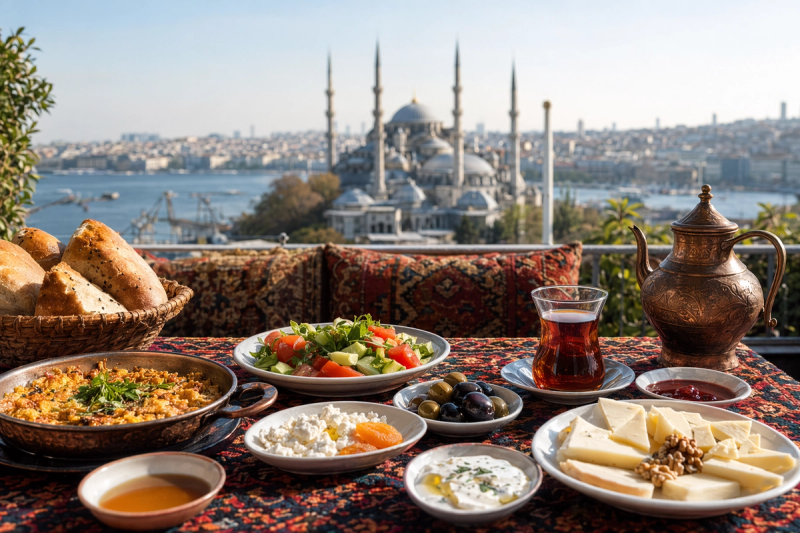
#I landed in Istanbul with that weird long-flight headache, the one where your body is in Delhi time but your suitcase is somewhere between Europe and Asia. My hotel was near Sultanahmet, very touristy, yes, but I was too tired to be clever about neighbourhoods. Next morning I walked out thinking I’ll grab “something light” and be done. Hah. Turkey had other plans. A small café owner waved me in, put tea in a tulip glass before I even understood the menu, and suddenly my table had olives, tomatoes, cucumber, white cheese, honey, jam, bread, butter, more tea, and a tiny pan of eggs I had to politely refuse because I don’t eat eggs. That was my first real Turkish breakfast moment. Not fancy. Not Instagram-perfect. Just warm bread, salty cheese, strong tea, and me sitting there thinking, okay, Indian vegetarians can survive here. Actually, we can eat pretty well, if we know where the traps are.
Turkey breakfast, or kahvaltı, is one of those meals that feels made for slow travellers. The word is often explained as “before coffee,” and while coffee gets all the dramatic love in Turkey, breakfast tea is the daily hero. You sit, sip, tear bread, dip it into honey or tahini-pekmez, talk nonsense, watch cats act like they own the street. For Indian vegetarian travellers, especially the ones used to poha, upma, idli, paratha, chai at 7 am, the good news is that Turkish breakfast has lots of naturally veg stuff. The slightly annoying news is that menus don’t always explain clearly what has meat stock, eggs, gelatin, or animal rennet. So you need a little street-smartness. Not paranoia, just attention.
What a typical Turkish breakfast looks like, and what’s usually safe for vegetarians
#A classic Turkish breakfast spread is not one dish. It’s more like a table full of small decisions. You get ekmek, which is bread, sometimes fluffy village bread or crusty rolls. There will be olives, often black and green, sometimes marinated with herbs. Tomatoes and cucumber are almost always there, and they taste way better than the sad hotel buffet tomatoes we get in some places, honestly. Then cheese comes in: beyaz peynir, kaşar, tulum, lor, and many regional types. If you eat dairy, this is where breakfast becomes happy. Add butter, honey, jams, tahini mixed with grape molasses called tahin pekmez, and endless çay. I mean endless. Turkish tea servers somehow know the exact second your glass is empty.
For a lacto-vegetarian Indian traveller, the basic kahvaltı plate can be excellent. It has no onion-garlic issue usually in the plain stuff, and it’s not spicy, but it has flavor from salt, fat, fresh produce, and good bread. If you are vegan, it becomes harder but still doable: olives, vegetables, bread, tahini-pekmez, jams, fruit, sometimes roasted peppers, and if you’re lucky, vegan-friendly spreads. If you are Jain or avoid root vegetables, you’ll need to ask more carefully because small salads and spreads can have garlic. Not always, but sometimes. Also, Turkish breakfast is very bread-heavy, so gluten-free travellers may struggle unless the hotel or café is used to international requests.
- Usually vegetarian-friendly: olives, tomatoes, cucumber, plain bread, honey, jam, tahini, pekmez, butter, most plain cheeses if you’re okay with dairy, fruit, nuts, simit, and many gözleme fillings like cheese or spinach.
- Ask before eating: börek, poğaça, soups, menemen, stuffed pastries, hotel hot dishes, anything called sucuklu, kıymalı, pastırmalı, tavuklu, etli, or served with broth.
- Egg issue: menemen is famous and delicious-looking, but it’s eggs with tomato and peppers. Some Indian vegetarians eat eggs, many don’t. So don’t assume it’s veg just because it has no meat.
The breakfast words I wish someone had tattooed on my brain
#Language was my biggest breakfast problem in Turkey, not hunger. In tourist areas people often speak enough English, but step into a neighbourhood bakery in Kadıköy or a bus stop café outside Cappadocia and suddenly you’re doing hand signs like a confused mime. I learnt some words the hard way. “Vejetaryen” is vegetarian, but it may be understood as no red meat rather than no chicken stock or no fish sauce, depending on the person. “Etsiz” means without meat, useful but not enough. “Tavuk” is chicken, “balık” is fish, “yumurta” is egg, “sucuk” is spicy sausage, “kıyma” is minced meat. “Jelatin” is gelatin. If you are strict, say it twice, smile, and confirm. People were mostly kind, but they are not mind readers.
| What to say or look for | Meaning for Indian vegetarian travellers |
|---|---|
| Vejetaryenim | I am vegetarian. Good starting phrase. |
| Et yemiyorum | I don’t eat meat. |
| Tavuk yok, balık yok | No chicken, no fish. Say this because sometimes chicken is not treated like “meat” in casual conversation. |
| Yumurta yemiyorum | I don’t eat eggs. Important for menemen, pastries, and hotel breakfast items. |
| Et suyu var mı? | Is there meat broth? Useful for soups and cooked beans. |
| Peynirli | With cheese. Usually veg, but ask if strict about rennet. |
| Ispanaklı | With spinach. Often veg, though sometimes mixed with cheese or egg wash. |
| Kıymalı / sucuklu / pastırmalı | Minced meat / sausage / cured beef. Avoid. |
One small thing: if you’re the type who reads every label, Turkey can be tiring in the beginning. Supermarket labels are in Turkish, bakery counters are fast, and some ingredients hide in plain sight. I’ve had similar label-anxiety in other countries too, so I found this guide on Vegetarian Food Labels Abroad: Hidden Ingredients pretty relevant for the general habit of checking broths, gelatin, rennet, and random animal-based additives. Turkey is not impossible at all. You just need to stop assuming “plain-looking” means vegetarian. That rule has saved me many times, including once with a very innocent-looking lentil soup that turned out to have meat stock.
Istanbul: where I ate too much bread and felt no regret
#Istanbul is honestly the best place to start if you’re nervous about veg food in Turkey. It has everything: old-school bakeries, hip cafés, huge breakfast places, tiny tea gardens, supermarket backups, and enough travellers that staff are used to questions. My favourite breakfast walks were in Kadıköy and Cihangir, not because they are secret or anything, but because they feel lived-in. In Kadıköy, I’d grab a simit from a street cart, buy fruit from a market stall, then sit near the ferry with tea. Is that a proper breakfast? Maybe not. Did it make me ridiculously happy? Yes. Simit is that sesame-crusted bread ring, chewy and crisp, usually vegetarian, and it became my emergency food. It’s like Turkey’s answer to the “safe snack” problem.
Cihangir has cafés that do long breakfast plates with cheese, olives, jams, breads, and sometimes menemen. Van-style breakfast places in Istanbul are also famous, inspired by the huge breakfast tradition of Van in eastern Turkey. Places like Van Kahvaltı Evi in Cihangir have been known for big shared breakfasts, though like anywhere, check the current menu and timings before you go because restaurants change moods faster than Mumbai weather. I liked the Van-style idea because the table becomes a landscape: clotted cream, honey, herby cheese, walnut paste, bread, tea. But if you’re vegetarian, tell them no meat items and no eggs if needed. Shared breakfast spreads can include little extras you didn’t order, and suddenly there’s sausage sitting next to your olives like an unwanted guest.
Beşiktaş is another breakfast-heavy area, especially around streets known for kahvaltı salons. It can get packed on weekends. I made the rookie mistake of going late on a Sunday, hungry and overconfident, and stood around watching people eat for 30 minutes. Painful. But once seated, it was worth it. The servers brought so many small plates I lost track. I skipped eggs, ignored the sausage option, and basically lived on bread, cheese, olives, honey, butter, tomatoes, and tea. By Indian standards, it may feel “cold” because there’s no hot sabzi or dosa situation, but the variety makes up for it. Also, the bread. I know I keep saying bread, but Turkish bread is dangerous in the best way.
Bakery breakfasts: börek, poğaça, açma, and the tiny dangers inside
#Turkish bakeries are where Indian vegetarians can either win big or make mistakes. Börek is layered pastry, flaky and rich, often with cheese, spinach, potato, or minced meat. Cheese börek and spinach börek are usually safe-ish for vegetarians, but ask because sometimes fillings mix things or trays sit close together. Poğaça is a soft savoury bun, often cheese, olive, potato, or plain, but can also have meat. Açma is like a soft buttery ring, sometimes plain and often veg. These are great for early bus rides, airport mornings, and those days when your hotel breakfast is just boiled eggs staring at you.
I had one memorable bus morning from Istanbul to Bursa where I bought cheese poğaça from a bakery near the station. I was half-asleep, holding my tea like it was emotional support, and the baker wrapped two warm buns in paper. I ate one on the bus while the city blurred outside the window and it tasted like comfort. Not spicy, not Indian, but comfort anyway. That’s when I realised vegetarian travel is partly about letting go of the exact food you miss. You won’t get aloo paratha everywhere. But you might get hot bread with salty cheese while crossing into a new town, and that counts.
Simit is the real MVP, but don’t build your whole trip on it
#Simit saved me so many times that I started calling it my travel insurance. Street carts sell it in many cities, and it’s cheap, filling, and normally meat-free. Pair it with ayran if you drink dairy, or tea, or fruit from a shop. But after day four, I got slightly bored. This is where Indian tastebuds complain. We like warmth, masala, contrast. So I started carrying small things: roasted chana from India, thepla on the first two days, a tiny masala sachet, and later from Turkish supermarkets, nuts, bananas, yogurt, and packaged cheese. It sounds unromantic, but breakfast backups are what keep travel happy. Nobody is spiritual when they are hungry.
Hotel breakfast buffets: blessing, trap, and comedy show all together
#Hotel breakfasts in Turkey can be excellent for vegetarians, especially mid-range and boutique hotels. You usually find bread, cheese, olives, tomatoes, cucumbers, jams, honey, fruit, cereal, yogurt, tea, coffee. Sometimes there’s hot food like potatoes, mushrooms, menemen, sausages, soups, and pastries. The blessing is choice. The trap is shared serving spoons, unclear labels, and meat sitting near veg items. I once picked up what I thought was plain fried potato and then saw tiny sausage pieces hiding in it. Put it back. Felt betrayed by potato. This is why I do one full scan before filling my plate, like a detective but with more hunger.
If you’re strict vegetarian, reach breakfast early when trays are cleaner and staff are less rushed. Ask for plain bread separately if the buffet tongs are touching meat. Ask whether soup has et suyu, meat broth. And don’t be shy about saying “no egg” because hotel staff may think eggs are the obvious vegetarian protein. Me and my friend had this funny moment in Cappadocia where the hotel owner proudly made “vegetarian breakfast” and brought us a huge pan of menemen. He looked so pleased. We felt terrible saying we don’t eat eggs. He laughed, then brought extra cheese, olives, and honey. People are usually helpful when you explain kindly.
Cappadocia mornings: balloons, cave hotels, and breakfast with a view
#Cappadocia breakfast hits differently because the landscape does half the cooking. You wake before sunrise, crawl onto a terrace wrapped in a jacket, and watch hot air balloons float over those strange fairy chimneys while tea warms your hands. Even if the food is simple, it becomes dramatic. I stayed in Göreme, where many cave hotels serve terrace breakfasts. Mine had bread, cheeses, olives, jams, fruit, tomatoes, cucumber, and a potato dish that I confirmed was meat-free. Nothing revolutionary, but eating it after a sunrise walk made it taste like a feast.
Vegetarian-wise, Cappadocia is manageable but more repetitive than Istanbul. Tourist restaurants offer vegetarian pottery kebab sometimes, lentil soup, salads, cheese gözleme, stuffed vine leaves, and pasta-ish options, but breakfast is mostly hotel-based. So choose your stay carefully. When booking, I now message hotels: “We are Indian vegetarians. No meat, no chicken, no fish, no eggs. Can you provide breakfast with cheese, bread, fruit, vegetables?” It sounds too much, but it prevents awkwardness. Also, if you eat eggs, Cappadocia becomes much easier because menemen and omelettes are everywhere. If not, dairy and bread will be your friends.
Gözleme mornings and village-style breakfasts
#Gözleme is one of my favourite Turkish breakfast-ish foods, though people eat it beyond breakfast too. It’s thin flatbread cooked on a griddle, filled with things like cheese, spinach, potato, or minced meat. For Indian travellers, it feels familiar because, hello, stuffed flatbread. Not the same as paratha, but emotionally related. I had spinach-cheese gözleme near a roadside stop on the way to Pamukkale, and I still think about it. The woman making it rolled the dough so quickly it was almost rude, like she was showing off without showing off. I asked “etsiz?” maybe three times, she nodded, smiled, and then pointed at the meat filling kept separately. That little visual confirmation helped.
Village-style breakfast places can be amazing in Turkey: fresh bread, homemade jams, cheeses, olives, tomatoes, cucumbers, maybe kaymak with honey, maybe herbs, sometimes pancakes or fried dough. But they can also be meat-heavy in hidden ways if they include sucuk, sausages, or eggs by default. So don’t just order “full breakfast” and hope. Say what you don’t eat. Turkish hospitality can mean they keep adding things to your table, and while that’s lovely, it can also create confusion. I learnt to say, “No sucuk, no meat, no egg, please,” before the table turned into a festival.
The hidden non-veg stuff Indian travellers should watch for
#The biggest hidden issue in Turkey for vegetarians is not the obvious kebab shops. Those are easy to avoid. The real issue is broth, minced meat, sausage, and sometimes gelatin or rennet depending how strict you are. Lentil soup, mercimek çorbası, looks like our friend. It is often vegetarian, but not always, because some kitchens use meat stock. Rice pilaf may be cooked with chicken stock. Beans can have meat pieces. Pastries can look plain but have kıyma inside. Desserts are mostly okay, but check gelatin in puddings or packaged sweets if you’re strict. Cheese may use animal rennet, and many local places won’t know how to answer that level of detail. I’m not saying panic. Just choose your battles depending on your own vegetarian line.
This is similar to what I felt travelling in parts of Europe where “vegetarian” was understood, but stock and bakery fillings were still sneaky. If Turkey is part of a longer trip, you might also like reading Croatia & Slovenia Vegetarian Food for Indians, because the same survival tricks apply: bakery caution, supermarket backup, and asking about soup stock instead of trusting the menu title. Breakfast abroad is always a little negotiation, no? Half food, half detective work.
Supermarket breakfast backups that saved my mood
#I love restaurants, but supermarkets are where vegetarian travellers become calm. In Turkey, look for chains and local markets for yogurt, ayran, fruit, nuts, bread, cheese, olives, tahini, pekmez, hummus-style spreads, breakfast biscuits, and packaged juices. I’d often buy bananas, walnuts, and yogurt the night before early tours. Some packaged breads and cakes may contain eggs, so check if that matters. If you are vegan, tahini and pekmez is gold. Mix them, dip bread, eat with fruit, done. It’s rich and sweet and slightly nutty, almost like a breakfast dessert pretending to be healthy.
Indian families travelling with kids or elderly parents should especially not depend only on cafés. Carry a few ready snacks from India: thepla, khakhra, roasted makhana, dry poha mix if you can manage hot water, masala peanuts, instant upma cups if your hotel has kettle access. I know some people say “eat local only” and I respect that, but also, my mother cannot start the day with only olives and cheese for seven days. Travel has to be practical. Eat local, yes. Also protect your stomach and your family’s mood. Both things can be true.
Tea, coffee, and the Indian chai adjustment
#Turkish çay is everywhere, and I grew very fond of it, but it is not masala chai. It’s black tea, served strong, no milk usually, in tulip glasses. You add sugar if you want. At first I missed ginger-cardamom chai badly. Then by day three, I started liking the clean bitterness of çay with salty cheese and sweet jam. Turkish coffee is more intense and usually not a breakfast drink for everyone, but try it later in the day. Just don’t expect a giant cappuccino unless you’re in modern cafés. Breakfast culture in Turkey is tea-led, and once you accept that, it becomes beautiful.
Ayran is another breakfast-adjacent drink if you consume dairy: salty yogurt drink, cooling, and very good with simit or gözleme. Some Indians love it instantly because it reminds them of chaas. Some hate it because they expect sweet lassi and get salty surprise. I liked it more in hot places like Antalya and Pamukkale than in chilly Istanbul mornings. Funny how weather changes taste. Or maybe I’m just moody.
Regional breakfast notes: where I’d go again for food
#Istanbul is best for variety and confidence. Cappadocia is best for breakfast views. Izmir and the Aegean coast are lovely for olives, fresh produce, herbs, and relaxed café mornings. Antalya gives you sunny hotel breakfasts and fruit that actually tastes alive. Eastern Turkey, especially Van, is famous for lavish breakfast culture, with regional cheeses, honey, cream, breads, and many small plates. I didn’t make it all the way to Van on that trip, sadly, and it is still on my food-travel list because everyone who loves Turkish breakfast talks about it like a pilgrimage. But even in western cities, Van-style breakfast places give you a taste of that abundance.
If you’re planning a route, I’d say give Istanbul at least three breakfast mornings. One for a classic spread, one for street simit and ferry tea, one for bakery hopping. In Cappadocia, choose a stay with breakfast included and message them in advance. On road trips, learn gözleme and bakery words. On beach-town days, rely on fruit, yogurt, bread, and cheese. And if you’re the kind of traveller who compares every foreign breakfast to Indian breakfast, maybe don’t. Turkey breakfast is not trying to be poha or dosa. It’s doing its own slow, salty, bread-tea-cheese thing. Let it.
My simple vegetarian Turkey breakfast plan, if I had to do it again
#- First morning in any city: eat a basic kahvaltı plate and learn what the local version looks like. Don’t over-order. Turkish portions can quietly become huge.
- Second morning: try bakery breakfast. Ask for peynirli, ıspanaklı, patatesli, and avoid kıymalı or sucuklu. If eggs are an issue, ask because pastries may be brushed with egg.
- Third morning: do a supermarket picnic. Simit, fruit, yogurt or tahini-pekmez, nuts, tea from a café. Eat in a park or by the water if you can.
- Always keep one emergency snack in your bag. Not because Turkey is difficult, but because tours start early and hunger makes everyone dramatic.
This style of planning is the same reason I enjoyed reading breakfast guides for other countries too. For example, the Japan Konbini Breakfast Guide for Indian Travelers has a totally different food setting, but the mindset is similar: know your labels, identify safe staples, and don’t wait until you’re starving to figure out breakfast. Morning food decides the whole travel day. I fully believe this. Bad breakfast, bad mood, bad photos, unnecessary fight with travel partner. Scientific? Maybe not. True? Very.
Turkey is one of those places where vegetarian breakfast is not hard, but it does ask you to be awake. Ask questions, smile, learn five food words, and never underestimate bread with honey and cheese.
Final thoughts from one hungry Indian vegetarian to another
#Turkey surprised me because I went in worried about kebabs and came back obsessed with breakfast. The vegetarian traveller’s Turkey is not the same Turkey shown in meat-heavy food videos. It is sesame simit at a ferry stop, white cheese with tomatoes that taste of sun, tahini-pekmez dripping onto warm bread, olives you slowly learn to love, hotel owners trying to feed you extra because you said no eggs, and that endless glass of tea arriving like a small act of kindness. There were awkward moments, sure. I said no to food people proudly offered. I ate too much bread. I missed green chutney. Once I nearly cried for proper masala chai. But I also felt welcomed, fed, and curious every single morning.
So if you’re an Indian vegetarian planning Turkey, don’t be scared. Be specific. Say no meat, no chicken, no fish, no egg if needed. Ask about broth. Use bakeries wisely. Carry snacks without shame. Stay near areas with cafés for your first few days. And please, please take time for at least one long Turkish breakfast where you’re not rushing to a museum or airport. Sit there. Pour tea. Break bread. Watch the street wake up. That’s the good stuff. For more food-travel rambles and practical vegetarian travel ideas, I usually end up browsing AllBlogs.in, because sometimes you just need another hungry traveller’s notes before booking the next trip.