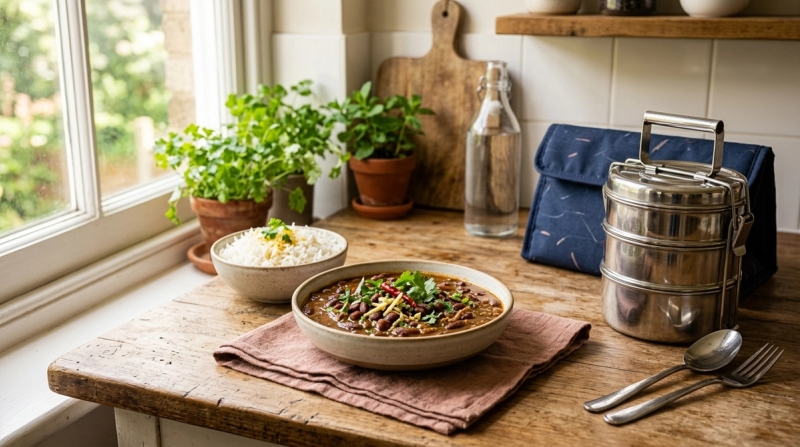
Rajma has a way of feeling “safe” just because it is home food.
You make a big pot, everyone eats lunch, and the rest stays on the stove for dinner. Maybe there’s enough for tomorrow’s tiffin too. In many Indian homes, that is completely normal.
But summer changes the rules.
When the kitchen is hot, the fan is only moving warm air around, and the rajma is sitting in a deep vessel for hours, it is no longer just a harmless leftover. It becomes a food safety issue.
So if you are wondering, can rajma stay outside in summer, the honest answer is: not for long.
Rajma, or kidney bean curry, is moist, protein-rich, and usually cooked with onion, tomato, spices, and oil or ghee. That is exactly why it tastes so good with rice. But the same things also make it more likely to spoil if it is kept out too long, especially in hot weather.
This is not a rajma recipe. This is a practical guide for everyday life: home lunches, office dabbas, school tiffins, hostel food, train journeys, road trips, and leftover rajma sitting in the kitchen “for later.”
Quick answer
#If cooked rajma is kept outside the fridge in summer, follow these basic rules:
- At room temperature: Keep it out for no more than 2 hours.
- In very hot Indian summer weather: Try to eat it or refrigerate it even sooner, ideally within 1 hour, especially if the room, kitchen, classroom, office desk, car, or train compartment is warm.
- In the fridge: Properly stored rajma usually lasts around 3 to 4 days.
- In the freezer: Rajma can be frozen for around 2 to 3 months if packed well.
If cooked rajma has been outside for more than 2 hours in summer, especially in a hot kitchen or non-AC room, the safest choice is to throw it away.
Yes, that feels wasteful. Nobody likes throwing away rajma, especially when it still looks fine. But food does not always give clear warning signs before it becomes unsafe. Smell, taste, and appearance can help, but they are not perfect safety tests.
Here is the short version:
Why rajma becomes risky in summer
#Rajma is not like khakhra, roasted chana, dry thepla, namkeen, biscuits, or other low-moisture snacks.
It has cooked beans, water, gravy, protein, onion, tomato, and masala. All of that makes it comforting and filling, but it also means bacteria can grow if the food sits warm for too long.
The real problem is time plus temperature.
Cooked food becomes risky when it stays too long at warm room temperature. And in Indian summer, “room temperature” can mean many things:
- A hot kitchen after lunch
- A steel dabba inside a school bag
- A lunchbox in a non-AC office drawer
- Food kept near a sunny window
- Rajma carried in a bus, train, or car
- A deep pot left on the stove for hours
Rajma is thick, so it also cools slowly. The top may feel normal when you touch it, but the middle of the pot can stay warm for a long time. That warm, moist center is exactly where trouble can start.
This is why leaving a full pot of rajma on the stove from lunch until dinner is not a good idea in summer.
The gravy also matters. Watery rajma spreads moisture into rice when packed together. By lunchtime, mixed rajma chawal can become soggy, dense, and warm. That is not ideal for summer tiffin.
Thicker rajma is better for packing because it leaks less and keeps its texture better. But thick rajma is still perishable. It does not become safe for unlimited hours just because it is less watery.
Rice brings its own risk too. Rajma chawal is wonderful, but cooked rice is also a perishable food. When hot rajma is poured over rice and sealed in a lunchbox for hours, the whole thing becomes warm, wet, and heavy.
If you already follow safety rules for dal, think of rajma in a similar way. You may also find this related AllBlogs guide useful: how long cooked dal can stay outside in summer.
Tiffin rules for rajma
#Rajma in a tiffin is all about timing.
A lunchbox packed at 7:30 AM and eaten at 1:30 PM has been sitting for about six hours. That is very different from eating rajma at home half an hour after cooking.
So, can you pack rajma chawal for school, college, or office in summer?
Yes, but don’t treat it casually. Rajma is a perishable food. It needs some planning.
1. Don’t close the box while the food is steaming hot
#This is a very common habit: fill the dabba straight from the pan, shut the lid, and send it off.
But when you close hot rajma or rice immediately, steam gets trapped inside. That steam turns into water, drips back into the food, makes the rice soggy, and keeps the lunchbox humid.
Let the rajma and rice stop steaming before closing the lid.
But don’t leave it out for hours in the name of cooling. The idea is simple: cool briefly, pack properly, and avoid long sitting time.
For leftovers at home, use shallow containers so the rajma cools faster before going into the fridge. For tiffin, try to pack freshly made food, not rajma that has already been sitting around for a long time.
2. Keep rajma and rice separate
#If you are packing rajma chawal, separate compartments are much better than mixing everything in the morning.
When rice and rajma are mixed too early, the rice absorbs the gravy. By lunch, it can become soggy and heavy. In summer, it is also more worrying because both rice and rajma are moist cooked foods.
Use:
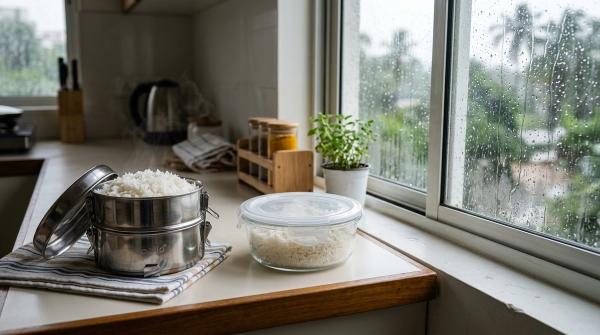
- A two-tier steel tiffin
- A divided lunchbox
- Two small containers
- A food jar for rajma and a separate box for rice
Mix them only when it is time to eat.
This also makes it easier to notice if something is off. If the rajma smells sour or strange, you are more likely to catch it before eating.
3. Think honestly about the commute
#Not all tiffin situations are the same.
These two lunches are very different:
- Rajma packed at 8 AM, carried in an AC car or metro, kept in an AC office, and eaten by 12:30 or 1 PM.
- Rajma packed at 7 AM, carried in a non-AC bus, kept in a school bag or hot locker, and eaten after 1:30 PM.
The second one is much riskier.
AC does not make food magically safe, but it does help keep the surrounding temperature lower. Non-AC travel, hot classrooms, outdoor work, factory floors, and long commutes make rajma harder to manage.
For more summer lunch packing ideas, see this AllBlogs office guide: office lunch in Indian heat.
4. Use insulation properly
#If you are packing rajma hot, use a proper insulated food jar or insulated tiffin designed to keep food hot.
If you are packing it cold, use an insulated lunch bag with an ice pack.
Try to avoid the middle zone where the rajma is neither properly hot nor properly cold for several hours.
A regular thin steel dabba in a cloth bag may be fine for a short trip, but it does not offer much protection in peak summer, especially if lunch is late.
5. Pack thicker rajma for tiffin
#For tiffin, thick rajma is better than watery rajma.
It leaks less, keeps the rice from getting soggy too fast, and is easier to eat neatly. It also holds its texture better.
But remember: thick does not mean shelf-stable. Rajma is still cooked, moist food. It still needs careful handling.
6. Be extra careful with children’s tiffin
#Children may not notice a slightly sour smell or odd texture. They may also be in a hurry during lunch break and eat without thinking much.
School tiffins often sit in warm conditions for hours: in buses, bags, classrooms, corridors, or playground areas.
If you are packing rajma for school in summer:
- Keep rajma and rice separate.
- Use an insulated lunchbox if possible.
- Avoid watery gravy.
- Pack a reasonable portion, not a huge box.
- Prefer rajma on days when lunch is early.
- Skip rajma if the school is very hot and lunch is late.
Sometimes the safer choice is a drier tiffin item for very hot days.
Fridge and reheating rules
#Rajma leftover safety does not start in the fridge. It starts before that.
The question is not only, “How many days can rajma stay in the fridge?”
It is also, “How long was the rajma sitting outside before it went into the fridge?”
Cool leftovers quickly
#After lunch or dinner, don’t leave the full pot of rajma on the stove for the rest of the day.
Do this instead:
- Transfer leftover rajma into smaller, shallow containers.
- Let the steam reduce for a short time.
- Cover the containers properly.
- Refrigerate as soon as possible, preferably well before 2 hours in hot weather.
A deep vessel cools slowly. A shallow container helps the heat escape faster. This is especially useful for thick rajma because the center can stay warm for quite a while.
You also don’t want to put a huge boiling hot pot directly into the fridge because it can warm up the other food inside. The better method is to divide the rajma, cool it briefly, and refrigerate it quickly.
Store rajma in clean airtight containers
#Use clean, dry, airtight containers.
Avoid keeping rajma in the cooking pot with just a loose plate on top, unless it is only for a very short time before serving.
Airtight containers help in three ways:
- They reduce contamination.
- They keep fridge smells away.
- They stop the top layer of rajma from drying out.
How long rajma lasts in the fridge
#Properly refrigerated rajma usually lasts around 3 to 4 days.
That assumes:
- It was refrigerated within the safe time.
- The fridge is cold enough.
- The container is clean and closed.
- The rajma has not been reheated and cooled again and again.
- There are no spoilage signs.
If rajma sat outside for many hours before going into the fridge, refrigeration does not reset the clock. The fridge can slow spoilage, but it cannot make badly handled food safe again.
Freezing rajma
#If you have cooked too much rajma, freezing is a better option than keeping it in the fridge and hoping someone finishes it in time.
Freeze rajma in meal-sized portions. Do not freeze it mixed with rice. Rajma freezes better on its own, and it is easier to thaw and reheat only what you need.
Frozen rajma is best used within 2 to 3 months for good quality.
Label the container with the date if you might forget. Most of us think we’ll remember, and then we absolutely don’t.
When possible, thaw frozen rajma in the fridge. Avoid leaving it on the kitchen counter for hours in summer.
Reheat only what you need
#Repeated reheating is a common leftover mistake.
If you have a big container of rajma in the fridge, don’t heat the whole thing every time. Take out the portion you need, reheat that, and keep the rest cold.
Reheat rajma until it is steaming hot throughout. Stir it well, especially if you are using a microwave, because thick gravy heats unevenly. Some parts may be hot while others are still cold.
If reheated rajma smells sour, looks fizzy, or tastes strange, don’t try to “fix” it by boiling it longer. Throw it away.
Signs that rajma has spoiled
#Rajma can spoil before it looks obviously bad. Sometimes the signs are clear. Sometimes they are subtle.
In summer, if you are unsure, it is better to be cautious.
Throw away rajma if you notice any of these signs.
Sour or fermented smell
#Fresh rajma should smell like cooked beans, spices, tomato, onion, and ghee or oil.
Spoiled rajma may smell sour, fermented, sharp, stale, or just unpleasant.
If you open the container and immediately feel something is wrong, trust that reaction. Don’t eat it.
Bubbles or froth
#Tiny bubbles, foam, or a fizzy look can be a sign of fermentation.
This is especially concerning if the rajma was not freshly boiled or recently stirred.
Do not taste it to check.
Slimy texture
#Rajma beans should be soft, not slimy.
If the beans feel unusually slippery, or the gravy looks stringy, sticky, or odd, discard it.
Mold
#Any visible mold means the whole container should be thrown away.
White, green, black, fuzzy — it does not matter.
Do not scoop off the top and eat the rest. Rajma is a wet food, and mold or spoilage may not be limited to the visible area.
Strange taste
#If the rajma looked okay but the first small taste is sour, bitter, fizzy, or just wrong, stop eating.
Spit it out and throw the food away.
Important: do not taste food that already smells bad. A bad smell is enough reason to discard it.
Safety checklist
#Use this quick checklist when you are confused about what to do.
Rajma left outside after lunch
#Ask yourself:
- Has it been outside for less than 2 hours?
- Was the kitchen reasonably cool?
- Was the rajma covered and untouched?
- Does it smell normal?
If yes, transfer it to shallow containers and refrigerate it quickly.
If it has been outside for more than 2 hours in summer, especially in a hot kitchen, it is safer to throw it away.
Rajma left outside overnight
#Throw it away.
Even if it looks normal. Even if it smells okay.
Cooked rajma left outside overnight in summer is not safe. Reheating does not reliably make it safe again.
Rajma packed for office
#Best case:
- Packed fresh in the morning
- Rajma and rice kept separate
- Carried in an insulated bag
- Kept in an AC office or fridge
- Eaten by lunchtime
Higher risk:
- Long non-AC commute
- Warm desk or locker
- Watery gravy
- Mixed rajma chawal packed for many hours
- Late lunch
If your office has a fridge, use it. If there is a microwave, refrigerate the rajma and reheat it properly before eating.
Rajma packed for school
#Be careful with school tiffins. They often stay warmer than parents realize.
Rajma can be packed more safely if lunch is early, the tiffin is insulated, and rice is packed separately.
But if lunch is late, the classroom is hot, and the box sits in a school bag for many hours, choose a safer option.
Rajma on a train or road trip
#Rajma is not the best long-duration summer travel food unless you can keep it properly hot or properly cold.
For trains and road trips:
- Eat rajma early in the journey.
- Do not carry it overnight in a regular dabba.
- Avoid keeping it in a hot car for hours.
- Do not rely only on smell after long warm storage.
- If you cannot manage proper insulation or cooling, choose a less perishable food.
A parked car can heat food very quickly. A non-AC train compartment in summer is also not a good place for wet cooked curries.
Practical examples
#Sometimes the rules are easier to understand with real-life situations.
Example 1: Rajma cooked at 11 AM, lunch at 1 PM, leftovers still on the stove at 5 PM
#This is too long in summer.
The safer choice is to discard the leftovers.
Next time, move leftover rajma into shallow containers after lunch and refrigerate it before the 2-hour window closes.
Example 2: Rajma cooked at night, left outside to “cool,” found in the morning
#Throw it away.
Cooked rajma left outside overnight in summer is unsafe, even if it looks normal.
Example 3: Rajma packed at 8 AM, eaten at 12:30 PM in an AC office
#This is more manageable, especially if the food was packed well, kept away from heat, and eaten by lunchtime.
Still, using the office fridge is better if available.
Example 4: Rajma chawal mixed in one box at 7 AM, eaten by a child at 2 PM in a hot classroom
#This is risky.
For school, keep rice and rajma separate, use insulation, avoid watery gravy, and consider skipping rajma on very hot days.
Example 5: Leftover rajma refrigerated properly and eaten after 2 days
#This is usually fine if the rajma was cooled and stored properly, smells normal, shows no spoilage signs, and is reheated thoroughly.
Final takeaway
#So, can rajma stay outside in summer?
Only for a short time.
Treat cooked rajma outside the fridge as a time-sensitive food. Refrigerate it within 2 hours, and sooner if the weather is very hot. Do not keep it out overnight.
For tiffin, pack it carefully. Keep rice separate, avoid watery gravy, use insulation when possible, and be realistic about Indian summer commutes, classrooms, offices, trains, and road trips.
Rajma is too good to waste, but it is not worth getting sick over.
If the time, temperature, smell, or storage history feels doubtful, the safest answer is simple: throw it away.