
When the rain hits Ahmedabad, the snack map changes completely
#There’s a very particular smell Ahmedabad gets when the first proper monsoon shower lands. Dust, wet stone, scooter exhaust, frying oil, coriander, and that faint sweet smell from a jalebi counter somewhere you can’t even see yet. I know that sounds dramatic, but honestly, if you’ve walked through the old city after rain, you get it. The lanes around Manek Chowk and Teen Darwaza feel like they’ve been washed just enough to sparkle, but not enough to stop being chaotic. Which is basically Ahmedabad in one sentence.
I went back during the rains with one very unserious mission: eat the big rainy snack trio I keep craving when I’m not in Gujarat — fafda, khaman, and khichu — without doing that classic traveller thing where you get overexcited, eat from six stalls in two hours, drink mystery water, and then spend the next day negotiating with your stomach. Been there. Not cute.
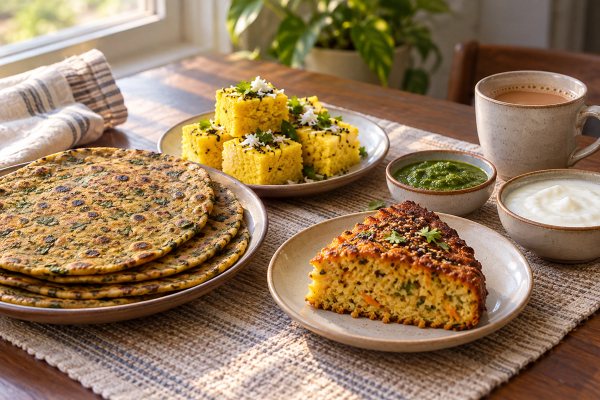
Ahmedabad is already famous for snacks, obviously. Fafda-jalebi in the morning, khaman at tea time, bhajiya when clouds gather, khichu from a steamy cart when the evening turns sticky and damp. But in the monsoon, everything feels more urgent. You want hot food. Vendors are moving fast. People are standing under shop awnings, holding paper plates, eating with that quiet focus only Indians have when the snack is genuinely good. Nobody’s pretending to be fancy. It’s beautiful.
A wet morning in the old city: fafda, jalebi, and the sound of rain on tin roofs
#My first rainy breakfast was near the old city side, where the morning crowd was already buzzing even though the sky looked like it hadn’t fully woken up. I had this plan to be sensible — one plate of fafda, maybe tea, walk around the pols, take photos, very balanced traveller behavior. Then I saw hot jalebi coming out of the kadai and, well, my discipline left the chat.
Fafda is one of those foods that looks simple until you actually pay attention. Thin strips made from gram flour dough, stretched and fried till they’re crisp but not hard, served with fried green chillies, raw papaya sambharo, and chutney. Good fafda has a snap to it, but it also kind of melts in your mouth. Bad fafda tastes like old oil and regret. Sorry, but true.
The vendor handed me a plate and I stood under a blue tarpaulin with three office guys, one uncle in a spotless white shirt, and a college kid who was eating jalebi like it was a competitive sport. Rain was dripping behind us. A scooter splashed through a puddle. Someone shouted for extra kadhi. That first bite — salty, crunchy, with the sweet jalebi next to it — was exactly why I travel for food. Not because it’s rare or expensive, but because it belongs so completely to that place and that morning.
How I judge fafda in the rain, because apparently I’m that person now
#I’m not a professional food critic, and honestly I don’t want to be one of those people who says “mouthfeel” every 20 seconds. But after eating fafda in Ahmedabad a few times, I do have a tiny checklist in my head. Freshness matters so much in rainy weather. If the fafda is sitting in a giant pile looking sad and bendy, I move on. If the oil smells heavy, burnt, or weirdly sweet, also no. I want to see movement — people buying, fresh batches coming out, the person frying not looking like the oil has been there since last Tuesday.
- I like fafda that’s fried in small-ish batches, not mountains made too far in advance.
- The papaya sambharo should look fresh, not watery or dull. In monsoon, watery sides make me nervous.
- Chutney is where I’m cautious. If it’s sitting uncovered with rain splashes and flies doing tourism, I skip it.
- Hot tea with fafda is underrated. Actually, hot tea with anything in Ahmedabad is usually a good idea.
This is the same rule I use in other rainy food walks too: fried snacks are safest and best when they’re hot, fast-moving, and eaten immediately. I wrote down similar notes after a Rajasthan trip, and if you’re comparing rainy fried-snack moods, this Jaipur Pyaaz Kachori in Monsoon: Food Walk Guide has that same “watch the oil, pace yourself, don’t drown in chutney” vibe.
Khaman is not just dhokla’s cousin, okay?
#Let me say this before somebody’s Gujarati auntie corrects me: khaman and dhokla are not the exact same thing. People outside Gujarat mix them up all the time. I did too years ago, and then I got politely educated by a shopkeeper who looked personally hurt. Khaman is usually made from gram flour, softer and more spongey, bright yellow, sweet-sour-spicy in that Gujarati way where one bite is doing five jobs. Dhokla can be made from rice-lentil batter and has a different texture. There are variations, of course, because India refuses to keep anything simple.
In Ahmedabad, khaman is everywhere. Some places do it fluffy and gentle, some drench it in tempered oil with mustard seeds, curry leaves, green chillies, and coriander till it shines like it’s ready for a wedding. I stopped at a well-known khaman shop one rainy afternoon after walking near Relief Road, partly because I was hungry and partly because the rain had turned from romantic drizzle into full-on slap-your-face weather. The kind where your jeans stick to your legs and you start questioning all your travel choices.
The khaman came warm, not piping hot, with sev on top and a chutney packet on the side. I took one bite and immediately forgave the weather. It was soft enough to collapse under the spoon, a little sweet, a little tangy, and the chilli hit late. That late chilli is dangerous. You think you’re fine and then suddenly you’re reaching for tea like it’s emergency medicine.
My khaman hygiene rule is boring but it works
#I know hygiene talk can make a food blog feel like a school notice board, but rainy season eating needs some boring wisdom. Ahmedabad’s monsoon is not Himalayan cold-rain romantic. It’s humid, splashy, crowded, and food can go from fresh to questionable quicker than you expect. So with khaman, I look for turnover. If a tray is half-empty and people are constantly buying, good sign. If the shop is cutting fresh pieces and tempering often, even better.
I’m more careful with green chutney than with the khaman itself. Fresh coriander-mint chutney is lovely, but it often has water, and in travel stomach terms, water is the mysterious villain in the movie. If the chutney is refrigerated, covered, served in small batches, or the place is clearly busy and clean, I’ll have it. If it’s in an open steel bucket with spoon marks from 400 strangers, I just... don’t. You can still enjoy the snack without proving bravery to nobody.
Rain makes snacks taste better, but it also makes you notice which stalls are truly clean and which ones are just surviving on good smell and crowd pressure.
Khichu: the steamy little comfort food I didn’t expect to love so much
#Khichu was my quiet winner this trip. Fafda is the celebrity, khaman is the reliable friend, but khichu is the thing I wanted again the next evening. It’s basically a soft, steamed rice flour dough, usually seasoned with cumin, ajwain or green chilli depending on the vendor, then served hot with oil and red chilli powder. It looks humble. Almost too humble. Like, if you don’t know it, you might walk past thinking it’s baby food. Big mistake.
I had my best bowl near a busy evening snack stretch, standing beside a cart while rainwater ran along the edge of the road in a skinny brown stream. The vendor lifted the lid and steam hit my glasses so badly I couldn’t see for a second. He scooped the khichu into a leaf-style bowl, added oil, sprinkled chilli, and handed it over with a wooden spoon. It was hot enough to demand respect.
The first spoonful was soft, warm, slightly sticky, and deeply comforting. Not fancy. Not Instagram-pretty unless you really try. But it felt like something made for wet evenings when your feet are tired and you want food that hugs you from inside. I know that sounds cheesy. I’m keeping it.
Why khichu feels safer than half the things I crave
#From a traveller’s hygiene point of view, khichu has one big advantage: it’s usually served steaming hot. Heat doesn’t solve every problem, no no, but hot freshly cooked food is generally a better bet than cold sauces, cut fruit, or snacks that have been sitting out in damp air. I still watch the basics though. Is the vessel covered? Is the spoon clean? Is the vendor handling cash and food with the same hand without even pretending? Is the water source looking okay? You learn to scan these things without being rude about it.
One small tip: don’t go wild with the chilli oil if you’ve been eating all day. I say this as someone who went wild with the chilli oil and then had to sit very quietly for 18 minutes on a bench near the riverfront, pretending to admire the view while my stomach filed a complaint.
Where I wandered between snacks, because Ahmedabad isn’t only eating
#Food trips work best when you walk enough to earn the next plate. Ahmedabad makes that easy if you’re not in a rush. The old city, with its pol houses, carved wooden balconies, Jain temples tucked into lanes, and sudden bursts of market noise, is a fantastic place to wander between snack stops. Ahmedabad was named India’s first UNESCO World Heritage City in 2017, and while that sounds like a travel brochure line, the old neighbourhoods really do feel layered in a way newer cities don’t.
I started one morning near Jama Masjid, walked through lanes where rainwater was dripping from old roofs, got distracted by brassware shops, then ended up at a snack counter because the smell of frying batter has more power over me than Google Maps. Later I did the Sabarmati Riverfront for a calmer stretch. The riverfront after rain is nice in a different way — open sky, families walking, chai vendors doing steady business, and that slightly cooler breeze that makes you think Ahmedabad is being kind, even if only for 40 minutes.
Manek Chowk is the obvious evening food stop, and yes, it’s touristy, crowded, loud, and sometimes overwhelming. But I still like it. The transformation from daytime jewellery market to night food zone is one of those urban magic tricks that Indian cities do so well. I wouldn’t go there expecting solitude or delicate dining. Go for the energy. Go with patience. And maybe don’t eat every single cheese-loaded thing you see unless you have the digestion of a teenage cricket player.
A small rainy food route I actually enjoyed
#- Start with old city wandering in the morning, then fafda-jalebi while it’s still fresh and busy.
- Do a heritage walk or your own slow walk through pol lanes, but wear shoes that can handle puddles. Pretty sandals are a trap.
- Have khaman around late afternoon with tea, preferably from a shop with steady local crowd and covered counters.
- Save khichu or bhajiya for evening, when the rain cools the air a bit and hot snacks feel basically necessary.
- If you go to Manek Chowk, pace yourself. One snack, walk, another snack. Not six things while standing in one place like me on my worst behavior.
For anyone planning a wider Gujarat monsoon trip, the same stomach logic travels with you. Hot snacks, safe water, and not acting like your body is a dustbin. I found the mountain-town version of this mindset useful in the Saputara Monsoon Food Guide: Eat Safely, especially because rainy weather can make even simple food decisions feel weirdly complicated.
The hygiene talk: not glamorous, very necessary
#Okay, let’s talk properly about hygiene because this is where people get either too scared or too careless. I don’t believe in avoiding street food. That would be like going to Ahmedabad and refusing to look at architecture. What’s the point? But I also don’t believe in the “my stomach is strong bro” attitude. Your stomach may be strong at home. Travel is different. Rain is different. Sleep, heat, water, spice, random eating hours — all of it adds up.
My rule is not “eat only in fancy places.” Some fancy places have sad food, and some tiny stalls are cleaner than restaurants with laminated menus. I watch behavior. Are they covering food when rain blows sideways? Are plates being handled properly? Are the chutneys in small containers or one giant open tub? Is there a handwashing setup or at least some basic separation between cash and food? Does the oil look like it’s been reborn too many times? You can tell a lot in 30 seconds if you actually look.
My monsoon snack safety checklist, the real one
#- Eat hot. Fafda straight from the fryer, khichu steaming, bhajiya fresh. Warm-ish is okay for khaman if turnover is high, but cold damp snacks are not my thing.
- Be careful with chutneys, cut onions, raw salads, and anything watery. I love them, but I don’t trust everyone with them.
- Carry your own water bottle, or buy sealed water from a shop with decent turnover. Don’t be shy about this.
- Avoid ice in random drinks during the rains unless you really trust the place. I know cold chaas is tempting, I know.
- Watch the queue. A busy local crowd usually means fresh food, but crowd alone doesn’t equal clean. Look at the counter too.
- If your stomach feels off, stop. Don’t “push through” for one more snack. That one more snack is how travel stories become toilet stories.
For night markets especially, I like having a mental checklist before I get dazzled by lights and sizzling pans. This Night Market Food Safety: Traveler’s Hot-Food Checklist matches a lot of what I do at places like Manek Chowk — hot food, queues, sauces, ice, stall hygiene, all the unsexy stuff that saves your trip.
Restaurants, old shops, carts — I love them differently
#Ahmedabad’s snack personality isn’t locked into one kind of place. You’ve got older restaurants and sweet shops that people recommend with the seriousness of family inheritance. You’ve got legendary-style breakfast spots where fafda-jalebi is practically a ritual. You’ve got khaman counters doing takeaway parcels at crazy speed. You’ve got carts selling khichu, corn, bhutta, bhajiya, and tea to office workers, students, families, and random hungry wanderers like me.
I like mixing it up. A known shop is good when you want reliability, especially in the rain. There’s comfort in tiled floors, covered counters, and staff who’ve handled morning rush for years. But carts have their own charm. You stand there, you watch your food being made, you chat a little, you get the weather report, traffic complaint, and snack recommendation all in one. One khichu vendor told me, very firmly, that I should not eat pani puri in heavy rain from “just anywhere.” He said it like a doctor giving a diagnosis. I listened.
Also, Ahmedabad portions can sneak up on you. Fafda looks light because it’s thin. Khaman feels airy because it’s spongey. Khichu seems small because it sits in a bowl looking innocent. Then suddenly you’ve eaten enough gram flour and rice flour to build a small house. Walk. Drink water. Take breaks. Travel eating is a marathon, not a reel.
What rain does to flavor, and why I’m obsessed with this city in monsoon
#Rain changes how you taste things. I swear it does. Crisp fafda tastes louder when the air is damp. Khaman feels brighter when you’re tired from dodging puddles. Khichu tastes softer, warmer, more necessary. Even tea becomes more than tea. It becomes a tiny reset button.
Ahmedabad in summer can be brutal, and winter is probably more comfortable for serious sightseeing. I won’t pretend monsoon is the easiest season. Roads flood in spots, traffic gets messy, humidity does bad things to hair, and your shoes may never fully forgive you. But for snack travel? Monsoon has drama. The city feels hungry. Every covered stall becomes a little theatre. People gather, complain about rain, order more food, laugh, shift sideways when water drips from the awning. It’s not polished. That’s why I like it.
One evening, after too much khaman and not enough planning, I got caught in a sudden shower near Law Garden. I ducked under a shopfront with strangers and we all stood there watching the road turn shiny black. A boy next to me was eating roasted corn with lime and masala, and the smell was so good I bought one too even though I was full. Was it part of the original snack mission? No. Was it necessary? Emotionally, yes.
If I had only one rainy snack day in Ahmedabad
#If a friend asked me how to do one rainy snack day in Ahmedabad without getting exhausted, I’d keep it simple. Start early. Eat fafda-jalebi when the city is waking up and the oil is fresh. Walk the old city slowly, don’t rush from landmark to landmark like you’re collecting stamps. Have tea often. In the afternoon, find good khaman and sit down if you can, because standing and eating all day gets old after 30, ask me how I know. Then save the evening for khichu or a hot bhajiya plate, somewhere busy and covered, with steam rising and rain doing background music.
Skip anything that makes you hesitate. That’s my biggest advice. If a stall smells off, if water is pooling near the food, if chutney looks tired, if your stomach says “friend, please,” just move on. Ahmedabad has no shortage of snacks. You are not missing your only chance at happiness.
And please don’t make the whole trip about famous names only. Ask your auto driver. Ask the hotel staff where they eat, not where tourists go. Ask the aunty buying two kilos of farsan for home. Gujarati people have opinions about snacks, strong ones, and they’ll often send you somewhere better than your search results. Sometimes they’ll also disagree with each other immediately, which is half the fun.
Final bites before the rain stops
#Ahmedabad’s rainy snacks are not just food items on a checklist. Fafda is morning confidence, crisp and salty with jalebi sweetness crashing into it. Khaman is afternoon comfort, soft and bright, the kind of thing you keep eating because each piece feels too small to count. Khichu is evening warmth, plain-looking but weirdly addictive, especially when the air smells of wet roads and frying chillies.
The hygiene part doesn’t ruin the romance for me. It actually makes the food walk better, because you slow down and notice things — the fresh batch, the covered pot, the vendor wiping the counter, the crowd that knows exactly when to arrive. Eating well while travelling isn’t about being fearless. It’s about being curious and just cautious enough to keep going the next day.
So yes, go to Ahmedabad in the rain if you love snacks. Carry an umbrella you’ll probably forget somewhere, wear shoes that don’t mind puddles, eat hot, respect chutney danger, and leave room for one unplanned plate. That’s usually where the best memory hides. And if you’re collecting more food-travel ideas around India, I keep finding nice rabbit holes on AllBlogs.in — the kind that make you hungry before you’ve even booked the ticket.