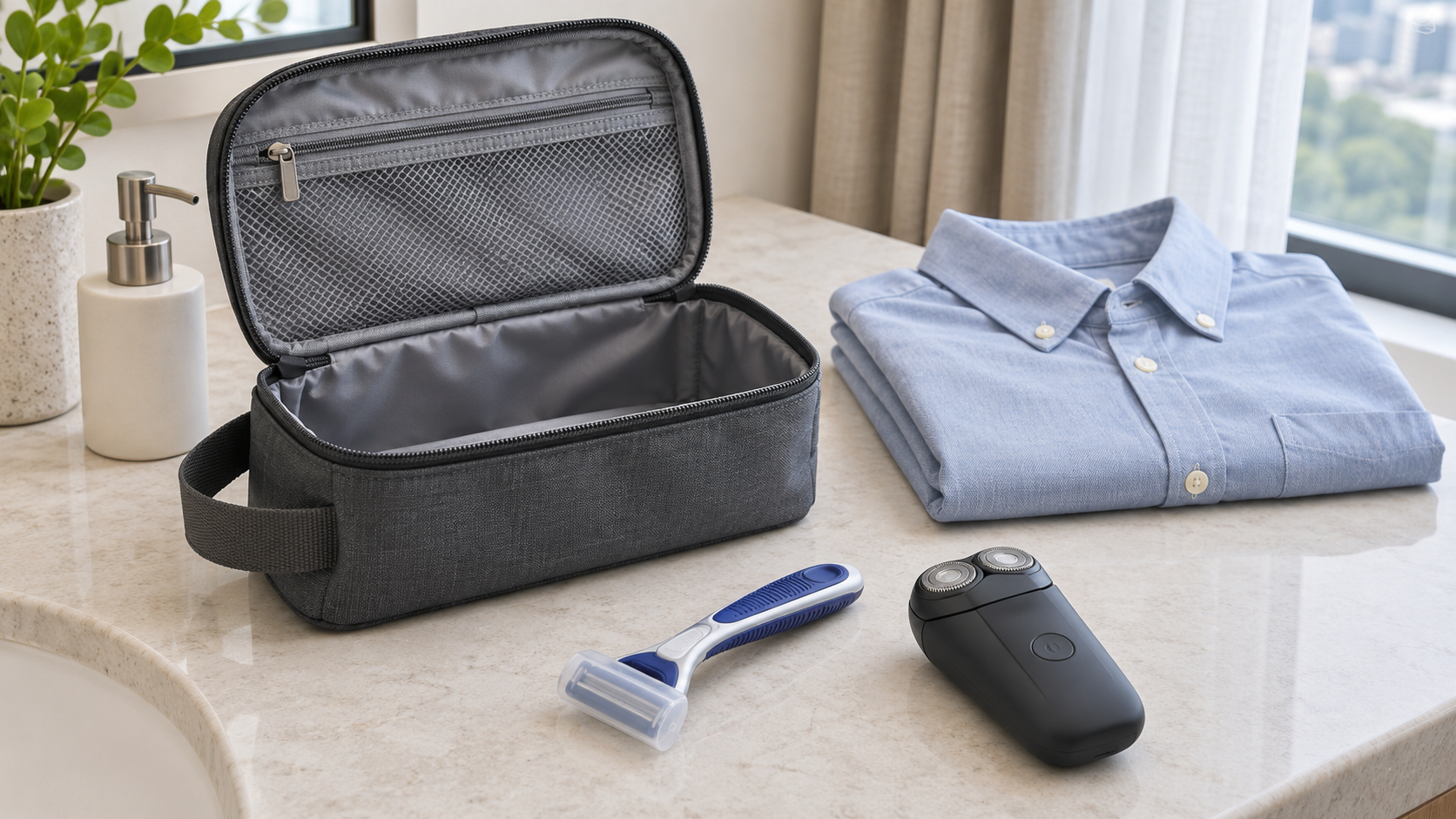
A disposable razor with the blades fixed in its head is usually the easiest option for carry-on. For a US departure, TSA distinguishes disposable razors and enclosed cartridges from loose blades. UK guidance allows fixed-cartridge disposable razors in hand luggage. If you use a double-edge safety razor, check the handle and the blades as separate items before you pack.
Start with the razor on your bathroom shelf. Does the entire plastic head come off in one piece? Do you take an individual metal blade out of the handle? Or does a motor do the shaving behind a foil or rotary guard? That quick look tells you which rule to check.
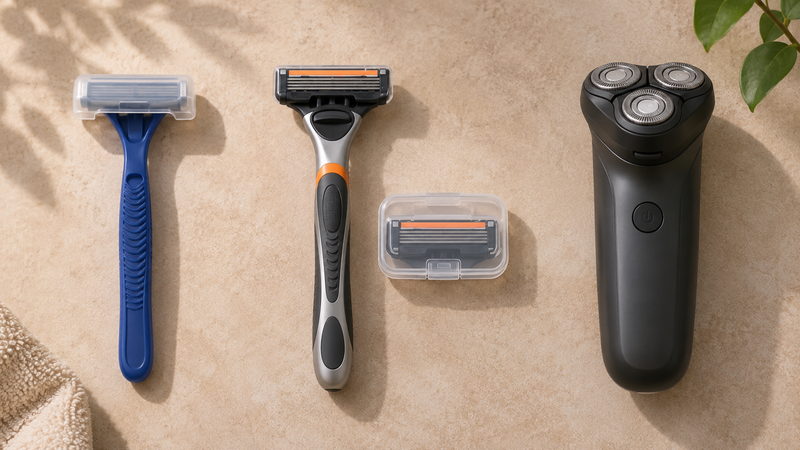
Match the razor you own to the right type
#The names don’t help as much as you’d think. A replaceable cartridge has blades fixed into the cartridge itself. A safety razor usually opens so you can remove a separate blade. Both let you replace something, but only one leaves you holding an individual blade.
| What you have | What to check before packing it |
|---|---|
| One-piece disposable razor | Check the departure rules for a disposable razor with blades fixed in its head. |
| Cartridge razor or spare enclosed cartridge | Check the rules for complete cartridges, including spares. Keep the blades in their original housing. |
| Double-edge safety razor | Check the empty handle rule separately. Plan for loose blades to stay out of hand luggage. |
| Straight razor or replaceable-blade shavette | The edge is exposed in use. Check permitted hold-bag options or leave it at home. |
| Electric foil or rotary shaver | Check the installed battery, any spares and the airline’s device rules. |
Consider the spare refills in your bag too. A plastic cartridge pack and a little box of double-edge blades can both look like shaving supplies on your packing list. They represent different items at screening.
What to pack for a US departure
#TSA’s published prohibited-items list singles out razor-type blades, including those for non-disposable safety razors. It excludes disposable safety razors and disposable razor blade cartridges from that prohibition. For a carry-on trip, look for the familiar disposable or enclosed cartridge type, with the blades still fixed in the head.
TSA’s item guidance lists a safety razor handle without its blade as a separate case. If you want to take that handle, remove the blade at home and check the current TSA item listing before you leave. Leave the loose blades at home for a cabin-only trip or pack them in checked luggage where allowed and safely secured against injury. The officer at screening makes the final decision.
The label “safety razor” can cause confusion here. In a shop it often means the heavy metal handle that takes a flat, individually replaceable blade. The TSA reference to disposable safety razors covers a different design. When searching the rules, look up the specific item name and check that its description matches the one you own.
If you plan to carry a straight razor, check the carrier and departure authority’s rules for the checked bag. Keep any permitted sharp edge secured so it can’t injure a person handling the bag. If you only have a cabin bag, take a confirmed permitted type or plan to get shaving supplies at your destination.
What changes for a UK departure?
#UK government guidance lists fixed-cartridge razor blades, such as the ones in a disposable razor, as allowed in hand luggage and hold luggage. Gatwick’s own security guide also lists permanently enclosed razors and razor cartridges for hand luggage. The wording gives you a useful check at home. Look at how the blades sit inside the cartridge, rather than whether you can swap the complete head.
For removable blades or a specialty handle, look up the departure airport’s current guidance and ask it about the exact model if the list is unclear. Keep a UK departure separate from the flight that got you there. If you fly from New York to London and back, check the US rules for the outward leg and the UK rules for the return. Your first screening decision won’t carry forward to a different departure.
A connection can add another check. When you need to go through security again at an intermediate airport, read that airport’s rules for the items you plan to keep in the cabin. The practical choice for a trip with several screenings is an item that you can verify for all of them.
Electric razors bring a battery question
#A regular foil or rotary shaver is a different packing problem from a loose blade. Check whether the shaver plugs into the wall, has a rechargeable battery installed or runs on removable cells. A charger for the shaver and a power bank you use to charge it are two different items too.
The US Federal Aviation Administration recommends keeping portable electronics with lithium batteries in carry-on baggage. Where you’re allowed to place such a device in a checked bag, follow the applicable rules to turn it off fully and protect it from damage and accidental activation. The FAA puts spare lithium batteries in carry-on only and requires protection against damage and short circuits. Check your carrier’s rules, especially when the device has an unusual battery or a separate battery pack.
If the airline checks your cabin bag at the gate, take spare lithium batteries and power banks out as required and keep them with you in the cabin. Tell the staff if your bag contains a battery-powered device and follow their instructions. A travel lock or a rigid case can prevent an accidental button press while the shaver’s in the bag.
Get the model and battery information from the device or its manual. If you have an old rechargeable trimmer that has swollen, overheated or been recalled, check the manufacturer and carrier guidance before you bring it. The fact that it used to fit in your travel bag doesn’t settle its condition today.
Pack the gel as a separate item
#A carry-on decision about a razor tells you little about the tube or aerosol next to it. Shaving gel, foam and liquid aftershave fall under the liquid or aerosol rules applicable at screening. Check the current limits for the airports where you’ll be screened and the airline’s conditions for aerosols. For a size-limited container, pay attention to the size printed on the package. A large tube with just enough gel for one shave can still count as a large container.
If the label is worn off, use a known-size container that meets your departure rules for that product or buy a suitable size. Keep aerosol caps in place. If you use a solid shaving soap, check the actual product form and carry it in a case that keeps the rest of your bag dry.
What I’d pack for three different trips
#A weekend with one small bag
#Imagine you need one shave and have no checked luggage. I’d start with a capped disposable or a cartridge razor whose enclosed blades meet the departure rules. Take only the shaving product you’ll use. If you’re leaving from one airport and flying back from another, look up both while you can still change what’s in the bag.
A longer trip with a favourite metal handle
#If you use a double-edge safety razor at home, decide where the blades will go before packing the handle. With a checked bag, verify that the blades are permitted there and keep them secured in protective packaging. For hand luggage only, confirm that an empty handle is allowed at each checkpoint or leave it behind. A replacement at the destination is worth considering if you know where you can get one.
A work trip with a rechargeable shaver
#Pack the shaver where you can take it out if asked. Check the travel lock and leave it switched off. If you’re taking a power bank, put it with the items you’ll keep in the cabin even if the larger bag is checked at the gate. It helps to keep the right charging lead with the shaver instead of bringing every cable in your desk drawer.
Check the rules in the order you’ll use them
#Start with the authority responsible for the checkpoint you’ll walk through. Search the item as specifically as you can. Match the description to what’s in your hand. Then check the airline for baggage conditions that affect batteries or aerosol products. Where you can’t get a clear answer for a less common design, choose a type that the departure guidance covers in plain language.
If your itinerary only shows the airline’s carry-on dimensions, you still have to check the contents. A razor of any kind takes up very little space, so weight and size tell you almost nothing about the decision. Likewise, a carry-on allowance for two bags won’t change the rule for the item itself.
You can do the checks while the toiletries are laid out. Put the razor in one spot, the spares in another and the cream or gel to the side. Read the battery label if it’s a powered shaver. If a departure line for your exact item is missing, contact the airport while you have time to decide. A clear photo of the intact product or manufacturer’s model name can help you describe it without using a broad term like “travel razor.”
If the item gets questioned at screening
#Tell the officer which kind of razor it is and follow their instructions. A cartridge may look familiar to you and still need a closer look. Having the spare cartridges in their protective holder makes the contents easier to identify. Keep any part the officer asks to inspect accessible.
If the item cannot go through, ask the officer what options are available at that airport. Whether you can return to check-in depends on the airport, the airline and the time left before departure. A bag you checked earlier might already be on its way. Decide how much time you can spend resolving the issue before boarding.
Before leaving home, take one more look at the whole kit. Check the head, spare refills, gel or foam and any batteries on their own. Once each piece matches the rules for the trip, zip the bag up and move on to the rest of your packing.