There is a very specific kind of hunger that hits before a long flight from India. Not normal hunger. Airport hunger. The sort that comes after you’ve wrestled with traffic on the way to Delhi T3, argued politely with a suitcase scale, removed your laptop twice because security wanted another look, and then suddenly you’re standing inside the terminal with three hours to kill and a boarding pass to somewhere far away. London, Singapore, Doha, New York, wherever. And that’s when the lounge starts calling. Not softly either. It calls like, come here, sit down, eat too much dal, drink bad coffee, and pretend you’re relaxed.
I’ve spent a slightly embarassing amount of time eating in Indian airport lounges before long flights. Delhi, Mumbai, Bengaluru, Hyderabad, Chennai, Kolkata, sometimes even Ahmedabad when connections got weird. I travel for food as much as for places, which means I notice the sambhar before I notice the sofa upholstery. And honestly, Indian airport lounge food has become its own little cuisine now. Not exactly restaurant food, not exactly hotel buffet, not home food either. It’s this in-between thing: comfort, convenience, nostalgia, spice control, and the strange emotional drama of leaving the country at midnight.
The First Rule: Don’t Judge a Lounge by the Sandwich Counter
#My first proper lounge meal before a long-haul flight was at Delhi’s Terminal 3, years ago, when I was flying to Frankfurt half-asleep and overexcited. I remember walking into the lounge thinking I’d just grab tea. Fifteen minutes later I had poha, idli, aloo paratha, curd, two types of chutney, and a gulab jamun sitting in front of me like I was training for a buffet marathon. Did I need all that before sitting in economy for nine hours? Obviously not. Did I eat it? Of course I did.
That’s the thing about Indian lounge food. It knows your weakness. Western lounges often do cheese cubes, crackers, sad salad, maybe soup if you’re lucky. Indian lounges go straight for emotional damage. Chole. Upma. Pav bhaji. Rajma rice. Masala dosa if the kitchen is feeling generous. Hot chai that tastes a little like the train station and a little like childhood. You tell yourself you’ll eat light because airplane food is coming later, but then someone brings out fresh pooris and suddenly all your wellness plans have left the building.
Delhi T3: Where I Learned That Dal Before a 14-Hour Flight Is Both Love and Risk
#Delhi’s Indira Gandhi International Airport, especially T3, is still one of the big lounge food battlegrounds in India. Between Encalm lounges, airline lounges, premium card access spaces, and the usual international departure chaos, there’s always something happening. Access rules keep changing, especially with credit card programs and lounge crowding, so I always tell people to check before they go. Don’t be that person loudly discovering at reception that your card stopped working last month. I have seen it. It’s painful theatre.
Food-wise, Delhi does North Indian comfort very well. The last time I passed through before a late-night international flight, the spread had dal makhani, jeera rice, paneer in a thick tomato gravy, some noodles, soup, salad, breads, and desserts. Standard, yes, but when the dal is hot and the roti hasn’t turned leathery, it works. I’m a sucker for dal makhani in airports, which is probably a bad life choice because heavy food before flying can sit in your stomach like checked baggage. Still, when it’s creamy and smoky and you’re watching planes blink outside the glass, it feels right.
- My Delhi lounge rule: eat the hot Indian items first, inspect the sandwiches suspiciously, and never underestimate the power of plain curd before a long flight.
Mumbai T2: Glam Terminal, Practical Food, and That Pre-Flight Sweet Tooth
#Mumbai’s Terminal 2 is probably the prettiest airport terminal in India if you ask me. The art wall, the dramatic lighting, the way everyone looks slightly more cinematic while dragging cabin bags. But food in the lounges can be hit or miss depending on time, crowd, and which lounge you land in. I’ve had really good misal-style breakfast flavors there, and I’ve also had pasta that tasted like it had given up on life. Both things can be true.
What Mumbai airport lounges often understand better than some others is snack mood. You’re not always looking for a full thali before a long flight. Sometimes you want something bready, spicy, small-ish. Pav bhaji, vada pav inspired bites, dhokla, poha, cutlets, little desserts. I once had a surprisingly decent sheera at a Mumbai lounge before flying to Singapore, and I still remember it because it was exactly the kind of soft, ghee-warm thing my body wanted at 5:30 in the morning. Not glamorous. Just correct.
The 2026-ish travel trend I keep noticing, at least across bigger Indian airports, is that lounges are trying to feel less like anonymous waiting rooms. More regional food, more live counters where possible, more millet options, more plant-based labels, better coffee machines, and QR-based ordering in some premium spaces. It’s not perfect. Sometimes the QR code doesn’t load and the coffee still tastes like office pantry coffee. But the intent is there. Indian travellers are more food aware now, and lounges know they can’t just put out cold bread pakora and call it luxury.
Bengaluru Airport and the Rise of the “Actually Nice” Lounge Meal
#Kempegowda International Airport in Bengaluru has changed so much that every time I go, I feel like I’ve missed three chapters. The newer terminal experience, the garden-like design, the local food branding around the airport, the whole thing feels more relaxed than the old rush-and-queue airport mood. Bengaluru is also one of the places where I’ve had lounge meals that felt lighter and more modern, not just buffet heaviness.
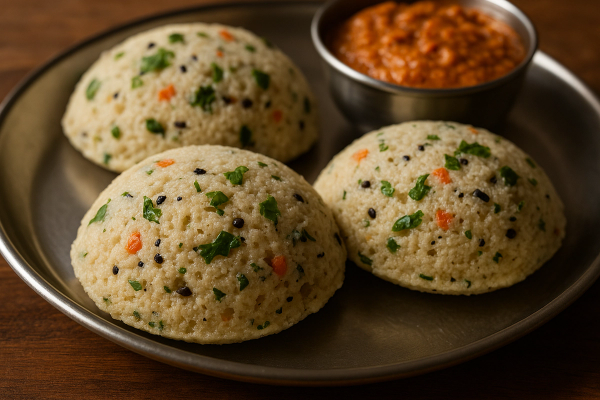
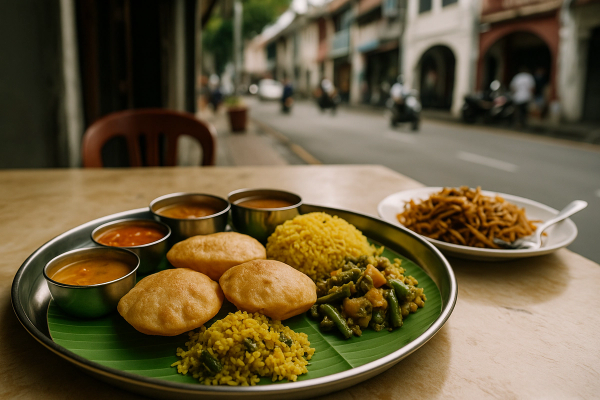
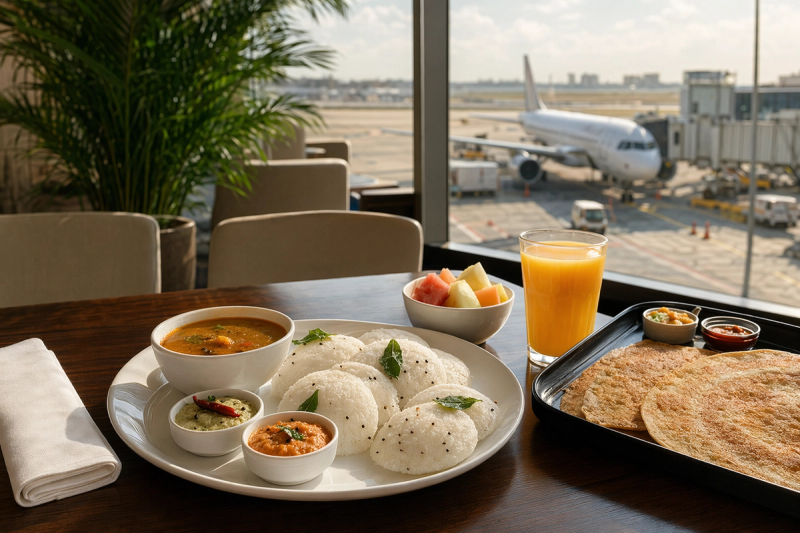
The 080 lounges at BLR have got a lot of attention over the last few years, and for good reason. The design feels more Bengaluru, less generic global airport beige. Food can vary, because lounges are living creatures and they have good days and bad days, but I’ve had crisp dosas, decent filter coffee, fresh fruit, and South Indian breakfast that didn’t taste like it had been punished under a heat lamp. That matters. A good idli before a long flight is basically a blessing. Soft, fermented, filling but not too aggressive. If I had to build the perfect pre-flight Indian plate, idli would be there, quietly doing important work.
My hot take: South Indian breakfast is the best long-flight lounge food in India. Idli, upma, pongal, sambhar, coconut chutney. It fills you up without making you feel like you swallowed a brick.
Hyderabad: Biryani Temptation and the Dangerous Joy of Overconfidence
#Hyderabad airport is where my self-control goes to die. Even if the lounge spread is simple, the city’s biryani energy somehow follows you into the terminal. Rajiv Gandhi International Airport is clean, efficient, and honestly one of the easier Indian airports for long-haul departures. But if there’s biryani or even a biryani-adjacent rice dish in the lounge, I become a fool.
I once ate a plate of chicken biryani in a Hyderabad lounge before a long connection toward Europe, then decided I needed just a little more raita, then just a small dessert, then coffee. This is not advice. This is a confession. The first two hours of the flight were fine, then I spent the next four negotiating with my own digestive system somewhere over the Arabian Sea. Indian spices are beautiful, but altitude and cabin pressure have opinions too.
Still, Hyderabad does spice with confidence. The better lounge spreads here tend to have rice dishes, dal, a chicken curry or paneer option, curd rice sometimes, and snacks that don’t feel completely random. Curd rice deserves special mention. It is humble, cooling, and honestly one of the smartest things you can eat before a flight. I used to ignore it because it looked too simple. Big mistake. Now, if I see curd rice before a red-eye, I take it as a sign from the travel gods.
What Indian Lounges Are Getting Right in 2026
#Food travel has changed. People are no longer treating airports as dead zones between real meals. Airports are becoming part of the trip, and in India this is especially interesting because our food culture is so regional. A traveller flying out of Chennai wants something different from someone leaving Amritsar or Guwahati. Even premium passengers don’t just want imported cheese and muffins anymore. They want good chai, proper regional breakfast, maybe a millet dosa, maybe a healthier bowl, maybe something their grandmother would recognise but plated a bit cleaner.
The big trends I’m seeing in Indian airport lounge food right now are pretty clear. Regional comfort food is winning. Millets are showing up more, partly because India has been pushing them hard in recent years and partly because travellers actually want lighter, high-fibre options. Plant-based and Jain-friendly labeling is getting better in many places, though not always consistent. Contactless access, app-based lounge discovery, and card-linked bookings through services like DreamFolks-style platforms have made lounge hopping more common, but also more crowded. And because overcrowding became such a mess at many Indian lounges, airports and card companies have been tightening access, adding limits, or nudging people toward paid upgrades.
- More regional dishes: pongal in the south, poha in the west, chole and paratha in the north, and rice-curd combos almost everywhere.
- Healthier corners: fruit, sprouts, millet snacks, infused water, soups that are sometimes good and sometimes just hot mystery.
- Better beverage expectations: travellers want real coffee, masala chai, fresh juices, and not just cola from a machine that sounds tired.
- Less patience for stale buffet food. People complain faster now, and honestly, good. We should.
The Best Things to Eat Before a Long Flight from an Indian Lounge
#After many flights, many mistakes, and one extremely regretful double helping of chole before a 16-hour itinerary, I have developed a personal strategy. It is not scientific, but it works for me. Eat warm food, but not too oily. Choose familiar flavours. Hydrate like a responsible adult even if you don’t feel like it. Avoid the dessert section unless something looks genuinely fresh. And please, please don’t eat everything just because it’s included. I say this as someone who still struggles.
- Start with something gentle: idli, upma, poha, pongal, curd rice, plain rice with dal, or soup if it looks trustworthy.
- Add protein carefully: paneer, eggs, grilled chicken, dal, chana in small portions. Not three curries plus biryani plus cake. That road is dark.
- Take curd or yogurt if available. It helps with spice, salt, and the general weirdness of long-haul travel.
- Keep sweets small. One gulab jamun is joy. Four gulab jamuns before boarding is a medical experiment.
I sound sensible here, but I’m not always. In Chennai once, before a flight to Kuala Lumpur, I found hot medu vadas in the lounge. Fresh-ish, crisp edges, coconut chutney, sambhar. I told myself one. Then another. Then half of one because it was broken and broken food doesn’t count. By the time I boarded, I was basically 40 percent vada. No regrets, actually. Some foods are worth bending the rules for.
Chennai, Kolkata, and the Smaller Joys People Don’t Talk About Enough
#Chennai airport lounges can be uneven, but when the South Indian breakfast is fresh, it beats many fancier spreads. A simple plate of pongal with pepper, ghee, cashews, and sambhar can calm the soul before an early morning international flight. Filter coffee, if decent, changes the whole mood. Chennai also reminds me that lounge food doesn’t need to be huge to be satisfying. Give me two idlis, chutney, coffee, and a quiet corner, and I’m good.
Kolkata is more emotional for me. Maybe because Bengali food has that soft corner in my brain. Airport lounge food there isn’t usually where you’ll find the city’s best culinary expression, obviously. For that you go outside, eat kathi rolls, kosha mangsho, mishti doi, fish fry, phuchka, all the real stuff. But I’ve had nice little lounge moments in Kolkata with luchi-style breads, aloo, tea, and sweets that made the wait feel less sterile. Indian airport food, at its best, gives you a tiny goodbye from the city.
The Problem With Lounge Buffets: Too Much Choice, Not Enough Soul Sometimes
#Now let’s be honest. Not every lounge meal is a beautiful travel memory. Some are very average. Some are crowded to the point where the buffet line feels like a railway platform. You see people stacking plates like they’re preparing for a siege. Kids running around, coffee machines beeping, staff trying their best, someone arguing about card access, and the poor pasta sitting there turning dry under yellow light. I’ve been in lounges where the food was technically available but emotionally absent.
The biggest issue is turnover. Indian lounges at metro airports can get slammed, especially during international departure banks late at night and early morning. Food that was good at 8 pm may be tired by 10:30. Live counters help, but not every lounge has the space or staffing. Also, Indian food needs timing. A dosa cannot wait around. Poori gets sad. Rice dries. Chutney changes mood. So when lounges try to serve everything to everyone for hours, quality slips.
Still, I have sympathy. Feeding hundreds of travellers with different dietary needs, flight schedules, card entitlements, and stress levels is not easy. And compared with many global airports, Indian lounges still offer a proper hot meal more often than not. That’s something. I’ve been in expensive airports abroad where the lounge dinner was olives, crackers, and a soup that tasted like warm tap water with ambition. Give me dal and rice any day.
My Ideal Indian Lounge Plate Before Flying Long-Haul
#If I had to build my perfect pre-long-flight lounge plate, it would look a bit boring, which is exactly the point. Two idlis or a small scoop of pongal. A little sambhar. Coconut chutney, but not too much because coconut can sit heavy. One spoon of dal if it looks good. Plain rice or curd rice. Fruit. Masala chai, then water. If it’s a night flight, maybe skip coffee unless I want to stare at the seatback map for seven hours and question my life choices.
For North Indian spreads, I go small portions: dal, rice, maybe one roti, maybe paneer if it’s not swimming in oil. I avoid raw salad unless the lounge looks extremely well-managed. I avoid creamy desserts before flights unless I know I can handle dairy at altitude, which apparently I cannot always. I love chole bhature with my whole heart, but before a long flight? That is a weekend brunch food, not a cabin-pressure food. Learn from my suffering.
The Emotional Side of Eating Before Leaving India
#There’s something tender about eating Indian food at the airport before leaving the country. Maybe you’re going on holiday. Maybe moving abroad. Maybe returning to work after visiting family. Maybe you’ve got containers of homemade thepla in your backpack even though you said you wouldn’t carry food this time. The lounge buffet becomes more than food. It’s one last plate of familiarity before airplane trays, foreign breakfasts, and days of explaining how spicy you want something.
I remember flying out of Delhi after a long trip home, feeling that heavy leaving feeling, and eating plain dal rice in the lounge. Nothing special. Not even the best dal. But it hit me. The smell of tadka, the rice steam, the steel spoon clinking against the bowl, announcements echoing in the background. Food does that. It sneaks past your practical brain and goes straight to memory. That’s why I defend Indian lounge food even when it disappoints me. Because when it’s good, it comforts in a way a croissant never could.
Quick Practical Tips, Because Someone Will Ask
#If you’re planning to eat in an Indian airport lounge before a long flight, check your access before leaving home. Card programs, airline status rules, guest fees, and international versus domestic eligibility change constantly. Arrive early, but not ridiculously early unless your lounge allows it. Many lounges cap entry to a few hours before departure. If you have dietary restrictions, ask staff directly because labels are improving but still not perfect. And if the lounge is packed, do a quick scan before committing. Sometimes the food court outside may honestly be better, especially at airports like Bengaluru, Mumbai, and Delhi where terminal dining has improved a lot.
- Best time for fresh breakfast: early morning, when idli, poha, dosa, and upma are usually moving fast.
- Best time to be cautious: late night, when buffets can look tired and everyone is cranky.
- Best pre-flight drink: water first, chai second, alcohol only if you know how your body handles flying.
- Best mindset: don’t chase value by overeating. The flight is long enough without regret.
Final Bite: Indian Lounge Food Is Messy, Comforting, and Very Us
#Indian airport lounge food before long flights is not always elegant. Sometimes it’s chaotic, sometimes too oily, sometimes surprisingly lovely. But it reflects how we travel: with appetite, with family WhatsApp calls happening at full volume, with snacks packed just in case, with opinions about tea, and with a deep belief that a journey should begin with something warm in the stomach. I love that.
So yes, I’ll keep judging lounges by their sambhar, their dal, their coffee, their ability to keep poha fluffy, and whether the gulab jamun tastes like celebration or syrupy sponge. I’ll keep making mistakes too, because that’s half the fun of food travel. Next time you’re flying long-haul from India, don’t just rush through the lounge like it’s a waiting room. Taste it a little. Notice the city saying goodbye. And if you enjoy these food-and-travel rambles, I’d say wander over to AllBlogs.in sometime, there’s always something tasty to read there.