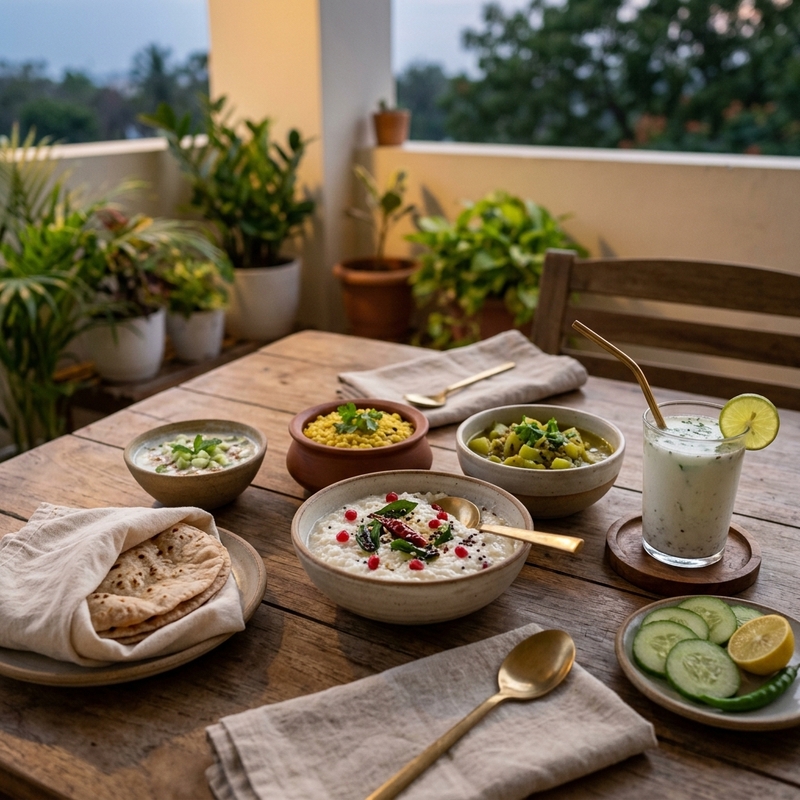
Hot Indian evenings can make dinner strangely confusing. You may be hungry, but the idea of a rich paneer gravy, fried snacks, or a giant thali feels like work. Then you eat too little, wake up hungry, or eat too heavy and spend the night feeling bloated.
The better answer is not “skip dinner.” It is to make dinner lighter, cooler, simpler, and easier to digest—without turning it into a sad plate of cucumber slices.
Quick answer: On very hot nights, a good Indian dinner is usually built around one soft carb, one light protein or dal, one cooked vegetable, a cooling side such as curd or raita if it suits you, and enough fluids earlier in the evening. Good options include moong dal khichdi, curd rice, phulka with lauki sabzi, dal-rice with kachumber, idli with light sambar, vegetable daliya, lemon rice with curd, or a simple millet bowl.
This guide is not a strict diet plan. Think of it as a practical dinner menu for real homes—office days, school nights, power cuts, late trains, humid kitchens, and those evenings when nobody wants to stand near a hot tawa for long.
What makes a summer dinner feel light?
#A light dinner is not just a low-calorie dinner. It is a meal that sits well in your stomach, does not make you thirstier, and does not leave you restless before sleep.
In Indian summer, that usually means:
- Less oil and heavy masala than lunch or weekend meals
- More water-rich sides like cucumber, lauki, tori, pumpkin, ash gourd, curd, or thin dal
- Soft textures such as khichdi, rice, daliya, idli, or phulka instead of very crisp, fried, or dry foods
- Moderate spice, especially if you are prone to acidity at night
- Freshly cooked food, not leftovers that sat out in heat for hours
- Enough salt and fluid through the day, without turning dinner into a salty snack meal
The goal is comfort. A summer dinner should let you sleep, not make you feel like you need a second fan only for your stomach.
The easiest dinner formula for hot nights
#Use this basic plate when you do not want to overthink:
1 soft base + 1 light protein + 1 cooked vegetable + 1 cooling side
For example:
- Rice + thin moong dal + lauki sabzi + cucumber curd
- Phulka + tori sabzi + plain dal + sliced onion-cucumber
- Daliya + mixed vegetables + curd on the side
- Idli + light sambar + coconut chutney used carefully and fresh
- Lemon rice + roasted peanuts + curd or chaas
This formula works because it avoids the two common summer dinner mistakes: eating only carbs and feeling hungry later, or eating a heavy “proper meal” that feels too much at bedtime.
12 light Indian dinner ideas for summer nights
#1. Moong dal khichdi with cucumber and curd
#Moong dal khichdi is the dinner many Indian homes quietly return to when the weather is too much. It is soft, filling, and easy to adjust.
Keep it simple: rice, yellow moong dal, turmeric, cumin, ginger if you like it, and a small spoon of ghee. Add lauki, carrot, pumpkin, or beans if you want vegetables inside the khichdi itself.
Serve it with cucumber slices, plain curd, or a thin raita. If curd does not suit you at night, use a squeeze of lemon and a small kachumber instead.
2. Curd rice, but keep the safety in mind
#Curd rice can be perfect on hot nights because it is cooling, soft, and familiar. The catch is storage. Curd-based foods should not sit in a warm kitchen or office bag for hours.
For dinner, make it fresh or use properly refrigerated rice. Keep the tempering light. Add cucumber, coriander, curry leaves, roasted cumin, or grated carrot. Avoid making a giant bowl and leaving it on the counter “for later.”
If the night is very humid or the power has been unreliable, make a smaller portion and finish it fresh.
3. Phulka with lauki, tori, or pumpkin sabzi
#A simple phulka-sabzi dinner is underrated. The trick is choosing a vegetable that does not need too much oil to taste good.
Lauki, tori, pumpkin, parwal, beans, cabbage, and capsicum can all work. Use light spices, avoid deep frying, and keep the sabzi moist rather than oily. Pair with plain dal or curd if you need more protein.
This is a good dinner for people who do not feel satisfied with rice at night but still want something lighter than paratha or puri.
4. Vegetable daliya with curd or chaas
#Daliya is useful when you want something warm but not heavy. Cook it softer than usual for dinner. Add bottle gourd, peas, carrot, beans, tomato, or spinach depending on what you have.
A bowl of vegetable daliya with curd or chaas on the side can feel complete without becoming rich. If you are cooking for children or elders, keep the chilli low and the texture softer.
5. Idli with light sambar
#Idli is a good hot-weather dinner when you want a break from roti-rice. It is soft, portion-friendly, and easy to pair with a thin vegetable sambar.
The caution is chutney. Coconut chutney can spoil faster in warm weather, especially if made early and kept outside. Make a small fresh batch, refrigerate if needed, and avoid carrying old chutney into dinner.
If you want a lighter plate, skip the extra podi oil and keep the sambar vegetable-heavy.
6. Lemon rice with curd or cucumber salad
#Lemon rice can be a smart dinner when you already have rice and want something quick. Use a light hand with oil, add curry leaves, mustard seeds, turmeric, and a small amount of peanuts for crunch.
Pair it with curd, cucumber salad, or thin chaas. Avoid making it too spicy at night. If you are prone to acidity, too much lemon and chilli may not feel great before bed, so adjust both.
7. Dal-rice with kachumber
#This is the simplest answer, and often the best one. Plain rice, thin dal, and a fresh kachumber of cucumber, onion, tomato, coriander, and lemon can feel cooling without being bland.
Choose moong dal, masoor dal, or a thin toor dal. Keep tadka small. If your lunch was heavy, this dinner brings things back to normal.
8. Sattu drink with a small roti-sabzi plate
#Sattu is filling, but it can feel too heavy if you drink a huge glass and then eat a full dinner. A better summer-night use is a small salted sattu drink with a light roti-sabzi plate.
Keep it thin: sattu, water, roasted cumin, lemon, black salt or regular salt, and mint if you like. Avoid overdoing it if you already feel bloated.
This works especially well after a sweaty commute when you want something cooling but still need a real dinner.
9. Millet curd bowl or rice-style millet bowl
#If millets suit your digestion, a small bowl can be a good dinner base. Use cooked little millet, barnyard millet, or foxtail millet like rice. Add curd and cucumber for a curd-millet bowl, or pair it with thin dal and vegetables.
Do not suddenly eat a huge millet dinner if your body is not used to it. Millets can be filling, and for some people that feels heavy at night. Start small and keep the sides simple.
10. Vegetable poha for dinner
#Poha is not only breakfast. A soft vegetable poha with peas, carrot, onion, curry leaves, and peanuts can work as a quick dinner when the kitchen is too hot.
For dinner, make it slightly moist and not too oily. Add curd on the side if you want more fullness. If you are eating very late, keep the portion moderate.
11. Thin kadhi with rice
#Kadhi-rice feels comforting in summer, especially when you keep it thin and not too spicy. Use fresh curd or buttermilk, simmer it properly, and avoid leaving it outside after dinner.
Add lauki pakoras? Maybe on a weekend. For a light summer dinner, plain kadhi with rice and a cucumber side is enough.
12. Soft paneer bhurji with phulka, not heavy paneer gravy
#Paneer can be part of a light dinner if the preparation is light. A soft paneer bhurji with tomato, capsicum, turmeric, and mild spices is usually easier than a cream-based paneer curry.
Keep the portion reasonable and pair it with phulka, not fried bread. If dairy feels heavy for you at night, choose dal instead.
Foods that often feel too heavy on hot nights
#You do not need to ban these foods forever. Just be careful when the weather is hot, the meal is late, or your stomach already feels sensitive.
Common heavy dinner choices include:
- Paratha with lots of oil or ghee
- Poori, bhatura, pakora, and fried snacks
- Creamy paneer gravies
- Very spicy chole, rajma, or black dal late at night
- Biryani that has been sitting out for hours
- Large portions of sweets after dinner
- Extra chilli pickle with an already spicy meal
- Street-side cold dairy drinks when freshness is doubtful
If you really want a richer dish, reduce the portion and add a cooling, fresh side. A small serving of chole with rice and cucumber is different from a huge late-night chole-bhature plate.
What about raw salads at dinner?
#Raw cucumber, onion, carrot, tomato, and lemon can make dinner feel fresher. But summer and monsoon hygiene matters.
Wash vegetables well, cut them close to mealtime, and avoid pre-cut salad that has been sitting uncovered. If your digestion does not enjoy raw onion or raw cabbage at night, choose cooked vegetables instead.
For families with elders, young children, pregnant people, or anyone with a weaker immune system, be extra careful with cut fruit, raw sprouts, and salads that were prepared long before dinner.
Dinner timing matters more in summer
#A light dinner eaten very late can still feel heavy. If possible, eat dinner a little earlier and keep a gap before sleep.
If you come home late, do not force a full thali. Try one of these:
- Small bowl of khichdi
- Curd rice made fresh
- Thin dal-rice
- Two phulkas with a soft sabzi
- Idli with sambar
- Vegetable daliya
And if you are genuinely not hungry, keep it small. Summer appetite can change, especially after a hot commute.
Food safety: do not let “light dinner” become risky dinner
#Hot weather makes food spoil faster. The safer habit is simple: cook smaller portions, refrigerate leftovers promptly, and do not trust smell alone.
Be more careful with:
- Curd rice and raita
- Paneer dishes
- Cooked dal and rice
- Coconut chutney
- Cut fruit and salad
- Leftover biryani or pulao
- Egg or chicken dishes
If food has been sitting out in a hot kitchen for a long time, reheating may not fix everything. When in doubt, do not stretch leftovers just to avoid waste.
A simple 7-day light summer dinner plan
#Use this as a starting point, not a strict menu.
Swap based on your home. If curd does not suit you at night, use lemon, cucumber, mint, or cooked watery vegetables instead.
Small upgrades that make summer dinner better
#A few tiny changes can make ordinary food feel more summer-friendly:
- Add roasted cumin to curd, chaas, and raita
- Use mint, coriander, curry leaves, or ginger for freshness
- Keep chilli lower at dinner than lunch
- Choose thin dal over thick, oily dal
- Use soft phulkas instead of parathas on very hot nights
- Make sabzi moist, not dry and oily
- Keep dinner portions steady instead of skipping and snacking later
Also, drink water through the evening rather than gulping a lot right before bed. If you sweat heavily, a lightly salted drink such as chaas or nimbu pani may feel better than plain water alone, unless you have been told to restrict salt.
How to choose dinner by your situation
#If you have acidity
#Choose khichdi, thin dal-rice, phulka with lauki, curd rice if curd suits you, or vegetable daliya. Go easy on chilli, fried foods, lemon, and very late tea or coffee.
If you are cooking after office
#Pick one-pot meals: khichdi, daliya, lemon rice, vegetable poha, or dal-rice. Keep pre-chopped vegetables refrigerated if you prep ahead.
If the power went out
#Avoid depending on old dairy, old rice, leftover paneer, or chutney that warmed up in the fridge. Cook fresh, simple food if possible.
If kids want something tasty
#Try soft paneer bhurji, lemon rice, idli-sambar, vegetable poha, or curd rice with pomegranate if available. Keep spice separate for adults.
If elders are eating
#Soft khichdi, thin dal, lauki sabzi, daliya, and curd rice can work well, but adjust based on medical advice and personal digestion.
Final thought
#The best Indian summer dinner is not fancy. It is the meal that cools the evening down a little, uses what your kitchen already has, and does not punish you at midnight.
When in doubt, go back to the simple plate: a soft base, a light dal or protein, a cooked vegetable, and a cooling side. That is enough for most hot nights—and honestly, it often tastes better than the complicated dinner you were too tired to cook anyway.