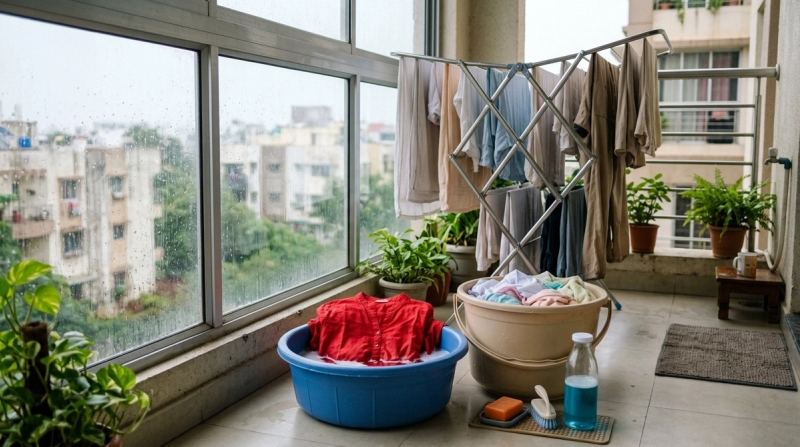
Colour bleeding in clothes is what happens when dye from one garment runs and stains another. It is usually caused by loose or poorly fixed dye, and it is especially common with new, dark, bright, and hand-dyed clothes.
The safest way to prevent it is simple: wash new and strongly coloured clothes separately in cold water for the first few washes. If colour transfer has already happened, don’t panic—but don’t dry the stained garment either. Keep it wet, remove the item that bled, and rewash the stained clothes quickly with a colour-safe detergent.
If you have ever opened the washing machine and found your white shirt looking slightly pink, blue, or grey, you already know how frustrating this can be. It happens in family homes, hostels, PGs, shared flats—pretty much anywhere laundry is done in a hurry.
And during monsoon, the problem gets worse. Clothes stay damp for longer, wet garments sit on top of each other, drying racks get crowded, and mixed loads become harder to avoid. One new red kurta, dark pair of jeans, bright dupatta, or deep blue T-shirt can stain the rest of the load if you are not careful.
The good news? Most colour run problems are easier to control if you act quickly. The trick is to prevent bleeding where possible, spot risky clothes before washing, and know when a home fix is not worth the risk.
Why Colour Bleeding Happens More During Monsoon
#Colour bleeding happens when dye is not properly fixed to the fabric. Some garments release colour because of poor dyeing, extra surface dye, very dark shades, bright colours, or traditional dyeing methods.
The usual troublemakers include:
- Deep reds
- Bright oranges
- Indigo shades
- Black denim
- Dark blue T-shirts
- New kurtas and dupattas
- Hand-dyed fabrics
New clothes are especially risky because loose dye may still be sitting in the fibres.
Monsoon adds another problem: humidity. When the air is damp, clothes take much longer to dry. This means wet garments stay in contact with each other for longer, whether inside the washing machine, in a laundry bucket, or on a crowded drying stand.
A wet dark sleeve pressed against a light collar for a few hours is sometimes enough to leave a stain.
So, the best monsoon laundry habits are not complicated. Use cold water, test new clothes, avoid overloading the machine, take clothes out quickly after washing, and dry them with as much airflow as possible.
Quick Guide: Prevent, Fix, or Avoid DIY
#Use this table when you are unsure what to do next.
Checklist for Washing New Clothes in Humid Weather
#Before adding a new garment to your regular laundry pile, run through this quick checklist.
- Read the care label. Look for instructions like “wash separately,” “wash with like colours,” or “colour may transfer.”
- Do a quick colour test. Wet a white cloth or cotton swab and rub it gently on an inside seam or hem. If colour comes off, wash the item separately.
- Wash new dark and bright clothes alone. Do this for the first few washes, especially with reds, oranges, indigo, black denim, and deep blues.
- Use cold water. Hot water can make some dyes release more easily.
- Avoid soaking mixed colours together. A long bucket soak can quickly turn into a colour bleeding mess.
- Dry clothes quickly. Hang them as soon as the wash is done. Keep space between garments and use a fan if the room feels damp.
- Do not leave wet clothes in the machine. During monsoon, even a short delay can increase the chance of colour transfer.
How to Stop Colour Bleeding Before It Starts
#Prevention is always easier than fixing colour transfer later. Once dye has moved from one garment to another, you are working against time.
1. Wash Risky Clothes Separately
#New clothes, dark denim, bright kurtas, dupattas, leggings, T-shirts, and hand-dyed items should not go straight into a mixed wash. Wash them separately for the first few rounds.
This is especially helpful if you do laundry in a hurry, like many students, office-goers, and people living in shared flats. One separate wash can save several everyday outfits.
2. Use Cold Water for Coloured Clothes
#Cold water is usually safer for coloured garments because it is less likely to loosen dye compared with hot water. It also helps reduce fading.
That said, always check the garment’s care label first. If it says “dry clean only,” “hand wash only,” or “wash separately,” follow that instruction.
3. Turn Clothes Inside Out
#Turning clothes inside out reduces rubbing on the visible surface. This helps protect colour and may lower the chance of loose dye rubbing onto other clothes.
It is a good habit for:
- Jeans
- Dark T-shirts
- Printed tops
- Kurtas
- Coloured cotton shirts
- Leggings and activewear
4. Do Not Overload the Washing Machine
#An overloaded machine does not wash or rinse properly. Clothes rub tightly against each other, detergent may not spread evenly, and loose dye can get trapped in the load.
Give clothes enough space to move. This matters even more in monsoon because slow drying already increases the risk of colour transfer.
5. Remove Clothes Immediately After Washing
#This is one of the most useful monsoon laundry habits.
Do not let wet clothes sit in the machine after the cycle ends. Take them out, shake them open, and hang them with space between each garment.
If you dry clothes indoors, keep a fan running or place the drying stand in the most ventilated area of the house.
6. Use Colour Catcher Sheets If Available
#Colour catcher sheets are designed to trap loose dye in the wash water before it settles on other clothes. They can be useful for mixed loads.
But they are not magic. They should not replace sorting, separate washing, or care-label instructions. If a garment is clearly bleeding, wash it separately.
What to Do When Colour Has Already Run
#If you notice colour transfer after washing, act before the stain dries.
Step 1: Do Not Dry the Garment
#Do not put the stained garment in a dryer. Do not iron it. Do not place it in strong sunlight or near direct heat to “finish drying.”
Heat can set the transferred dye, making it much harder to remove. Keep the garment wet while you decide what to do next.
Step 2: Find and Remove the Bleeding Item
#Look through the load and find the garment that released colour. It is often a new red, blue, black, orange, or dark denim item.
Remove it from the rest of the clothes. Do not rewash everything together with that same item, or it may bleed again.
Step 3: Rewash the Stained Clothes Quickly
#Put only the stained clothes back into the machine. Use cold water and a colour-safe detergent. Wash them again while the dye transfer is still fresh.
For mild colour transfer, a quick rewash can reduce the stain significantly.
Step 4: For Whites, Use Care-Label Safe Options
#If the stained garment is white, an oxygen-based bleach may help—but only if the care label allows it.
Use cool water and follow the product instructions carefully. Avoid chlorine bleach unless the care label clearly says it is safe. Chlorine bleach can damage some fabrics and may spoil trims, embroidery, elastic, or prints.
Step 5: Stop If the Fabric Is Delicate
#Do not scrub or soak delicate garments at home. This includes:
- Silk
- Wool
- Chiffon
- Zari work
- Embroidery
- Sequins
- Structured garments
- Expensive occasion wear
Take the garment to a professional cleaner and explain exactly what happened.
What About Salt and Vinegar?
#You may have heard that soaking clothes in salt water or vinegar stops colour bleeding. Be careful with this advice.
Salt and vinegar are often suggested as dye-setting tricks, but they do not permanently set every type of dye. They may not work well on modern synthetic dyes, blended fabrics, or heavily coloured garments.
Some traditional cottons may behave differently, but the care label should always come first.
If you still want to try a mild home method, test it on a hidden seam before treating the whole garment.
Most importantly, never mix harsh chemicals. Do not mix vinegar with bleach, ammonia, or commercial stain removers. Chemical mixing can create dangerous fumes and can damage your clothes too.
When to Stop and Use a Professional Cleaner
#DIY is not always the safest option. Stop home treatment and consult a professional cleaner if:
- The stain has dried completely.
- The garment was dried with heat or ironed.
- You have already rewashed it once or twice and the stain has not improved.
- The fabric is silk, wool, chiffon, or heavily embroidered.
- The garment has zari work, sequins, trims, or delicate detailing.
- The item is expensive, sentimental, or hard to replace.
- The original colour is fading badly along with the dye transfer.
A professional cleaner may have safer options for delicate fabrics and stubborn dye stains. The sooner you take the garment in, the better your chances are.
Everyday Monsoon Laundry Routine for Mixed Loads
#If you do not have time to sort every load perfectly, use this practical routine.
- Pull out new, dark, and bright clothes first.
- Check care labels quickly.
- Wash risky items separately in cold water.
- For mixed everyday clothes, keep similar colour families together as much as possible.
- Turn coloured clothes inside out.
- Do not overload the machine.
- Remove clothes as soon as the wash cycle ends.
- Dry with airflow and avoid crowding the drying rack.
- Check for colour transfer before ironing or hot drying.
This routine works well for hostel laundry days, family washing schedules, weekday office wear, and shared flat laundry. It does not take much extra time, but it can save you from that one ruined shirt moment.