If you’re new to skincare and your skin feels mostly normal, start with a simple moisturizer.
That’s it. Really.
For most beginners, a good moisturizer is enough to keep skin comfortable, reduce that dry “tight face” feeling after washing, and support your skin day to day.
A barrier repair cream is more like a backup plan for when your skin is clearly upset. Think stinging, flaking, rough patches, burning, tightness, or that annoying moment when even your usual gentle products suddenly feel harsh.
So here’s the simple answer:
Buy a moisturizer first.Buy a barrier repair cream only if your skin feels irritated, over-exfoliated, very dry, or just not like itself.
Skincare shopping can get confusing fast. One tub says moisturizer. Another says barrier cream. Another says barrier repair with a long ingredient list that feels like homework.
You don’t need all of them.
At allblogs, we like skincare that makes life easier, not routines that make you feel like you need 12 products just to wash your face. So let’s keep this simple.
Moisturizer vs Barrier Repair Cream: What’s the Difference?
#Your skin barrier is the outer protective layer of your skin. When it’s healthy, your skin usually feels calm, soft, and comfortable.
When it’s stressed, your skin may feel:
- Tight
- Stingy
- Rough
- Flaky
- Dry no matter what you apply
- Suddenly sensitive to products it normally tolerated
A regular moisturizer helps hydrate your skin and keep it comfortable. It’s your everyday basic.
A barrier repair cream is usually richer, thicker, and more protective. It’s designed for skin that feels dry, irritated, damaged, or overworked from too many products.
But here’s where it gets a little messy: some regular moisturizers already contain barrier-supporting ingredients. The American Academy of Dermatology mentions ingredients like glycerin and ceramides as helpful for dry skin care.
So no, a moisturizer and a barrier repair cream are not always completely different.
Sometimes the real difference is not the name on the front. It’s the ingredient list and texture.
Quick Comparison: Moisturizer vs Barrier Repair Cream
#When a Regular Moisturizer Is Enough
#A regular moisturizer is enough if your skin is mostly doing okay.
Choose a moisturizer if:
- Your skin feels a little dry after washing, but not painful.
- You want a simple morning and night routine.
- Your skin does not sting when you apply basic products.
- You live in humid weather and thick creams feel sticky.
- You have oily or combination skin.
- You’re new to skincare and don’t want to overbuy.
- Your skin feels normal most days.
A very simple beginner routine can look like this:
- Gentle cleanser
- Moisturizer
- Sunscreen in the morning
That’s genuinely enough for many people.
You don’t need to buy a separate barrier repair cream just because social media says everyone has a “damaged skin barrier.” If your skin feels comfortable, your moisturizer is probably doing its job.
When You Should Buy a Barrier Repair Cream
#A barrier repair cream makes more sense when your skin feels stressed, not just slightly dry.
Consider buying one if you notice:
- Stinging or burning when applying a gentle moisturizer
- Tight, shiny, uncomfortable skin
- Flaky or rough patches
- Dryness that comes back quickly after moisturizing
- Sensitivity after using too many exfoliants
- Irritation after harsh cleansers, dry weather, or over-cleansing
- Skin suddenly reacting to products it usually liked
This doesn’t mean you need the most expensive cream available. It simply means your skin may need something richer, calmer, and more protective for a while.
The goal is not to add more steps.
The goal is to calm your skin down.
Barrier Cream vs Barrier Repair Cream: Are They the Same?
#People use these terms loosely, so the labels can get confusing.
A barrier cream usually focuses on forming a protective layer on top of the skin. It helps reduce moisture loss and protects skin from dryness, rubbing, or friction.
A barrier repair cream usually suggests that the product also contains barrier-supporting ingredients, like ceramides or skin-like lipids, along with protective ingredients.
But in real-life shopping, don’t stress too much about the exact name.
A product called “barrier repair cream” is not automatically better than a simple moisturizer with glycerin and ceramides.
Look at the ingredients. Look at the texture. Think about what your skin actually needs.
Ingredient Label Checklist for Beginners
#Marketing can be loud. The back of the bottle is usually more useful.
Here are the ingredients worth knowing.
1. Glycerin
#Look for: glycerin high up or somewhere in the middle of the ingredient list.
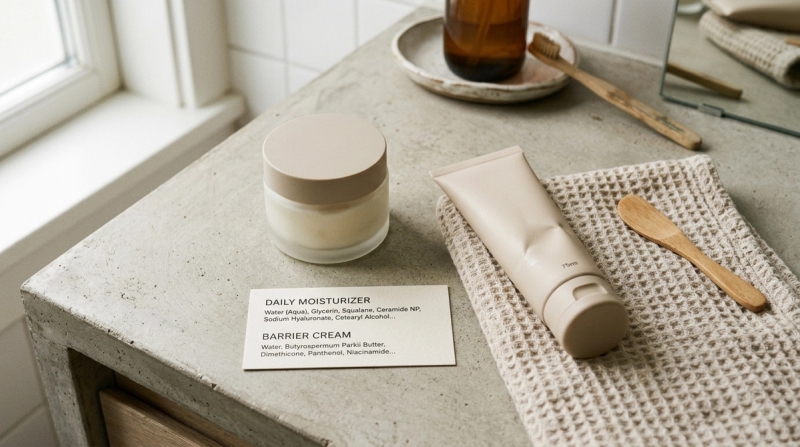
Glycerin is a humectant. That means it helps pull water into the top layer of your skin. It’s common, affordable, and useful in both moisturizers and barrier creams.
Good for:
- Dry skin
- Oily skin that still feels dehydrated
- Humid weather
- Beginner skincare routines
If you have no idea where to start, a simple moisturizer with glycerin is usually a safe first choice.
2. Ceramides
#Look for: ceramide NP, ceramide AP, ceramide EOP, or simply “ceramides.”
Ceramides are lipids that naturally exist in your skin barrier. In skincare, they help support barrier comfort and reduce dryness.
Good for:
- Tightness
- Flaking
- Dryness
- Skin that feels irritated after too many products
A moisturizer with ceramides may be enough for many beginners. If your daily moisturizer already has ceramides and your skin feels fine, you probably don’t need a separate barrier repair cream.
3. Petrolatum
#Look for: petrolatum, petroleum jelly, or mineral oil in richer products.
Petrolatum is an occlusive ingredient. It helps create a protective layer that reduces water loss from the skin. This can be very helpful when your skin feels cracked, rough, or extremely dry.
Best for:
- Very dry skin
- Cracked-feeling dryness
- Cold or dry weather
- Night use
- Dry patches that need extra protection
Use it more carefully if:
- You have very oily skin
- You live in hot, humid weather
- Heavy creams make your face feel greasy
- You break out easily from rich textures
Petrolatum is not bad. It’s actually a very useful ingredient. It’s just not always comfortable for every skin type or climate.
4. Fragrance
#Look for: fragrance, parfum, essential oils, limonene, linalool, citronellol, geraniol.
If your skin feels stressed or irritated, choose fragrance-free when possible. Fragrance can bother some people, especially when the skin barrier is already weak or reactive.
Also, “unscented” and “fragrance-free” are not always the same thing.
Unscented products may still contain ingredients that mask smell. If your skin is sensitive, fragrance-free is usually the better label to look for.
Humid Weather and Oily Skin: What Should You Buy?
#If you have oily skin or live somewhere hot and humid, don’t rush to buy the thickest barrier cream you can find.
Heavy creams can feel sticky in warm weather. They may sit on top of the skin, mix with sweat, and make your face feel greasy. If you’re acne-prone, a rich balm texture may also feel like too much for everyday use.
A better option is to:
- Choose a lightweight gel-cream or lotion.
- Look for glycerin and ceramides.
- Avoid heavy textures during the day.
- Use richer creams only at night or on dry patches.
- Look for “non-comedogenic” if clogged pores are a concern.
Oily skin still needs hydration. The trick is choosing a texture that doesn’t feel like a mask.
Also, if your oily skin is stinging or flaking, don’t exfoliate more. That can make things worse. Instead, pause harsh products, use a gentle cleanser, and switch to a light barrier-supporting moisturizer.
What to Avoid When Your Skin Feels Compromised
#When your skin feels irritated, it’s tempting to keep adding more products.
Usually, the better move is the opposite: remove the things that might be causing the problem.
Avoid over-exfoliation
#Too much exfoliation can make skin feel raw, tight, shiny, or stingy.
Pause these for a while:
- Face scrubs
- Peeling gels
- Exfoliating toners
- Cleansing brushes
- Frequent AHA or BHA use
- Strong exfoliating masks
If your moisturizer burns, it is not the time to scrub harder. Your skin is asking for a break.
Avoid harsh actives for a bit
#If your skin feels stressed, stop using strong active ingredients until it feels comfortable again.
This may include:
- Retinol or retinal
- Glycolic acid
- Lactic acid
- Salicylic acid
- Strong vitamin C serums
- High-strength acne products, unless a dermatologist told you to use them
These ingredients are not bad. They can be very useful. But when your skin barrier feels irritated, they may be too much.
Avoid miracle claims
#Be careful with products that promise overnight repair, instant transformation, or “medical-grade” results without clearly explaining what they actually do.
A good moisturizer or barrier repair cream can help with dryness and comfort. But it cannot fix every skin concern. It also shouldn’t replace medical care if you have a rash, swelling, severe acne, allergy signs, or broken skin.
Beginner Buying Guide: What Should You Actually Buy?
#Here’s the easiest way to decide.
Buy a regular moisturizer if:
#- You’re building your first skincare routine.
- Your skin feels normal or only mildly dry.
- You want something for daily use.
- You have oily or combination skin.
- You live in humid weather.
- You don’t currently have stinging, peeling, or irritation.
Look for:
- Glycerin
- Ceramides if possible
- Fragrance-free if your skin is sensitive
- Lightweight lotion or gel-cream texture for oily skin
Buy a barrier repair cream if:
#- Your skin stings with gentle products.
- You have visible flaking or rough dry patches.
- Your skin feels tight and uncomfortable.
- You recently overused exfoliants or strong actives.
- Your skin feels very dry in cold or dry weather.
- A normal moisturizer is not giving enough comfort.
Look for:
- Ceramides
- Glycerin
- Petrolatum or other occlusive ingredients if your skin is very dry
- Fragrance-free labeling
- A simple formula without too many extra actives
Do you need both?
#Usually, no.
Most beginners do not need both a moisturizer and a barrier repair cream in the same routine. Start with one good moisturizer. Add a barrier repair cream only if your skin clearly needs extra support.
If you already own both, use them like this:
- Regular moisturizer for everyday use
- Barrier repair cream for dry patches, night use, or short periods when your skin feels irritated
Simple is often better, especially when your skin is already annoyed.
India Beauty Context: Why Ingredient Labels Matter More Now
#Ingredient-led beauty has become a major trend in India. Mintel and NielsenIQ have both highlighted how shoppers are paying more attention to ingredients and performance-based beauty claims.
That’s a good thing, but it can also make skincare feel more complicated than it needs to be.
You don’t need to memorize every ingredient in the skincare aisle.
For this decision, just remember four things:
- Glycerin for hydration
- Ceramides for barrier support
- Petrolatum for stronger moisture sealing
- Fragrance-free if your skin is sensitive or irritated
That’s enough to shop with more confidence.
Related AllBlogs Guides
#If you’re building a simple skincare routine, these existing AllBlogs guides are useful next reads:
- Moisturizer for Humid Weather: Gel, Lotion or Cream?
- Face Wash vs Cleanser vs Micellar Water: What Should Beginners Use?
- Fragrance-Free vs Unscented Skincare: What Sensitive Skin Beginners Should Actually Check
- How to Patch Test Skincare Products and Read Labels Before Trying Something New
Dermatologist Warning Signs and Safety Note
#This article is for general skincare education only. It is not a diagnosis, treatment plan, or substitute for medical advice. Skincare products can help with cosmetic dryness and comfort, but they are not meant to treat medical skin conditions.
Speak to a dermatologist or qualified healthcare professional if you notice:
- A rash that is spreading, painful, or not improving
- Burning that is intense or keeps coming back
- Swelling of the face, lips, eyelids, or skin
- Hives or signs of allergy
- Blistering, oozing, or broken skin
- Sudden or severe acne
- Irritation that keeps returning even after stopping products
- Skin concerns during pregnancy or breastfeeding
- Skin issues while using prescription treatments
If you have trouble breathing, severe swelling, or signs of a serious allergic reaction, seek urgent medical help.
The Bottom Line
#For beginners, the best first buy is a simple moisturizer. It’s practical, easy to use every day, and enough for most skin that feels normal or mildly dry.
Buy a barrier repair cream when your skin is clearly stressed: stinging, flaking, tight, rough, irritated, or uncomfortable after over-exfoliation or harsh products.
If you have oily skin or live in humid weather, don’t jump straight to a thick balm. Try a lighter barrier-supporting moisturizer with glycerin and ceramides first.
Simple rule:
Use moisturizer for daily maintenance. Use barrier repair cream when your skin needs extra support.