Rain, smoke, and that first kebab smell in old Lucknow
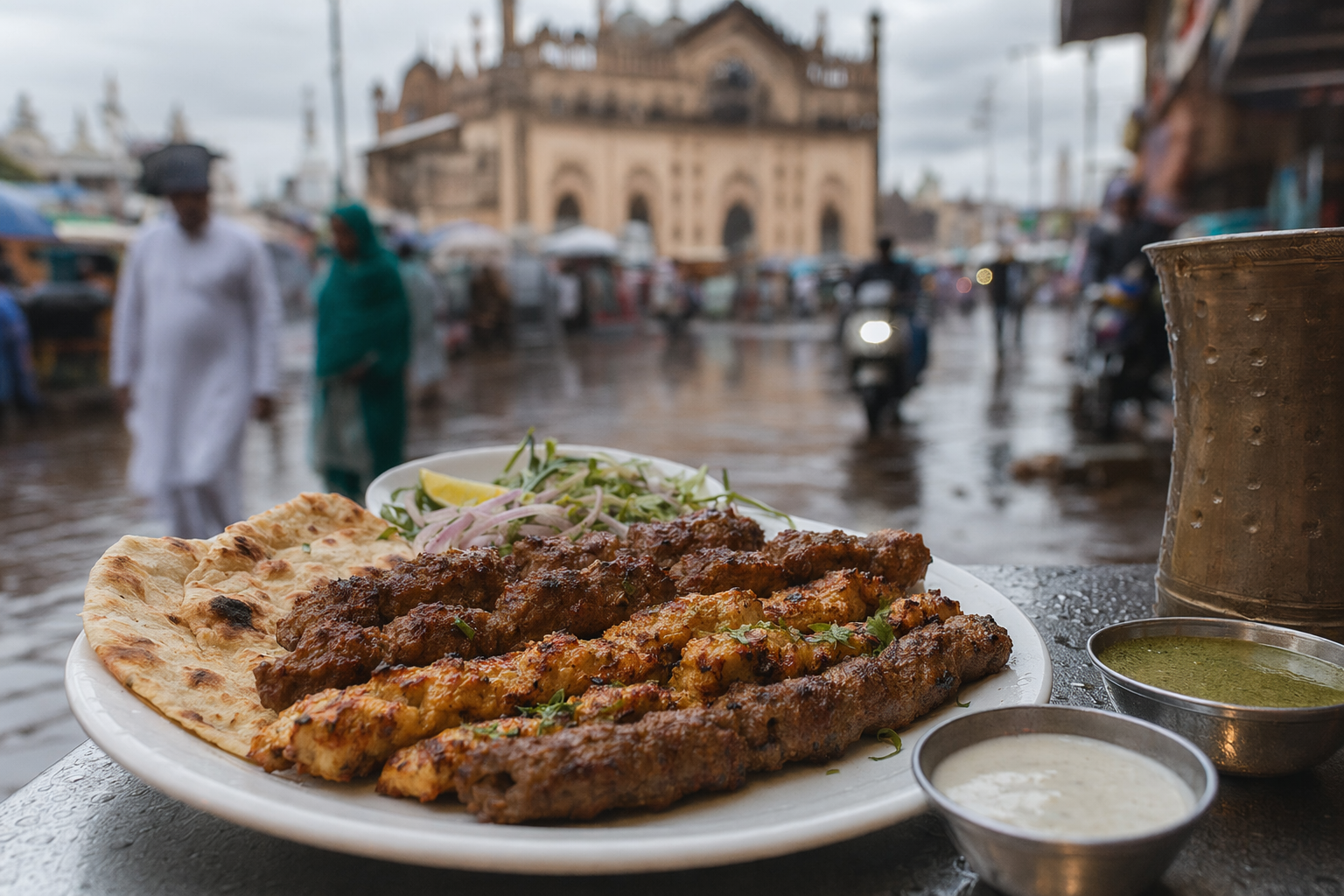
#The first thing monsoon does to Lucknow is make it dramatic. Like, properly filmy. The lanes around Aminabad and Chowk get shiny with rain, scooter horns sound extra rude, the air smells of wet brick and frying fat, and somewhere behind a curtain of steam someone is flattening a kebab on a hot tawa like his whole family reputation depends on it. I landed in Lucknow with one small backpack, one foolishly white pair of shoes, and a very serious plan to eat kebabs till I needed emotional support. Which, honestly, happened sooner than expected.
But monsoon food walks are a slightly different beast. You can’t just run around eating everything because the weather looks romantic. Rainwater splashes, drains overflow in places, chutneys sit out longer than they should, and your stomach is not always as brave as your Instagram story. So this is my Lucknow kebab walk, but with the safety bits I wish someone had drilled into me earlier. Not fear-mongering, okay. Just practical. Because a good galouti should make you weak in the knees, not stuck in your hotel bathroom at 3 am.
Why Lucknow kebabs feel different from kebabs anywhere else
#Lucknow’s kebab culture is not just “meat on fire”. That’s the lazy version people say when they haven’t actually stood near a tawa in old city and watched a cook turn minced meat into something softer than butter. Awadhi food has this old nawabi memory running through it, rich but not always loud, scented with mace, cardamom, clove, kabab chini, sometimes raw papaya as tenderizer, sometimes secrets that no one is telling you even if you ask very sweetly. The famous galawati, or galouti as half of us say, is the one everyone chases. It’s meant to be delicate, almost collapsing, made for eating with ulte tawa ka paratha or sheermal if you’re in a sweet-bread mood.
Then there’s seekh kebab, kakori-style kebabs if you find a place doing them well, boti, pasanda, shami, and those gravies around old Lucknow that pretend to be side characters but steal the whole scene. I have eaten kebabs in Delhi, Hyderabad, Bhopal, Kolkata, even some very respectable places abroad, but Lucknow has this softness. Not only texture-wise. The food feels like it’s trying to persuade you, not punch you. Although after the fourth stop, yes, it does punch you a little.
My monsoon route, messy but worth it
#I usually start a Lucknow kebab walk around late afternoon, because lunch heat plus heavy kebabs is not my idea of personal growth. In monsoon, the light turns grey-gold around 4-ish, shops begin waking up properly, and you still have enough time to move before the dinner crush gets mad. My loose route was Aminabad first, then Chowk side, then Akbari Gate if traffic and rain allowed. This is not a perfect Google Maps route. Nothing in old Lucknow is perfect when it rains. A lane that looked open ten minutes ago may suddenly become a river of scooters, umbrellas, and one uncle carrying twelve packets of kulcha like a hero.
Aminabad is where I always feel the food walk begins emotionally. Tunday Kababi is the name everyone knows, especially for galawati kebabs, and yes it is touristy, yes people argue about branches, yes somebody will always tell you it was better “before”. Still, standing there with a hot plate and rain tapping on plastic sheets above you, it hits. The kebab is soft, spiced deep, and disappears too fast. I don’t care if that sounds basic. Some classics are classic because they still work.
Stop one: galawati and the danger of starting too strong
#My first mistake, always, is ordering like I’m feeding a committee. Galawati kebab, paratha, maybe another plate because the first one looks small, then suddenly I’m sweating from my eyebrows and pretending I’m fine. Monsoon makes this worse because your appetite lies to you. The air is cool, so you think you can eat double. You cannot. Or maybe you can, but later you will be negotiating with your digestive system like it’s a landlord.
For galawati, I look for the tawa. Is it properly hot? Are kebabs moving quickly from tawa to plate? Is the paratha being cooked fresh, not sitting limp on a steel tray collecting rainy air? In busy old places, turnover is usually your friend. A queue can be annoying but also reassuring because food isn’t just lying around. I avoid raw onion and chutney if it has been sitting open and watery. I know, I know, chutney is half the fun. But in monsoon, watery chutney from a doubtful bowl is how regret enters the chat.
My safer eating rules, learned the sweaty way
#Let me be clear, I’m not a doctor, just someone who has had enough travel stomach drama to become slightly annoying about it. The boring rules are boring because they work. Eat food that is cooked thoroughly and served hot. Keep hands clean. Be careful with water and ice. That basic public-health advice is repeated everywhere for a reason, and in a rainy street-food situation it matters even more. Lucknow’s best kebab shops often cook in front of you, which is great because you can actually see what’s happening instead of guessing.
- I pick stalls where the kebabs are sizzling hot, not lukewarm and waiting. Steam is my love language in monsoon.
- I carry sanitizer, but I still prefer washing hands with soap when possible. Sanitizer plus greasy fingers is not magic, sorry.
- I skip cut fruit, open salads, and watery chutneys if the place looks chaotic or splashy. Especially near road puddles.
- I drink sealed bottled water, and I check the cap because me being paranoid has saved me more than once.
If you’re doing an evening walk through crowded kebab lanes, the same thinking applies as any night food market: high turnover, hot food, clean handling, and no suspicious room-temperature sauces. I wrote down a similar checklist in Night Market Food Safety: Traveler’s Hot-Food Checklist, and honestly I still use that mental list in Lucknow, Bangkok, Old Delhi, wherever. Food travel is adventure, not a dare.
Chowk in the rain: beautiful, slippery, and slightly chaotic
#Chowk during monsoon is my favourite and also my test of patience. The old buildings look tired in a poetic way, the shop signs glow through drizzle, and every few steps someone is selling something that smells better than your original plan. You may go for kebabs and end up staring at a tray of kachori, then a kulfi sign, then paan, then someone mentions nihari and suddenly your “light food walk” has become a legal case.
In Chowk and around Akbari Gate, I like mixing kebab stops with older Lucknow staples. Rahim’s near Akbari Gate is widely known for nihari-kulcha, and even though nihari is not exactly a kebab, it belongs in the same rainy-night fantasy. Mubeen’s is another old-city name people bring up for rich meat dishes. Idris Biryani near the old city side is famous too, though biryani after kebabs is either genius or madness depending on your stomach. Me and my friend once tried doing galawati, nihari, and biryani in one evening because we thought we were “experienced eaters”. We were not. We were two fools with wet socks.
A small note on famous names and local arguments
#Lucknow people have opinions. Strong ones. Ask five locals where the best kebab is and you may recieve seven answers plus one story about how their grandfather knew the real cook. Some will tell you the old Aminabad places are unbeatable. Some prefer Dastarkhwan in Lalbagh or Gomti Nagar because it’s more comfortable and reliable for visitors. Some will say Hazratganj side is cleaner but not soulful enough. I kind of agree and disagree with everyone. Old city has atmosphere you cannot fake, but a sit-down place with proper seating and dry floors can feel like heaven when rain is coming sideways.
This is where travel style matters. If you’re with kids, older parents, or someone with a sensitive stomach, don’t be macho. Do one old-city stop for the experience, then move to a cleaner, established restaurant. Dastarkhwan is popular with travelers for a reason. It gives you Lucknow flavours without making you balance a plate under a dripping awning while a scooter tries to marry your ankle. That said, I still love the dripping awning version. I’m inconsistent, what to do.
What to eat, and what to maybe leave for next time
#If it’s your first kebab walk, start with galawati and paratha. Then maybe seekh kebab. Then boti or pasanda if the place is known for it and the meat looks freshly cooked. Add sheermal if you like a sweet, saffron-ish bread with rich meat. I do, but not everyone does. Sheermal with a spicy kebab in rainy weather feels almost too indulgent, like you should be wearing a shawl and discussing poetry, not standing next to a puddle.
What I don’t recommend is trying every heavy thing in one night. Galawati, sheermal, nihari, biryani, malai paan, kulfi, chai, then hotel buffet breakfast next morning? This is not eating, this is combat. I’ve started planning rest days after serious food walks, or at least lighter mornings. If you are building a whole foodie trip around Lucknow, this guide on Food Tour Rest Day Planning: Recover Between Heavy Meals is weirdly useful because rich gravies and kebabs need recovery time. Your tastebuds may be romantic, but your gut is practical.
Monsoon timing: when I’d actually go
#My favourite window is early evening after a rain shower, not during full downpour. Right after rain, the air cools down and the smoke hangs low, which makes everything smell more intense. But during heavy rain, old lanes get messy fast. Splashing water, slippery stone, vendors covering food in a hurry, rickshaws cutting close, it’s not exactly relaxing. If the forecast looks wild, I’d rather eat at a proper restaurant that night and save the lane-walk for a calmer evening.
Also, avoid arriving starving. This sounds wrong for a food walk, but hear me out. If you arrive ravenous, you’ll ignore every safety instinct. You’ll eat from the first stall, drink the random sharbat, say yes to raw onions, and order too much. Have a banana or a small snack before leaving. Carry tissues. Carry a small umbrella but not a giant one because old Lucknow lanes and giant umbrellas are basically social violence. Wear shoes you don’t love. My white shoes never recovered, and frankly they deserved it for being arrogant.
Tea breaks are not optional
#Between kebab stops, chai is my reset button. Not fancy cafe chai. I mean hot, sweet, cutting-through-grease tea from a busy stall where milk is boiling like it has personal issues. In monsoon, a hot drink also feels safer than cold drinks with uncertain ice. I’m not saying every tea stall is automatically hygienic, obviously, but if the tea is properly boiled and served fresh, I feel better about it than a glass of something cold sitting near a drain.
One of my best Lucknow rain memories is standing under a half-torn blue tarp near Chowk, holding chai in a little paper cup, while a kebab cook next door kept flipping seekhs over coals. The rain had slowed to a mist. Someone was arguing about cricket. A child in school uniform was eating paratha like it was the most normal thing in the world. That’s the stuff I travel for. Not just the famous plate, but the whole little scene around it.
Gut-friendly backups, because not every meal has to be royal
#Here’s the part nobody wants to admit in a kebab article: after two days of rich Awadhi food, plain dal can feel like a blessing from above. I love kebabs madly, but I also need balance. In Uttar Pradesh, lighter foods like khichdi, curd rice if you find it, simple dal, sattu drinks from reliable places, roasted chana, and plain roti-sabzi can help you reset. Not in a medical miracle way, just in the normal human way of not drowning your stomach in spice and fat every six hours.
When I’m in Lucknow for more than a weekend, I alternate. One big kebab night, one lighter day. Maybe breakfast of poha or simple toast at the hotel, lunch dal-chawal, then evening snacks. If you want regional lighter ideas around the same travel zone, Gut-Friendly Uttar Pradesh Foods for Travelers pairs nicely with a Lucknow kebab trip. It’s not glamorous advice, but it keeps the trip from becoming a stomach horror story, and I prefer my drama on the plate.
How I judge a kebab place in the rain
#I’ve developed this slightly nosy ritual. Before ordering, I stand back for two minutes and watch. Are workers touching cash and food with the same hands? Are plates being washed in clean running water or just dunked sadly in a bucket that has seen too much life? Is the meat kept covered? Are flies partying? Is the cook reheating old kebabs or cooking fresh batches? Sometimes a place is famous but the moment looks wrong. And sometimes a humble stall is doing everything carefully, with hot food moving fast and counters wiped between rushes.
- First, I check the crowd. A steady local crowd is good, but a crush so big that food handling becomes careless is not always ideal.
- Second, I check heat. Kebabs should be hot enough that you instinctively blow on them before eating.
- Third, I check the surroundings. If rainwater is splashing near the cooking area, I move on. No kebab is that important. Okay, some are close, but still no.
- Fourth, I order small. One plate first. If it’s good and feels safe, order more. This has saved me from both bad food and overeating, which are seperate problems but equally tragic.
Vegetarian friends, you’re not doomed
#Lucknow is famous for meat, yes, but vegetarian travelers can still eat very well. During a kebab walk, though, I’ll be honest, the main storyline is meat. Veg options may include paneer tikka, soya chaap in newer areas, dahi ke kebab in restaurants, and all the chaat, kachori, basket chaat, kulfi, malai makhan in season, and sweets that can fill a whole trip by themselves. In monsoon, apply the same safety filter: hot, fresh, busy, covered. I’m careful with pani puri during rains unless the water setup looks extremely reliable, and even then I’m sometimes cowardly about it.
One vegetarian friend came with me on a Lucknow food evening and ended up happier than all of us because she paced herself. While we were collapsing under kebab ambition, she had hot aloo tikki, chai, a bit of sheermal, and later kulfi from a busy shop. She woke up cheerful next morning. We woke up making noises like old furniture. There’s a lesson there, but I continue to ignore it occassionally.
Packing list for a rainy kebab walk
#You don’t need much, but the little things matter. A small umbrella or light rain jacket. Hand sanitizer. Wet wipes. Tissues because many places will give you one napkin the size of a postage stamp. A bottle of water bought from a reliable shop. Some cash in small notes because digital payment may work, may not, and old city networks sometimes get moody. I also carry an antacid, oral rehydration sachet, and any personal medicine I may need. Again, not dramatic. Just normal travel sense.
Clothes-wise, wear something breathable because rain does not always mean cool. Lucknow humidity can sit on you like a damp blanket. Avoid long flowy trousers that drag through puddles. Keep your phone protected, but don’t spend the whole walk filming. I say this as someone who has filmed too many kebab videos and later realised I barely tasted the food properly. Take the photo, yes. Then put the phone away for the first bite. That first bite deserves privacy.
My ideal Lucknow monsoon kebab evening
#If I had to design the evening for a friend, I’d start in Aminabad around 5 pm with galawati and paratha, one plate shared between two if you’re planning more stops. Then a short walk, maybe chai. Move toward Chowk as the lights come on, stopping only where food is hot and the area isn’t waterlogged. Try seekh or boti somewhere with good turnover. If the rain is gentle and your stomach is behaving, head toward Akbari Gate for nihari-kulcha, but share it. Please share it. Lucknow portions plus monsoon appetite can trick even sensible people.
End with paan or kulfi if the shop is busy and clean enough, or just hot chai if you’re done. Then go back before you get too tired. This is another safety thing people forget: tired travelers make bad food choices. They eat random leftovers, accept water from anywhere, and stop noticing hygiene. Leave while you still feel happy. A food walk should end with you smiling in an auto, smelling of smoke and spice, not bargaining with fate.
The best Lucknow kebab walk is not the one where you eat the most. It’s the one where every bite still tastes exciting, and you wake up the next day wanting more instead of swearing off meat forever.
Final bite: go hungry, but not foolish
#Lucknow in the monsoon is one of those food-travel experiences that stays under your skin. The rain, the old lanes, the glow of kebab shops, the softness of galawati, the sweetness of sheermal, the sharp little hit of spice at the back of your throat. It’s beautiful. It’s also messy and humid and occasionally inconvenient, which is partly why it feels real. I’d go again tomorrow, though I’d pack darker shoes and eat half as much on night one. Maybe. No promises.
So yes, do the kebab walk. Wander Aminabad. Taste Chowk. Respect the old names but trust your eyes too. Eat hot food, drink safe water, pace yourself, and don’t let monsoon romance bully you into ignoring common sense. Lucknow rewards curious eaters, especially the ones who can slow down enough to notice the sizzle, the rain smell, and the cook’s quiet confidence behind the tawa. And if you’re collecting more food-travel rabbit holes after this, have a lazy browse through AllBlogs.in sometime, preferably with chai nearby.