Why your eyes can feel so awful at 35,000 feet
#Dry, gritty, burning eyes on a flight can feel weirdly dramatic for something so small. One minute you’re fine at the gate, the next you’re blinking like mad, your contact lenses feel glued on, and the air vent above you is basically a tiny desert fan pointed at your face. If that sounds familiar, you’re not being fussy. Airplane cabins really can be rough on the tear film, especially if you wear contacts, stare at a screen, nap in your seat, or already deal with dry eye symptoms on the ground.
The short version: cabin air is low in humidity, airflow is constant, and most people blink less when reading, watching movies, or scrolling. The tear film on the surface of the eye evaporates faster. Contact lenses can make that feeling more noticeable because the lens sits right on the eye and depends on a stable tear layer to stay comfortable. None of this means something dangerous is happening every time your eyes feel dry on a plane. But it does mean a little planning may help, and some symptoms should not be ignored.
What actually happens to your eyes during a flight
#A healthy eye surface is covered by a thin tear film. It is not just “water,” which is kind of the important bit people miss. Tears include a watery layer, oils that slow evaporation, and mucus-like components that help everything spread evenly. When the tear film gets unstable, the eye can feel dry, watery, scratchy, tired, or strangely sharp and irritated. Yep, watery eyes can still be dry eyes, because the eye may be reflex-tearing in response to irritation.
Airplane cabins are typically much drier than many indoor environments. Aviation and occupational health sources often describe cabin relative humidity as low, sometimes around 10 to 20 percent on longer flights. That is dry enough to make lips, nasal passages, skin, and eyes feel uncomfortable. Add the overhead vent, a face-level draft, and several hours of screen focus, and the tear film has to work harder than usual.
There’s also the blink problem. When people concentrate on screens, reading, or work, blink rate often drops and blinks may become incomplete. Incomplete blinking leaves parts of the eye surface exposed for longer. This is one reason the “I was just watching a movie and now my contacts feel terrible” thing happens. The flight didn’t magically ruin your eyes. It set up a bunch of small irritants at once.
Contact lenses on flights: convenient, but not always kind to your eyes
#Contact lenses are safe and effective for many people when used properly, but flying can push them into the uncomfortable zone. Soft lenses, especially, can feel drier in low-humidity environments. Some lens materials hold moisture better than others, and some people simply tolerate lenses better than others. It’s not a moral failure. It’s biology, fit, lens type, tear quality, allergies, medications, age, hormones, sleep, air quality, all of it.
For a short flight, contacts may be totally fine. For a long-haul flight, overnight flight, or any trip where you know you’ll sleep, glasses are often the more eye-friendly option. The CDC and eye care organizations warn that sleeping in contact lenses increases the risk of eye infection, including microbial keratitis. The CDC has reported that people who sleep in contact lenses are at higher risk of contact lens-related eye infections. So even if someone says, “I do it all the time and I’m fine,” that does not make it a low-risk habit for everyone.
- If you plan to sleep on the plane, consider switching to glasses before you get drowsy, not after you wake up with lenses stuck to your eyes.
- Pack a clean lens case, travel-size contact lens solution, glasses, and appropriate drops in your personal item, not in a checked bag.
- Do not rinse lenses with tap water, bottled water, or saliva. It sounds obvious, but travel makes people improvise, and eyes do not love improvisation.
- If a lens feels painful, damaged, or stuck, don’t force it. Use appropriate lubricating drops and seek help if it does not move or symptoms are concerning.
Eye drops: which ones make sense, and which ones deserve caution
#For flight-related dryness, the most commonly recommended over-the-counter option is artificial tears or lubricating eye drops. These are designed to supplement the tear film and reduce friction on the eye surface. For people who use drops often, preservative-free artificial tears may be gentler, because preservatives in some drops can irritate the ocular surface when used frequently. That does not mean preserved drops are “bad” for everyone. It means frequency and sensitivity matter.
| Type of drop | May be useful for | Important caution |
|---|---|---|
| Preservative-free artificial tears | General dryness, frequent use, sensitive eyes | Single-use vials should not be reused once contaminated or left open |
| Contact lens rewetting drops | Dryness while lenses are in | Check the label says suitable for contact lenses |
| Lubricating gel drops | Longer-lasting moisture, often for use when not wearing lenses | Can blur vision, so not ideal right before walking through an airport |
| Redness-relief drops | Occasional cosmetic redness in some cases | Many contain vasoconstrictors and can cause rebound redness or irritation if overused |
| Prescription dry eye drops | Diagnosed dry eye disease or inflammation, when prescribed | Use only as directed by an eye care professional |
The label matters more than the pretty packaging. Some drops are safe to use with contacts in. Others are not. Some drops need lenses removed first and a wait time before reinserting. If the bottle says “not for use with contact lenses,” believe it. And if you already use prescription eye drops, ask your eye doctor or pharmacist how to time them around flights, artificial tears, and lenses. Mixing drops randomly is not the vibe.
One more thing: be careful with “get the red out” drops. They can make eyes look whiter for a while, but they do not treat the underlying dryness, and frequent use can lead to rebound redness for some people. If your eyes are red because they are dry, irritated, allergic, or infected, whitening drops may hide a clue your eye doctor would actually want to know about.
A simple pre-flight eye comfort plan
#The best time to deal with dry eyes on a plane is before they get angry. Not in a dramatic way. Just, you know, don’t wait until hour six when your lenses feel like old plastic wrap. If you already know flights dry your eyes out, think of your eye kit the same way you think of headphones or a charger. Small thing, big difference.
- Before leaving home, wash your hands and insert fresh lenses if you wear daily disposables. If you wear reusable lenses, make sure they are clean, undamaged, and not older than recommended.
- Put glasses in an easy-to-reach case. Not at the bottom of the overhead bin. That is how people end up sleeping in lenses because getting up feels annoying.
- Bring artificial tears or contact lens rewetting drops that you have used before without problems. A flight is not the ideal time to test a random new product.
- Use drops before your eyes feel severely dry, especially on longer flights. Preventing the scratchy spiral is usually easier than calming it down later.
- Aim the air vent away from your eyes or close it if you can tolerate the temperature. Direct airflow is a big dryness trigger.
For people who get dryness in the nose or throat too, the whole cabin-air thing can feel like a full-body moisture robbery. After travel, a bedroom humidifier may support comfort if your home air is dry, especially during winter or in air-conditioned spaces. If you’re weighing sleep comfort gadgets more broadly, this guide on Mouth Tape vs Nasal Strips vs Humidifier: What Should You Buy for Better Sleep? covers some adjacent dry-air and breathing-comfort questions without pretending one product fixes everything.
What to do during the flight, without turning it into a whole project
#Nobody wants a 14-step wellness routine in seat 27B. The goal is not to become the most hydrated, perfectly blinking passenger in the sky. The goal is to reduce avoidable irritation. Start with the easy stuff: blink fully, take screen breaks, keep drops nearby, don’t blast air into your face, and switch to glasses if your lenses start feeling uncomfortable.
The 20-20-20 rule is often suggested for screen-related eye strain: every 20 minutes, look about 20 feet away for 20 seconds. On a plane, you may not have a perfect 20-foot view unless you’re staring down the aisle at someone’s snack bag, but the principle still works. Look away. Blink slowly. Close your eyes for a few seconds if that feels comfortable. Let the surface of the eye reset a little.
Hydration is a little more nuanced. Drinking water supports overall comfort, and dehydration can make dryness feel worse, but chugging water alone usually will not “cure” dry eyes in a dry cabin. Alcohol can be dehydrating and may worsen sleep quality. Caffeine affects people differently, and sugary drinks may leave some travelers feeling less great overall. If you’re choosing a fun airport drink, it’s fine to enjoy it, just be realistic about comfort. Even something like bubble tea can be part treat, part sugar/caffeine choice, depending on what you order. This piece on Airport Bubble Tea Before a Flight: Buy, Sip, or Skip? gets into that pre-flight drink decision in a very practical way.
If you wear contacts, these are the bigger no-nos
#Some flight habits are merely unhelpful. Others are actually risky. Contact lenses sit on the eye, and bacteria, fungi, and other organisms can cause serious infections if lens hygiene goes sideways. The scary cases are not common for every traveler, but they are serious enough that eye care professionals repeat the same advice constantly: don’t sleep in lenses unless they are specifically approved for overnight wear and your eye doctor has said it is appropriate for you, don’t expose lenses to water, and don’t keep wearing lenses through pain.
- Do not top off old solution in a case. Empty it, rinse with fresh disinfecting solution if recommended for your system, and let it air dry.
- Do not swim, shower, or wash your face with contacts in if water may get into the eyes. Travel days make this easy to forget.
- Do not use expired drops or solution. Airport panic is not a reason to put questionable liquid near your cornea.
- Do not share drops, solution, or lens cases. Even with someone you love. Especially with someone who says “it’s probably fine.”
- Do not keep a painful lens in because you paid for the flight and want to watch the movie. Pain is information.
Choosing drops for your carry-on bag
#A small bottle of artificial tears is usually allowed in carry-on liquids when it meets standard travel-size limits, and medically necessary liquids may have separate screening rules depending on the airport and security authority. In practical terms, most over-the-counter eye drop bottles are already small. Keep them where you can reach them and consider putting them in a clean zip pouch with your lens case and glasses. Not glamorous. Very useful.
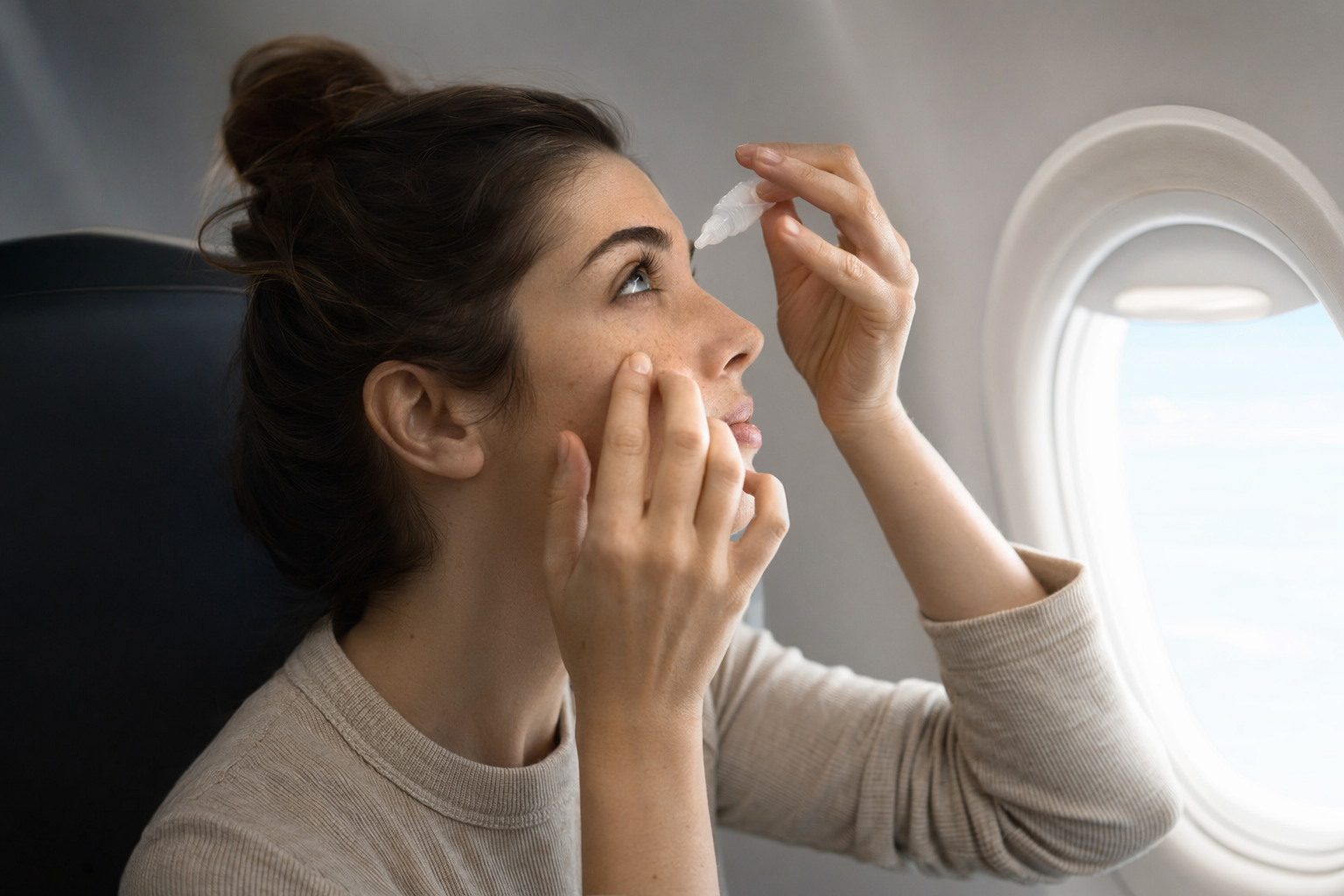
If you use single-use preservative-free vials, they are great for avoiding preservatives, but they can be fiddly in a cramped seat. Open them with clean hands. Don’t let the tip touch your eye, eyelashes, tray table, blanket, or anything else. Once opened, use as directed and discard. Multi-dose preservative-free bottles exist too, and some people find them easier, but they can cost more and the pump mechanism can be annoying at first. Tiny travel frustrations, basically.
For contact lens wearers, rewetting drops are not the same thing as disinfecting solution, and saline is not the same thing as disinfecting solution either. Rewetting drops may help comfort while lenses are in. Disinfecting solution is for cleaning and storing reusable lenses. Saline can rinse in some care systems but does not disinfect. The words sound similar when you’re tired at a pharmacy kiosk, so read the label slowly.
Dry eye disease vs temporary flight dryness
#Temporary dryness during a flight is common, but some people have underlying dry eye disease, blepharitis, meibomian gland dysfunction, allergies, autoimmune conditions, medication-related dryness, or other eye surface problems. The American Academy of Ophthalmology and other eye health organizations describe dry eye as a condition that can involve tear quantity, tear quality, inflammation, and ocular surface irritation. In plain language: it can be more complicated than “use more drops.”
This matters because if your eyes are dry every day, if contact lenses have become harder to tolerate, or if you need lubricating drops constantly, it may be worth getting an eye exam rather than just buying a bigger bottle. Eye care professionals can check your tear film, eyelids, glands, cornea, lens fit, and whether allergies or inflammation may be part of the picture. They may suggest changes like lens material adjustments, daily disposables, lid hygiene, warm compresses, prescription therapies, or other options when appropriate. That should be individualized, not guessed from a travel blog.
General eye comfort tips can be helpful, but eye pain, vision changes, marked redness, or light sensitivity deserve proper medical attention. Eyes are not a place to “wait it out” forever.
When to take symptoms seriously
#Most flight-related dryness is annoying and temporary. Still, some symptoms are red flags, particularly for contact lens users. Remove your lenses and seek prompt advice from an eye care professional if you have eye pain, increasing redness, light sensitivity, discharge, a feeling that something is stuck in the eye that does not improve, blurred vision that does not clear with blinking or drops, or symptoms that worsen after the flight. If there is sudden vision loss, significant injury, chemical exposure, or severe pain, treat it as urgent.
Also be careful if you recently had eye surgery, have a corneal condition, use medicated eye drops, have an autoimmune disease affecting the eyes, are immunocompromised, or have been told by a clinician that your eyes are high-risk. Flying itself is not automatically unsafe for everyone in those groups, but personalized guidance matters. Ask before travel if you are unsure, especially before a long-haul trip.
A realistic packing list for dry-eye-prone travelers
#You do not need a suitcase full of eye products. Actually, too many random products can make things confusing. A simple kit usually works better: glasses, contact lens case, appropriate solution, artificial tears, rewetting drops if you wear lenses, tissues, and hand sanitizer for when soap and water are not available. Hand sanitizer is useful, but let it dry fully before handling lenses because alcohol near the eye is... no thanks.
- Daily disposable contact lenses, if your eye doctor has prescribed them, can be convenient for travel because there is no case or cleaning solution for that pair.
- A backup pair of glasses is not optional if you rely on vision correction. Flights get delayed, bags get lost, eyes get irritated.
- A clean lens case should be replaced regularly. Old cases can develop biofilm and contamination.
- Sunglasses may help after landing if your eyes feel light-sensitive or wind-irritated, though persistent light sensitivity should be checked.
- A small reminder on your phone to use drops or switch to glasses before sleeping can be surprisingly helpful on overnight flights.
What about omega-3s, warm compresses, and all the trendy eye wellness stuff?
#Eye wellness has become its own little corner of the internet, with heated masks, eyelid sprays, supplements, blue-light glasses, humidifiers, blinking apps, and “hydration hacks” everywhere. Some tools may be genuinely useful for certain people. Warm compresses, for example, are commonly recommended for meibomian gland dysfunction, where eyelid oil glands are not contributing enough to the tear film. But they are not an instant flight fix, and not every irritated eye needs the same routine.
Omega-3 supplements have been studied for dry eye, but results have been mixed, including large clinical research that did not show a clear benefit for all patients. That does not mean nobody ever benefits, but it does mean supplements should not be sold as a guaranteed solution. They can also interact with medications or be inappropriate for some people. Ask a qualified healthcare professional before starting supplements for a medical reason, especially if you take blood thinners, have surgery planned, are pregnant, or have chronic conditions.
Blue-light glasses are another example. They may help some people feel more comfortable with screens, but major eye organizations generally emphasize blinking, screen breaks, lighting, and treating dryness over blaming blue light for every symptom. If your eyes burn on planes while watching movies, the issue may be reduced blinking and dry cabin air more than the screen itself.
A gentle landing routine after the flight
#Once you land, give your eyes a chance to recover. If you wore contacts and they feel dry, switch to glasses when you can do so safely and hygienically. Use lubricating drops as directed. Avoid rubbing your eyes hard, even though it is tempting, because rubbing can worsen irritation and may be risky for some eye conditions. If your eyelids feel crusty or irritated, gentle lid hygiene may help, but avoid harsh soaps near the eye.
If symptoms settle after a few hours, it was probably just travel irritation. If they persist into the next day, keep getting worse, or come with pain, discharge, light sensitivity, or vision changes, get checked. Contact lens wearers should be especially cautious because infections can progress quickly and early treatment matters. This is not meant to scare anyone. It is just the sensible line between self-care and medical care.
The bottom line for calmer eyes in the air
#Dry eyes on flights are common, understandable, and often manageable with a little planning. Low cabin humidity, airflow, screen use, reduced blinking, and contact lenses all stack together. Preservative-free artificial tears may help many travelers, contact lens rewetting drops can support comfort when labeled for lenses, and glasses are often the kinder choice for long or sleepy flights. The biggest safety points are simple: don’t sleep in contacts unless your eye care professional has specifically cleared it, don’t expose lenses to water, don’t ignore pain or vision changes, and don’t use random drops without reading the label.
Travel is already tiring enough. Your eyes do not need extra drama. Pack the basics, blink like you mean it, be nice to your tear film, and ask an eye care professional if symptoms are severe, persistent, worsening, or unusual for you. For more practical, careful wellness guides that don’t make health feel more complicated than it already is, you can wander over to AllBlogs.in.