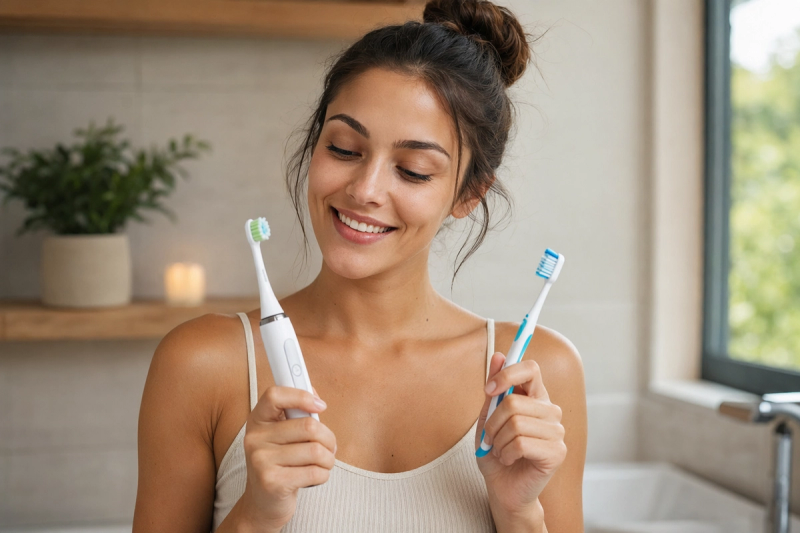
The honest answer: both can work, but “worth it” depends on your mouth, your habits, and your budget
#Electric toothbrushes have become one of those wellness purchases that somehow feels small and expensive at the same time. It’s just a toothbrush, right? But then you’re standing in the aisle, looking at a basic manual brush for a few dollars and an electric one that costs as much as a week of groceries, and suddenly oral care feels weirdly complicated.
Here’s the careful, dentist-aligned version: a manual toothbrush can clean your teeth well if you use it properly and consistently. An electric toothbrush may help some people remove more plaque and reduce gum inflammation, especially if technique is a struggle, brushing feels rushed, or grip and dexterity are limited. But it is not magic. It does not replace flossing or interdental cleaning, it does not “fix” gum disease on its own, and it definitely doesn’t mean you can brush badly and still win.
So the real question is not “Is electric better?” It’s more like: will an electric toothbrush make the healthy thing easier for you to actually do, twice a day, without brushing too hard or giving up after 30 seconds? That’s the part people don’t always talk about.
What the research says, without making it sound more dramatic than it is
#The best-known evidence often cited in this area is a Cochrane review published in 2014, which looked at dozens of trials comparing powered toothbrushes with manual toothbrushes. The review found that powered brushes reduced plaque and gingivitis more than manual brushes, with effects becoming more noticeable after longer-term use. In broad terms, powered brushes showed modest but meaningful reductions in plaque and gum inflammation compared with manual brushing.
That sounds like a slam dunk, but a bit of caution is useful. Research studies are not the same as real life. People in studies may brush differently because they know they are being watched. The type of electric toothbrush matters. Technique still matters. And “less plaque on average” doesn’t mean every single person needs to buy a device tomorrow morning.
The American Dental Association’s general guidance remains pretty practical: brush twice a day for two minutes with fluoride toothpaste, clean between the teeth daily, replace toothbrushes or brush heads about every three to four months, and see a dentist regularly. The ADA also notes that both manual and powered toothbrushes can be effective. That’s probably the most balanced place to start.
Why electric toothbrushes can feel easier for some people
#A lot of people don’t have a knowledge problem. They know they’re “supposed” to brush for two minutes. They know they shouldn’t scrub like they’re sanding furniture. They know flossing exists, even if the floss sits in the drawer judging everyone. The issue is the routine itself.
Electric toothbrushes can reduce some of the effort. The brush head moves on its own, so your job is more about guiding it gently along the teeth and gumline. Many models also include a timer, often with 30-second pacing for each quadrant of the mouth. That tiny buzz telling you to move sections may sound silly, but it can be genuinely helpful if you normally brush for, like, 45 seconds and call it a day.
Pressure sensors are another useful feature. Brushing harder does not clean better. It may irritate gums and contribute to enamel wear over time, especially if someone already has gum recession or sensitivity. A brush that lights up or slows down when too much pressure is applied can act like a gentle little “hey, ease up” reminder. Not glamorous, but useful.
Where a manual toothbrush still holds up really well
#Manual toothbrushes are not outdated junk. A soft-bristled manual brush used with good technique can do the job. They are cheap, easy to replace, easy to pack, quiet, and don’t need charging. If you brush for two full minutes, use gentle circular or small back-and-forth motions near the gumline, reach all surfaces, and clean between your teeth daily, you may not need anything fancier.
Manual brushes also make sense for people who dislike vibration, have sensory sensitivities, travel often, or simply don’t want another device in the bathroom. There’s something nice about a tool that doesn’t need an app, a charger, a subscription brush head plan, or a blinking battery light at 11 pm.
The catch is technique. Manual brushing asks more from your hand and your attention. If you tend to rush, miss the back molars, brush too aggressively, or forget how long you’ve been brushing, a manual brush may technically be enough but practically not working that well for you. That gap between “can work” and “does work in real life” is where electric toothbrushes earn their fans.
Who may benefit most from an electric toothbrush
#Electric toothbrushes may be especially helpful for people who have trouble brushing thoroughly with a manual brush. That can include older adults, people with arthritis or reduced hand strength, people with mobility or coordination challenges, and anyone wearing braces or orthodontic appliances. The smaller moving brush head can make it easier to work around brackets, wires, and awkward spots, though orthodontic care still needs specific guidance from a dental professional.
They may also help people who are trying to build consistency. A built-in timer, pressure sensor, and smaller head can make brushing feel more guided. Some newer brushes have apps, coaching, and colorful charts, which some people love and other people find deeply annoying. Both reactions are valid. If the app helps you brush better, great. If it makes oral care feel like homework with notifications, skip it.
Children may benefit from electric brushes too, especially if the timer makes brushing more engaging, but parents and caregivers should choose age-appropriate brushes and supervise brushing depending on the child’s age and ability. For very young children, toothpaste amount and swallowing risk matter, so it’s worth following pediatric dental guidance rather than guessing.
When an electric toothbrush may not be worth the money
#If you already brush carefully for two minutes twice daily, use a soft brush, clean between your teeth, and your dentist or hygienist says your plaque control is good, an electric toothbrush may be a nice upgrade rather than a necessary one. It might feel cleaner. It might be more pleasant. But it may not be the best use of money if the rest of your routine is already solid.
Also, electric toothbrushes have ongoing costs. Replacement heads are usually more expensive than manual brushes, and they vary a lot by brand. Some models lock you into pricier brush heads, which is one of those small expenses that becomes less small over a year or two. If the cost makes you delay replacing the brush head when it’s worn out, that’s not ideal. A fresh, soft manual toothbrush may be better than an old electric head with frayed bristles.
There’s also the charging thing. Some people forget. Some travel adapters are bulky. Some bathrooms have exactly one outlet and it’s already occupied by a hair dryer, razor, or mystery plug that nobody wants to unplug. Personal care devices can be helpful, but they should make life easier, not create a tiny maintenance project. It’s similar to other grooming choices, honestly — the “best” tool is often the one you’ll use correctly. If you like practical comparison guides, this same logic shows up in Electric Shaver vs Trimmer vs Razor: What Should Beginners Buy for Grooming?.
The features that actually matter, and the ones that are mostly nice-to-have
#If you decide to buy an electric toothbrush, you do not necessarily need the fanciest model. The core features that tend to matter most are a two-minute timer, a pressure sensor, a comfortable handle, and easy-to-find replacement heads. A small brush head can also help reach the back teeth. Soft bristles are still the usual recommendation, whether the brush is manual or electric.
- Useful: two-minute timer, quadrant pacer, pressure sensor, soft bristles, comfortable grip
- Useful for some people: travel case, long battery life, sensitive mode, orthodontic brush heads
- Optional: Bluetooth app tracking, brushing scores, decorative lights, multiple fancy modes you may never touch
Oscillating-rotating and sonic brushes are the two common categories people compare. Oscillating-rotating heads move in small circular motions, while sonic brushes vibrate rapidly and usually have a more traditional brush-head shape. Research has often found powered brushes helpful overall, and some analyses suggest oscillating-rotating models may have an edge, but the difference may not matter as much as consistency, comfort, and technique. If one style feels awful in your mouth, you probably won’t use it well.
Electric vs manual: a simple comparison
#| Factor | Electric toothbrush | Manual toothbrush |
|---|---|---|
| Cleaning support | May help remove more plaque for some users, especially with good guidance and regular use | Can clean very well with proper technique and enough time |
| Technique required | Still requires gentle positioning, but the brush does much of the motion | Requires more active brushing skill and attention |
| Cost | Higher upfront cost plus replacement heads | Low upfront cost and cheap replacements |
| Helpful features | Timer, pressure sensor, modes, sometimes app coaching | Simple, no charging, easy to replace |
| Travel | Needs charging or batteries, may be bulkier | Light, quiet, no charger needed |
| Best for | People who rush, brush too hard, have dexterity issues, braces, or want guided brushing | People with strong technique, tight budgets, sensory preferences, or simple routines |
Gum health, bleeding, and sensitivity: don’t ignore the signals
#If your gums bleed when you brush or clean between your teeth, it can be tempting to blame the toothbrush. Sometimes brushing too hard is part of the problem. Sometimes a worn brush, stiff bristles, or rough technique irritates the gums. But bleeding can also be a sign of gum inflammation or other oral health issues that deserve professional attention.
An electric toothbrush may help improve plaque control and may support healthier gums when used gently and consistently. But it should not be treated as a treatment plan for gum disease. If bleeding is frequent, worsening, painful, or comes with swelling, loose teeth, persistent bad breath, sores, or changes in your bite, it’s sensible to speak with a dentist or qualified dental professional. The same goes for severe tooth pain, facial swelling, fever, injury, or symptoms that feel unusual. Dental problems can escalate, and waiting it out is not always the safer move.
For sensitivity, a softer approach usually matters. That means soft bristles, light pressure, and not scrubbing aggressively at the gumline. Some people use toothpaste made for sensitive teeth, but persistent or one-sided sensitivity should be checked, because causes can vary from enamel wear to gum recession to cavities or cracks. Online advice can help you ask better questions, but it can’t look inside your mouth.
Technique matters more than people want it to
#This is the unsexy part, sorry. Whether you use electric or manual, brushing well is still a skill. The general recommendation is to brush twice daily for two minutes with fluoride toothpaste. Aim for the outer surfaces, inner surfaces, and chewing surfaces. Angle the bristles gently toward the gumline. Don’t saw back and forth with force. Don’t forget the back molars, because they are basically where good intentions go to die.
With an electric toothbrush, many dental professionals suggest letting the brush do the work. Hold it lightly against each tooth for a moment, then move slowly along the gumline. Pressing hard usually defeats the point. With a manual toothbrush, gentle small strokes are usually better than big aggressive scrubs. And with either one, cleaning between the teeth matters because toothbrush bristles do not fully reach those tight spaces.
It’s a bit like the wellness debate around devices versus habits. A tool can support the habit, but it doesn’t replace the habit. The same kind of question comes up with sleep gadgets and light exposure — when does a device add real value, and when is the simpler routine enough? That’s covered from a different angle in Morning Sunlight vs Light Therapy Lamp for Better Sleep.
The cost question: what are you really paying for?
#A basic manual toothbrush is hard to beat on price. Even replacing it every three to four months, the yearly cost stays low. Electric toothbrushes can range from budget-friendly to very expensive, and the brush heads are the ongoing part people forget to calculate. If you buy one, check the replacement head price before you buy the handle. Seriously. That is where some brands quietly get you.
The value comes from whether the device changes your actual behavior. If the timer helps you brush longer, the pressure sensor helps you stop scrubbing, and the moving head helps you clean more thoroughly, then the money may be worth it. If you buy a premium model and use it exactly like a rushed manual brush, then no, the upgrade probably didn’t do much.
A practical middle ground is to start with an affordable, reputable electric brush that has the essential features rather than jumping into the luxury version. Look for a comfortable grip, soft heads, a timer, and replacement heads you can easily buy. If you’re choosing for a child, an older adult, or someone with specific needs, ask a dentist for suggestions.
Sustainability and clutter, because that matters too
#Manual toothbrushes create plastic waste, and electric brush heads do too. Electric handles also involve batteries and electronics, so they are not automatically the greener option. Some companies offer recycling programs or replaceable heads with less plastic, but availability varies. From a sustainability perspective, the best choice is not obvious and depends on how long the electric handle lasts, how often heads are replaced, and what recycling options exist where you live.
There’s also bathroom clutter. Chargers, stands, extra heads, travel cases — it can all add up. For some people, the structure feels motivating. For others, it’s just another thing on the counter. This sounds minor, but routines stick better when they fit your real life, not the imaginary version of your life where every drawer is labeled and no one ever loses a charger.
The same “basic versus upgrade” thinking applies in skin care and other personal-care routines too. Sometimes the simple option is plenty, and sometimes a more targeted product is worth it because it solves a specific problem. If that kind of practical buying decision is your thing, Barrier Repair Cream vs Moisturizer: What Should Beginners Buy? has a similar beginner-friendly approach.
So, should you buy one?
#Buy an electric toothbrush if you want help brushing for the full two minutes, you tend to brush too hard, you struggle to clean thoroughly, you have braces or hard-to-reach areas, or you have limited dexterity and a powered handle would make brushing easier. It may also be worth it if your dentist or hygienist has mentioned plaque buildup or gum inflammation and you want a tool that supports better daily cleaning.
Stick with a manual toothbrush if your technique is good, your oral health professional is happy with your home care, you’re on a tight budget, you dislike vibration, or you simply prefer a low-maintenance routine. There is no wellness medal for buying the more expensive thing. A cheap soft toothbrush used well is better than a fancy electric brush used badly.
If you’re unsure, ask at your next dental cleaning. A hygienist can often tell where plaque tends to build up and whether your brushing pattern suggests rushing, missed areas, or too much pressure. That kind of personalized feedback is much more useful than guessing based on packaging claims.
A practical buying checklist
#- Choose soft bristles. Hard bristles are rarely necessary and may be too rough for many people.
- Look for a two-minute timer and, if possible, a pressure sensor. These are more useful than ten brushing modes.
- Check replacement head cost and availability before buying the handle.
- Make sure the handle feels comfortable, especially for children, older adults, or anyone with grip issues.
- Replace the brush head or manual toothbrush every three to four months, or sooner if bristles are frayed.
- Use fluoride toothpaste unless your dental professional has advised something different for your situation.
- Keep cleaning between your teeth. Electric brushing does not cancel out floss, interdental brushes, or other tools recommended for you.
Final take: worth it for some, not mandatory for everyone
#An electric toothbrush can be worth buying, especially if it makes good brushing easier, more consistent, and gentler. The research suggests powered brushes may offer an advantage for plaque and gingivitis reduction, but the advantage is not a free pass. Technique, time, fluoride toothpaste, interdental cleaning, and regular dental care still matter.
If your budget is limited, don’t feel guilty about using a manual toothbrush. Focus on a soft brush, two minutes twice a day, gentle pressure, and daily cleaning between the teeth. If you can afford an electric model and think the timer or pressure sensor would help, it may be a sensible upgrade — not because it’s trendy, but because it supports the boring daily habit that actually protects oral health.
The best toothbrush is the one you can use gently, thoroughly, and consistently — and the one your dental professional agrees fits your mouth and your needs.
And if you’re comparing everyday wellness purchases without wanting the hype machine, you’ll find more practical guides like this on AllBlogs.in.