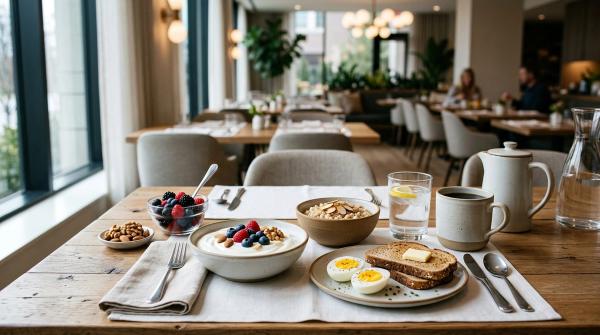
Waking up in a new city should be one of the fun parts of a trip. Maybe everyone slept better than expected. Maybe the kids are in a good mood. Maybe breakfast is included, which sounds like one less thing to think about.
And then you walk into the hotel breakfast room.
There are pastries, eggs in a warming tray, shared tongs, a toaster full of crumbs, open tubs of butter, and a long line of people trying to get to the coffee. If you or someone in your family has food allergies, celiac disease, or serious dietary restrictions, that “easy” breakfast can suddenly feel like a lot.
A safer hotel breakfast with food allergies usually comes down to a few simple habits: spotting cross-contact risks, asking the right questions, and bringing backup food so you’re not forced into a risky choice just because everyone is hungry.
Quick answer: the safest hotel breakfast strategy
#For hotel breakfast food allergies, the safest approach is to be careful around the highest cross-contact areas. These usually include shared toasters, bakery displays, open condiments, toppings bars, and buffet trays with shared utensils.
Start with the things that are easiest to control: whole fruit you can peel yourself, factory-sealed single-serve foods with labels, and made-to-order items only if staff can use clean equipment and safe ingredients from the kitchen.
Try to ask how something is prepared, not just whether it is “safe.” And bring a small backup breakfast kit. Because sometimes the honest answer is that the buffet just isn’t going to work that morning. It’s much better to know that before a hungry child, or adult, is close to tears at the table.
Why hotel breakfast buffets are tricky
#A buffet is not just food sitting on a table. It is a busy little storm of people, crumbs, utensils, refills, and good intentions.
Even if a food starts out safe, it may not stay that way once it is on the buffet line. Guests move tongs around. Crumbs fall into places they shouldn’t. Someone uses the wrong spoon. Staff refill trays quickly. Foods often sit close together with very little space between them.
That is the hard part of finding an allergy-friendly hotel breakfast. The question is not only, “Does this food contain my allergen?” It is also, “What touched it? What was it cooked with? What happened after it left the kitchen?”
Common buffet cross-contact risks include:
- Shared serving utensils: Tongs from pastries may end up in eggs, fruit, potatoes, or another dish.
- Crumbs from nearby foods: Toast, muffins, croissants, waffles, and pastries can leave crumbs on counters and in nearby trays.
- Open containers: Butter, jam, cream cheese, nut spreads, syrup, and toppings can collect crumbs when people double-dip knives or spoons.
- Crowded layouts: A food may look fine but be sitting right next to bread, nuts, dairy, or another problem food.
- Fast refilling: Staff may use shared tools or refill dishes in ways you can’t see.
This does not mean every hotel breakfast is impossible. It just means you need to look at the whole setup, not only the food itself.
Safer options to look for first
#No buffet food is automatically safe for everyone. Your allergy plan, celiac needs, or dietary restrictions come first. Still, some breakfast options are usually easier to evaluate than others.
Whole fruit you can peel yourself
#Bananas and oranges are often easier than fruit salad or sliced melon because the peel gives you more control. Whole apples may also work, especially if you can wash them first.
If fruit has been sitting beside pastries or handled with shared tools, use your judgment. When in doubt, choose fruit you can wash or peel yourself.
Factory-sealed single-serve items
#Individually sealed yogurt cups, sealed cereal boxes, and packaged items can be helpful if they have clear labels and fit your needs.
Read the ingredient list yourself whenever possible, especially with flavored yogurts, granola, cereals, muffins, and snack bars. Ingredients can change, and staff may not know every detail.
If sealed items are sitting out near messy or high-risk foods, you can ask whether there are unopened ones in the back. Sometimes staff are happy to grab one. Sometimes they are too busy or cannot. Either way, it is worth asking.
Made-to-order eggs, but only with the right process
#An omelet station or made-to-order egg station may be safer than a tray of buffet eggs, but only if the process is careful enough.
You can ask for:
- A clean pan
- Fresh utensils
- Ingredients from unopened or back-kitchen containers
- No shared ladle, spatula, or cooking surface
- No butter, oil, cheese, or fillings unless ingredients are confirmed
If the station is slammed, the staff seems unsure, or the same tools are being used for every order, it may be better to skip it.
Simple drinks
#Coffee and tea may be manageable for many travelers, but pay attention to the extras. Shared milk pitchers, creamers, flavor syrups, toppings, and milk frothers can create problems depending on your allergy or restriction.
If you need milk or a milk alternative, ask for a sealed container if available, and check the label yourself.
Buffet foods to approach with caution, or skip
#Some hotel breakfast foods are hard to verify because they pass through too many hands, sit near too many other foods, or contain ingredients you can’t see.
Pre-cut fruit and fruit salad
#Pre-cut fruit can look like the safest thing on the buffet, but it is not always easy to trust. It may have been cut on shared boards, handled with shared gloves or utensils, or placed near pastries and toppings.
Fruit salad adds another issue: one ingredient, garnish, or utensil can affect the whole bowl.
If you want a lower-risk option, whole fruit is usually easier to manage.
Buffet scrambled eggs
#Large trays of scrambled eggs can be hard to confirm. They may contain milk, butter, cheese, seasoning blends, or other ingredients. The serving spoon may also have touched other foods.
If eggs are safe for you, made-to-order eggs prepared with a clean pan and clean utensils are usually easier to assess than eggs from a shared warming tray.
Breakfast potatoes
#Potatoes seem simple, but they can be surprisingly tricky. Ask how they are cooked. They may share a fryer, pan, oil, grill, or utensils with other breakfast foods. Seasonings can also be unclear.
A good question is:
“Are the breakfast potatoes cooked in a shared fryer or on shared equipment?”
Open toppings and condiments
#Open jam jars, butter dishes, cream cheese tubs, nut spreads, syrup pitchers, and topping bowls are high-risk for crumbs and shared utensils.
Even if the ingredient itself would normally be safe, the container may not be safe anymore once dozens of guests have used it.
Sealed single-serve packets are usually easier to check than open communal containers.
Granola, cereal, and toppings bars
#Granola and toppings may contain nuts, wheat, dairy, seeds, sesame, or other allergens. They can also be scooped with shared spoons.
If you cannot read a label or confirm the container, skip it. Breakfast is not the time to guess.
Bakery and toaster cautions
#The bakery and toaster area deserves special attention because it is one of the biggest cross-contact zones at hotel breakfast.
For anyone managing celiac disease, wheat allergy, or gluten-related dietary restrictions, a communal toaster is generally not a safe choice. Wheat crumbs stay inside the toaster. Bringing your own gluten-free bread does not make that toaster safe.
The same caution applies to toaster ovens, shared cutting boards, bread knives, pastry trays, and baskets of muffins or croissants.
If you want warm bread, you can ask whether the kitchen can heat your safe bread on clean foil or a clean tray, using clean gloves or utensils. If they cannot explain a careful process, it may be better to eat it untoasted or use your backup food.
Bakery counters can also be difficult for nut allergies, egg allergies, dairy allergies, sesame allergies, and other restrictions. Pastries may have hidden fillings, glazes, toppings, or shared baking and display surfaces. If staff cannot confirm ingredients and handling, it is completely reasonable to skip the bakery.
Questions to ask hotel staff
#Try not to rely on a quick “yes, it’s fine” from someone who may not know the kitchen process. Most people want to be helpful, but they may not understand what you need unless you ask clearly.
Be polite, but specific. If possible, ask to speak with the chef, kitchen manager, or food and beverage manager.
Helpful questions include:
- “I have a serious allergy to [allergen]. Can you tell me how this item is prepared?”
- “Is this made in the hotel kitchen, or does it arrive packaged from a supplier?”
- “Can I see the ingredient label or packaging?”
- “Can you prepare eggs in a clean pan with clean utensils?”
- “Can the ingredients come from the back kitchen instead of the open buffet containers?”
- “Are the potatoes cooked in a shared fryer, shared oil, or on a shared grill?”
- “Is there any sealed yogurt, cereal, bread, or milk available that has not been placed on the buffet?”
- “Do you use the same toaster, knife, board, or tray for regular bread and gluten-free bread?”
- “Are nuts, sesame, dairy, egg, wheat, or other allergens handled in the same area?”
- “If you are not sure, who would be the best person for me to ask?”
That last question matters. A careful “I’m not sure, let me check” is much better than a confident guess.
If you are traveling internationally or somewhere you do not speak the local language well, carry translated allergy cards. They can make breakfast conversations much easier. You can read more about using them here: food allergy cards for international travel restaurants.
When to skip buffet items
#Skipping food can feel frustrating, especially when breakfast is included in the room rate. You paid for it, so of course you want to use it.
But with food allergies or celiac disease, the safest choice is sometimes to walk away from one item, or from the buffet entirely.
Consider skipping an item when:
- Staff cannot answer basic ingredient or preparation questions
- The food is next to pastries, bread, nuts, or other problem foods
- Serving utensils are shared or have clearly moved between dishes
- The item is in an open communal container
- There are crumbs on or around the dish
- The toaster, grill, fryer, pan, or oil is shared
- Labels are missing or unclear
- The breakfast room is too busy for careful handling
- Your child is upset, rushed, or tempted to grab food
- You feel pressured to “just try it”
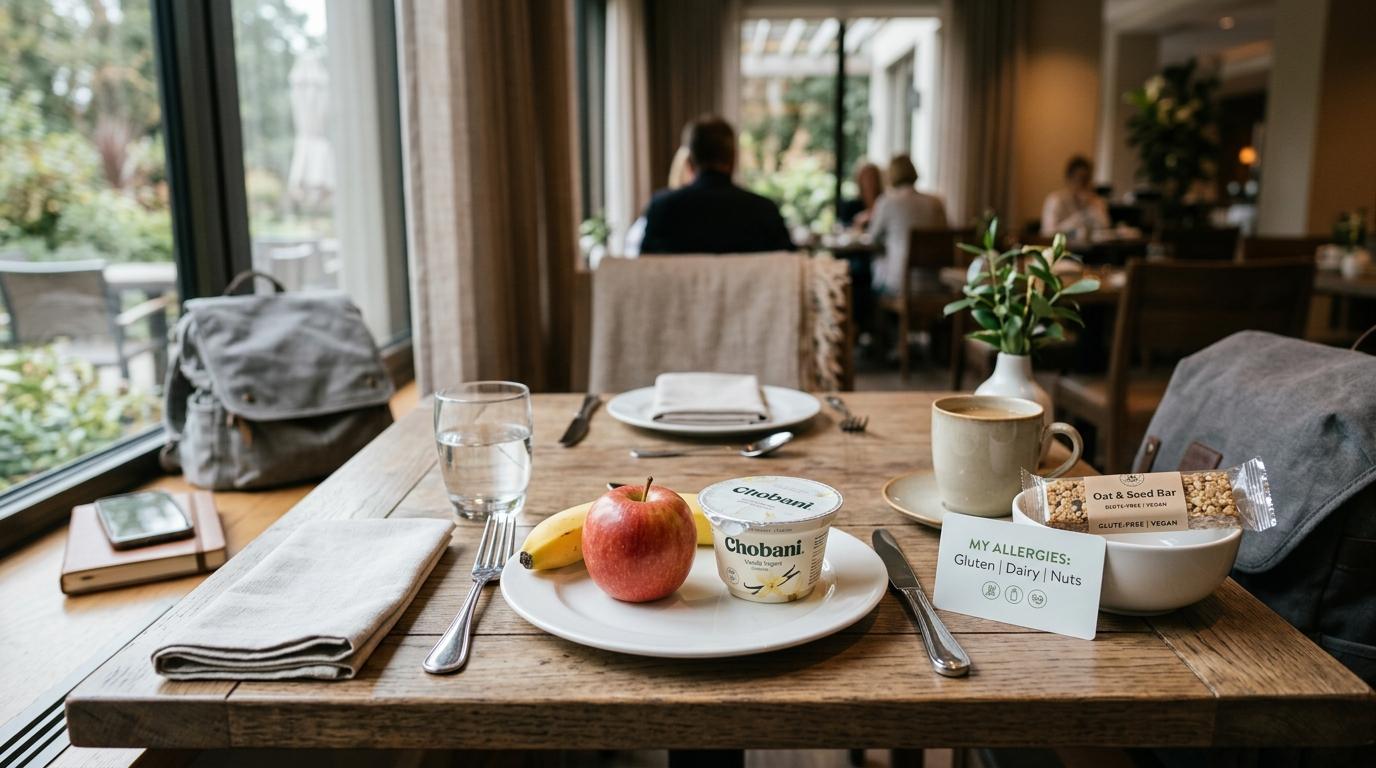
A safe hotel breakfast does not have to look like everyone else’s plate. Sometimes breakfast is a banana, a sealed yogurt, and coffee. Sometimes it is food you brought from home. That is not failure. That is planning.
Build a backup breakfast kit
#A backup kit takes a lot of stress out of hotel breakfast. It means you do not have to choose between hunger and risk.
Pack foods that fit your allergy plan, travel style, and destination. Useful options may include:
- Allergy-safe granola or protein bars
- Single-serve snacks that fit your needs, such as nut-free, dairy-free, gluten-free, or sesame-free options
- Certified safe instant oatmeal, if oats are safe for you
- Shelf-stable milk or milk alternative, if suitable and allowed for your travel route
- Your own safe bread, bagels, crackers, or muffins in a rigid container
- Single-serve spreads that are safe for you
- Protein powder packets, if they fit your diet
- A collapsible bowl and spoon
- Wipes for hands and surfaces
- Small food bags or containers for your own leftovers or safe foods
Be cautious with hotel room coffee makers or shared hot-water stations if cross-contact or cleanliness is a concern for your situation. If you need hot water, ask what is available and decide based on your comfort level.
The goal is not to pack your entire pantry. It is simply to make sure you have one reliable breakfast if the buffet does not work out.
Family and child allergy tips
#Hotel breakfast can be especially hard for children. They see pancakes, muffins, cereal dispensers, toppings, juice, and other guests grabbing whatever they want.
A little structure helps, even if everyone is tired.
Set the rules before leaving the room
#Do not wait until your child is standing in front of the waffle station. Before breakfast, calmly review the plan.
For example:
- “No touching buffet food until an adult checks it.”
- “We only eat food from our safe list.”
- “If you want something, ask first.”
- “Your safe treat is in our bag.”
Keep it short and simple. Nobody needs a long lecture at 7:30 in the morning.
Bring a safe “yes” food
#Children hear “no” a lot when traveling with allergies. Bring something they are excited to eat, such as a safe muffin, bar, cereal, or bread from home.
That way, breakfast is not only about what they cannot have. If the hotel has pastries your child cannot eat, your safe item helps them feel included at the table.
Use a tag-team system
#If you are traveling with another adult, one person can stay with the child while the other checks the buffet and talks to staff.
This keeps a hungry child away from unsafe foods while decisions are being made.
If you are the only adult, consider seating your child first with a safe snack from your bag before you inspect the buffet.
Watch for little hands and shared surfaces
#Buffets are full of touch points: serving spoons, counters, cereal dispensers, juice buttons, chair arms, and tables. For some families, handwashing before and after breakfast is an important part of the routine.
You know your child’s risk level and allergy plan best. Keep the routine calm, clear, and consistent — or as consistent as travel allows.
Emergency preparedness while traveling
#Even with careful planning, accidental exposure can happen. Before your trip, make sure your emergency plan is current and that any prescribed emergency medication is with you, not upstairs in the hotel room.
If you have questions about managing your specific allergy, celiac disease, or dietary restriction while traveling, talk with your doctor or allergist before you leave.
This is not about expecting something to go wrong. It is about being prepared enough to enjoy the trip with less stress.
A calm breakfast plan you can repeat
#Here is a simple order of operations for travel breakfast allergy tips:
- Walk the buffet before taking food.
- Notice the obvious high-risk zones, especially bakery, toaster, open toppings, and shared utensils.
- Look for whole fruit and sealed items.
- Ask staff specific process questions.
- Choose made-to-order food only if clean equipment and safe ingredients are possible.
- Skip anything unclear.
- Use your backup breakfast kit without guilt.
A safe hotel breakfast is not about finding the perfect buffet. It is about making steady, informed choices and having enough backup that you never feel trapped.
For more practical travel and food safety guides, visit allblogs.