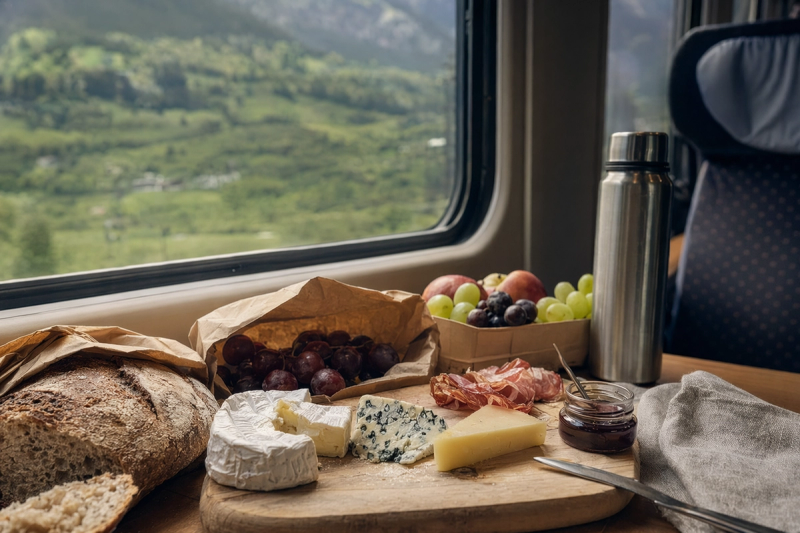
The best meal in Europe is sometimes balanced on your knees
#I used to think train food meant a sad triangle sandwich, a hot coffee that tastes faintly like cardboard, and maybe a chocolate bar bought in panic six minutes before departure. Then I started traveling around Europe by train more often, and somewhere between Lyon and Geneva, with a crusty baguette tearing crumbs all over my black jeans, I realized the train picnic is honestly one of the great food experiences of the continent. Not fancy. Not plated. Usually not even comfortable. But when you get it right? Bread, cheese, fruit, a little chocolate, maybe some olives, maybe a paper cup of wine if the vibe allows... it feels like you cracked the code.
And the funny thing is, it’s not really about luxury. It’s timing. It’s knowing which bread survives four hours in a bag without becoming a weapon. It’s choosing cheese that smells romantic in a market but doesn’t become a sweaty disaster by Strasbourg. It’s buying peaches only when you are emotionally prepared for peach juice on your sleeve. I have learned these things the messy way, like most useful travel lessons.
My first proper train picnic was in France, obviously, because France cheats
#The first one I remember properly was a morning train from Paris toward Avignon. I’d stayed near Gare de Lyon, and I walked out stupidly early, still half-asleep, and found a bakery already warm and alive, with the smell of butter just floating into the street. I bought a demi-baguette, a pain au chocolat for “later” that lasted maybe 11 minutes, a small wedge of Comté from a cheese counter nearby, and these little apricots that looked ugly in the best possible way. Like actual fruit, not display fruit.
On the train, I waited too long to eat because I thought I should be civilized and let the landscape start first. Rookie mistake. By the time we were past the grey edges of the city and into that soft, green, old-France countryside, I was starving and trying to cut Comté with a hotel key card. Don’t do that. It kind of worked, but also made me feel like a raccoon in linen.
Still, that meal was perfect. The bread cracked. The cheese had that nutty, salty, cellar-ish thing going on. The apricots were tart and sweet and one had a bruise I ate around because, whatever, I was on holiday and nobody was watching. It cost less than a mediocre station sandwich and made the whole ride feel like a moving restaurant with better windows.
Bread is not just bread when you’re on a train
#This is the hill I will die on: bread choice makes or breaks the European train picnic. A fresh baguette is glorious, yes, but it’s also basically a crumb grenade. Ciabatta behaves better. German seeded rolls are practical and smugly healthy. A Swiss rye loaf can survive being shoved next to a camera, a scarf, and a book you definitely won’t read. In Portugal, I once bought a little rustic roll in Porto before a train to Coimbra, and it was so chewy and good that I ate half of it plain while still standing on the platform. No regrets, except I had less bread for the cheese.
My basic bread rules now are not elegant but they work:
- If the train ride is under two hours, buy the flaky, crusty, messy thing. Live a little.
- If it’s three to six hours, get something sturdier, like a small sourdough roll, rye, focaccia, or seeded bread.
- Avoid sliced sandwich bread unless you’re desperate. It gets weirdly damp in a bag and has no soul. Sorry.
- Always ask for it sliced if you can, unless you enjoy ripping bread apart like a medieval peasant while your seatmate pretends not to notice.
Focaccia is my secret favorite, especially in Italy. Before a train from Bologna to Verona, I bought a square of rosemary focaccia from a bakery close to the station, plus a few tomatoes and a small chunk of pecorino. The oil stained the paper bag, then stained my napkin, then nearly stained my dignity. But wow. That meal tasted like the sun had been salted.
Cheese: the romance, the danger, the smell problem
#Cheese is where people get brave and then immediately regret it. I say this with love, because I have been that person. I once bought a very ripe Époisses-adjacent situation in Burgundy because the cheesemonger looked so proud and I wanted to be the kind of traveler who says yes to the local thing. Twenty minutes later, on a regional train, I opened my bag and the cheese announced itself to the carriage like a tiny barnyard opera. A woman across the aisle looked at me. Not angrily exactly. More like, “you know what you did.”
So now I think about cheese in two categories: cheese for eating soon, and cheese for traveling around like a normal person. Hard and semi-hard cheeses are your friends. Comté, Gruyère, aged Gouda, Manchego, pecorino, Appenzeller, mature cheddar if you’re passing through the UK or Ireland. They slice badly with a plastic knife, sure, but they hold up better and they don’t ooze. Soft cheeses can be gorgeous, but they are needier. Brie, Camembert, fresh goat cheese, burrata, ricotta-ish things, anything very creamy... I only buy those if I know I’m eating them quickly or I’ve got a cooler bag.
Food-safety guidance in a lot of countries uses the same general idea: perishable foods shouldn’t hang out warm for hours. The common two-hour rule is boring, yes, but it has saved me from making bad choices on hot travel days. If you’re trying to decide what cheese can survive a station-to-train-to-hotel situation, I’ve found this guide on Supermarket Cheese While Traveling: Fridge and Picnic Tips genuinely useful, especially the hard vs soft cheese bit. And if you’re buying from a farmers market before boarding, where everything looks handmade and seductive and slightly risky, this one on Farmers Market Cheese Travel Safety: Soft Cheese and Ice Packs is worth reading before you commit to the creamy stuff.
Fruit is the mood, but choose it like you’ve been hurt before
#Fruit on trains feels wholesome until you are holding a leaking plum above your lap while the train curves through the Alps. I love fruit for train picnics, but not all fruit is train fruit. Apples are reliable. Pears are lovely but only if they’re not at that five-minute window between rock-hard and collapse. Grapes are elite. Clementines are almost perfect except you need to deal with peels. Cherries are romantic until you remember pits exist. Strawberries are a gamble, though in late spring in France or Belgium I become weak and buy them anyway.
My most dramatic fruit moment happened on a train from Barcelona to Girona. I had bought peaches at La Boqueria because they smelled like perfume, actual perfume, and I thought I’d be smart and eat one before it got bruised. Well. The peach exploded. Not literally, but close enough. Juice down my wrist, onto the tray table, onto a napkin that instantly gave up. The guy next to me handed me another napkin without saying anything, which is one of the kindest forms of European public transport friendship.
But I still buy peaches. Of course I do. Travel makes hypocrites of us all.
Timing is the thing nobody talks about enough
#Here’s the real strategy. Not what to buy, but when to buy and when to eat. A train picnic has a rhythm. If you shop too early, everything gets warm, crushed, or mysteriously damp. If you shop too late, you end up sprinting through a station buying paprika chips and a banana from a kiosk. Which, fine, I’ve done it, but it’s not exactly your dream culinary travel moment.
For morning trains, I like to buy bread fresh the same morning, then cheese the night before only if it’s a hard cheese and I have a fridge. Fruit can be bought the day before, but I keep it somewhere visible because I have abandoned so many apples in hotel rooms it’s embarassing. For midday trains, I shop 30 to 60 minutes before departure if there’s a decent market, bakery, or supermarket close to the station. For evening trains, I’m cautious. By 7 pm, the good bakery shelves can be sad and empty, and markets are usually done. That’s when a supermarket becomes your friend.
- Eat soft cheese early in the journey, especially on warm days. Don’t save it for hour five unless you packed it properly.
- Keep bread separate from wet fruit. This sounds obvious until apricot juice ruins your beautiful roll.
- Open the smelly cheese in stages, like you are negotiating peace. Small bites. Quick wrapping. Don’t terrorize carriage B.
- Save chocolate for after the conductor checks tickets, because I swear that’s when I finally relax.
Markets near stations are my favorite kind of treasure hunt
#Some people plan train travel around scenery. I do that too, but I also plan around markets. There’s something so satisfying about building a meal from local bits before getting on a train. In Paris, even a basic neighborhood fromagerie can make you feel like you’re doing something important with your life. In Zurich, the station food options are painfully tidy and expensive, but also often good, and a little Swiss cheese with dense bread makes sense when the mountains are about to show off. In Vienna, I’ve done the Naschmarkt-to-train thing, grabbing bread, fruit, and pickles before heading west, though you do need time because it’s not exactly inside the Hauptbahnhof.
Bologna might be one of my favorite pre-train food cities. The old food streets near Quadrilatero are dangerous if you’re hungry, because suddenly you need mortadella, Parmigiano Reggiano, cherries, a little cake, and maybe fresh pasta even though fresh pasta is not a train picnic food. I repeat: fresh pasta is not train picnic food. Unless it is. No, it’s not. See, this is where I contradict myself because I once ate tortellini from a takeaway container on a platform and it was fantastic, but I would not recommend it as a lifestyle.
Station supermarkets can be surprisingly useful too. I’ve built excellent meals from Monoprix in France, Migros or Coop in Switzerland, REWE in Germany, Albert Heijn in the Netherlands, and random little Italian station shops where the mozzarella looked tempting but I had to be a grown-up and not buy it for a hot train. The trick is ignoring the sad prepared salads with mayonnaise unless you can keep them cold and eat them soon. If you’re tempted by cold-case pasta salads or deli items, the practical notes in Deli Salad Bar Food Safety for Travelers are a good reality check, because train picnics are fun but food poisoning in a tiny train toilet is not character building.
The unofficial etiquette of eating on European trains
#Most European trains are pretty relaxed about bringing your own food, though rules can vary by operator and route, and you should check if you’re on something special or international. But legality is not the same as kindness. The real rules are social. Don’t bring anything that smells like a fish market in August. Don’t spread your entire feast over two seats when the train is full. Don’t peel boiled eggs slowly in silence like a villain. Actually, I love boiled eggs, but on trains they’re risky socially. People have feelings.
I try to pack like I’ll have no table, because often I won’t. A small cloth or thick napkin helps. A folding knife is useful only if you’re not flying with carry-on before the train, because airport security will take it and you’ll feel silly. I usually carry a lightweight spork, a few paper napkins, a reusable bag for rubbish, and sometimes a tiny container of salt. Salt sounds extra until you buy tomatoes in summer and realize you are a genius.
- Quiet foods are better than crunchy chaos, unless it’s a short ride and you don’t care.
- Wrapped cheese is better than open cheese. Obvious, but somehow not.
- Bring water. Wine is cute, dehydration is not cute.
- If you have a window seat, don’t make the aisle person stand up every ten minutes because you forgot grapes in your backpack.
Picnic meals by route, because the landscape changes the appetite
#Certain routes just demand certain foods. I don’t know if that’s science or me being dramatic, but I stand by it. On a French TGV heading south, I want baguette, Comté, apricots, maybe saucisson if I’m not sitting too close to strangers. On a Swiss train, I want something tidy and alpine: rye bread, Gruyère, apples, dark chocolate. On the train from Amsterdam to Antwerp or Brussels, I tend to go for Gouda, seeded crackers, grapes, and maybe stroopwafels because I am not made of stone.
Italy is harder because everything is tempting and some of it is too wet. A safe Italian train picnic for me is focaccia, pecorino or Parmigiano, cherry tomatoes if they’re firm, and fruit that won’t leak. Maybe prosciutto if it’s packed well and I’m eating soon. Spain? Manchego, breadsticks or pan, oranges, almonds, and if you can find good membrillo, that quince paste with cheese situation is ridiculous. In Germany and Austria, I like seeded rolls, mountain cheese, radishes if I can find them, grapes or apples, and a pastry for later because trains make me want cake. I can’t explain it.
One of my favorite rides was from Munich toward Salzburg, where I had a pretzel, a chunk of Bergkäse, an apple, and a square of chocolate. Nothing complicated. The train slipped past lakes and farms and those suspiciously perfect little villages, and the whole meal felt like it belonged to the view. That’s the magic bit. A train picnic is not just food you eat while traveling. It somehow tastes like the route.
What I pack now, after many sticky mistakes
#I’ve become the sort of person who has a “train picnic kit,” which sounds unbearably organized, but it’s really just a few things shoved into a side pocket. Napkins, always. A reusable produce bag. A zip bag for cheese wrappers or fruit pits. A tiny wooden knife if I bought one somewhere and haven’t lost it yet. Sometimes a beeswax wrap, though I forget it half the time. Wet wipes, because fruit juice is chaos. And a small tote, because walking onto a train juggling bread, coffee, and a paper bag of cherries is how you lose either your dignity or your cherries.
I don’t pack plates. I tried that phase and it was annoying. I don’t pack glass jars unless I’m doing a short ride, because jars get heavy and then you resent your own lunch. I don’t pack anything that requires assembly more complicated than “tear bread, add cheese, eat.” You may think you’re going to lovingly build little open-faced sandwiches while the countryside rolls by. Maybe you are. But more likely the train will tilt, your tray table will be tiny, and your tomato will roll into your scarf.
The meal formula I actually use
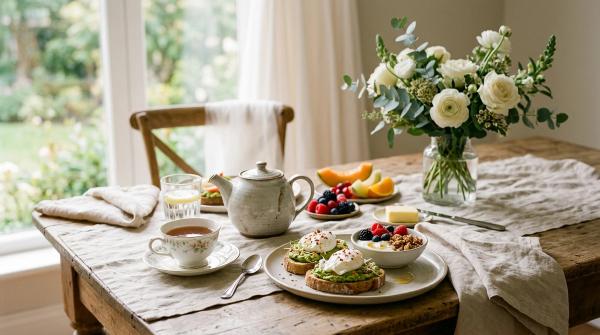
#After years of over-buying, under-buying, forgetting knives, choosing cheeses that could clear a carriage, and once sitting on a nectarine, I’ve landed on a formula that works almost anywhere in Europe. One bread. One cheese. One fruit. One little salty thing. One sweet thing. Water. That’s it. It sounds too basic, but it leaves room for local personality.
So in France it might be baguette, Comté, apricots, cornichons, and dark chocolate. In Spain: crusty bread, Manchego, oranges, almonds, and turrón if it’s around. In Switzerland: rye, Gruyère, apple, pickles, chocolate. In Italy: focaccia, pecorino, grapes, olives, and a biscotti or tiny pastry. The formula is simple enough that you won’t panic-shop, but flexible enough that you still feel like you’re eating where you are, not just feeding yourself calories between museums.
A good train picnic should taste local, survive the journey, and not make the stranger next to you hate your entire family line.
A few mistakes I’d still probably make again
#I should tell you not to buy too much. But I always buy too much. A market does something to my brain. Suddenly I’m convinced I need three cheeses for a two-hour train, like I’m hosting a moving dinner party for imaginary friends. I should tell you not to buy delicate berries. But if it’s June and they smell amazing, I’m probably buying them and eating them immediately with stained fingers. I should tell you not to drink wine on trains unless you know the rules and the vibe, and yes, that’s sensible. But I’ve had a plastic cup of red wine with bread and cheese rolling through southern France and it felt, at the time, like the correct answer to life.
Travel food doesn’t have to be perfect to be memorable. Actually, the imperfect ones are the ones I remember. The orange I peeled badly between Cologne and Brussels. The cheese I cut with a room key. The cherries I shared with a friend on a delayed train in Italy while we complained, then stopped complaining because the cherries were so good. The bread I bought in a rush in Lisbon that turned out to be sweet, not savory, and weirdly worked with cheese anyway.
Final crumbs from the carriage floor
#If you’re planning a European train trip, give the picnic some respect. Not too much respect, because then you’ll overthink it and end up with artisanal stress. Just enough. Buy bread that fits the length of the journey. Choose cheese that won’t punish you or your neighbors. Pick fruit with a realistic understanding of gravity and juice. Time your shopping so the food is fresh but not turning questionable in your bag. And leave space for one impulsive thing, because that’s usually the best part.
For me, these little meals are now tied to the places as much as any restaurant reservation. I love restaurants, don’t get me wrong, I will happily plan a whole day around lunch. But there’s something about eating local bread and cheese while watching Europe slide past the window that gets under my skin. It’s simple, it’s cheap-ish, it’s occasionally messy, and it makes the journey feel like part of the meal instead of dead time between destinations. Anyway, if you’re into more food-travel rambles and practical little trip ideas, I’ve been browsing AllBlogs.in lately and it’s a nice rabbit hole for that kind of thing.