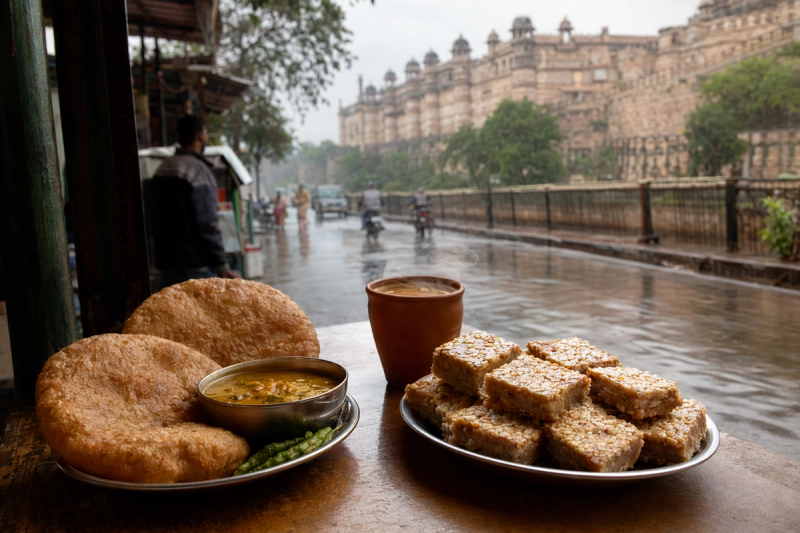
Rain on Gwalior stone, hot oil in the kadhai, and that first bite
#I reached Gwalior on one of those grey mornings where the whole city looks like it has been washed twice and not dried properly. The railway station was damp, the auto seats were damp, my backpack strap was damp, and honestly my mood was also a little damp because I had slept badly on the train. But then, somewhere between the station road and Lashkar, I smelled frying dough. Not just any frying dough. That deep, hing-heavy, ajwain-ish smell that tells you breakfast is not going to be polite today. It’s going to be oily, loud, spicy, and absolutly worth it.
Gwalior in the rain has a different personality. The fort sits above the city like it knows everything, the sandstone turns moody, traffic slows down but somehow honking increases, and tea stalls suddenly become the most important architecture in town. I had come with a rough plan, you know, fort in the morning, Jai Vilas Palace later, maybe some old market wandering. But food plans always bully travel plans. So my rainy morning became a slow crawl from bedai to poha-jalebi, from chai to kachori, and finally toward gajak shops where I stood like a confused uncle asking too many questions about til and gud.
First stop: bedai, because rain and restraint don’t go together
#If you’ve eaten bedai in North India, you already know it’s not just puri with attitude. In Gwalior, the version I had was closer to that bedmi style family, a crisp fried bread stuffed or spiced with urad dal masala, served with potato sabzi that looked simple until it hit the tongue. The sabzi had that loose, bright, masala-heavy thing going on. It soaked into the bedai, but not so much that the whole thing died. Very important. Nobody wants soggy bedai unless they are emotionally broken.
The place was a small morning stall near a busy market lane, the kind locals describe by saying “arre wahan corner pe jo purani dukaan hai” as if you were born there and should know. A man beside me was eating his plate so fast I felt competitive for no reason. The vendor slapped bedai into leaf bowls, ladled sabzi, added a little green chutney, and then did that beautiful Indian street food move where he asks “mirchi?” after already adding mirchi. I said yes because rain makes me overconfident. Two bites later my nose was running and I was pretending it was because of the weather.
A rainy morning breakfast in Gwalior is not delicate. It warms you up, wakes you up, and then politely ruins your plan to eat light for the rest of the day.
A small note on finding the right bedai place
#I don’t like giving one single “best” stall verdict for foods like bedai, because half the fun is local timing and luck. Ask your auto driver, hotel guy, or a tea seller where fresh bedai is turning over fast that morning. That last part matters. Fresh turnover means the oil is active, the bread is hot, and the sabzi hasn’t been sulking in a corner for hours. I usually look for three things: crowd, speed, and whether people are eating standing up without complaining. If a place has all three, just go.
- Go early, ideally before the office crowd thins out, because morning snacks taste different when the city is still waking up.
- If it’s raining hard, pick a stall where the food is covered properly. Romantic rain is nice, wet chutney splash is not.
- Don’t judge by fancy signboards. Some of my favourite bites in Gwalior came from places that looked like they were held together by steam and trust.
Poha-jalebi: the soft, sweet, crunchy detour I always fall for
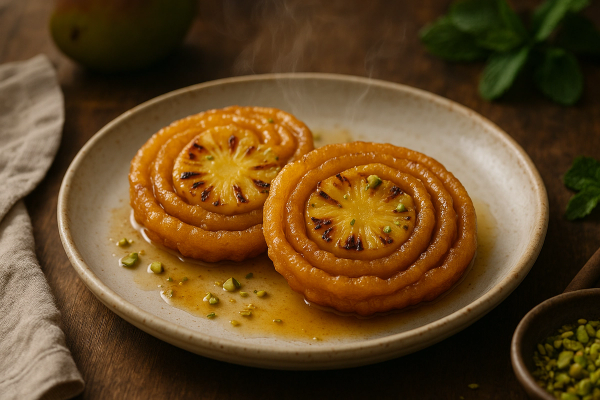
#After bedai I should have stopped. Obviously I did not. Gwalior sits in Madhya Pradesh, and like many MP mornings, poha-jalebi is not a snack here as much as a breakfast mood. The poha was light, turmeric yellow, with sev on top and a lemon wedge that did more work than it looked capable of doing. Then came jalebi, thin and crisp, still warm. I know some people act shocked at sweet with breakfast, but those people need help. Hot jalebi after poha makes complete sense in monsoon weather. Salt, spice, citrus, sugar, crunch. Done.
There was steam rising from the poha tray, rainwater running down the plastic sheet above the stall, and a boy filling little paper cups of chai like he had been doing it since birth. I stood there eating with one hand and holding my phone in the other, trying not to drop chutney on the screen. Failed, of course. The city moved around me in that slow rainy way. Scooters splashing, school kids stepping over puddles, shop shutters clanking open. Travel guides can tell you the monuments, but mornings like this tell you the city’s actual pulse.
If you’re planning a wider Madhya Pradesh rainy-season food trip, this Gwalior breakfast mood reminded me a lot of the comfort-stop feeling in Mandu Monsoon Food Stops: Dal Bafla, Kees & Tea. Different food, different landscape, but same logic: rain makes hot, local, slightly messy food taste like it was invented for you personally.
Between bites: wandering toward the fort, badly prepared but very happy
#Once the rain softened into a drizzle, I went toward Gwalior Fort. I’ll be honest, climbing or even moving around after bedai and poha-jalebi is not exactly athletic behavior. But the fort pulls you in. Those blue-tiled details on the Man Singh Palace walls, the long curves of stone, the view over the city when clouds are hanging low... it’s dramatic in a way that doesn’t need much explanation. My shoes were slipping a little on wet stone and I kept thinking, this is probably how I become a cautionary tale in someone else’s travel blog.
What I love about Gwalior is that food and history don’t feel separated. You can eat something fiery in a market lane and twenty minutes later be staring at a fort complex that has seen centuries of rulers, music, war, repairs, tourists, pigeons, and school groups shouting into the wind. The city has this layered feeling. It isn’t polished like some weekend tourist places try to be, and I mean that as a compliment. It’s a little rough around the edges, a little chaotic, and then suddenly very graceful.
Chai break number one, because rain gives permission
#Somewhere after the fort, I took my first proper chai break. Not the quick tea I had with poha, but the stand-still-and-watch-the-road kind. The chai was sweet, boiled hard, served in a small glass that was too hot to hold and too good to put down. Nearby, a man was frying pakoras, and I swear the sound of pakoras in hot oil during rain should be a UNESCO thing. Maybe I’m exaggerating. Actually no, I’m not.
This is also where rainy-day food travel needs a little common sense. Fried snacks are glorious, but monsoon humidity can make food sit badly if the stall isn’t busy. I use the same rough checks everywhere: Is the oil smoking in a scary way? Are items being refried too many times? Are locals eating there right now? Does the chutney look fresh or like it has lost hope? For people who love comparing regional rainy snacks, the practical stall-turnover thoughts in Jodhpur Rainy Evening Snacks: Vada, Kachori & Lassi apply surprisingly well to Gwalior too.
Kachori, samosa, and the dangerous middle of the morning
#There is a dangerous time in a food walk, around 10:30 or 11, when breakfast is over but lunch is not socially acceptable yet. In Gwalior, that gap is filled with kachori and samosa. I found a shop in a bazaar lane where people were buying both in paper packets, some for office, some for home, some probably for eating secretly in the car while telling family they had only tea. The kachori had a crisp shell and spicy filling, and it came with aloo sabzi again because apparently potatoes are the city’s emotional support vegetable.
The samosa was flatter than the Delhi kind I’m used to, or maybe that was just this shop’s style. It had peas, potato, masala, and enough heat to make the chai mandatory. I ate it standing under a half-broken awning with two other strangers. Nobody talked much, but everyone did that little head nod when the fresh batch came out. Food creates these tiny temporary communities. Five minutes, same rain, same hot snack, then everyone disappears into their own day.
Where to wander for food without turning the day into a checklist
#Gwalior has several market areas where snacks and sweets show up naturally if you walk with patience. Around Lashkar, Sarafa Bazaar, Daulatganj, Naya Bazaar, and the older shopping lanes, you’ll find breakfast stalls, sweet shops, namkeen counters, chai places, and those tiny counters selling things you didn’t know you wanted until the smell grabs you. I’m not saying every lane is magical. Some lanes are just traffic and puddles and someone reversing a scooter into your shin. But that’s part of it too, sadly.
My advice is to not over-map every bite. Keep a few anchors, like fort, palace, market, sweet shop, then let food fill the spaces between. The best thing I ate that morning was not from a place I had saved. It was a random second chai with a small salty mathri thing that the vendor pushed toward me like, “try this also.” I don’t even know the exact name he used because the traffic swallowed half his sentence. Still thinking about it.
Lunch? Sort of. More like negotiating with my stomach
#By noon, the rain had slowed and Gwalior had become warmer, stickier, and louder. I wanted a proper thali but also wanted to keep moving, which is always a stupid conflict. I ended up eating a simple vegetarian meal in a no-drama restaurant near the market: dal, roti, rice, a dry sabzi, pickle, curd. After all that fried breakfast chaos, the dal tasted like someone sensible had entered the room. Travel food isn’t only about famous dishes. Sometimes the meal that saves you is plain dal, served hot, while your socks dry under the table.
This is where I’ll contradict myself a little. I love street food travel, but I also think you need one calm meal if you’re doing a full day in the rain. Your stomach is not a tourist attraction, don’t punish it. Gwalior is good for that because you can go intense in the morning and then find simple North Indian vegetarian meals without fuss. Add curd if you’ve been eating too much mirchi. Drink water. Basic stuff, but people forget when they are chasing snacks like treasure.
The sweet turn: Gwalior, Morena, and the gajak question
#Now, gajak. This was the part I had been waiting for because winter sweets and monsoon weather have a strange crossover in my brain. Technically, gajak is more of a cold-weather sweet, made with sesame, jaggery or sugar, and serious skill. But in the Gwalior-Chambal belt, gajak has such a strong presence that you’ll hear about it even when the weather is not peak winter. Nearby Morena is especially famous for gajak, and shops in Gwalior often carry varieties that travellers buy as edible souvenirs. I wanted the brittle, layered, nutty kind that breaks with a snap but melts slowly after.
A sweet shop uncle gave me a full lecture, and I deserved it because I asked beginner questions. Til gajak, gud gajak, sugar gajak, roll types, dry fruit versions, patisa-like textures, soft versus hard. He broke pieces for tasting. The sesame smell was warm and roasted, the jaggery version had that deep earthy sweetness, and the sugar one was cleaner, more candy-like. I liked the gud one best, but then I bought both because I have no discipline. He packed it in a box and then another layer, warning me not to let moisture get in. Rainy day problem. Gajak and humidity are not friends.
If you’re carrying sweets onward by train, bus, or flight, treat gajak with the same seriousness you’d give any famous regional sweet. Ask when it was made, choose dry pieces, avoid anything that already feels sticky in wet weather, and pack it tight. I was reminded of the same carry-home logic from Agra Petha Travel Packing Guide: Freshness & Train Tips, because North Indian sweets are wonderful until you ignore storage and then they become a sad suitcase story.
How I picked gajak without pretending to be an expert
#I am not a gajak scholar. I’m just a greedy traveller with questions. But after tasting at a couple of counters, I started noticing small differences. Good gajak should smell nutty, not stale. If it has jaggery, the flavour should be deep but not burnt. The texture depends on style, so don’t expect every piece to be the same. Some are flaky and layered, some are hard and crisp, some are softer. Ask for tasting if the shop allows it. Most decent sweet shops understand that travellers are buying for family and will help, unless they are too busy, in which case don’t be annoying. I say this to myself also.
- Buy smaller quantities from one or two trusted shops instead of carrying a mountain of sweets in rainy weather.
- Ask for proper sealed packing, especially if your next stop is a long train ride or a damp hotel room.
- If you’re gifting it, don’t wait five days to hand it over and then act shocked that texture changed. Fresh sweets have feelings too.
The rainy route I’d actually recommend
#If a friend asked me how to do a Gwalior rainy morning food walk without collapsing, I’d say start early near your stay or station-side market area with bedai and sabzi. Then do poha-jalebi, but share one plate if you’re not a big eater. Take chai. Go to the fort while the weather is still forgiving. Come down, snack lightly on kachori or samosa if you must, then take a simple lunch. Keep sweet shopping for later in the day when you’re not rushing and can taste properly. End with another chai because obviously.
- Start around 7 or 7:30 in the morning, especially if you want fresh breakfast and fewer crowds.
- Carry cash in smaller notes. Plenty of small stalls still move faster with cash, and nobody wants to break a large note for one chai.
- Wear shoes that can handle wet stone and muddy market corners. Gwalior in rain is beautiful but not always gentle.
- Keep a small cloth or napkin. Street food plus rain plus phone photography equals sticky fingers, always.
Also, don’t pack the day like a military operation. Gwalior rewards slow wandering. If you only run from one famous thing to another, you’ll miss the old man making chai beside a puddle, the woman bargaining for fresh coriander, the smell of wet earth near the fort road, and the way fresh jalebi steam fogs your glasses for two seconds. These are not side details. They’re the whole point.
A few honest misses and tiny regrets
#Not everything was perfect. One kachori I tried later was too cold and had that tired oil taste, the kind that makes you pause and reconsider your life choices. I also forgot to carry an umbrella because I thought “light drizzle only” and then got properly soaked near a crossing. My gajak box survived, my notebook did not. There was one sweet shop I wanted to visit but it was too crowded and I gave up, which I regret a bit, though maybe that saved me from buying another kilo of sugar disguised as culture.
I also wish I had stayed one more night. Gwalior has evening food moods I barely touched: chaats, more sweets, dinner places, late tea, maybe music if you catch the right season or event. But there’s something nice about leaving hungry for more. Not physically hungry, please understand, I was extremely full. I mean mentally. The city stayed unfinished in my head, which is usually a sign I’ll come back.
Why this city works so well for food travellers
#Gwalior isn’t always the first name people shout when talking about food travel in India, and maybe that’s why I liked it so much. It doesn’t perform too hard. It has serious history, big monuments, practical markets, railway-town energy, and food that belongs to everyday life. Bedai is not trying to be Instagram famous. Poha-jalebi doesn’t need a caption. Gajak doesn’t care if you understand its regional pride immediately. The food just exists, and locals keep eating it because it makes sense there.
Rain adds another layer. It slows you down enough to notice steam, texture, heat, the comfort of standing under a tin shade with strangers. It makes fried food feel less like indulgence and more like weather management. It turns chai into punctuation. Morning bedai becomes a beginning, gajak becomes something to carry away, and the travel day between them becomes this messy, satisfying story you can taste later when you open the sweet box at home.
Leaving with sticky fingers and a louder heart
#By the time I left Gwalior, my bag smelled faintly of sesame and fried masala. I had a gajak box wrapped like treasure, damp socks in a side pocket, and that heavy happy feeling you get after a day built around food instead of checklists. The rain had made everything more inconvenient, sure. Autos were slower, lanes were slippery, photos came out blurry, and I had to keep wiping my glasses. But honestly, I’d choose that version again. Rainy Gwalior gave me hot bedai, bright poha, jalebi crunch, too much chai, a fort in the clouds, and gajak for the road. That’s a pretty good bargain.
If you go, go hungry but not hurried. Ask people where they eat. Share plates. Taste before buying sweets. Let the rain mess up your schedule a little. And if you like these food-travel rambles, I keep finding myself browsing AllBlogs.in for more ideas when I’m planning the next snack-led escape.