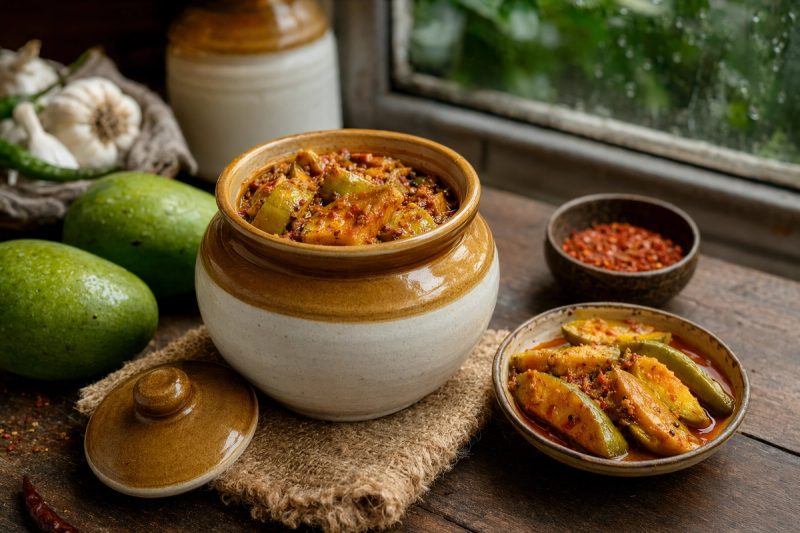
Every monsoon, my kitchen turns into a small pickle drama. The rain starts, the windows fog up, the masala smells warmer somehow, and suddenly every auntie, neighbour, and WhatsApp group expert has one warning: “Don’t make pickle now, fungus ho jayega.” And honestly? They’re not totally wrong. Monsoon is a tricky little season for homemade pickle. The air is wet, jars stay damp longer, sunlight plays hide-and-seek, and one careless wet spoon can ruin a whole batch of mango achaar that you were emotionally attached to. I have lost pickle to fungus before and I still remember staring at that cloudy white patch like it personally betrayed me.
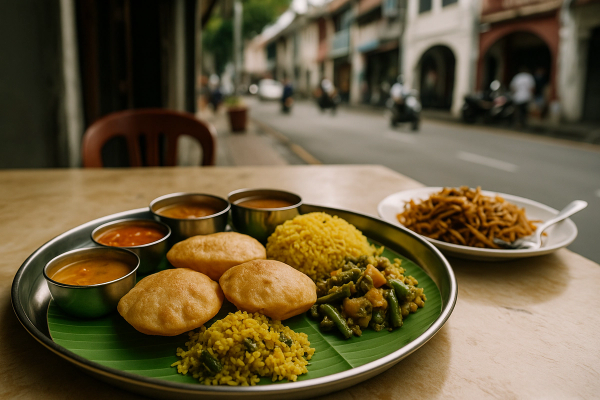
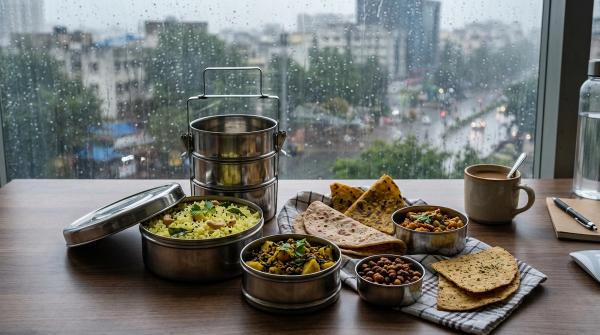
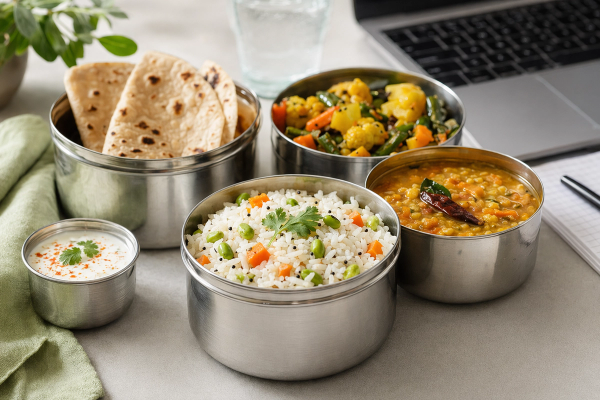
But I also don’t believe in being scared of pickling during the rains. Some of my favourite rainy-day meals are plain dal-rice with a sharp mango pickle, curd rice with lemon pickle, hot paratha with green chilli achaar, or leftover khichdi made heroic by one spoon of oil-slicked, masala-heavy pickle. Pickle is not a side dish in my house. It is mood, memory, emergency flavour, and sometimes therapy. So this is my very practical, slightly obsessive guide to making safe homemade pickle in monsoon and preventing fungus, without turning the whole thing into a lab project.
Why Pickles Get Fungus in Monsoon, Even When You “Did Everything Right”
#Fungus in pickle usually comes down to moisture, air, low salt, dirty jars, wet spoons, or not enough oil/acid protecting the ingredients. In monsoon, all these problems get amplified because humidity is just sitting in your kitchen like an unwanted guest. Your mango pieces may feel dry but still hold surface moisture. Your jar may look clean but have tiny droplets around the rim. Your masala may clump. Even the spoon you quickly rinsed and wiped on a towel can carry enough water to invite trouble.
I used to think pickle was protected just because it had lots of chilli powder and mustard oil. Cute thought. Wrong, but cute. Spices help, sure, and mustard oil has antimicrobial qualities, but fungus doesn’t care about family pride. If there is moisture and oxygen and not enough salt or acid, it will arrive. Especially that white fuzzy growth on top, or greenish-black spots near the jar wall. And please, please don’t just scrape it off and eat the rest if the pickle smells off or the mold has spread. I know old-school kitchens sometimes did that, but food safety advice now is more cautious: when mold is visible in a wet or semi-wet food, invisible threads may already be inside. I’d rather lose one jar than lose my stomach for two days.
My pickle rule now is simple: dry ingredients, dry jar, dry spoon, enough salt, enough oil or acid, and no ego. If it smells wrong, looks wrong, or tastes fizzy in a weird way, I don’t argue with it.
My First Monsoon Pickle Disaster, Which Still Hurts a Bit
#Years ago, I made a small batch of raw mango pickle in July because I was craving that bright, sour, mustardy punch with hot thepla. The mangoes were beautiful, hard and green, and I felt very confident because I had watched my mother make achaar a hundred times. But watching and doing are different beasts. I washed the mangoes, chopped them, patted them dry for maybe twenty minutes, then got impatient. The clouds were heavy, no sun, and I thought, “It’s fine, salt will handle it.” Salt did not handle it.
Three days later, the top smelled a bit yeasty. Not the nice fermented smell, more like damp cupboard plus sour fruit. By day five, there were little white islands forming near the mango pieces touching the surface. I tried to convince myself it was salt. It was not salt. My mother looked at it once and said, “You put wet mango.” That was it. No emotional support, no long explanation. Just judgement. Fair judgement, actually.
Since then I’ve become almost annoying about drying. I spread mango, lemon, chilli, amla, whatever I’m pickling, on a clean cotton cloth under a fan if there is no sun. Sometimes I use the lowest setting of the oven for a short time, door slightly open, not cooking the pieces, just drying the surface. A dehydrator is also trendy now among serious home cooks, and I get why. In 2026, with so many people making small-batch pickles, fermented hot sauces, and “regional achaar flights” at home, these little tools don’t feel excessive anymore. They feel like insurance.
The Monsoon Pickle Safety Checklist I Actually Follow
#I’m not a fan of overcomplicated kitchen rules, but for pickle in rainy weather I do have a checklist. Not a cute printable one, just the kind I mutter to myself while wiping jars for the third time. The big idea is this: remove water, reduce microbial growth, and protect the pickle from air. That’s it. Everything else is just details.
- Use completely dry vegetables or fruit. After washing, dry them on a cloth for several hours, preferably under sun, or under a fan if the sky is being dramatic.
- Sterilise jars properly. I wash glass jars with hot soapy water, rinse well, then either boil them or heat them in the oven until dry. The lid matters too, not just the jar.
- Use enough salt. For many traditional oil-based Indian pickles, salt is not just flavour, it’s preservation. Too little salt is one of the fastest ways to get spoilage.
- Keep pickle covered with oil if it’s an oil-based achaar. The oil layer acts like a barrier against air and moisture. I check this every few days in monsoon.
- Use clean, dry spoons only. No wet spoon. No spoon that touched curd rice. No “just one quick dip.” This is how heartbreak starts.
- Make smaller batches during heavy rains. It’s less romantic than giant ceramic bharanis, but much safer for regular home kitchens.
Salt, Oil, Vinegar, and Sun: The Four Pickle Bodyguards
#Every safe homemade pickle depends on at least one strong preservation method, usually more than one. Salt pulls water out of the fruit or vegetable and makes life harder for spoilage microbes. Oil blocks air. Vinegar adds acidity. Sunlight dries and warms the pickle, helping flavours mature while discouraging moisture-loving fungus. In monsoon, when sunlight is weak, you need to compensate with extra care in the other areas.
For vinegar-based pickles, acidity is important. Food safety guidance for acidified foods often talks about keeping pH below 4.6 because that level helps prevent dangerous bacteria like Clostridium botulinum from growing. Most home cooks don’t test pH, but pH strips are cheap now and honestly not a bad idea if you’re experimenting with low-salt or low-oil pickles. This has become more common lately because people want “healthy” pickles with less oil and less salt. I understand the trend, I do. Restaurants and home brands are doing lighter pickles, probiotic pickles, low-sodium brines, all that. But preservation needs balance. If you reduce salt and oil, you usually need more acid, refrigeration, or controlled fermentation. You can’t just remove the preservers and hope vibes will do the work.
For oil-based Indian pickles, I’m partial to mustard oil. Heat it to smoking point, cool it fully, then use. That raw pungent nose of mustard oil with methi, rai, saunf, haldi, red chilli... I mean, come on. That smell alone could make a rainy afternoon better. Sesame oil is beautiful for South Indian pickles, especially lemon, garlic, gongura, and mango thokku styles. Neutral oils work, but they don’t give the same soul, at least to me.
My Monsoon Mango Pickle Method, the Non-Fancy Version
#This is the method I use when I want a small batch of mango pickle during the rains. It is not one of those heirloom 20-kilo recipes that needs a terrace, three cousins, and perfect May sunlight. This is apartment-friendly, monsoon-aware, and honestly quite forgiving if you follow the dryness rules.
- Choose firm raw mangoes with no soft spots. Wash them, wipe them, chop them, then dry the pieces on a clean cloth for 4 to 6 hours under a fan. If the weather is extra damp, I leave them longer.
- Dry roast spices lightly if needed, then cool completely before grinding. Warm spice powder going into a closed jar can create condensation, and condensation is basically fungus invitation card.
- Mix mango with salt and turmeric first. Let it sit in a dry bowl for a few hours so some moisture comes out. You can use that salty liquid in the pickle if the recipe is designed for it, but don’t let watery mango sit exposed forever.
- Add chilli powder, mustard powder, fenugreek, fennel or whatever your family style uses. Mix with a dry spoon or clean dry hand. I prefer hand mixing, but only after washing and drying my hands like a surgeon.
- Pour cooled, pre-heated mustard oil over the mango until the pieces are fully coated. In the jar, keep a visible oil layer on top.
- Store in a sterilised glass jar. For the first week, shake gently once a day with the lid closed, or stir with a dry spoon. If the oil level drops, add more heated-and-cooled oil.
In summer, I’d put the jar in the sun. In monsoon, I place it near a bright window when possible, but I don’t rely on sunlight alone. Some people now use fermentation boxes or temperature-controlled cabinets, which used to sound very chef-y and unnecessary to me, but with the way home fermentation has exploded recently, I’m warming up to the idea. Still, for most of us, clean jars and dryness do 80 percent of the work.
What About Lemon Pickle in Monsoon?
#Lemon pickle is actually one of my safer monsoon picks because lemons are naturally acidic, but they still need respect. Wash lemons, wipe them bone dry, and if possible let them air-dry before cutting. The knife and board should be dry too. This sounds fussy until you’ve seen a whole jar go slimy because the cutting board was damp. I like salted lemon pickle with turmeric, chilli, and a little roasted methi. Some families cook lemon pickle briefly, which can help reduce risk because heat lowers the microbial load and softens the rind faster.
There’s a newer trend I’ve been seeing in food circles: quick lemon pickles stored in the fridge, almost like a condiment between achaar and relish. Less oil, brighter flavour, ready in days not months. I like them, but I don’t treat them like shelf-stable pickle. If it’s low oil, low salt, or lightly fermented, I refrigerate it. The fridge is not a defeat. It is a tool. Our grandmothers used sun, salt, and climate knowledge. We have fridges and pH strips. Use what you have.
The Spoon Problem: Tiny Habit, Big Damage
#If I could shout one thing from a balcony during monsoon, it would be: stop putting wet spoons in pickle jars. This is probably the most common reason homemade pickle grows fungus after opening. Someone serves curd rice, dips the spoon into pickle, touches the plate, dips again. Someone uses a spoon washed two minutes ago. Someone leaves the jar open while deciding how much they want. It happens in every house. Mine too.
I now keep a tiny dry pickle spoon inside a separate clean bowl near the jar, not inside the jar because trapped humidity can be weird. When serving, I take out what we need and close the main jar quickly. For daily use, I transfer a small amount into a smaller jar and keep the main batch untouched. This one habit has saved my pickles more than any fancy ingredient.
How to Tell If Your Pickle Is Spoiling
#Not every change in pickle is bad. Oil may cloud a bit in cooler weather. Spices may darken. Lemon rind softens. Mango shrinks. Fermented pickles may smell tangy and lively. But there are warning signs you should not ignore, especially in monsoon.
- White, green, black, or fuzzy growth on the surface or jar walls.
- A rotten, musty, or damp-cloth smell instead of sharp, spicy, sour aroma.
- Slimy texture that was not part of the pickle style.
- Gas buildup, bulging lids, or pickle bubbling aggressively when it is not meant to ferment.
- Discoloration with off smell, especially in low-acid, low-salt mixtures.
If I see a tiny white film on a brined ferment, I pause because sometimes kahm yeast can appear in fermentation and it’s not the same as fuzzy mold. But for oil-based mango or lemon achaar, fuzzy spots are a no from me. I don’t do heroic rescues anymore. Food poisoning is not worth proving you are brave.
A Small Note on 2026 Food Trends and Pickle Fever
#Pickle is having a proper cool moment again, and I love it. Not that achaar was ever uncool in Indian homes, but restaurants and cafés have finally started treating it like a star instead of a sidekick. The big trend I keep seeing in 2026 is pickle tasting boards: tiny portions of mango, garlic, bamboo shoot, gongura, fish pickle, chilli oil pickle, fermented carrot, even fruit pickles with cheese plates. Some modern Indian restaurants are pairing house pickles with millet khichdi, sourdough dosas, smoked curd rice, and regional thalis. It’s fun, though sometimes I taste these polished restaurant pickles and think, hmm, my neighbour’s garlic achaar still wins.
There’s also a big movement toward small-batch, regional, traceable pickles: Naga axone-style ferments, Andhra gongura, Kerala kadumanga, Gujarati chhundo, Rajasthani ker-sangri, Bengali kasundi-inspired pickles, and Himalayan lingri or fiddlehead pickles when seasonal. Homegrown brands are using better packaging now too, like vacuum sealing, tamper-proof lids, QR-coded batch details, and cold-chain delivery for fresh probiotic pickles. Nice to see, because pickle deserves that respect. But at home, the basics remain old-fashioned: clean, dry, salty, acidic, protected.
My Favourite Rainy Meal With Homemade Pickle
#If you ask me what I want on a rainy evening, I’ll probably say something very simple: hot rice, ghee, toor dal with extra hing, papad roasted directly on flame, and mango pickle that bites back. No plating. No microgreens. Just that first spoon where the ghee melts into dal and the pickle oil stains the rice orange-red. That is comfort food with a backbone.
Another one: methi paratha with curd and lemon pickle. I had this once during a long train delay, packed by a friend’s mother, and I still think about it. The parathas had gone a little soft, the curd was barely cold, but the lemon pickle was electric. Salty, sour, bitter at the edge, chilli hitting late. Food doesn’t need perfect conditions to become a memory. Sometimes it just needs rain on the window and one pickle that refuses to be boring.
Common Monsoon Pickle Mistakes I’ve Made So You Don’t Have To
#I have made nearly every pickle mistake, so let my failures be useful. First, don’t fill jars to the absolute top. You need a little space to shake or stir, but not so much air that the surface dries out weirdly. Second, don’t use plastic containers for long-term oily pickles if you can avoid it. Glass or traditional ceramic is better. Third, don’t add fresh herbs casually unless the recipe accounts for their moisture. Fresh coriander in pickle sounds cute until it spoils. Fourth, don’t trust a cloth cover in monsoon unless the pickle is in a controlled, clean, dry spot. Dust, insects, and humidity are too much drama.
Also, don’t rush the masala. If you roast spices, cool them. If you heat oil, cool it. If you wash mango, dry it. Every hot or wet thing that goes into a closed jar can create condensation. And condensation is the villain in this story.
| Problem | Likely Reason | What I Do Now |
|---|---|---|
| White fungus on top | Moisture, exposed pieces, low oil layer | Discard if moldy, next time dry better and keep oil above solids |
| Pickle smells musty | Wet jar or wet ingredients | Sterilise jars and dry everything longer |
| Oil level disappeared | Ingredients absorbed oil | Add heated-and-cooled oil until top is covered |
| Pickle tastes too salty | Salt not balanced yet or too much added | Let it mature, pair with bland foods, adjust next batch |
| Gas or bulging lid | Fermentation or spoilage pressure | Open carefully, check smell and recipe type, discard if suspicious |
Should You Refrigerate Homemade Pickle in Monsoon?
#This depends on the pickle. Traditional high-salt, high-oil, properly made pickles can often stay at room temperature, but monsoon room temperature is not always friendly. If your kitchen is humid, warm, and poorly ventilated, refrigeration is smart, especially after opening. Low-oil pickles, quick pickles, low-salt pickles, fresh chutney-style pickles, and experimental ferments should usually go in the fridge. I know the fridge can dull oil texture a little, but you can take the jar out for a few minutes before serving.
For big batches, I store one small jar outside for daily meals and keep the rest refrigerated or in the coolest, driest cupboard. I label jars with the date because I used to think I’d remember and then absolutely did not. A strip of masking tape and a marker has saved me from many “when did I make this?” mysteries.
Final Thoughts: Pickle Is Love, But Love Needs Hygiene
#Making homemade pickle in monsoon is not impossible. It just asks for patience. Dry the ingredients longer than you think. Sterilise the jars. Respect salt, oil, and acid. Keep wet spoons far away like they owe you money. Make smaller batches if the weather is wild. And don’t be ashamed to refrigerate. The goal is not to prove you are more traditional than everyone else. The goal is safe, delicious pickle that makes your dal-rice taste like home.
I still get excited when I open a jar and that sharp spicy smell comes out, especially on rainy days when everything outside is grey and sleepy. Pickle wakes up the plate. It wakes up me, honestly. If you’re making achaar this monsoon, be careful, be a little obsessive, and then enjoy it fully. And if you’re the kind of person who likes reading food stories, kitchen experiments, and delicious little rabbit holes, take a casual wander through AllBlogs.in sometime. You’ll probably lose track of time there, in the best way.