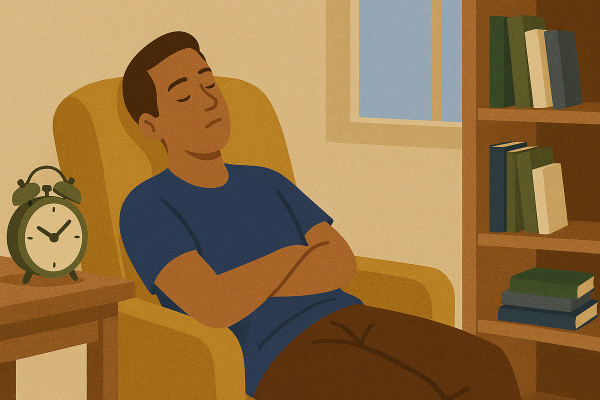

The goal isn’t to become a perfect phone monk
#Doomscrolling has this sneaky way of making a person feel both informed and completely drained. You open an app to check one thing, maybe the weather, maybe a message, maybe “just the headlines,” and somehow 38 minutes later your shoulders are tense, your jaw is doing that little clampy thing, and your brain feels like it has been dragged through a group chat full of emergencies. The answer people often hear is: delete the apps. Go offline. Touch grass. And sure, for some people that may help. But for a lot of readers, deleting social media is not realistic or even desirable. Social platforms are where people keep up with friends, follow community updates, learn about work, organize events, laugh at stupid videos, and yes, sometimes read news that genuinely matters. So the more useful question is not “How do I quit forever?” It’s “How do I stop letting the scroll run my nervous system?”
This is a health and wellness issue, but it is not a moral failure. Doomscrolling is not proof that someone is lazy, weak, dramatic, or “addicted” in the casual insult-y way people use that word online. Apps are designed to hold attention. Bad news is emotionally sticky. Human brains are built to scan for threat. Put all that together with stress, loneliness, boredom, fatigue, or a late bedtime and, honestly, it makes sense that the thumb keeps moving. The practical path is usually not shame. It’s friction, awareness, better defaults, and some gentle replacement habits that don’t feel like punishment.
What doomscrolling actually does to your body and mind
#Doomscrolling generally means compulsively consuming negative, alarming, or emotionally charged online content, especially news or social posts, even when it is making you feel worse. It can happen with world news, politics, climate stories, crime updates, celebrity crises, health scares, local drama, comment sections, or even wellness content that makes you feel like you are never doing enough. The body may respond to that stream of threat as if it needs to stay alert. Not always in a dramatic way. Sometimes it is subtle: restlessness, irritability, trouble settling down, racing thoughts before sleep, or feeling weirdly numb after taking in too much.
Research on social media and mental health is still mixed, and it is important not to overstate it. Social media does not affect every person the same way. Some people find connection, support, identity, humor, and practical information there. At the same time, health organizations have become more cautious about patterns of use that interfere with sleep, mood, school, work, relationships, or daily functioning. The U.S. Surgeon General’s 2023 advisory on social media and youth, for example, emphasized that social media can offer benefits and risks, and that sleep disruption, comparison, harassment, and excessive use are important concerns, particularly for young people. Adult brains are not magically immune either. The details vary, but the basic wellness principle is pretty steady: if a habit regularly leaves you distressed, depleted, or unable to do the things you care about, it deserves attention.
A helpful rule of thumb: if scrolling gives you information but takes away your ability to act, rest, connect, or think clearly, the cost is probably too high.
Start by spotting your personal doomscrolling pattern
#Before changing anything, it helps to figure out what your version of doomscrolling looks like. Not the idealized version where you calmly reflect with a journal and herbal tea, though that’s lovely if you’re into it. Just a quick, honest scan. When does it happen? Where are you? What app pulls you in first? What emotion is usually there right before the scroll starts? A lot of people assume the trigger is “bad news,” but sometimes the trigger is actually tiredness, avoidance, loneliness, waiting in line, procrastination, or that uncomfortable little gap between activities.
- Notice the time of day: first thing in the morning, during work breaks, after dinner, in bed, or during anxious waiting periods.
- Notice the emotional hook: anger, fear, boredom, sadness, uncertainty, comparison, or the need to feel prepared.
- Notice the physical cue: slumped posture, shallow breathing, dry eyes, headache, neck tension, or realizing you have not moved in a while.
- Notice the “one more” thought: one more post, one more update, one more comment thread, one more search.
This is not about policing yourself. It is about making the invisible visible. If you know your danger zone is 11:40 p.m. in bed, your solution will look different than someone who spirals during lunch breaks at work. If you mostly doomscroll during breaking news, your plan may involve news boundaries. If you mostly doomscroll because you are lonely, app timers alone may feel useless unless you also build in actual connection. Annoying, but true.
Do not rely on willpower, because willpower gets tired
#A common mistake is trying to beat doomscrolling with one heroic decision: “I will simply stop.” That can work for about seven minutes. Maybe even a whole afternoon. But attention is influenced by environment. If the app is still on the home screen, notifications are still popping up, autoplay is still doing its thing, and you are exhausted after a long day, the phone is going to win a lot of the time. Not because you are broken. Because the setup is lopsided.
Instead, make the easier choice the healthier choice. Add small barriers between you and the scroll. Move social apps off the home screen. Turn off nonessential notifications. Log out of the app that gets you most activated. Use grayscale in the evening if it makes the phone less tempting. Set app limits, but use them as a speed bump, not as proof of character. If you want a deeper comparison of tools, App Blocker vs Screen Time vs Focus Mode: What Should You Use to Cut Phone Distractions? breaks down the difference between built-in settings and stronger blockers in a practical way.
Friction ideas that are small but surprisingly effective
#- Take social media apps out of the dock or first screen, so opening them is no longer automatic.
- Disable push notifications for news, trending topics, suggested posts, and “people are talking about…” alerts.
- Set your phone to Focus Mode during meals, work blocks, exercise, reading, family time, or your wind-down routine.
- Use the browser version instead of the app for one platform. It is usually a bit clunkier, which is the point.
- Create a “pause screen” by placing a notes widget or wallpaper reminder that asks: “What am I here to do?”
The trick is to avoid making the system so strict that you rebel against it. Some people do well with hard blocks. Others need softer boundaries, like “I can check Instagram after lunch, but not before breakfast.” There is no gold medal for the most intense setup. The best boundary is the one you will actually use on an ordinary Tuesday when you are cranky and under-slept.
Give social media a job before you open it
#One of the simplest ways to stop doomscrolling without deleting social media is to decide what the app is for before you open it. That sounds almost too basic, but it changes the relationship. Instead of “I’m going on my phone,” try “I’m checking two messages,” or “I’m posting the event flyer,” or “I’m looking at my saved recipe,” or “I’m giving myself 10 minutes of memes because today was a lot.” The last one counts, by the way. Pleasure is not illegal.
A helpful practice is the three-word intention: check, reply, leave. Or post, respond, close. Or laugh, save, stop. It does not have to be fancy. The purpose is to stop entering an infinite environment with no exit plan. When there is no plan, platforms happily provide one for you, and their plan is usually “stay here.”
Try the “one screen only” rule
#For feeds that pull you in quickly, try viewing only the first screen of content. No refresh. No explore page. No trending tab. Just the first screen, then out. This may sound silly, but it changes the behavior from hunting to checking. Hunting is where doomscrolling thrives. The brain keeps searching for the next update that will finally make the uncertainty feel settled. Unfortunately, online uncertainty rarely settles. There is always another angle, another take, another horrifying quote post, another person being confidently wrong.
Build a healthier news routine, not a news blackout
#Some people avoid news entirely and feel better. Others feel more anxious when they do not know what is happening. Neither response is wrong. The middle ground is a deliberate news routine. Choose one or two reliable sources. Pick a time of day that is not right before bed and not the very first minute after waking. Decide how long you will spend. Then stop when the time is up, even if the story is still developing, because it usually is.
This is especially important during major crises, elections, disasters, public health updates, or local emergencies. Staying informed can support practical action. Constant refreshing often cannot. If there is something you need to do, write it down: donate, call someone, check on a neighbor, prepare supplies, vote, attend a meeting, contact a representative, save an emergency alert page. Turning information into a grounded next step may help reduce that helpless, spinning feeling. If there is no action available right now, that is useful information too. It means your next responsible action might be rest.
A simple news boundary that feels less extreme
#- Morning: no news until after basic care, like washing up, eating, medication if prescribed, or getting outside briefly.
- Midday or early evening: one planned check-in, ideally from sources you chose on purpose.
- Night: no breaking-news rabbit holes in bed. If something is urgent enough, official emergency alerts will not need you to refresh a feed every 90 seconds.
Of course, some jobs require monitoring news or social platforms. Journalists, organizers, healthcare communicators, public safety workers, creators, and community managers may not be able to simply “check once.” In that case, the boundary may be more about recovery: scheduled breaks, separate work and personal accounts, no comment sections after a certain hour, and a real off-ramp when the workday ends.
Protect your sleep like it actually matters, because it does
#Bedtime doomscrolling is its own beast. It can feel like the only private time of the day, especially for caregivers, students, shift workers, or anyone who spends all day responding to other people’s needs. So telling someone “just put the phone away” can sound a little tone-deaf. Still, sleep is one of the biggest reasons to change the pattern. Late-night scrolling can delay bedtime, increase emotional arousal, expose you to bright light, and keep the mind engaged when it needs a softer landing. Sleep experts commonly recommend a consistent wind-down routine, a regular sleep schedule when possible, and reducing stimulating activities close to bedtime.
A realistic approach is not “no phone ever after sunset.” Try creating a bedtime mode. Put the phone across the room, or at least out of reach. Charge it somewhere that requires standing up. Use audio instead of feeds: a calm podcast, music, a sleep story, a guided relaxation, or an audiobook you have already heard before. If you use your phone as an alarm, consider a cheap alarm clock, or use a mode that blocks social apps while allowing calls from important contacts. If your late-night scrolling is tied to a messy sleep schedule, replacing it with light-based morning cues may also support your rhythm. This related guide on Morning Sunlight vs Light Therapy Lamp for Better Sleep explains the difference in a down-to-earth way.
Make a “soft landing” list for nights when your brain wants more
#When the urge to scroll shows up at night, it helps to have alternatives that are easy and slightly comforting. Not aspirational. Not “learn a language at 11 p.m.” unless that truly relaxes you. Think low-friction: stretch for two minutes, wash your face slowly, read three pages, write tomorrow’s top concern on paper, tidy one small surface, listen to rain sounds, breathe out longer than you breathe in, or sit in dim light and do nothing for a moment. Doing nothing can feel weird at first. That is not a sign it is bad. It may just be unfamiliar.
Use your body to interrupt the loop
#Doomscrolling often keeps attention trapped in the head: thoughts, predictions, arguments, imagined disasters. A body-based reset can interrupt that loop. This does not need to be a full workout or some intense wellness performance. It can be basic nervous-system care: stand up, unclench your jaw, roll your shoulders, look at something far away, take a few slower breaths, drink water, step outside, or walk around the room. These actions do not magically erase stress, but they may help signal to the body that it is not required to stay frozen in alert mode.
One useful method is the 30-3-30 reset: after you catch yourself scrolling, look 30 feet away if you can, take 3 slow breaths, and move for 30 seconds. It is not a medical treatment. It is just a pattern break. For eye comfort, many eye care professionals also suggest taking regular screen breaks, often using a version of the 20-20-20 idea: every 20 minutes, look about 20 feet away for around 20 seconds. Evidence on exact formulas varies, but breaks from close-up screens are a reasonable, low-risk habit for many people.
Clean up the feed, but don’t turn it into another self-improvement project
#Your feed is not neutral. It is shaped by who you follow, what you watch, what you pause on, what you search, what you argue with, and what the platform decides might keep you engaged. If your feed is a constant buffet of outrage, comparison, panic, and people yelling in all caps, it makes sense that you feel awful after using it. Curating the feed is not shallow. It is mental hygiene.
- Unfollow or mute accounts that regularly leave you agitated, ashamed, or stuck in comparison.
- Use “not interested” tools when platforms recommend distressing or repetitive content.
- Create lists or favorites for accounts you actually want to see, such as close friends, local updates, hobbies, or credible health sources.
- Avoid reading comment sections when you already feel activated. Comment sections are often where calm goes to die.
One caution: do not make your feed so sanitized that it becomes an echo chamber where you never encounter real issues or different perspectives. The goal is not to avoid discomfort forever. The goal is to stop being force-fed distress in a way that harms your functioning. There is a difference between being informed and being emotionally sandblasted.
Replace the need, not just the behavior
#If doomscrolling is meeting a need, even poorly, removing it without replacing that need can feel awful. If it gives you connection, build another tiny connection point. Send one text. Join a low-pressure group chat. Call someone while walking. If it gives you stimulation, use music, a puzzle, a quick errand, or a short burst of movement. If it gives you a sense of control, make a small plan for one real-world task. If it helps you avoid a feeling, try naming the feeling first: “I’m anxious,” “I’m lonely,” “I’m overwhelmed,” “I don’t want to start the next thing.” Naming does not fix everything, but it can lower the fog a little.
A lot of wellness advice skips this part and jumps straight to restriction. But restriction alone can become brittle. People do better when the replacement is satisfying enough to compete with the phone. Not always equally satisfying, because apps are engineered to be very shiny. But satisfying enough. A cup of tea and a book may not beat a chaotic live thread during a major news event, let’s be honest, but a walk with a friend might. A funny show might. Cooking while listening to music might. A hobby that uses your hands might. The replacement should match the need.
Make room for emotions without feeding the spiral
#Doomscrolling often starts with a reasonable emotion. Concern about the world. Anger about injustice. Fear for loved ones. Grief. Uncertainty. None of those are “bad vibes” to be deleted. In fact, trying to suppress emotions can sometimes make them louder. The healthier move is to give the emotion somewhere to go that is not an endless feed.
Try a two-column note. On one side: “What I know.” On the other: “What I am imagining.” This can be grounding when the mind starts treating every possibility as a fact. Another option is the action-and-care split: one action that reflects your values, and one care step that supports your body. For example, read one reliable update and then make dinner. Send one donation and then take a shower. Check on a friend and then go outside. The care step is not apathy. It is how people stay human enough to keep caring.
When app limits don’t work, look at what’s underneath
#If you have tried limits, blockers, grayscale, timers, and all the tricks, but scrolling still feels uncontrollable, it may be worth looking more gently at the bigger picture. Are you sleeping enough? Are you under chronic stress? Are you isolated? Are you using the phone to cope with anxiety, low mood, trauma reminders, work overload, or a situation that feels unsafe? General wellness strategies may help, but they are not a substitute for mental health care when distress is severe, persistent, worsening, or interfering with daily life.
Consider reaching out to a qualified healthcare professional or mental health professional if scrolling is connected with panic, significant mood changes, ongoing insomnia, inability to function at work or school, relationship conflict, compulsive behavior that feels impossible to interrupt, or use that continues despite serious consequences. If you are having thoughts of self-harm, suicide, or harming someone else, seek urgent support now through local emergency services or a crisis hotline in your country. You deserve real-time help, not another article and not another scroll.
A seven-day reset that doesn’t require deleting anything
#If you want a structured experiment, try this for one week. Keep it flexible. The point is not to become a flawless digital minimalist. The point is to gather evidence about what helps you feel steadier.
- Day 1: Track without changing. Write down when doomscrolling happens, which app, and what you felt before and after.
- Day 2: Turn off nonessential notifications. Leave calls, messages from important people, and true emergency alerts if you need them.
- Day 3: Move the most tempting apps off your home screen and choose one planned check-in time.
- Day 4: Create a bedtime boundary, even a small one, like no feeds in bed or phone charging across the room.
- Day 5: Curate the feed. Mute, unfollow, or limit accounts that reliably spike distress.
- Day 6: Add one replacement that matches the need: connection, rest, movement, humor, information, or comfort.
- Day 7: Review what worked. Keep the easiest two changes and ignore the advice that felt unrealistic.
The review matters. People often quit because they miss one day and decide the whole thing failed. But behavior change is usually messy. If you doomscroll after three calmer days, that does not erase the calmer days. It gives you data. What was different? Were you tired? Was there breaking news? Did you skip meals? Did you have an argument? Did the app send a notification? The goal is not perfection. It is pattern recognition.
How to handle relapses without turning on yourself
#There will probably be times when you fall back into the scroll. During stressful news cycles, personal uncertainty, illness in the family, big deadlines, lonely weekends, or just random low-energy evenings. That is normal. Shame tends to make doomscrolling worse because it adds another uncomfortable feeling to escape. A kinder response is more useful: “Okay, I got pulled in. What do I need now?” Maybe water. Maybe sleep. Maybe to close the app and stand up. Maybe to message someone. Maybe to admit that the topic matters to you and decide on one grounded action tomorrow.
One phrase that may help is: “I can care without consuming everything.” Caring does not require reading every update, watching every clip, or absorbing every stranger’s reaction. You are allowed to have limits. You are allowed to be informed and still protect your attention. You are allowed to use social media for the parts that genuinely add to your life, while refusing to let the worst parts set the tone for your whole day.
A calmer relationship with social media is possible
#Stopping doomscrolling without deleting social media is mostly about changing the conditions around the habit. Add friction. Choose when and why you open apps. Protect sleep. Build better news boundaries. Curate the feed. Replace the need underneath the behavior. Get professional support if distress feels severe, persistent, or bigger than self-help can reasonably handle. None of this has to be dramatic. Small changes, repeated often, can make the phone feel less like a trap and more like a tool again.
And if you keep social media because it gives you real connection, useful information, or a bit of joy, that is okay. The goal is not to disappear from modern life. It is to stop handing your most tender hours to an infinite feed. Be patient with yourself, test what works, and keep the boundaries that actually make your day feel more livable. For more practical, careful wellness reads, you can always wander over to AllBlogs.in.