The road where biryani city slowly turns into temple forest
#I’ll be honest, Hyderabad to Srisailam is one of those trips that looks simple on Google Maps and then quietly becomes a full-on mood. You start with traffic, chai, petrol pumps, bakery smells, and that very Hyderabad feeling of “arre we’ll leave by 5 only” but obviously everyone is still looking for socks at 5:40. Then the city thins out, the road opens toward the Nallamala side, and suddenly you’re thinking less about emails and more about idli, peppery upma, temple darshan, and whether you packed enough water. This guide is basically how I do the Hyderabad–Srisailam temple day without ruining my stomach, my mood, or the sacred part of the trip. Food and faith, both need timing, boss.
The usual drive is around 210–230 km depending on where in Hyderabad you start, mostly via the airport/ORR side and then toward Kadthal, Kalwakurthy, Dindi, Mannanur, and the Srisailam ghat stretch. It’s not a “just pop out for lunch” kind of drive, especially if you want proper darshan at Sri Mallikarjuna Swamy and Bhramaramba Devi temple. Start early. Like actually early, not Hyderabad early. Also, forest/ghat road timings and temple darshan schedules can change during festivals, weekends, and maintenance days, so I always check the temple’s official updates or call my stay/driver the previous evening. Saves drama later.
Before leaving Hyderabad: please don’t eat like you’re going to war
#This is the mistake I made on my first Srisailam run. We had a huge breakfast near Dilsukhnagar because someone said, “Long drive ra, eat properly.” Properly apparently meant ghee karam dosa, vada, chutney refills, and tea so sweet it could settle family disputes. By the time we crossed the outer city, I was already regretting my life choices. The road after a point has curves, heat, and stretches where you can’t just demand a clean washroom every 15 minutes. So now I do light breakfast before the ride and save the greedy eating for later. If you get motion sick or travel with kids/elders, this matters more than people admit. I liked this practical checklist on What to Eat Before a Long Taxi Ride in India, because honestly, long cab food planning is a real thing, not some fancy travel blogger problem.
- Good pre-drive breakfast: 2 idlis, plain dosa, upma, banana, curd rice in a small dabba, or a simple egg toast if that suits you.
- Risky pre-drive breakfast: heavy biryani leftovers, oily puri, too much coffee, chaat, or that random spicy Chinese dosa your friend swears by.
If I’m leaving from central Hyderabad, I usually grab tiffin before the airport road chaos. If leaving from Gachibowli or Kondapur side, I prefer eating at home and carrying coffee in a flask, because the first part of the route can be more about escaping the city than enjoying food. From LB Nagar side, you’ll find plenty of tiffin places early morning. Don’t overthink the “best” place. Clean, hot, fast. That’s the holy triangle.
Stop 1: Shamshabad side, for coffee and the last city-style comfort
#Once you hit the Shamshabad/airport belt, this is your last easy comfort zone before the route gets more highway-ish. There are cafés, fuel stations, packaged snack options, and washrooms that are usually more predictable than what you’ll get later. I don’t always stop here, but if someone in the car says “chai?” this is where I say yes, because later that same chai request can become a 40-minute hunt and one sad paper cup of boiled dust.
Food-wise, keep it boring here. Tea, coffee, maybe a bun, maybe hot idli if the place is busy and turnover is good. I know boring sounds like bad advice for a food blog, but road-trip eating is not only about chasing legendary dishes. Sometimes it’s about not getting acidity before entering the forest stretch. The Hyderabad foodie inside me wants keema dosa and Irani chai, but the person who has survived ghat roads says, calm down.
Stop 2: Kadthal or Kalwakurthy belt, where breakfast becomes second breakfast
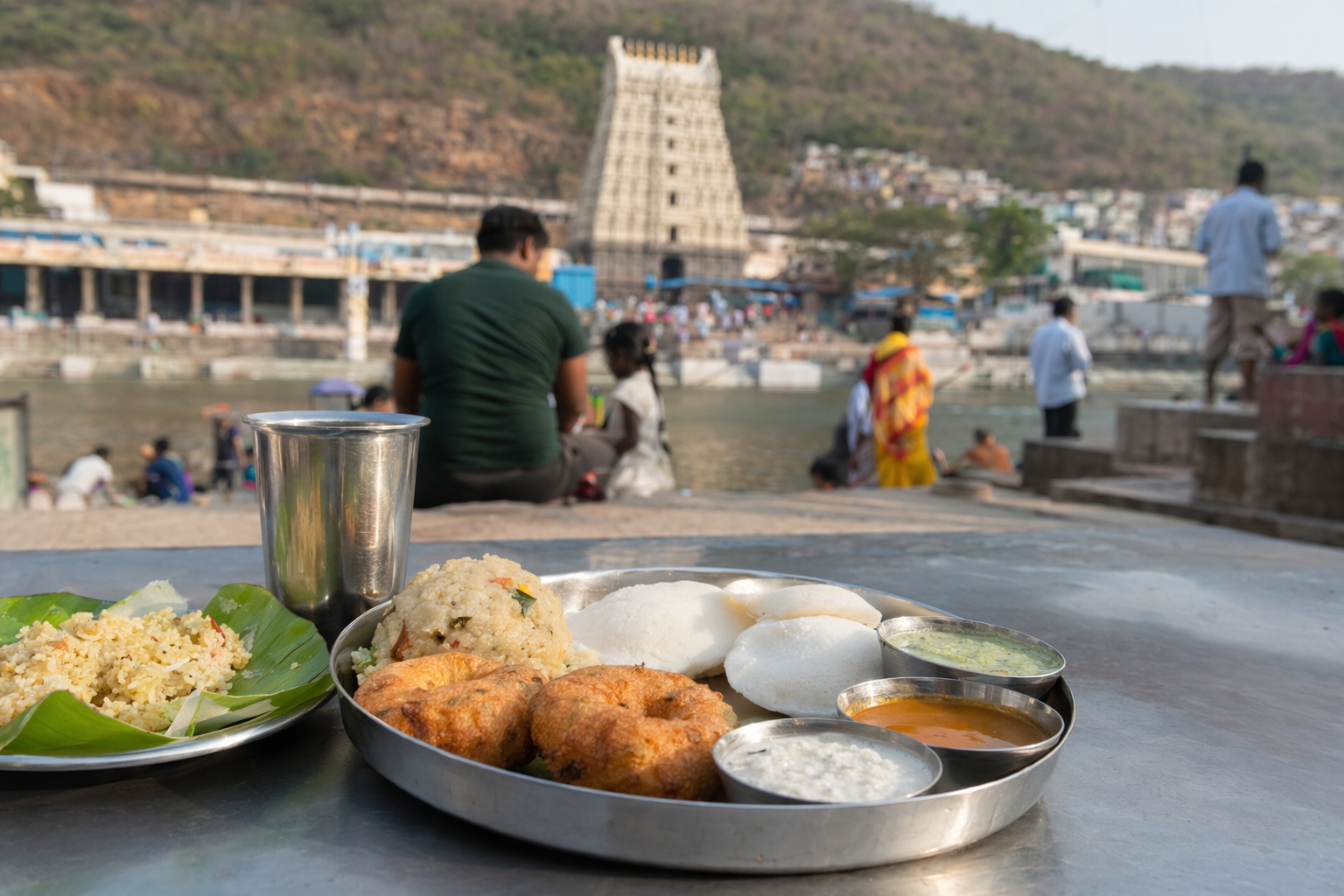
#Somewhere around Kadthal/Kalwakurthy, the mood changes. The city is properly behind you now. You’ll see more local eateries, fruit sellers depending on season, small bakeries, tea stalls, and those places with steel tumblers lined up like they’re ready for battle. This is where I like doing a proper second breakfast if we started too early. Hot idli with peanut chutney, pesarattu if available, plain dosa, or even just tea and biscuits. Nothing heroic.
One thing I’ve noticed on this route: the best stop is not always the biggest signboard. I look for places where there are local families, buses, or drivers eating, and where food is coming hot from the kitchen. If chutney is sitting outside in the sun looking tired, I skip. If the sambar is bubbling and the cook is annoyed but efficient, I trust it more. Is that scientific? Not fully. But road wisdom is half observation and half superstition, no?
My rule for the Hyderabad–Srisailam road: eat hot, drink sealed or freshly boiled, and never experiment with creamy things that have been waiting for you since sunrise.
A small food-safety rant, because one bad pakoda can spoil darshan
#I love dhabas. I really do. The smoky tea, the onion piles, the steel plates, the slightly chaotic service where three people ask what you ordered and nobody writes it down. But during monsoon or peak summer, I become annoyingly careful. Fried snacks are okay if they’re freshly fried in front of you. Old chutneys, cut fruit sitting uncovered, watered-down lassi, and reheated rice that smells even slightly off? No thanks. I’ve learned this the hard way on another Andhra-side drive where me and my cousin spent more time looking for ORS than looking at scenery.
If you’re doing this trip with children or older parents, be extra boring in the best way. Carry water, electrolyte sachets, dry snacks, tissue, sanitizer, and one light homemade item. I know people say “road food is the experience,” and yes it is, but safe road food is the better experience. For rainy drives especially, I keep going back to the same logic mentioned in Monsoon Dhaba Stops With Kids: Safe Food Guide: busy places, hot food, visible cooking, and no risky cold items. Simple, but people forget when pakodas appear.
The Dindi stretch: slow down, breathe, maybe eat something simple
#The Dindi side has that lovely pre-forest feeling. Water, trees, quieter roads, and that little excitement that Srisailam is getting closer. Depending on your timing, this can be a snack stop or an early lunch pause. I personally don’t like stuffing myself here because the Nallamala/ghat stretch after this needs attention and a calm stomach. But I do like stopping for tea, bottled water, bananas, maybe a hot plate of upma if the place looks clean.
If you’re lucky and the weather is cloudy, this part feels almost cinematic. Once, during a light drizzle, we stopped near a tiny place where the only options were tea, mirchi bajji, and something that was called “meals” but looked like it may or may not have survived the morning. The bajji came out fresh, properly hot, green chilli inside, gram flour outside, and that first bite with rain smell around us was honestly better than half the expensive café snacks I’ve had in Hyderabad. But then I also had only one. Maturity, finally.
Lunch strategy: Andhra meals or temple-town simple food?
#This is where everyone in the car starts having opinions. Someone wants full Andhra meals with pappu, pickle, rasam, curd, and rice. Someone else says eat only after darshan. One uncle will say he can manage with tea, and then he’ll eat half your lemon rice. My suggestion: if you’ll reach Srisailam by late morning and darshan lines are manageable, eat light before darshan and do lunch after. If it’s weekend/festival season and you may be in queue longer, eat a proper but not-too-heavy meal before entering town.
Andhra-style meals on this route can be deeply satisfying when done right: hot rice, dal/pappu, pulusu or sambar, a sharp pickle that wakes up your whole face, vegetable fry, rasam, curd. It’s not delicate food. It’s comfort with volume. But again, choose a busy place. If you’re the type who loves rainy highway meals, pappu, pickle and curd rice kind of plates, this piece on Andhra Meals on Rainy Highway Drives: What to Eat says a lot of what I feel too. Curd at the end of a spicy meal, especially before a temple visit, is basically peace in bowl form.
Entering Srisailam: forest road, monkeys, and sudden silence
#The ghat/forest approach to Srisailam is the part I love most, but also the part where you must stop acting like a picnic hero. Don’t feed monkeys. Don’t throw chips packets. Don’t stop randomly at blind curves for selfies. The Nallamala forest area is beautiful, and depending on the season it can feel dry and golden or green and damp, but it’s still a forest road. Keep snacks inside the car, windows up when monkeys are close, and please don’t wave bananas around like you’re auditioning for trouble.
This stretch also changes the food mood. Hyderabad’s noise fades. You start thinking about temple bells and that first glimpse of the dam side or the town signs. I usually stop eating anything heavy once we’re close. Just water, maybe a peanut chikki, maybe nothing. It’s strange but nice, like the body itself knows you’re shifting from road trip to pilgrimage.
Temple-day plan that doesn’t feel like punishment
#Sri Mallikarjuna Swamy Temple at Srisailam is one of the major Shaiva pilgrimage sites, and devotees also visit Bhramaramba Devi shrine in the same temple complex. It can be peaceful on a normal weekday and wildly crowded around festivals, Mondays, Karthika Masam, Maha Shivaratri period, and long weekends. I don’t give fixed darshan timings here because they do change, and special sevas or queue systems can shift. Check official temple information before you travel, especially if you’re booking accommodation or planning same-day return.
- Leave Hyderabad around 4:30–5:30 am if you want a real temple day and not just a tired road marathon.
- Do first proper washroom and coffee stop before the road gets sparse.
- Reach Srisailam late morning if possible, freshen up, keep phones/bags according to temple rules, and go for darshan.
- Eat lunch after darshan unless the queue is already looking scary. Hungry devotion becomes cranky devotion very fast.
- If returning same day, don’t leave too late because forest/ghat movement after dark may have restrictions or safety issues. Verify locally.
I’ve done both same-day and overnight versions. Same-day is possible, but overnight is nicer if you actually want to breathe. The same-day version becomes: drive, queue, eat, quick viewpoint, drive back. The overnight version lets you do evening temple atmosphere, early morning darshan, and a slow breakfast without everyone barking instructions at each other.
What to eat in Srisailam town after darshan
#Don’t expect Srisailam to behave like Hyderabad’s food scene. That’s not the point. You won’t be comparing haleem joints or arguing about biryani masala. Food here is mostly functional, pilgrim-friendly, vegetarian-heavy around the temple side, and simple. South Indian tiffins, meals, tea, coffee, snacks, curd rice, lemon rice, and sometimes North Indian basics depending on the hotel. The joy is in eating hot rice after darshan when your legs are tired and your mind is quiet.
I have a soft spot for temple-town meals. The steel plate arrives, rice mountain in the middle, dal on one side, pickle that is not playing around, rasam poured with confidence, curd at the end. You sit with other travelers: families from Telangana, Andhra, Karnataka, Maharashtra, sometimes people who have driven all night. Nobody is dressed for Instagram. Everyone is hungry. That kind of meal tastes better because it has relief in it.
If temple annadanam is available during your visit, follow the local system respectfully. Don’t waste food. Don’t treat it like a buffet review. It’s prasadam and community feeding, not a “content moment.” I know that sounds preachy but I’ve seen people behave weirdly in temple dining spaces, taking more than they can eat and then complaining. Eat what you can finish. Say thank you. Move on.
Snacks I actually carry, because hunger has bad timing
#My Srisailam food kit is not glamorous. It’s the opposite of those aesthetic picnic baskets people show online. Mine has bananas, roasted chana, peanut chikki, plain biscuits, lemon rice or curd rice if we’re leaving very early, water bottles, and sometimes homemade thepla because one Gujarati friend converted me and now I trust thepla more than I trust most people. I also carry a small trash bag. Not cute, but necessary.
- For kids: banana, curd rice, soft idli, dry cereal, small biscuit packs. Avoid too much sugar unless you enjoy car-seat chaos.
- For elders: warm water in flask, light snacks, medicines, and food they already know suits them. Road experiments are not compulsory.
- For spice lovers like me: carry pickle carefully, but don’t eat half a mango pickle jar before ghat roads. I say this with shame.
Also, don’t rely completely on digital payments once you’re beyond the city. Many places accept UPI, yes, but network moods are mysterious on road trips. Keep some cash for tea stalls, parking, small eateries, and random emergency coconut water. Very old-school advice, still useful.
Viewpoints, dam side, and where food fits into sightseeing
#Depending on your time, you may want to see Srisailam Dam viewpoints, Pathala Ganga ropeway/boat area if operating, and nearby viewpoints or local spots. Availability can depend on season, water levels, maintenance, and local rules, so don’t build your whole trip around one activity unless you’ve checked. I’ve had days where the plan changed completely and honestly, it was fine. We sat with tea and watched the hills instead. Not everything needs a ticket counter.
Food near sightseeing spots is usually snacky: tea, corn, bajji, packaged chips, biscuits, maybe lemon soda. Again, go fresh and hot. My favorite memory is not some famous restaurant, it’s holding a paper cup of tea near a viewpoint while one auntie in our group was scolding everyone for not wearing sweaters. The tea was too sweet, the wind was lovely, and the whole thing felt like a family trip from the 90s. Sometimes travel food is about setting more than recipe.
If you’re returning the same day, dinner planning matters
#The return drive is where people get careless. Everyone is tired after darshan, lunch, walking, heat, and maybe a little emotional exhaustion too. Don’t start back on an empty stomach, but don’t eat a giant oily meal either. I like early evening tea plus a simple snack in Srisailam town, then a proper dinner closer to Hyderabad or at a reliable highway place before the city. If the driver is sleepy, food is not the solution. Rest is. Please don’t solve drowsiness with five teas and blind confidence.
On one return trip, we stopped for dinner too late and ended up eating stale-looking fried rice somewhere we should’ve avoided. Nobody died, but nobody was happy. Since then, I plan the return meal before leaving Srisailam. If you’re going with family, decide: are we eating in Srisailam, on the highway, or only after reaching Hyderabad? This one boring decision prevents a lot of “you only said no to that place” arguments later.
My ideal Hyderabad to Srisailam food-and-temple itinerary
#| Time | Plan | Food idea |
|---|---|---|
| 4:45 am | Leave Hyderabad | Water, maybe black coffee, no heavy eating |
| 6:00–6:30 am | Shamshabad/early highway pause if needed | Idli, tea, coffee, banana |
| 8:00–8:45 am | Kadthal/Kalwakurthy side stop | Hot tiffin or simple second breakfast |
| 10:30–11:30 am | Approach Srisailam, freshen up | Only light snacks and water |
| Late morning/noon | Temple darshan depending on crowd | Avoid eating inside queue unless needed |
| After darshan | Lunch in Srisailam town | Veg meals, curd rice, lemon rice, or annadanam if available |
| Afternoon | Dam/viewpoint/quiet rest | Tea, fresh bajji if hot, packaged snacks |
| Evening | Return or stay overnight | Light dinner plan, don’t delay too much |
This is not a military schedule. It’s a rhythm. You can move things around depending on family, weather, darshan crowd, and how many chai people are sitting in your car. Every road trip has one person who says they don’t need anything and then suddenly needs everything. Build buffer for that person.
Little mistakes I’d avoid next time
#I would not wear uncomfortable footwear again. Temple queues, walking, steps, and roadside stops punish fancy shoes. I would not carry too many chips because monkeys and humans both become annoying around chips. I would not leave Hyderabad without checking basic temple updates and ghat-road advisories. And I definitely would not assume every “family restaurant” is automatically clean. Look, smell, watch what locals are ordering.
Another thing: keep expectations realistic. Hyderabad spoils us. We are used to late-night biryani, Irani chai, bakeries, mandi, dosa, everything. Srisailam is not a food crawl in that sense. It is a pilgrimage route with pockets of good eating. If you judge every meal like a restaurant critic, you’ll miss the charm. If you go with a traveler’s stomach and a little patience, you’ll find plenty to love.
Final thoughts, with a little pickle on the side
#Hyderabad to Srisailam is one of my favorite reminder trips. It reminds me that food doesn’t always have to be famous to be memorable. A hot idli before sunrise, tea near Dindi, a simple Andhra meal after darshan, curd rice eaten quietly when everyone is too tired to talk — these things stay. The temple gives the journey its purpose, the forest gives it calm, and the food gives it texture. Also acidity, if you make poor choices, but that’s part of growing up I guess.
If you’re planning it, start early, eat light but well, respect the temple and forest, carry your own basics, and don’t chase every snack just because it’s on the roadside looking heroic. Choose the hot, clean, busy places. Save space for the meal after darshan. And when you’re back in Hyderabad, tired and dusty, you’ll probably still want chai. I always do. For more such food-travel rambles and practical trip ideas, I keep finding nice reads on AllBlogs.in.