The little noodle cup that saved my trip more than once
#I have eaten instant noodles in some deeply unglamorous places. On a ferry floor in Greece with my backpack as a pillow. In a budget hotel in Tokyo where the room was so tiny I could touch the bed and bathroom door at the same time. At 1:17 a.m. in a train station hostel in Poland, standing in socks, holding a paper cup like it was some sacred bowl of ramen from a Michelin place. And honestly? Some of those meals are burned into my food memory harder than fancy dinners I paid way too much for.
Instant noodles while traveling are weirdly emotional. They are not just cheap calories, though yes, that helps when your budget has been beaten up by airport coffee and museum tickets. They are comfort. They are control. They are the meal you can make when every restaurant is closed, when the rain is doing that sideways thing, when you cannot face another menu in a language you are too tired to decode. But there is a catch, and it is not a small one: the kettle. The innocent little hotel kettle. The thing that looks helpful until you start wondering what, exactly, happened inside it before you arrived.
So this is my love letter and warning label for travel noodles. How to make them taste better, where I’ve eaten the best ones, when to trust a kettle, when to absolutely not, and why I now carry a tiny folding spoon like a person who has either learned wisdom or lost the plot. Maybe both.
Why noodles taste better when you are tired, broke, or slightly lost
#I swear instant noodles have terroir. Not in the wine-snob way, but in the travel way. A shrimp tom yum cup eaten on a balcony in Chiang Mai while scooters buzz below is not the same as that same cup eaten at your kitchen counter at home while answering emails. A packet of Shin Ramyun made in a Seoul guesthouse tastes different after you spent the whole day walking palaces, markets, subway stairs, more stairs, and then got humbled by spicy tteokbokki you pretended you could handle.
Japan is probably where my instant noodle brain fully switched on. I visited the Cup Noodles Museum in Yokohama years ago, and yes, it is touristy, and yes, I loved it anyway. There is something charming about a country taking a convenience food and giving it a full origin story, with design, nostalgia, and a whole make-your-own-cup situation. In Osaka, the Momofuku Ando Instant Ramen Museum in Ikeda does a similar thing around the birth of instant ramen. You walk out thinking, wow, humans are ridiculous and brilliant. We invented noodles that wait patiently in a plastic packet for our worst travel days.
South Korea does it differently. Convenience stores there are practically little noodle restaurants if you are hungry enough. You buy ramyeon, use the hot water machine, maybe crack in an egg if the store allows and sells them, and eat at a counter while teenagers, office workers, and travelers all do the same thing. It is democratic food. Spicy, steamy, messy, and usually better than it has any right to be. I once ate a bowl near the Han River after a long cold walk, and I remember the steam fogging my glasses and thinking, this is perfect. Not elegant. Perfect.
About that hotel kettle... let’s not be naive
#Here is the thing nobody wants to think about when they are hungry: hotel kettles can be gross. Most are fine. Probably. But I have also opened kettles and found limescale flakes, a weird stale smell, and once, in a hostel in Budapest, something that looked like tea leaves but was not tea leaves. I did not investigate further because I enjoy having peace in my life.
The basic rule I use now is simple: the kettle is for boiling water only. Not cooking noodles inside it. Not heating soup. Not warming milk. Not reheating yesterday’s dumplings because you saw someone online do it. Please, no. Apart from being rude to the next guest, it can leave oils, starch, dairy residue, and general mystery gunk in a machine that is hard to properly clean. Also some kettles have exposed heating elements or sensors that can get damaged by anything besides water. If you want noodles, boil water and pour it into a clean cup or bowl.
Before I use a kettle, I do my little inspection ritual. I open it. I look inside like a suspicious auntie. I smell it. I check for rust, thick scale, food bits, soap smell, or anything floaty. If it looks dodgy, I skip it. No drama. I would rather eat bread and cheese than gamble with a kettle that smells like old socks. For no-cook backup meals, I’ve leaned on bakery counters a lot, and this guide to Bakery Meals While Traveling: What to Buy, Skip, and Save for Later is basically the same survival mindset: choose foods that don’t need a fridge or a prayer.
My quick kettle safety routine, because I am fun at parties
#- Open the kettle and inspect inside. If there is residue, rust, heavy scale, or any weird smell, I do not use it. I know that sounds fussy, but stomach trouble on a travel day is worse than being fussy.
- If it looks okay, I rinse it, fill it with fresh water, boil once, dump that water, then boil again for the noodles. Is this always necessary? Maybe not. Do I do it anyway when the kettle has hostel energy? Absolutely.
- I use bottled water or water I know is safe to drink in places where tap water is uncertain. Boiling helps with many germs, but it does not fix every chemical or taste issue, and it does not magically make visibly dirty water nice.
- I pour boiling water into the noodle cup, cover it with the lid or a plate, wait the proper time, then eat it while hot. If I get distracted and it sits around for ages, I toss it. Sad, but fine.
Food safety agencies like the CDC and USDA generally talk about keeping hot foods hot and not letting cooked food sit in the danger zone too long. I am not going to turn your noodle snack into a science lecture, but the practical version is this: once noodles are hydrated, they are cooked food. Don’t leave half a cup on the desk for five hours and come back for round two. If you want to carry hot soup or noodles, a proper insulated flask is a different game, and the rules matter. I got more careful after reading up on hot-food storage, and this piece on Thermos Lunch Food Safety: What Stays Hot, What to Skip, and the Rules That Really Matter lines up with the stuff I wish I knew earlier.
The best noodle moments I’ve had on the road
#Thailand was where I learned to upgrade instant noodles like a tiny street-food goblin. I had a packet of Mama noodles in a guesthouse in Chiang Rai, and the lady running the place saw me making it plain. She looked personally offended. She handed me a lime wedge, a spoonful of chili flakes, and some chopped coriander from a plastic tub in the fridge. Suddenly it was not just a packet anymore. It had brightness, heat, that sour little kick. I still do this at home when I’m feeling dramatic.
In Indonesia, Indomie became my emergency food and my breakfast food and, honestly, sometimes my preferred food. The mi goreng version with the little seasoning packets feels like assembling a tiny chemistry project. Sweet soy, chili, fried onion bits, seasoning powder, oil. You mix it and suddenly your hostel kitchen smells better than it deserves to. I ate it in Yogyakarta after a sunrise trip to Borobudur, still dusty and half asleep, and I remember thinking that the fried onion sachet deserved its own passport stamp.
Taiwan gave me a different appreciation for convenience-store eating. The 7-Eleven and FamilyMart scene there is not just snacks, it is a whole parallel restaurant system. Tea eggs, rice balls, microwavable meals, noodle bowls, hot drinks, the lot. I had beef-flavored instant noodles in Taipei one rainy night after getting lost around Ximending. Was it the best beef noodle soup in Taiwan? Obviously no, don’t yell at me. Taiwan’s real beef noodle shops are a treasure. But did that convenience-store bowl comfort me when I was soaked and cranky? Yes. Yes it did.
Travel food does not always have to be the most authentic, rare, hand-pounded, grandmother-approved dish. Sometimes it is just the thing that keeps you warm enough to go back outside.
How I pack noodles without becoming that person with a suitcase full of soup
#I do not travel with a mountain of noodles anymore. I used to. Rookie mistake. They get crushed, the cups take up space, and then you arrive somewhere with a better local noodle aisle anyway. Now I bring maybe one emergency packet for the first night, especially if I’m landing late, then I shop locally. Supermarkets are one of my favorite travel activities, which sounds boring until you realise they are basically museums where you can buy everything.
In Japan, I stand in the instant noodle aisle forever, pretending I can make a reasonable choice from 78 options. In Korea, I look for spicy levels like I’m negotiating with danger. In Europe, I check the Asian grocery stores near train stations because they often have better noodle options than regular supermarkets. In Mexico City, I once found a spicy cup noodle with lime that I still think about, even though I cannot remember the brand and this bothers me more than it should.
My actual noodle kit is small: a collapsible silicone bowl if I’m doing hostels, a metal spoon or spork, a couple napkins, and sometimes a tiny bottle of chili oil wrapped in a plastic bag because leaks are the enemy of happiness. I also carry a few add-ins that don’t need refrigeration, like roasted seaweed, sesame seeds, dried mushrooms, or peanut butter packets. Peanut butter in spicy noodles sounds wrong until you try it. Then it becomes a problem.
What I add when I can find it
#- A boiled egg from a convenience store. Easy protein, no cooking, and it makes even cheap noodles feel like you tried.
- Fresh greens if I can wash them safely, like spinach, scallions, coriander, or bok choy. I tear them straight into the cup and let the hot water soften them.
- Lime, chili crisp, sesame oil, or soy sauce. Tiny flavor bombs. Also dangerous because then you start judging plain noodles like some noodle aristocrat.
- Leftover roast chicken or tofu only if it has been stored safely and I am eating it right away. Travel tummy is not the place for optimism.
The salty truth nobody wants to discuss
#Instant noodles can be very salty. Like, wake-up-puffy salty. Many nutrition labels show a big chunk of daily sodium in one package, and some are basically a salt lick wearing a noodle costume. I still eat them, clearly, but I don’t pretend they are health food because that is how lies begin.
My trick is to use less seasoning powder, maybe half or three quarters, then add real flavor with lime, chili, herbs, or a little sesame oil. If I want broth, I keep it brothy. If I just want noodles, I drain some water and toss them with the seasoning like a lazy dry noodle. Also, I try not to make instant noodles my every-meal plan. Travel already messes with sleep, hydration, digestion, all that glamorous stuff. Eating salty noodles three times a day makes me feel like a haunted dumpling.
On long bus days or road trips, sometimes the better move is not noodles at all. Especially if there is no clean hot water, no safe cup, or you know you’ll be stuck without a bathroom for hours. I’ll grab yogurt if I can keep it cold, fruit with a peel, nuts, sandwiches from a busy shop, or reliable convenience foods. For those in-between travel days, I liked this practical breakdown of Gas Station Food While Traveling: What to Buy, Skip and Save for Later, because not every meal has to involve boiling water in a questionable room.
Kettle mistakes I learned the annoying way
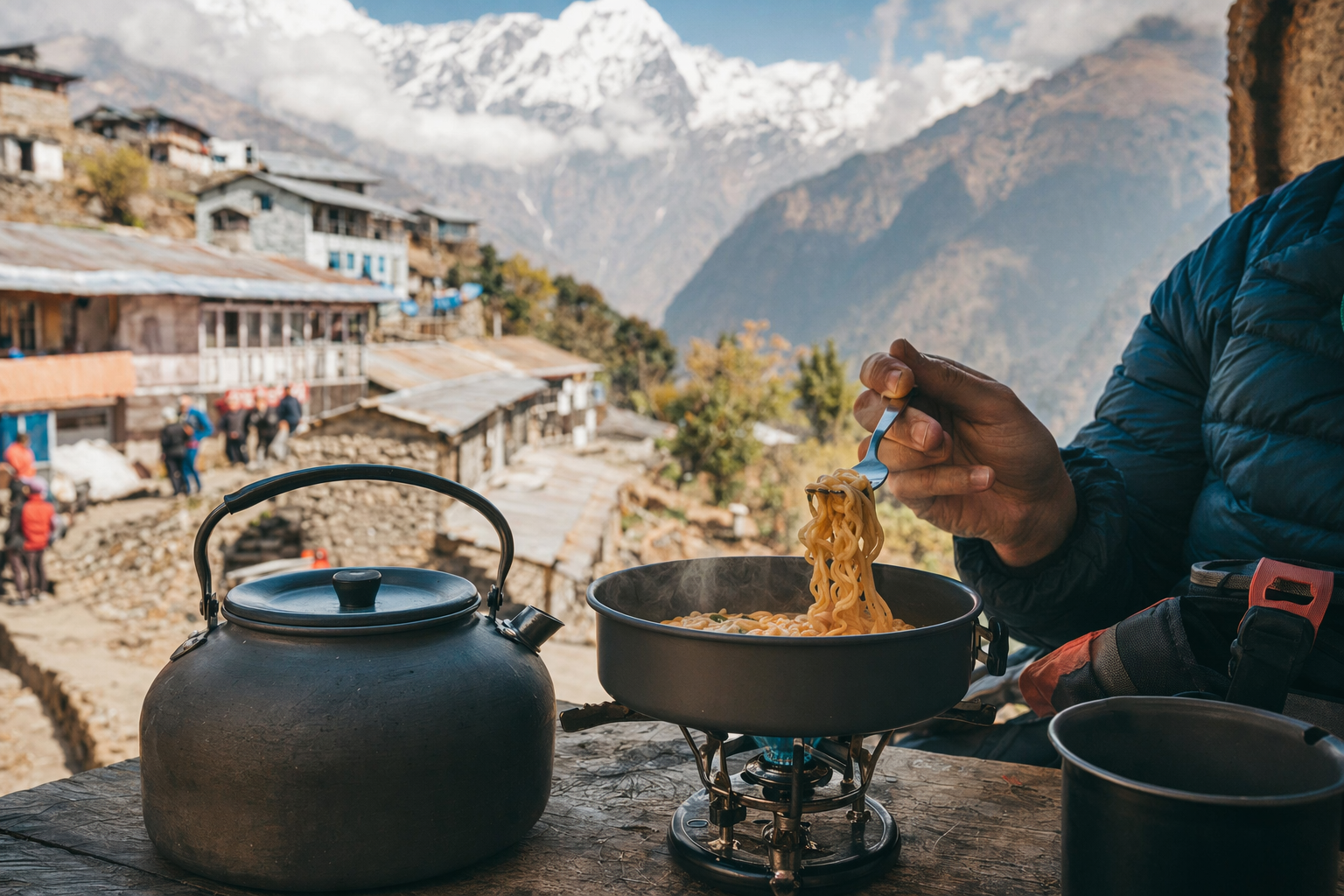
#I once made noodles in a hotel mug that smelled faintly of cleaning product. I rinsed it, thought, eh it’s fine, poured the water, and the whole thing tasted like lemon floor spray. That was dinner. Another time, in a mountain lodge, I forgot water boils at a lower temperature at higher altitude, so my noodles stayed weirdly firm even after the normal time. Not unsafe exactly, just disappointing, like chewing shoelaces in broth. Now at altitude I cover the cup better and wait longer. Simple.
The worst mistake though was assuming every paper cup can handle boiling water. Some can, some get soft and scary. I had one sag in my hand in a cheap motel room in the American Southwest, and I did the panic dance to the sink while hot broth sloshed around. Since then, I use the noodle cup it came in, a heat-safe bowl, or a mug I trust. If the container is thin plastic and not meant for boiling water, I don’t use it. Melted plastic flavor is not a regional delicacy.
Also, don’t fill cups right to the brim. I know hunger makes us ambitious. Leave space. Stir carefully. Put the cup on a stable surface, not a bed, not your suitcase, not the little hotel Bible drawer thing. I have spilled broth on myself and it is both painful and humiliating. There is no cool way to get burned by noodles while alone in a room.
Hostels, trains, airports, and other noodle habitats
#Hostels are the natural home of travel noodles. There is always someone making them at midnight, usually while whispering too loudly. The shared kitchen may have a kettle, but shared kitchens are also where food safety goes to be tested. I wash bowls before using them even if they look clean, because people’s definition of clean can be... poetic. I label leftovers, but honestly with noodles I rarely save them. They get mushy and sad, and safety-wise it’s just not worth babysitting half a cup of broth across a travel day.
Trains are trickier. Some long-distance trains in Asia have hot water dispensers, and this is one of civilization’s finest achievements. I have eaten noodles on trains in China and Vietnam, watching landscapes slide past while everyone around me somehow had better snacks than me. In Europe, it depends more. Sometimes you get a cafe car, sometimes you get a vending machine that looks emotionally unwell. I don’t count on hot water unless I know the route or station setup.
Airports are where instant noodles become a financial protest. When a sad sandwich costs more than a neighborhood lunch, a noodle cup can feel like rebellion. But airport security and hot water access varies, and not every lounge or cafe wants to fill your cup. I ask politely and buy something small if needed. If they say no, fine. Don’t be weird about it. Travel already has enough people being weird about things.
My personal noodle safety checklist, not fancy but it works
#If I had to boil all this down, ha, sorry, I would say: keep the water clean, keep the container heat-safe, keep the kettle for water only, and don’t save wet noodles like they are leftovers from a family feast. Dry packets are low drama. Hydrated noodles are food that needs normal food respect.
I also pay attention to allergies and ingredients more now than I used to. Instant noodles can hide shellfish, fish powder, meat extracts, dairy, wheat, soy, sesame, and all kinds of flavorings. If you have allergies, translation apps help, but they are not perfect. In countries where I cannot read labels well, I stick with brands I know or ask someone. Me and my overconfidence have been humbled by mystery seafood powder before.
And one more thing: don’t make instant noodles your excuse to ignore local food. I love them, but they are the backup singer, not always the main act. Go eat the laksa in Singapore, the pho in Hanoi, the ramen in Fukuoka, the beef noodle soup in Taipei, the mie ayam in Jakarta. Then, when you are tired and your feet hurt and your social battery is dead, return to your little noodle cup. It will be waiting. Patient. Salty. Loyal.
The comfort of a cheap meal in an unfamiliar room
#There is a certain kind of travel night I secretly love. You’ve had a full day. Maybe too full. Your clothes smell like rain or train seats or grilled meat from a market stall. You get back to the room, take off your shoes, and there is this quiet moment where the city keeps going outside but you are done being a participant. You boil water. The kettle clicks. You peel back the lid. Steam rises. For three minutes, nothing is required of you.
That is why I defend instant noodles, even while admitting they are imperfect little sodium bombs. They are not a replacement for culinary travel, they are part of it. They tell you what flavors a place likes, what convenience looks like there, how people snack, how supermarkets organize temptation. They have saved me from bad tourist restaurants, late-night hunger, and my own poor planning more times than I can count.
Just be smart with the kettle. Be nosy. Be picky. Skip it when it feels wrong. Add lime when you can. Carry a spoon because somehow spoons dissapear exactly when needed. And if you end up eating noodles in bed after a long travel day, watching a terrible local TV show you don’t understand, welcome to one of the underrated joys of wandering around this planet. For more food-and-travel rabbit holes, I’m always poking around AllBlogs.in too, usually while craving something spicy.