Dodha burfi is one of those sweets that doesn’t always shout for attention.
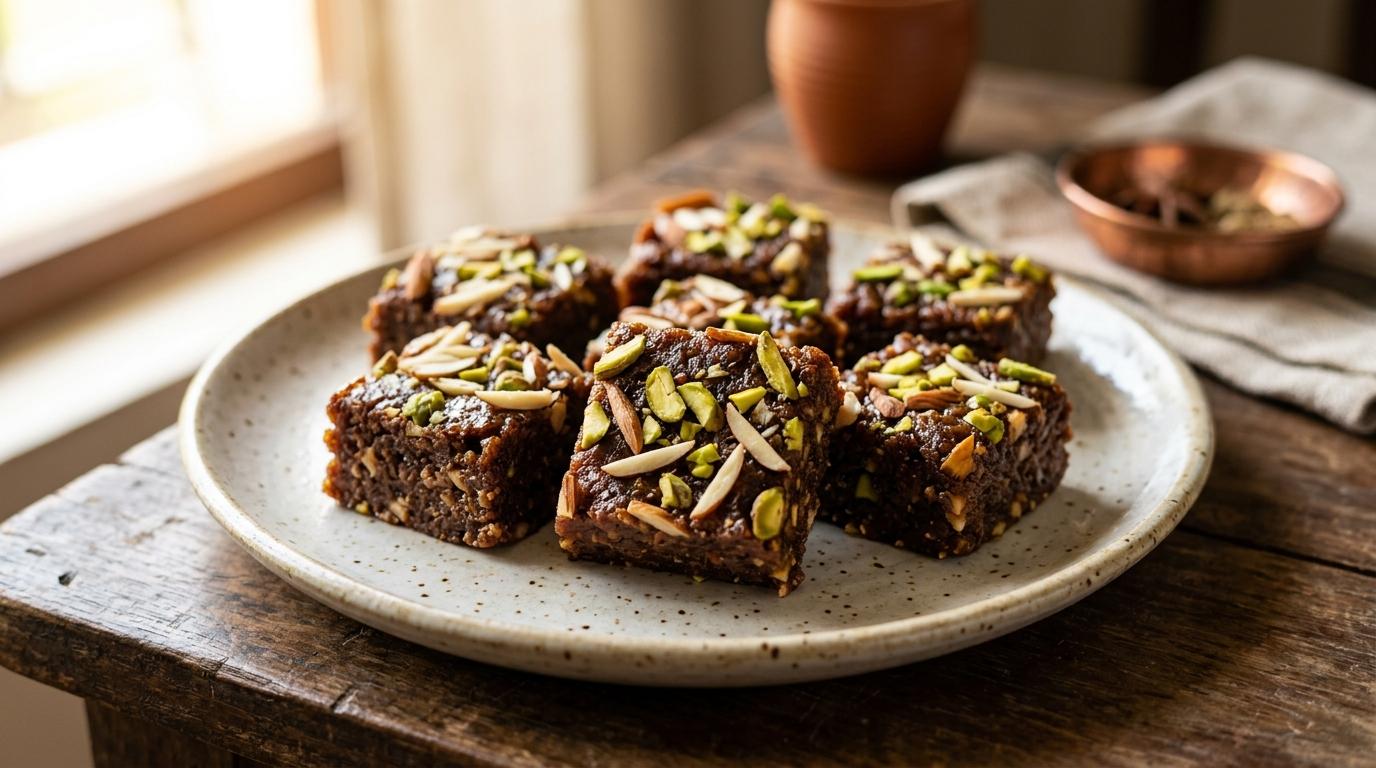
In a mithai shop, it might be sitting quietly beside the bright orange laddoos, glossy kaju katli, and soft creamy pedas. It’s usually dark brown, cut into thick squares, and maybe topped with a few almonds or pistachios.
But take one bite, and it makes sense why people love it.
Dodha burfi, also written as doda barfi, dodha barfi, or dodda burfi, is rich, dense, grainy, and deeply caramelized. It’s not the soft, pale burfi many people first imagine when they hear the word “burfi.” This one has more chew, more roasted flavour, and a heavier, almost fudgy feel.
This guide isn’t a recipe. It’s more of a simple, practical look at what dodha burfi is, what it tastes like, how it’s different from regular burfi, and how to buy, serve, and store it properly.
Quick answer
#Dodha burfi is a rich Indian milk sweet made with concentrated milk solids, ghee, sugar or another sweetener, and usually some form of wheat, such as cracked wheat or wheat flour. It is cooked slowly until the mixture turns dark brown and develops a roasted, caramel-like flavour.
It is known for:
- A deep brown or caramel colour
- A dense, grainy, slightly chewy texture
- A rich roasted milk flavour
- Nuts mixed in or sprinkled on top
You may see it called dodha burfi, doda barfi, dodha barfi, or dodda burfi. The spellings vary from shop to shop, but they usually refer to the same broad style of dense, brown, caramelized milk sweet.
What is dodha burfi?
#Dodha burfi is a traditional milk-based mithai, commonly found in North Indian sweet shops, especially Punjabi mithai shops.
Like many Indian sweets, its exact origin depends on who you ask. Recipes travel from region to region, families adapt them, and halwais often have their own way of making the same sweet. So you may find slightly different versions in different shops.
But for the person eating it, the idea is simple: dodha burfi is a slow-cooked, brown, milk-rich sweet with a grainy bite.
At its base, dodha burfi belongs to the larger family of Indian milk sweets. Milk is either reduced down or used in the form of khoya or mawa. It is then cooked with ghee, sweetener, and usually a grain component until it thickens, darkens, and sets firmly enough to be cut into pieces.
You’ll usually see it sold in squares or rectangles. Some pieces look rustic and simple, while others are decorated with almonds, cashews, pistachios, or silver leaf.
A good piece feels satisfying even when it’s small. That’s why dodha burfi often shows up in festive mithai boxes, wedding trays, and gift packs.
It is not a light sweet. And really, that’s part of its charm.
What does dodha burfi taste like?
#The best way to describe dodha burfi is: roasted, milky, nutty, sweet, and caramel-like.
Yes, it’s sweet. But it shouldn’t taste like plain sugar. A good dodha burfi has depth. The slow cooking brings out flavours that are closer to browned milk, toasted grain, ghee, and caramel.
If nuts are used, they add a gentle crunch and a buttery richness.
The texture is just as important as the flavour. Dodha burfi is usually:
- Dense, not airy
- Grainy, not smooth
- Slightly chewy, not completely melt-in-the-mouth
- A little crumbly around the edges, especially if it’s on the drier side
- Rich enough that one small piece feels satisfying
That grainy texture is not a flaw. It’s one of the things that makes dodha burfi different from smoother milk burfis. The graininess can come from reduced milk solids, wheat, or simply the way the mixture has been cooked and set.
A fresh piece should not feel rubbery, greasy, sour, or dusty. It should have some weight to it, a warm roasted smell, and a pleasant chew.
Dodha burfi vs regular burfi
#“Regular burfi” is a broad term, so the comparison depends on which burfi you mean. Plain mawa burfi, kaju katli, coconut burfi, besan burfi, and chocolate burfi are all quite different from each other.
Still, dodha burfi has a very clear personality.
The biggest difference is the roasted depth.
A regular milk burfi may taste creamy, sweet, and mild. Dodha burfi tastes cooked down, browned, and more intense.
If kaju katli is smooth and elegant, dodha burfi is hearty and old-school. Both are wonderful, but they satisfy different cravings.
How to buy good dodha burfi
#Buying good dodha burfi mostly comes down to freshness, smell, texture, and asking the right questions.
Start with the shop. A busy mithai counter with regular turnover is usually a better sign than a quiet display where the sweets look like they’ve been sitting for too long. This matters even more with milk-based sweets because freshness is important.
When buying, ask:
- Was this made today or recently?
- Does it need to be refrigerated?
- How should I store it after opening?
- Is there wheat in it?
- Does it contain nuts?
- What is the recommended use-by period?
If it’s packaged, check the label for ingredients, manufacturing date, best-before date, and storage instructions.
If it’s loose from a mithai counter, listen to the vendor’s advice but still use your own judgement.
Avoid pieces that look very dry, cracked all over, greasy, moldy, or dull. A little ghee shine is normal. Pools of oil are not a great sign and may point to poor handling, separation, or age.
How to check freshness
#Dodha burfi may look sturdy because it is dense and cooked down, but it is still a milk-based sweet. It should be treated with care.
Use these simple checks before buying or eating it.
1. Smell it
#Fresh dodha burfi should smell like roasted milk, ghee, caramel, and nuts.
Avoid it if you notice:
- A sour smell
- A rancid or stale oil smell
- A musty smell
- A fermented smell
- A strong off smell from old nuts
Your nose is often the first warning sign. Trust it.
2. Check the texture
#A good piece should feel firm but not rock hard. Depending on how it was made, it may be a little chewy, crumbly, or dense.
Be careful if it is:
- Extremely hard and dry
- Strangely sticky
- Slimy
- Wet on the surface
- Crumbling into dry powder
Texture alone doesn’t prove whether it’s safe, but it can tell you a lot about quality and age.
3. Look at it closely
#Fresh dodha burfi should have a deep, even brown colour. The nuts should look fresh, not shriveled or dusty. The surface may have a soft shine from ghee.
Avoid pieces with:
- Visible mold
- Discoloured patches
- Dusty or shriveled nuts
- Excess oil pooling
- Very dry, stale-looking cracks
- Dampness inside the box
If something looks or smells wrong, don’t take a tiny bite “just to check.” With dairy sweets, it’s better to be cautious.
How to serve dodha burfi
#Dodha burfi is rich, so small pieces are usually best. You don’t need a large serving to enjoy it.
Serve it at room temperature when possible. If it has been in the fridge, let it sit out for a short while so it softens slightly. Around 15 to 20 minutes is usually enough in many homes, but use common sense. In hot or humid weather, don’t leave milk sweets sitting out for too long.
Dodha burfi pairs well with:
- Unsweetened masala chai
- Plain hot tea
- Black coffee
- Warm milk, if you enjoy sweet dairy pairings
- A small mithai platter with different textures and flavours
Because dodha burfi is dense and caramelized, it goes especially well with drinks that are not too sweet. Strong tea or coffee cuts through the richness nicely.
If you’re serving guests, cut larger pieces into smaller squares. It makes the sweet easier to eat and helps avoid waste.
How to store dodha burfi
#Storage matters because dodha burfi is a dairy-based sweet.
There is no single shelf life that applies to every piece. It depends on the recipe, moisture level, climate, packaging, hygiene, and the vendor’s instructions.
A freshly made loose sweet from a local halwai is not the same as a sealed commercial pack. A dry winter kitchen is not the same as a humid monsoon day.
Always follow the storage advice given by the seller.
Refrigerate when in doubt
#For most homes, especially in warm weather, refrigeration is the safer choice.
Place the dodha burfi in an airtight container so it doesn’t absorb fridge smells or dry out too quickly.
If it becomes firm in the fridge, let only the piece you want to eat come closer to room temperature before serving. Keep the rest refrigerated.
Keep moisture away
#Moisture encourages spoilage.
Use a clean, dry container. Don’t put warm sweets straight into a sealed box, because trapped steam can create dampness.
This is especially important in humid weather. Keep the sweets dry, use clean utensils, and avoid repeated exposure to heat and air.
Don’t mix old and fresh sweets
#If you buy a new batch, store it separately from older pieces.
Mixing old and fresh sweets makes it harder to judge freshness and can affect the taste and quality of the newer batch.
Use clean hands or tongs
#Every time you touch a sweet, you can introduce moisture and germs.
Use clean hands, a dry spoon, or tongs, especially if the box is going back into storage.
Be careful while travelling
#Dodha burfi is dense and usually easier to carry than syrupy sweets, but it is still a milk sweet.
If you’re travelling, pack it well, keep it away from heat, and check airline or airport rules if you’re carrying sweets in cabin baggage.
For longer trips, packaged sweets with clear labels and storage instructions are easier to manage than loose sweets from an open counter.
When in doubt, throw it out
#This is the simplest rule for dairy sweets.
If the smell, texture, or appearance seems wrong, don’t take a chance.