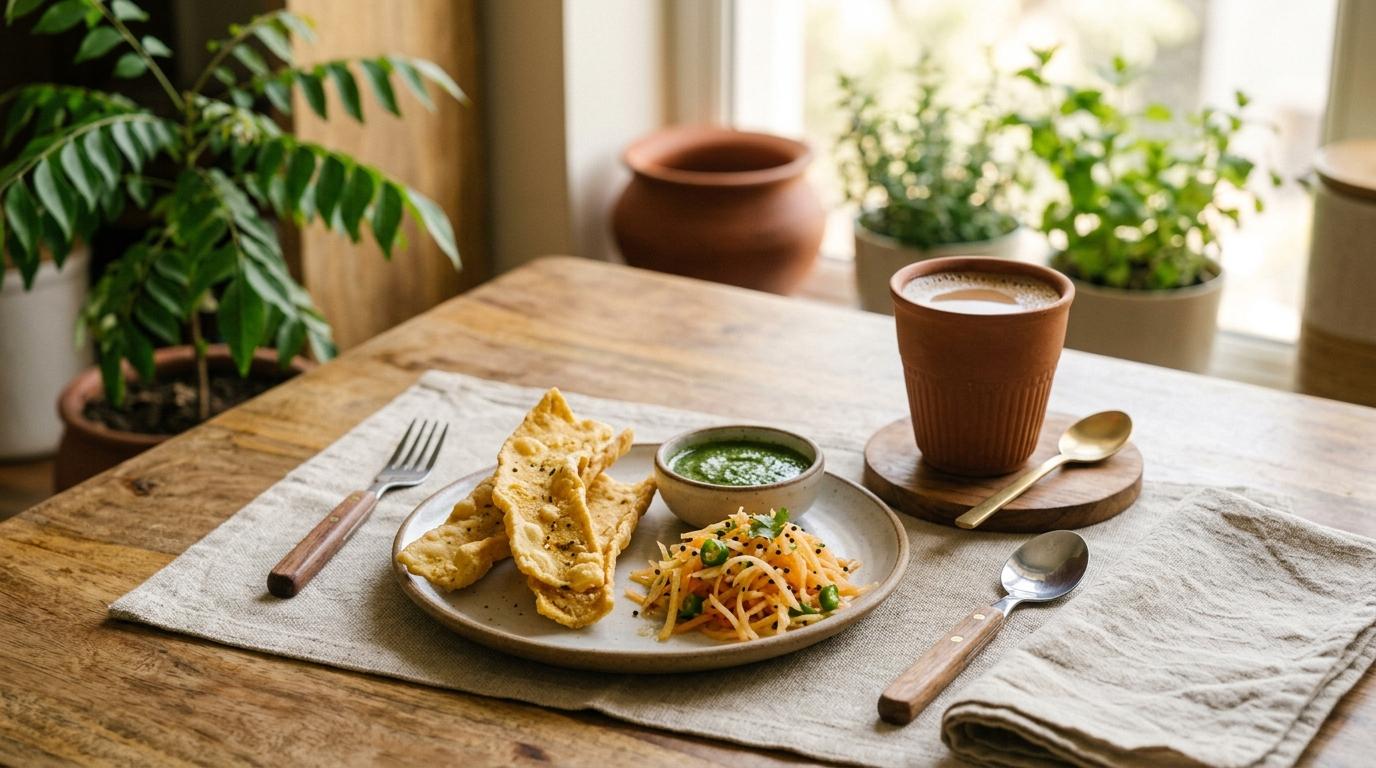
For many Gujarati families, fafda is not just “a snack.” It is Sunday morning. It is Dussehra. It is fresh papaya sambharo, yellow chutney, hot tea, and, very often, jalebi sitting dangerously close on the plate.
So if you or someone at home is managing diabetes or prediabetes, the question is very natural: is fafda good for diabetes, or should it be completely avoided?
The honest answer is: it depends on how much you eat, how often you eat it, and what you eat with it.
Fafda is not the best everyday breakfast for blood sugar control. But for some people, a small portion once in a while may fit into an otherwise balanced diet. The key is not to treat it like a full meal.
This article is for general education only. For personal advice, especially if your sugar levels are high or you take diabetes medicines, please speak with your doctor, endocrinologist, or dietitian.
Quick Answer
#Fafda is usually not a diabetes-friendly daily breakfast because it is deep-fried and contains carbohydrates.
Yes, it is made from besan, and besan can be a better choice than maida in some foods. But once besan is turned into a deep-fried snack and eaten in large amounts, it can still affect blood sugar and overall health.
So, can diabetics eat fafda?
Some people with diabetes or prediabetes may be able to eat a very small portion occasionally. It is better to have it with fiber-rich sides and some protein, and ideally without jalebi.
In simple words: fafda is better treated as an occasional festive food, not a regular Gujarati breakfast for diabetes.
Why Fafda Can Be Tricky for Diabetes
#Fafda is usually made with besan, salt, spices, oil, and sometimes ajwain or a little soda. Because besan has some protein and is common in Indian cooking, many people assume fafda must be okay for diabetes.
But the problem is not only the ingredient. It is the final form of the food.
Fafda is deep-fried. It is also very easy to overeat. It is crispy, salty, light, and usually served in a big pile. One or two pieces can quickly become five or six, especially when everyone is eating from the same packet.
For fafda diabetes concerns, these are the main issues:
- It contains carbohydrates, which can raise blood sugar.
- It is deep-fried, so the meal becomes heavier and higher in fat.
- It is easy to eat too much without realizing it.
- It is often served with sweet or carb-heavy sides, especially jalebi.
- It may not keep you full for long compared with protein, vegetables, sprouts, or dal-based foods.
This does not mean fafda is “bad” or that one bite will ruin your health. Food fear does not help anyone. But it does mean fafda needs some planning if you are managing blood sugar.
Portion Guide
#With fafda, the biggest thing to watch is portion size.
A small piece of fafda may be around 10 grams, though this can vary a lot depending on the shop and how it is made. For someone with diabetes or prediabetes, a cautious portion may be just 1 to 2 small pieces, eaten once in a while.
That may feel very little if you are used to eating a full plate. But the aim is to enjoy the taste, not make fafda the main part of breakfast.
Here are some practical ways to control the portion:
- Put it on a plate firstDo not eat straight from the packet or newspaper wrapping. Take your portion on a small plate and stop there.
- Keep fafda as a side itemYour plate should not be mostly fafda. Add fiber and protein around it.
- Avoid going back for moreWith crispy snacks, the second serving is where things usually go out of control.
- Do not combine it with more heavy carbsIf you are eating fafda, avoid adding bread, poha, sweet tea, sweets, or other large starchy foods in the same meal.
- Check your own response if you monitor sugarIf you use a glucometer or CGM, your after-meal readings can show how your body responds. Everyone’s blood sugar reaction is a little different.
A simple family rule can help: when fafda is on the table, let it be the “taste item,” not the “fill your stomach” item.
Chutney and Jalebi Checks
#Fafda is rarely eaten alone. What comes with it can make a big difference.
Jalebi: the main thing to be careful with
#Fafda-jalebi is a classic combination, and yes, it tastes amazing. But for diabetes management, it is not a friendly pairing.
Jalebi is deep-fried and soaked in sugar syrup. When you eat it with fried fafda, the meal becomes high in sugar, fast-acting carbs, and fat.
If you are managing diabetes or prediabetes, it is better to skip jalebi most of the time. If it is a festival and you really want to taste it, keep the portion very small. If your blood sugar is not well controlled, ask your doctor or dietitian before including sweets.
Papaya sambharo: a better side
#Raw papaya sambharo can be a helpful side because it adds volume and some fiber. It also slows down your eating, which can help with portion control.
A good serving of sambharo can make the plate feel fuller, so you may be less tempted to keep reaching for more fafda.
Just check the recipe. If sugar is added, then it becomes less ideal.
Besan chutney or kadhi: enjoy, but lightly
#The yellow chutney or kadhi served with fafda is tasty, but it may contain besan and sometimes sugar, depending on how it is made.
You do not have to avoid it completely, but use it like a dip. Do not turn it into a large bowl of gravy with the meal.
Fried green chillies: not a magic fix
#Some people feel that eating spicy chillies balances the meal. Unfortunately, chillies do not cancel out the effect of fafda or jalebi.
Fried chillies add flavor, but they also bring extra oil and salt. Eat them only if they suit your digestion, and do not think of them as a blood sugar solution.
Better Gujarati Breakfast Options
#If you love Gujarati food, diabetes does not mean you have to give up traditional breakfasts. It just means the everyday choices should be more balanced, and fried snacks should stay occasional.
For a better Gujarati breakfast for diabetes, try to include:
- Protein
- Fiber
- Less oil
- Controlled portions
Some better regular breakfast options may include:
- Steamed dhokla made with dal or besan, in controlled portions
- Sprouted moong chaat with cucumber, tomato, onion, and lemon
- Methi thepla made with less oil, paired with curd
- Vegetable handvo cooked with less oil
- Plain curd or chaas with breakfast
- Vegetable-heavy dishes instead of only flour-based foods
If you still want fafda occasionally, build a more balanced plate like this:
- 1 to 2 small pieces of fafda
- A larger serving of papaya sambharo or salad
- Unsweetened curd, sprouts, paneer, eggs, or another protein source that suits your diet
- No jalebi, or only a tiny taste on rare occasions
- Tea or coffee without sugar, or as per your diabetes meal plan
Timing also matters. Eating fafda first thing in the morning with sweet tea may not work well for many people. A more balanced breakfast with protein and fiber is usually a safer choice.
For more ideas, you can read AllBlogs guides like Gujarati Breakfasts for Diabetics and a practical diabetic-friendly Gujarati thali guide on allblogs.in. They can help you move away from “allowed” and “not allowed” thinking and focus more on building balanced plates.
Practical Breakfast Tips for Fafda Lovers
#Here are some realistic tips that work better in real life than strict food rules.
If you are buying from a shop
#Buy a small quantity, not the usual big packet. Once a large packet comes home, portion control becomes much harder.
Serve fafda on individual plates instead of keeping the whole packet open on the table.
If someone at home has diabetes, do not automatically serve jalebi with it. Keep it separate.
If you are eating at a family gathering
#Take your portion once. Add sambharo or salad. Eat slowly.
If relatives insist you take more, you can simply say, “Doctor has asked me to keep fried foods small.” That usually works better than giving a full lecture on blood sugar at the breakfast table.
If your fasting or post-meal sugar is high
#This is not the best time to experiment with fafda. Choose a more balanced breakfast and speak with your healthcare provider about your meal plan.
If you are newly diagnosed
#Do not guess your way through diabetes. Food tolerance can vary from person to person. A registered dietitian can help you understand whether foods like fafda can fit into your routine, and if yes, how much and how often.
So, Is Fafda Good for Diabetes?
#Fafda is not “good for diabetes” in the way vegetables, sprouts, curd, dal, or balanced home-cooked meals can be.
It is fried, easy to overeat, and often paired with sugary jalebi.
But it also does not have to become a fear food.
For some people, a small portion occasionally, without jalebi, and with fiber and protein on the side, may be manageable. The safest answer depends on your blood sugar control, medicines, activity level, and overall diet.
In short: enjoy the tradition, but respect the portion.
Medical Caution
#This article is for general education only and does not promise any blood sugar result. Diabetes and prediabetes need personalized care, and food responses can vary from person to person.
Please speak with a doctor, endocrinologist, or registered dietitian before changing your diet, especially if you take diabetes medicines, use insulin, or often have high or low blood sugar readings.