Rain, pink walls, and that first crackle of kachori
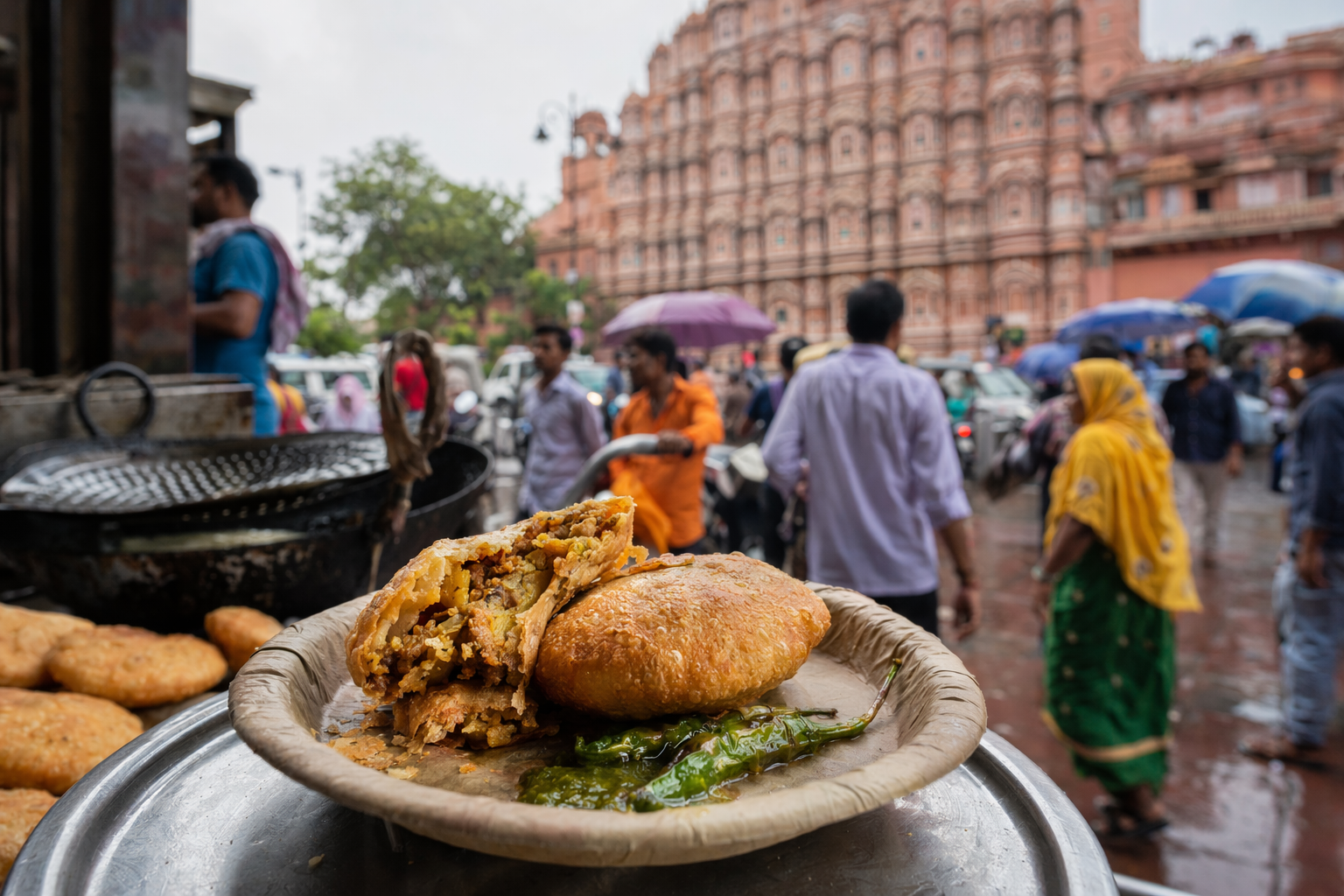
#I have this theory, and maybe it is a very hungry-person theory, but Jaipur in the monsoon smells better than Jaipur in any other season. The dust settles, the pink walls of the old city look freshly washed, the scooters make that soft wet-road hiss, and somewhere near a sweet shop counter, hot pyaaz kachori is being lifted from oil like a little golden planet. That is the exact moment I forget all my clever travel plans. I came for forts, bazaars, maybe a dramatic cloudy photo of Hawa Mahal. Then the kachori happened. Crispy, blistered, slightly greasy in the best way, stuffed with onion and masala that tastes sweet, spicy, sour, and properly Rajasthani all at once. Monsoon makes it worse, honestly. Or better. You are damp, a bit tired, your shoes are probably making that awful squish sound, and then someone hands you a kachori wrapped in paper. That first bite is not polite. It shatters. Chutney runs down your wrist. You pretend you are fine. You are not fine.
This guide is basically my Jaipur monsoon food walk built around pyaaz kachori, but not in a rigid clipboard kind of way. Jaipur does not reward people who walk around like they are inspecting a museum. It rewards wandering. You stop for chai because rain starts. You buy an umbrella you don't need because it has elephants printed on it. You get pulled toward a frying counter because the smell of hing, onion, ajwain, and hot oil grabs you by the collar. I have done this walk in dry heat and I have done it in drizzle, and drizzle wins. Not always for comfort, let me be honest. Traffic gets messy, puddles hide potholes, and the old city can feel like one giant umbrella collision. But food-wise? Wah. Fried snacks in rain are a whole mood, and Jaipur takes that mood very seriously.
What makes Jaipur pyaaz kachori so dangerous, in a good way
#Pyaaz kachori is not just “onion pastry,” though that is the boring translation people use when they are trying to explain it quickly. A proper Jaipur-style one is deep fried till the outer shell becomes flaky and almost layered, then inside there is a spiced onion filling that is cooked down so it has sweetness, heat, and that little tang that wakes you up. The masala can vary shop to shop. Some lean fennel-heavy and fragrant, some are more chilli-forward, some have that sour amchur kind of kick. I like the ones where the onion has not turned mushy into sadness. You should still feel the stuffing has texture, like it fought for its own identity.
The monsoon part matters because you eat differently when the weather changes. In May, Jaipur can feel like a giant tandoor and I mostly crave nimbu soda, chaas, and anything that does not require standing near oil. But when clouds come, fried food becomes weirdly logical. Pyaaz kachori, samosa, mirchi vada, pakoras, jalebi, and hot chai suddenly feel like survival equipment. Locals know this already. You will see it at counters. The rush comes in waves. Office people, college kids, shopkeepers, aunties carrying shopping bags, tourists who followed their nose. Everyone is waiting for that fresh batch. And that is actually your first food safety clue too: if the batch is moving fast, you are usually in a better place than a sleepy counter where kachoris have been sitting around getting soggy and philosophical.
Starting the walk: MI Road to the old city, with an empty stomach please
#I usually begin around MI Road because it is easy to reach, there are hotels nearby, and it lets you ease into the chaos before the old city properly swallows you. Rawat Mishthan Bhandar is the name almost everyone will throw at you when you say pyaaz kachori in Jaipur. It is famous, yes, and it can be busy in that “am I in a queue or just part of a crowd” way. I have had great kachori there and I have had one that was merely good, which is still not a tragedy. The trick is timing. Go when fresh frying is happening, not when you are getting the lonely piece that has been staring at the road for too long. Morning works. Late afternoon rain-snack hour works too, though it can get packed.
From MI Road, I like walking toward Ajmeri Gate if the rain is not too aggressive. If it is pouring like the sky has personal issues, take an e-rickshaw for a short hop and save your energy. The city gates look especially pretty when damp, and the old city beyond them has that theatrical Jaipur feeling: terracotta-pink facades, shop signs, bangles, sarees, tourists bargaining badly, and food everywhere if you pay attention. This is where your food walk stops being about one dish and becomes about appetite management. You cannot eat every kachori you see. I have tried. Bad idea. You need to share, nibble, pause, walk, and let the rain do its thing.
Stop one: the famous kachori counter and the first bite test
#At your first serious kachori stop, do not just order and attack. Watch for a minute. I know, self-control is annoying. But watch. Are they frying fresh? Is the oil bubbling cleanly or does it look tired and dark? Are the kachoris being drained properly or stacked into a steamy pile where the bottom ones go limp? Is the chutney being ladled from a covered container? None of this needs you to become a hygiene inspector, but monsoon street food asks for a little common sense. Rainy weather is romantic until your stomach starts writing complaint letters.
My first bite test is simple. The shell should crack, not bend. If it bends, I get suspicious. The filling should be warm all the way through, not cold in the middle. The onion masala should hit you slowly: sweet first, then spice, then that sharp savoury thing that makes you want chai. Some shops serve it with kadhi, some with green chutney, some with sweet tamarind chutney, some just hand it over plain because the kachori itself has enough personality. Personally, I like a little chutney but not drowning. Drowning is for bad kachori. Good kachori does not need a swimming pool.
Should you pair it with lassi? Yes, but be a little sensible
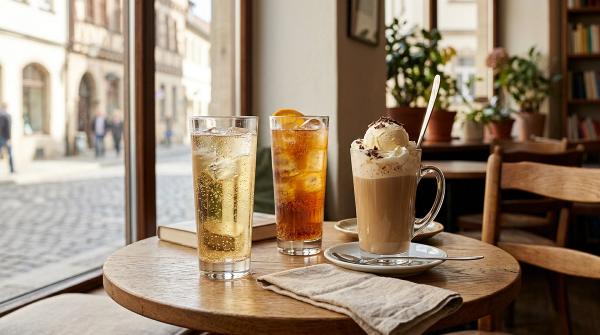
#A cold lassi after a hot pyaaz kachori sounds perfect, especially when the air is sticky and the rain has made everything smell earthy. Jaipur has plenty of good lassi places, and a thick sweet lassi can calm the chilli beautifully. But monsoon and dairy is one of those combinations where I become slightly boring for two minutes. Check if the place is busy, if the curd looks fresh, if they are keeping things covered, and whether ice is being added. I am not saying be paranoid. I am saying don't be the hero who drinks suspicious dairy at a random empty stall at 4 pm and then blames Jaipur. If you want a deeper checklist, this piece on Is Lassi Safe in Indian Summer? Dairy Freshness Checks Before You Drink is actually useful, even for monsoon travel because the same freshness and storage logic applies.
If lassi feels too heavy, go chai. Honestly chai is the more loyal partner for pyaaz kachori in rain. Small glass, hot, sweet, slightly overboiled, and somehow exactly right. I once stood under a narrow shop awning near Bapu Bazaar with a kachori in one hand and chai in the other, rainwater dripping from the awning edge onto my backpack, and I remember thinking, this is more Jaipur than any perfectly planned sightseeing day. Then a scooter splashed my jeans. Balance, I guess.
Into Johari Bazaar: walking, snacking, pretending you are not already full
#Johari Bazaar in the monsoon is beautiful but chaotic. The jewellery shops glow, the textiles look brighter under cloudy light, and the footpaths can turn into obstacle courses of puddles, parked bikes, and people who suddenly stop to check bangles. Go slow. This is not a race. I like to make this section a grazing stretch rather than a full eating stop. Maybe a small samosa. Maybe a bite of mirchi vada if it is fresh. Maybe just smell everything and say no, which is a skill I do not fully possess.
Here is where the food walk becomes travel, not just eating. You pass old havelis, tiny shrines tucked between shops, paan counters, flower sellers, and those old-style sweet shops with glass cases full of ghewar, imarti, laddoo, and things that look like they were invented by someone with deep respect for sugar. Jaipur's food culture is tied to its trading history, desert climate, royal kitchens, festival sweets, and everyday bazaar hunger. That sounds grand, but you feel it in small things. The way snacks are sturdy, spiced, travel-friendly. The way sweets use ghee like they mean it. The way a shopkeeper will insist you try one more thing even when you are clearly losing the battle.
A small detour toward Hawa Mahal, because digestion needs scenery
#After one or two kachoris, walk toward Hawa Mahal. Not because you need another selfie, though fine, take it, everyone does. Go because the area has a rhythm that helps you digest. The Palace of Winds looks moody in cloud cover, less postcard-perfect maybe, but more alive. The traffic in front is still mad. Camels sometimes appear like they missed a meeting. Tourists cluster with umbrellas. Vendors sell postcards, earrings, kulhad chai, and things you did not know you needed until someone shook them in front of you.
If you are doing the food walk in late morning, this is a good pause. Look up at the honeycomb windows, drink water, maybe buy nothing for once. Monsoon humidity tricks you because you do not always feel as thirsty as in dry summer, but you still need water. I learned this the stupid way on one trip when I kept replacing water with chai and then wondered why my head felt like a pressure cooker. Carry a bottle. Also carry tissues. And a small plastic bag for wet umbrella drama, because Jaipur shop floors are not waiting for your dripping nonsense.
Chaura Rasta, Tripolia side, and the second kachori decision
#By the time you move toward Chaura Rasta or Tripolia Bazaar, you need to decide if you are a one-kachori person or a compare-and-contrast person. I always pretend I am doing serious culinary research. Basically I want another kachori. Samrat Restaurant near Chaura Rasta is another well-known old-city stop people mention for snacks, and the whole area has that proper bazaar energy where you can eat, shop, dodge rickshaws, and question your life choices in one lane. Again, don't treat names like magic. A famous place can have an off day. A smaller place can surprise you. Freshness beats fame.
My second kachori rule is: split it. Share with a friend, or even ask for one and eat half if you are solo. The second one tells you more than the first because now you are not just hungry, you are judging. Is the crust lighter? Is the masala sharper? Does it leave too much oil on your fingers? Does the chutney make sense? One place I tried had a filling so peppery it bullied the onion completely. Another had this lovely fennel sweetness that stayed in my mouth for ages. I still think about that one, which is ridiculous because I cannot remember the shop name. This happens to me a lot. Great travel memories, terrible note-taking.
Monsoon snack safety without killing the fun
#I know food safety talk can sound like someone's uncle entered the blog, but it matters. Jaipur monsoon is not dangerous if you use your eyes. Choose hot food that is cooked in front of you. Avoid chutneys that look watery, uncovered, or like they have been sitting since a previous era. Be careful with cut fruit in heavy humidity. If your stomach is sensitive, do not start the day with six fried items and a mystery drink. This is not weakness. This is strategy.
- Pick stalls and shops with high turnover, especially during rainy weather when food can lose texture fast.
- Ask for a fresh batch if possible. In busy shops, this is usually not a weird request.
- Watch the oil color and smell. If it smells burnt or looks very dark, I move on.
- Carry hand sanitizer, but also use actual soap and water whenever you get a chance. Sticky chutney fingers are no joke.
If you like comparing rainy-season snacks across India, the logic is similar to coastal monsoon eating too: hot fried items can be wonderful, but chutney, oil freshness, and stall turnover matter. I was reminded of that while reading this Mangalore Goli Baje and Buns Monsoon Guide, because different city, totally different flavors, but the rainy-weather decision making is weirdly similar. Hot and fresh wins. Lukewarm and doubtful loses. Simple.
What else to eat when kachori needs a supporting cast
#Pyaaz kachori is the hero here, but Jaipur does not believe in solo performances. Add mirchi vada if you like green chilli drama. Try samosa if it is fresh and the potato filling smells of proper masala. If you see jalebi coming straight out of oil and into syrup, that is difficult to refuse, and I do not advise refusing it unless you have doctor-type reasons. In monsoon, ghewar also appears around the season of Teej and Raksha Bandhan, and Jaipur sweet shops take ghewar seriously. The plain one, malai one, rabri one... all dangerous. I say “just one piece” and then become a liar.
For a more filling meal later, look at dal baati churma, gatte ki sabzi, ker sangri, or a Rajasthani thali, but maybe do not stack that immediately after a kachori crawl unless you are built different. I once made the mistake of going from kachori to thali to kulfi in a few hours because I had only one day in Jaipur and apparently no respect for digestion. The food was great. The walk back to the hotel was silent and spiritual. Learn from me.
My loose monsoon food walk route, the one I actually follow
#- Start on MI Road in the morning or late afternoon. Get your first pyaaz kachori from a busy, fresh-frying counter.
- Walk or take a short ride to Ajmeri Gate. Enter the old city slowly, with no heroic crossing of flooded patches.
- Graze through Bapu Bazaar or Johari Bazaar. Keep it light, maybe chai, maybe a small bite, maybe just looking.
- Pause near Hawa Mahal for photos, water, and breathing space. Yes, breathing space is part of eating.
- Move toward Chaura Rasta or Tripolia side for your second kachori comparison, then stop before your stomach starts filing legal paperwork.
If you are the kind of traveler who likes early food walks, Jaipur works well in the morning because counters are active and the city is waking up in layers. That said, monsoon evenings have their own magic, especially when the rain cools the stone and everyone suddenly wants chai. For people planning more North Indian snack walks, the timing and hygiene cues are not that different from an Amritsar breakfast crawl, and this Amritsar Morning Food Walk Safety: Kulcha & Lassi Tips has good reminders about busy stalls, early starts, and dairy caution. Different city, same stomach common sense.
Practical little things nobody tells you until your socks are wet
#Wear shoes you can forgive. Jaipur old city is walkable, but monsoon walking means puddles, slick stone, and random muddy corners. I like sandals with grip or old sneakers, not fancy white shoes that will spend the rest of the trip looking betrayed. Keep cash in small notes because snack counters can be fast and crowded. Digital payments are common in many places now, but small cash still saves time when the network is acting moody. Carry a light rain jacket if you hate umbrellas. I hate umbrellas until I need one, then I become emotionally attached.
Also, do not over-schedule the same day. Amer Fort in the morning, City Palace, Jantar Mantar, shopping, food walk, sunset, dinner, cultural show... people make these itineraries and then wonder why they are exhausted and cranky. Jaipur deserves pauses. A pyaaz kachori walk is best when you can drift. Let the rain delay you. Let a shopkeeper talk you into smelling itr. Let yourself sit with chai longer than planned. Travel is not a productivity contest, even though Instagram sometimes makes it look like one.
The taste I keep chasing after leaving Jaipur
#What stays with me is not just the kachori. It is the sound. The metal skimmer tapping the kadhai. The crackle when a fresh batch is opened. The rain hitting plastic awnings. Someone yelling for two chai. A tourist asking if it is spicy and the vendor doing that Indian head wobble that means yes, no, maybe, and don't worry all at once. It is the feeling of standing in a city that has seen kings, traders, artists, weddings, festivals, and millions of hungry snack breaks, and you are just another person with chutney on your fingers.
I have eaten pyaaz kachori outside Rajasthan and some were genuinely good. But in Jaipur, especially in the monsoon, it has context. The pink city backdrop, the damp bazaar smell, the sudden appetite rain brings, the way hot masala feels when the air is cool for once. Food always tastes better when the place around it is doing half the seasoning. Maybe that is sentimental. Fine. I am sentimental about fried pastry. There are worse things.
Final bite, before the rain starts again
#If you go to Jaipur in the monsoon, do the forts and palaces, obviously. Watch clouds gather around Nahargarh if you get the chance. Walk the old city when the walls glow after rain. But please, leave space for pyaaz kachori. Not as a quick tick-box snack, but as a proper little journey: watch it fry, eat it hot, compare shops, sip chai, get slightly lost, and accept that your fingers will smell of masala for a while. That is part of the deal.
My best advice? Start hungry, move slowly, trust busy counters more than famous names, and never waste stomach space on a cold kachori. Jaipur will feed you well if you pay attention. And if you enjoy these messy, hungry, rain-soaked food travel stories, I keep finding more good rabbit holes and culinary guides over on AllBlogs.in, which is honestly dangerous for anyone who plans trips around snacks like me.