If you're planning Vietnam from India and wondering whether to get an eSIM before flying or just buy a local SIM after landing, yeah... I was stuck on the exact same thing. It sounds like a small decision till you're standing at the airport, sleep deprived, trying to book a Grab, text your hotel, and also tell your family in India that yes, you landed safely, no, nobody kidnapped you, relax. Internet in Vietnam becomes important stupidly fast. And after using both on different parts of the trip, I can honestly say there isn't one perfect answer for everyone. It depends on how you travel, where you land, whether your phone supports eSIM, and how much patience you have for airport kiosks and random activation drama.
I did Ho Chi Minh City first, then Da Nang, Hoi An, and a bit of Hanoi later. On one leg I used an eSIM activated before departure from India. On another trip segment, me and my friend bought a Vietnamese local SIM after landing. Both worked. Both annoyed me in different ways. So this guide is basically the version I wish someone had sent me on WhatsApp before I went.
First things first: does an Indian traveler even need constant mobile data in Vietnam?
#Short answer, yes. Very much yes. Vietnam is easy to travel in, but it's not the kind of place where I'd happily depend only on hotel Wi-Fi. You'll use data for Grab rides, Google Maps, restaurant reviews, translation, train or bus updates, digital payments research, Instagram if you're that person, and staying in touch with family. Also many Indian travelers now do self-planned Vietnam trips instead of package tours, so your phone basically becomes your trip manager. Mine was doing overtime.
- Grab is the big one for taxis and bike rides in cities like Ho Chi Minh City, Hanoi, Da Nang
- Google Maps helped a lot in old quarters and tiny alley style streets where everything looked same-same after a while
- WhatsApp calls back home were smoother on mobile data than some weak hostel Wi-Fi connections
- Translation apps were lifesavers at smaller cafes and family-run places
And btw, public Wi-Fi exists all over Vietnam, cafes especially, but I wouldn't trust it as my only option. Fine for scrolling maybe, not ideal if you're trying to book intercity transport or log into banking apps.
My honest take in one line: eSIM is easier, local SIM can be cheaper and sometimes stronger
#That's really the whole fight. eSIM wins on convenience. Local SIM often wins on value and local network stability, especially if you buy from an official shop instead of some random airport counter charging tourist prices. But life isn't that neat, is it. Sometimes the slightly more expensive thing is worth it just because your brain is fried after a flight from India and you don't want to argue over packages in another country.
What happened when I used an eSIM in Vietnam
#On my first entry, I set up an eSIM in India itself. Activation QR came by email, I installed it a few hours before leaving, and once I landed in Ho Chi Minh City, data started within a few minutes. That feeling? Amazing. I booked a Grab from the airport, messaged the hotel, checked exchange rate, all without hunting for a SIM stall. For first-time visitors, especially solo travelers or women arriving late night, this convenience is not small. It matters.
But... and there is always a but... the eSIM I used was data-only. So no local Vietnamese number. For me it was mostly okay because Grab and WhatsApp were enough. Still, a local number can help in some situations, like if a hotel or tour operator wants to call directly, or if some delivery or booking platform prefers local numbers. Not a deal breaker, just something to know before you act smart and book the cheapest plan available.
If your main goal is to be connected the second you land, eSIM feels almost cheating-level easy. If your main goal is stretching every rupee, local SIM still has a case.
Then I tried a local SIM and, yeah, that was a whole different vibe
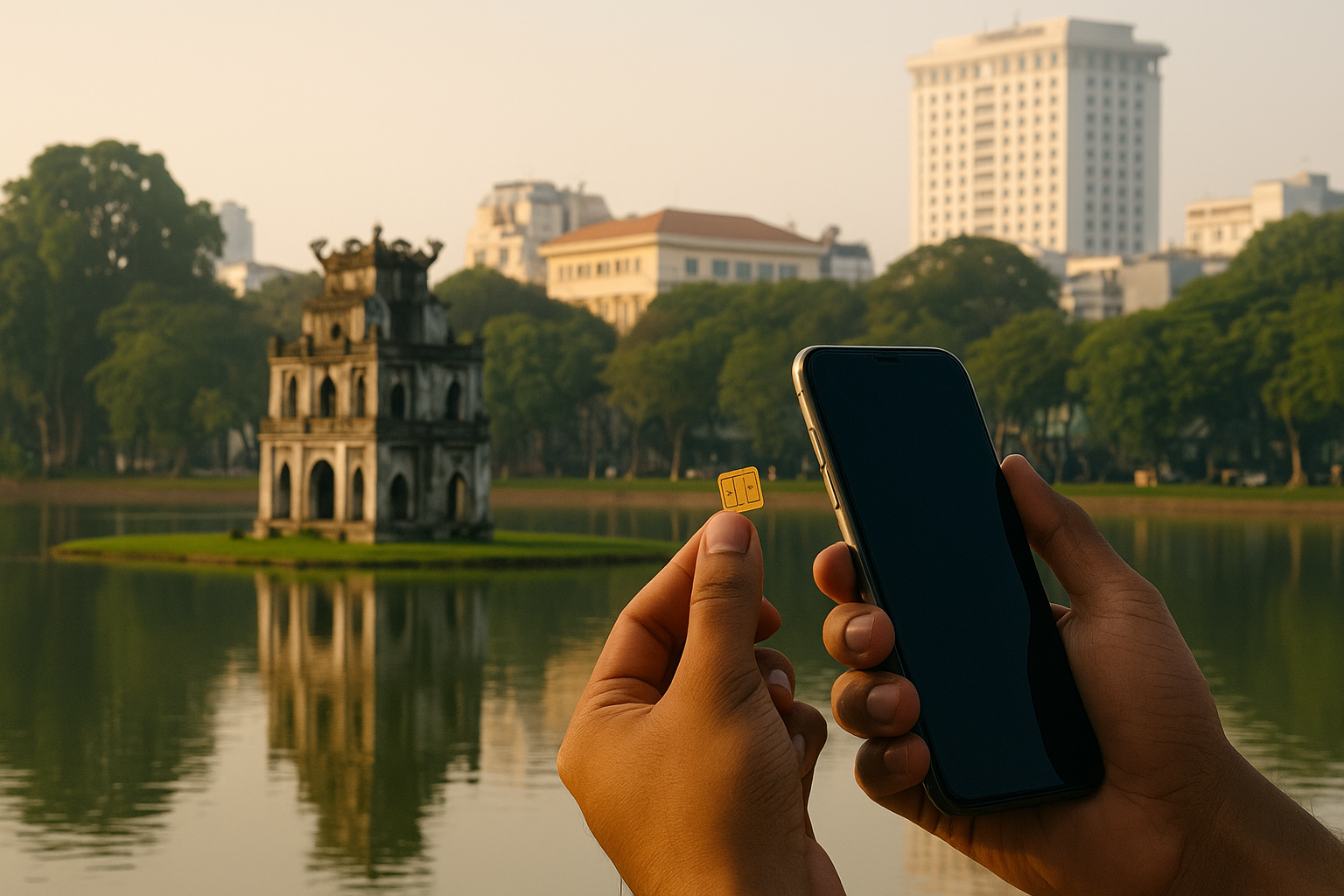
#Later in the trip, we bought a local SIM in the city instead of the airport. That part is important. Airport counters are convenient but often pricier, and the packages can be confusingly marketed. In Vietnam, the major networks travelers usually come across are Viettel, Vinaphone, and Mobifone. From what I saw and heard again and again, Viettel usually has the strongest reputation for wider coverage, especially if you're going beyond just major cities. In Hanoi and HCMC honestly all felt decent enough, but in more remote areas and road journeys, people kept recommending Viettel.
The local SIM gave us more data for the money, and network performance was solid. Calls were available too. The annoying part was the buying process. Some shops are smooth and set up everything in two minutes. Others... not so much. We had one guy confidently activate the SIM, then data didn't work properly till we restarted twice and changed settings. Not a disaster, but after travel fatigue even tiny issues feel personal.
So which one should Indian travelers choose?
#Okay, my practical answer. If it's your first Vietnam trip, your phone supports eSIM, and you care about convenience more than saving a few hundred rupees, just get an eSIM. Seriously. Especially if you're landing late, changing cities quickly, or traveling solo. If you're doing a longer trip, using lots of data, want a local number, or your phone doesn't support eSIM, then local SIM makes more sense. For budget travelers, backpackers, students, and groups, local SIM is still a very valid move.
- Choose eSIM if you want internet immediately on landing, don't want kiosk hassle, and are okay with a data-only setup in many cases
- Choose local SIM if you want better value, possibly more generous data, local calling, and don't mind spending time buying and activating it
- Choose Viettel first if you're going beyond major tourist zones or doing north-to-south travel
- Avoid buying blindly from the first airport counter unless the price and data validity are clearly explained
Phone compatibility stuff that people forget till the last minute
#This one sounds boring but can literally decide everything. Not every phone sold in India supports eSIM. A lot of newer iPhones do. Some premium Samsung and Pixel models do. But plenty of mid-range Android phones don't. And some phones may be eSIM-compatible globally but still carrier-restricted or have region weirdness. So check before the trip, not while sitting at Delhi or Mumbai airport with coffee in hand pretending you're prepared.
Also, your phone should be unlocked for foreign SIM use. Most Indian phones are, but just verify. And keep your physical SIM slot free if you plan to use a local SIM alongside your Indian number. Dual SIM setup was actually very useful for me because OTPs from Indian banks still came to my India SIM sometimes.
What prices felt normal when I was there
#Prices change a bit depending on season, airport vs city, and which seller is trying their luck with tourists. But generally, eSIM plans for short trips felt slightly more expensive than local SIM packages with similar data. Not wildly expensive, just enough to notice. For a typical 5 to 10 day trip, most Indian travelers will find both options affordable compared to overall flight and hotel costs. That's why I say don't over-optimize this one. If paying a bit more saves you stress on day one, maybe that's worth it. Travel has enough chaos already.
Accommodation in Vietnam is still one of the nicest surprises for Indians because your money goes decently far if you book smart. In backpacker zones you can find hostel beds from budget range levels, simple private rooms at very fair prices, and solid 3-star hotels that often cost less than what you'd pay in many Indian metro tourist areas. In places like Da Nang and Hanoi, mid-range stays can feel especially good value. So personally I wouldn't ruin my first day fighting over a SIM just to save a tiny amount, then spend way more on coffee and bánh mì anyway.
Coverage in cities vs beaches vs mountain areas
#In Ho Chi Minh City, Hanoi, Da Nang, and Hoi An, connectivity was mostly fine on both eSIM and local SIM options linked to strong networks. Uploading reels, video calls, maps, all good enough. The difference started showing more during transit and in less urban areas. If your itinerary includes Ha Giang loop, Sapa, Ninh Binh countryside, Cat Ba, Phong Nha, or long bus journeys, coverage quality matters more. That's where local network choice becomes bigger than the eSIM-vs-SIM debate itself. A good eSIM running on a strong local network can still perform well, but a cheap bad one may not.
So don't just ask 'eSIM or local SIM?' Ask which local network the eSIM is using. That's the sneaky detail many people skip.
Airport arrival reality for Indians, because no one talks enough about this
#Indian flights often land with half the plane switching on phones instantly, trying to connect, compare exchange rates, and message family groups. At Vietnam airports, you'll usually see SIM counters before you exit. Tempting, yes. But if you're tired, these counters can be confusing because the person is speaking fast, there may be multiple plans, and you might not fully understand validity, fair usage, or whether calls are included. One friend of mine bought a 'unlimited' package that was not really unlimited in the way he thought. Classic airport thing.
If you already have eSIM set up, you skip all that and just leave. That was honestly one of my favorite feelings after landing. Straight to ATM, then Grab, then food. Priorities.
Safety, scams, and little things to be careful about
#Vietnam felt pretty safe to me overall, including for Indian travelers moving around independently. But like any popular destination, touristy areas have overcharging and small hustles. With SIM cards, the risk isn't some dramatic scam movie scene, it's more boring than that. You may pay too much, get fewer days than expected, or receive a package that's not what you thought. Buy from official telecom stores or well-reviewed sellers when possible. Keep the package photo and receipt. Test data before leaving the shop. Tiny tip, but useful.
- Check validity in days, not just total data promised
- Ask whether hotspot is allowed if you need laptop work
- Confirm if local calls/SMS are included or if it's data-only
- Do a speed test or at least open maps before walking away
And because this is a travel blog and not a telecom ad, basic street safety too: watch for phone snatching in busy traffic-heavy areas, especially Ho Chi Minh City. Don't stand too close to the road waving your phone around like a confused influencer. Vietnam traffic has it's own energy, boss.
Best time to visit Vietnam, and why network choice changes a bit with your route
#Vietnam weather is weirdly regional, so there isn't one perfect month for the entire country. South Vietnam like Ho Chi Minh City is warmer and more tropical. Central areas like Da Nang and Hoi An have their own rain and typhoon-sensitive periods. North Vietnam, especially Hanoi and Sapa, can get surprisingly cool in winter. In general, many travelers from India like the periods with milder heat and less intense rain, but your exact route matters. If you're traveling in monsoon-affected windows or heading into mountain regions, stronger network coverage matters more because transport delays and rerouting can happen. That's another point in favor of choosing a reliable local network, whether through eSIM or physical SIM.
Food, transport, and daily travel life where mobile data really helped me
#Let me say this clearly: a working internet connection made Vietnam so much more enjoyable. I used it to find vegetarian options for one of my travel days, compare bus times, navigate night markets, and locate Indian food when I got sudden homesick cravings. Yes, I ate pho and bánh mì and bun cha and way too much egg coffee, but after a few days, finding dal rice or paneer somewhere in Hanoi felt emotional yaar. Data helped with all of that.
Transport-wise, Grab was easiest in big cities and usually felt transparent on pricing. For intercity travel, I checked trains, sleeper buses, and domestic flights online constantly. Vietnam has improved tourism infrastructure a lot, and independent travel is easier now than many Indians assume. Popular experiences like Hoi An lantern evenings, Da Nang beach stays, Ninh Binh boat rides, and even motorbike loop planning all become smoother when your phone just works. Sounds obvious, but when your data fails in the middle of changing buses, you'll understand what I mean.
For different types of Indian travelers, here's what I'd suggest
#If you're going on honeymoon or a short couple trip, get an eSIM and save your energy for actual travel. If you're a solo backpacker doing hostels, overnight buses, maybe Ha Giang, maybe Sapa, a good local SIM might give you more value. If you're traveling with parents, I'd honestly set up at least one eSIM in advance so airport arrival is less messy. For family groups, one or two people can have eSIM active immediately, and others can buy local SIM later if needed. That's a nice middle path actually.
For workation types and digital nomad-ish people, don't be cheap. Get the most reliable option you can. Vietnam has become super popular for longer stays, cafe work, beach city remote work, all that. Da Nang especially has that vibe now. If your income depends on connection, test redundancy. One eSIM plus one local SIM between devices is not overkill. It's just smart.
The option I'd personally choose next time
#Next time, I'd probably do this: land with an eSIM already active, then if the trip is longer than a week or I'm heading into rural areas, buy a local Viettel SIM in the city. Best of both worlds. Immediate arrival convenience plus stronger long-stay value. Maybe that sounds extra, but after one smooth arrival and one slightly annoying SIM setup, I've become that person. Travel teaches you weird priorities.
So yeah, Vietnam eSIM vs local SIM? eSIM for ease, local SIM for value, and the winner depends on your style. If this is your first Vietnam trip from India, don't overcomplicate it. Pick the option that reduces stress, not just cost. Your first bowl of pho, your first Grab ride through the madness, your first sunset in Da Nang or chaotic crossing in Hanoi, those memories should be stronger than your memory of troubleshooting mobile data. Trust me on that one.
Hope this helped you make the choice a little faster, or at least with less overthinking. Vietnam is brilliant, affordable by international trip standards, friendly, full of flavor, and honestly one of the easiest countries for Indians to love from day one. And if you're building your itinerary next, hotel-hopping like mad, or comparing routes, I keep finding decent travel reads on AllBlogs.in too.