Arriving in Kolhapur With an Empty Stomach Was My First Mistake
#I reached Kolhapur on one of those slightly dusty, slightly romantic Maharashtra road trips where you think you’re prepared because you packed water, sunglasses, and downloaded maps. Cute thought. By the time I got near Shahupuri, my stomach was doing full drama and the city smelled like frying farsan, wet stone, temple flowers, and that deep chilli-masala thing Kolhapur does so well. I had come for the Ambabai temple, Rankala Lake sunsets, and maybe some Kolhapuri chappal shopping, but honestly, the real pilgrimage became misal. Kolhapur misal is not just breakfast. It’s a challenge, a comfort meal, a local identity, and if you order badly, a small personal disaster. I say that with love because I did order badly the first time. Too much tarri, too fast, no curd, no pause. Rookie behaviour.
If you’re travelling through Kolhapur, especially as part of a Maharashtra food route, you need a little strategy. Not a boring spreadsheet type strategy, relax. Just a sense of when to eat misal, how spicy to ask for it, what to pair it with, and what not to do before sitting in a bus for four hours. Because Kolhapuri misal can be glorious, but it can also remind you that your stomach is, actually, not as brave as your Instagram captions.
So What Makes Kolhapur Misal Different?
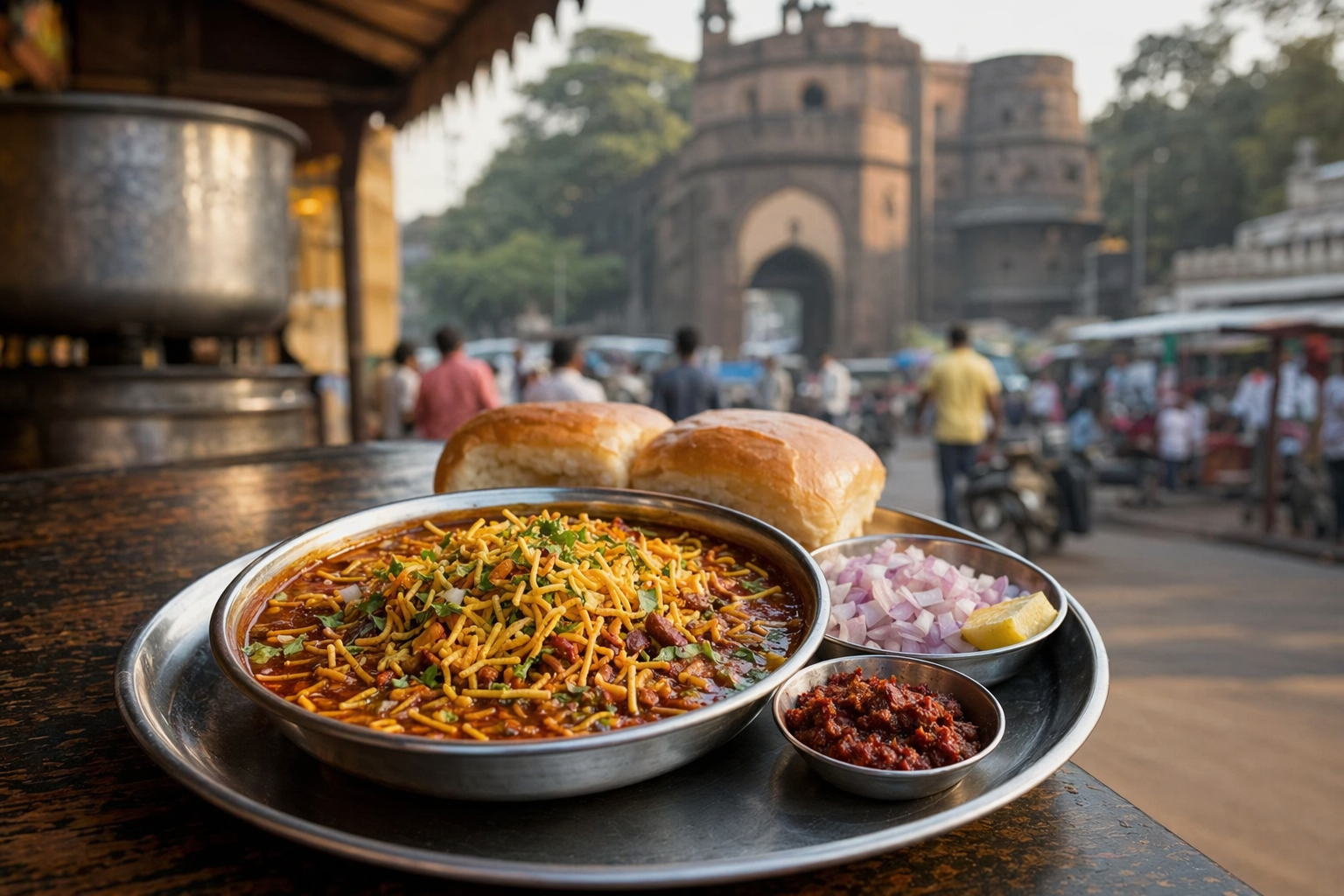
#Misal in Maharashtra changes personality every few hours of travel. Pune misal can be balanced and snacky, Nashik misal has its own fan club, Mumbai versions are often friendly and convenient. Kolhapur misal, though, walks in wearing dark sunglasses. It’s usually built around matki or mixed sprouts usal, topped with farsan, onion, coriander, lemon, sometimes poha or potato depending on the place, and then comes the big thing: kat or tarri. That red, oily, smoky-spicy gravy. The colour alone can make tourists go quiet for a second.
The Kolhapuri style leans into roasted spices, chilli heat, and a sort of earthy depth rather than just plain burn. Good misal doesn’t only hurt. It has layers. You taste the sprouts, the crunch, the lemon, the slightly sweet pav, the onion freshness, then the spice climbs up slowly and sits behind your ears. I know that sounds dramatic but if you’ve eaten proper Kolhapur misal at 8:30 in the morning after a train ride, you know exactly what I mean. It wakes you up better than coffee, and also maybe makes you question your life choices for 5 minutes.
The Bowl Is Not the Whole Story
#One thing I love about eating misal in Kolhapur is how normal it feels there. Like nobody is performing it for tourists. Office workers, students, older uncles reading newspapers, families before errands, drivers having a quick plate before heading out toward Sangli or Belgaum side. Everyone has a method. Some crush the pav into the sample, some keep it clean and dip slowly, some ask for extra tarri with terrifying confidence. Me, I started as an overexcited dipper and became a cautious spoon person by day two.
And the places themselves matter. Tiny breakfast joints near busy market roads, old-school eateries around central Kolhapur, stalls that open early and run through their morning rush, and those local favourites where the steel plates move faster than you can read the menu. Around Mahadwar Road and the Ambabai temple side, you’ll find plenty of food activity, though not every famous-looking place is automatically the best. Near Rankala, evenings are more snacky and relaxed, but misal is really happiest in the morning. At least I think so. Some locals will argue, and honestly they may be right too.
The Best Time to Eat Kolhapur Misal, Especially If You’re Sightseeing
#Timing is everything with misal. I learned this after eating a fiery plate late morning and then trying to do temple queues, shopping lanes, and a long walk near Rankala like nothing happened. It was not nothing. It was very much something. For travelers, especially if you’re not used to chilli-heavy breakfasts, don’t treat Kolhapur misal like a casual little snack before a packed itinerary. It’s filling, oily in that delicious way, and the spice hangs around.
| Travel Situation | Best Misal Timing | Why It Works |
|---|---|---|
| Arriving by morning train or bus | After checking bags, around 8:00-9:30 am | You’re hungry, shops are fresh, and you still have time to recover before sightseeing |
| Temple visit at Ambabai/Mahalaxmi | Eat after darshan if you’re sensitive to spice | Standing in queues with chilli heat in your belly is not always fun, trust me |
| Road trip onward to Pune, Goa side, or Bengaluru highway | Eat at least 2-3 hours before leaving | Bumpy roads and extra tarri are not best friends |
| Light sightseeing day | Late breakfast works beautifully | You can walk it off slowly, have chaas later, and enjoy the city |
| Hot summer afternoon | Maybe skip heavy misal and eat early | Kolhapur heat plus chilli can feel like a personal attack |
My sweet spot is around 8:30 am. The city is awake but not exhausted, the misal is fresh, pav is soft, and you can still spend the day wandering. If you’ve done breakfast travel in India before, you’ll know each city has its own rhythm. Indore does that poha-jalebi thing in the morning, light but somehow festive, and if that’s your kind of food timing you might enjoy this Indore Poha-Jalebi Breakfast Guide for Travelers. Kolhapur is a different beast. Less sweet, more fire, more “sit down properly and respect the plate.”
How Spicy Is It Really?
#Short answer: spicy. Longer answer: depends where you eat, how much tarri they add, and whether the person serving you has decided you look too confident. Some misal shops serve the spicy gravy separately, which is ideal because then you control the burn. Other places pour it in with a generous hand and before you know it your bowl looks like a red lake with crunchy islands. Beautiful, dangerous, perfect.
I don’t like pretending spice tolerance is some moral achievement. It’s food, not a wrestling match. Locals grow up with these flavours, and even they have preferences. Some like it blazing, some take it medium, some add extra farsan to calm things down. If you’re from outside Maharashtra or outside India, please don’t feel shy about asking for less chilli. You’re not insulting anybody. You’re just trying to enjoy your breakfast instead of sweating through your shirt. This guide on How to Ask for Less Spicy Food in India is genuinely useful if you’re nervous about ordering, especially phrases like asking for “kam tikhat” or requesting tarri on the side.
My Personal Heat Scale, Which Is Not Scientific But Very Real
#- Mild Kolhapur misal: still spicy for many visitors, but you can taste everything and talk normally.
- Medium: the best level for me. Nose runs a little, eyes shine, but you’re happy and still human.
- Full Kolhapuri: delicious if you’re used to heat, slightly reckless if you are not. The tarri looks innocent for about 3 seconds.
- Extra tarri bravado: fun when locals do it. Questionable when travelers do it before a bus ride.
I once watched a college guy ask for extra tarri twice and eat it like soup. Meanwhile I was quietly tearing pav into tiny pieces and bargaining with god. But here’s the funny thing: by my third misal in Kolhapur, I wanted more heat. Not a lot more, but enough. Your palate adjusts, or maybe pride adjusts first and palate follows. Either way, don’t go maximum on day one. Build up.
What to Order With It So You Don’t Regret Everything
#The classic plate usually comes with pav, but you’ll see people ordering extra pav, dahi, taak or chaas, tea, sometimes batata vada nearby depending on the shop. I’m a huge believer in having something cooling after, not necessarily during. Curd can help soften the chilli hit, and buttermilk is one of those travel blessings that doesn’t get enough respect. Cold soda feels tempting but sometimes it just makes your stomach feel like a festival drum. Again, not medical advice, just me after too many ambitious breakfasts.
If the misal is very spicy, add lemon and onion properly. Don’t ignore the lemon wedge sitting there like decoration. It brightens the whole plate and cuts some heaviness. Extra farsan adds crunch but also makes it richer, so use your judgement. I have no judgement when hungry, which is why I’m telling you this now while calm. Also, if you’re comparing spice across Maharashtra, Kolhapur misal and Nagpur Saoji meals both deserve respect, but in different ways. Saoji can be deeper and meatier, often heavier, so this Nagpur Saoji Meal Guide for Travelers is a good companion if your trip is basically becoming a chilli tour of the state.
A Morning Around Ambabai Temple and Misal After
#My favourite Kolhapur morning started before sunrise, when the lanes near the Ambabai temple were still half-asleep and flower sellers were arranging marigolds in those bright orange heaps that look like little suns. The temple bells, the smell of incense, the old stone, the soft chaos of people removing shoes and calling out to family members, it all put me in that travel mood where even ordinary things feel cinematic. I didn’t eat before going in because I know myself. Heavy spicy food plus early temple crowd? No thanks.
After darshan, I wandered out through the lanes, got slightly lost, bought nothing but looked at everything, and finally followed a group of office-goers into a small misal place. This is one of my travel rules: if four hungry-looking locals in clean shirts are walking quickly toward the same breakfast joint, follow them. Not in a creepy way. Just, you know, with purpose. The misal came in a steel plate, the tarri in a small bowl, pav on the side, onions chopped fine, lemon wedge waiting. First bite was crunchy and warm. Second bite had more tarri. Third bite and I stopped speaking.
The owner, or maybe manager, noticed my face and laughed. Not unkindly. He said something like, “Tikhat aahe,” and I nodded as if I had not just discovered a new weather system inside my mouth. He brought me extra pav without making a big deal about it. That’s another thing I love in Kolhapur: people can be direct, practical, not overly fussy, but there’s warmth. The kind that shows up as an extra pav, more onion, a quick warning about spice.
Where to Look for Good Misal Without Chasing Hype
#I’m careful about naming “best” places because food fame changes, hours change, owners change, and travelers show up with expectations so huge no bowl can survive them. But you can definitely improve your chances. Look around busy breakfast areas in central Kolhapur, especially near market streets, older residential-commercial pockets, and areas where locals are eating before work. Ask your hotel staff, auto driver, or shopkeeper where they actually eat misal, not where tourists go. Sometimes the answer is a famous spot. Sometimes it’s a place with no signboard you would’ve walked past.
A good misal place usually has fast turnover. The sprouts shouldn’t taste tired, the farsan should still crunch, and the tarri should smell roasted and alive, not just oily. If the pav is stale, I get sad. Not angry, just sad. Pav matters because it’s your sponge, your rescue boat, your little peace treaty with the chilli. Also check if the place is clean enough for your comfort. Street food and small eateries are part of the joy, but travel stomach is real. I avoid places where chutneys or chopped onions look like they’ve been sitting forever in the sun. Maybe that’s not adventurous enough for some people, but I like continuing my trip.
The Market Walk Before or After Breakfast
#Kolhapur is not only misal, obviously. That would be unfair to a city with such a strong food culture. You’ll hear about tambda rassa and pandhra rassa, mutton thali, jaggery from the region, fresh spices, and snacks that keep appearing whenever you thought you were done eating. But misal fits beautifully into a traveler’s morning because it gives you energy and a local mood. After breakfast, I like walking markets slowly. No heroic agenda. Just watching spice shops, steel utensil stores, chappal sellers, women bargaining for vegetables, buses honking at impossible angles.
Kolhapuri chappals are the classic souvenir, and yes, I did buy a pair after misal while still slightly sweating. Was that smart? Maybe not, but the shopkeeper gave me a chair and I sat there trying sandals while my mouth was still tingling. Travel is glamorous like that. Later, near Rankala Lake, the evening air felt cooler and softer, and I realized the misal had become part of the day’s memory, not just a meal. That’s what good food travel does. It sticks to the streets, the weather, the people you met.
Common Traveler Mistakes With Kolhapur Misal
#- Eating the spiciest version immediately because someone dared you. Please don’t let ego order breakfast.
- Pouring all the tarri at once. Add little by little. You can always increase heat, you cannot un-burn your bowl.
- Planning a long bus ride right after. I know schedules are tight, but give your body a buffer.
- Skipping water all morning. Sip water, but don’t chug litres in panic while eating. It doesn’t really fix the spice anyway.
- Assuming every red misal tastes the same. Some are sharp, some smoky, some oily, some balanced. Try more than one if you can.
One mistake I made was eating too fast because the first few bites were so good. Misal rewards patience. Let the farsan soak slightly but not fully, tear pav slowly, squeeze lemon, taste the usal before drowning it. I sound like I’m describing wine tasting, but honestly why should wine people have all the vocabulary? A good misal has texture, aroma, heat, finish, the whole thing. And unlike wine, it usually comes with pav and makes your morning better.
A Practical One-Day Misal and Travel Plan
#If I had just one day in Kolhapur and wanted to do it properly, I’d keep it simple. Early temple visit if that’s on your list, then misal around 8:30 or 9. After that, walk the old lanes and markets at an easy pace. Don’t rush straight into another heavy food stop. Let the misal settle. Midday can be for rest, a museum visit if you’re interested, or slow shopping. Lunch should depend on your appetite. Some people go straight for a Kolhapuri thali, but for me that’s too much after a powerful misal morning. I’d rather keep lunch lighter and save the big thali for dinner.
Evening at Rankala Lake is lovely in that everyday-city way. Not polished, not silent, but alive. Families, snacks, water, sunset if you’re lucky, and that feeling of being in a place rather than just ticking it off. If you’re leaving the same night, keep dinner sensible. If you’re staying over, then yes, explore more Kolhapuri food. Just don’t try to prove anything. The city has been cooking like this for generations. It does not need your bravery certificate.
Final Thoughts From Someone Who Still Thinks About That Tarri
#Kolhapur misal is one of those travel foods that teaches you how to pay attention. To timing, to spice, to local rhythm, to your own limits. It’s fiery, yes, but it’s also generous and deeply satisfying when you eat it right. Go early, ask for tarri separately if needed, keep curd or buttermilk in your backup plan, and leave space in your day for a slow walk afterward. Don’t just rush in, take a photo, and run. Sit there. Sweat a little. Listen to the plates clanking and the servers calling orders and the uncle at the next table telling someone the misal was better last year, because there is always that uncle.
Would I travel to Kolhapur again just for misal? Honestly, yes. Maybe that sounds excessive, but food people understand. Some cities have monuments you remember, some have meals that become monuments in your head. Kolhapur has both. And if you’re planning more food-led wandering around India, keep browsing stories and guides on AllBlogs.in, because half the fun is deciding what to eat next before you’ve even digested the last adventure.