The first thing you learn in the Konkan during monsoon is that your plans are cute, but the rain does not care. I landed up near Malvan one July evening thinking I’d do the usual coastal thing, you know, beach walk, sunset, seafood thali, maybe a smug little photo of solkadhi in a steel glass. Instead the sky opened like someone had kicked over a bucket from heaven, my slippers gave up near the bus stand, and I ate my first monsoon seafood thali with wet jeans, fogged glasses, and the happiest stomach I’ve had in years.
Konkan in the rains is not the postcard beach holiday people imagine. It’s greener, moodier, slower. The sea is often wild and brown-grey, not turquoise. Ferries can be cancelled, roads get slushy, and half the “fresh catch” signs need questioning because there is a fishing ban in many coastal parts of Maharashtra and Goa during peak monsoon, usually around June and July depending on local rules. But food-wise? Oh god. It’s magic, if you know what to order and what to politely skip.
This is my very opinionated, slightly rain-soaked guide to eating a Konkan monsoon seafood thali. Not a fancy hotel brochure version. More like what I actually learnt after eating in Malvan, Devgad, Ratnagiri, Ganpatipule, Vengurla, Sawantwadi side, and bits of Goa where the Konkani kitchen has its own spicy personality. Some meals were incredible. Some were... let’s say educational.
First, What Exactly Is a Konkan Seafood Thali?
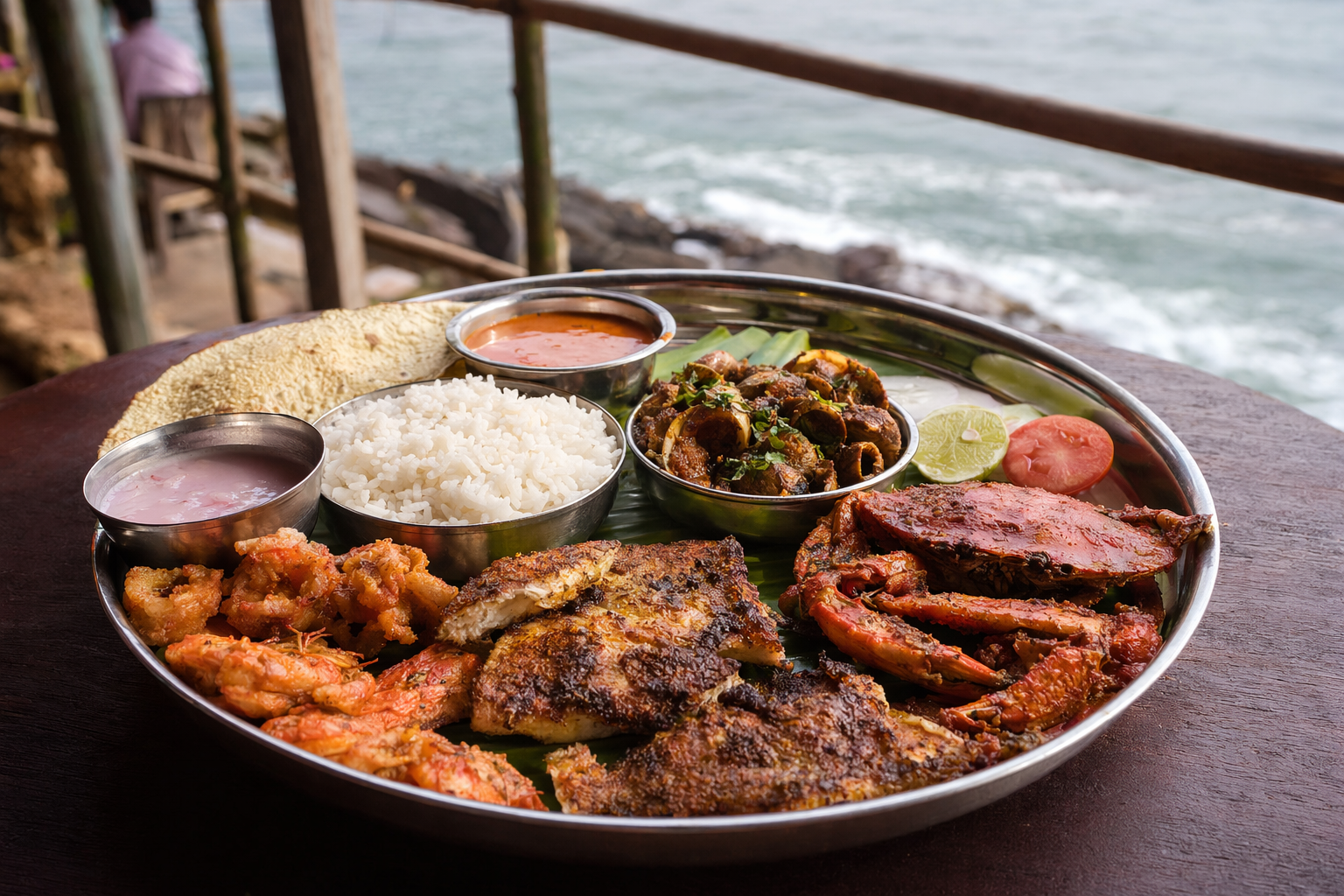
#A proper Konkan seafood thali is not one dish. It’s a whole mood on a plate. Usually you get rice, chapati or bhakri, a fish curry, fried fish, maybe a dry fish preparation or sukka, solkadhi, pickle, koshimbir, and sometimes a tiny sweet if the place is feeling generous. The masalas change every few kilometres, honestly. Malvani food hits you with coconut, red chilli, coriander, garlic, kokum, tirphal sometimes, and that deep roasted masala smell that makes you forget your phone exists. Go north toward Ratnagiri and Ganpatipule and the food can feel a little softer, more kokum-sour, still bold but not always attacking your face. Goa has its xacuti, recheado, rawa fry, ambot tik, and a whole different vinegar-chilli thing going on.
The thali is also seasonal. This is where many travellers mess up. They come in monsoon and demand surmai like it’s a hotel buffet. But monsoon is breeding season for many fish, the seas are dangerous, and mechanised fishing boats are banned for a period so fish populations can recover. So yes, you might still see fish on menus, but not all of it is “this morning’s catch” no matter what your waiter says with confidence.
My basic monsoon rule now: if a place is honest about what’s fresh, what’s frozen, and what’s not available, I trust them more than a restaurant pretending every fish in the Arabian Sea personally arrived at 6 am.
The Monsoon Seafood Reality Check Nobody Tells You
#In 2026, food travel along the Konkan has become much more intentional than it used to be. People aren’t just driving to Alibaug for a beach selfie anymore. I met travellers doing monsoon thali trails, staying in homestays near orchards, booking cooking sessions with local aunties, and asking uncomfortable but necessary questions like “is this fish in season?” and “who caught it?” Some newer coastal stays now talk about traceable seafood, low-waste kitchens, QR menus with catch-of-the-day updates, UPI-only payments, and local ingredient tasting menus. It sounds a bit urban and polished, but the best version of this trend is actually good: more money going to home cooks, fisher families, and small local eateries instead of only big resorts.
But here’s the practical bit. During the monsoon fishing ban, many restaurants rely on frozen fish from pre-ban stock, smaller local catch from traditional fishing, estuary fish, shellfish where available, dried seafood, and non-seafood Konkani dishes. Frozen is not automatically bad, by the way. I’ve had frozen pomfret fried so well in a small Malvan place that I nearly applauded. The problem is when old stock is sold as fresh, or when seafood has been thawed badly, refrozen, and then fried into spicy disguise. That’s when your romantic food trip becomes a bathroom tour.
What to Eat: The Monsoon Winners
#If you ask me, monsoon is the time to stop chasing only the glamour fish. Everyone wants pomfret, surmai, rawas. Fine, they’re lovely. But in rainy Konkan, the real joy is in dishes that belong to this damp, coconut-scented weather. Hot rice. Sour curry. Fried something crisp. Solkadhi cold enough to calm your chilli-burned soul. And that smell of wet laterite soil outside, which somehow makes every bite taste more coastal.
- Bangda curry or bangda fry, if the restaurant says it’s fresh or good-quality frozen. Mackerel takes spice beautifully and doesn’t behave like a delicate celebrity fish.
- Tisrya sukka, which is clams cooked with coconut, onion, masala, and sometimes a little kokum. This is one of my favourite rainy-day things, but only at a place that has fast turnover and clean handling.
- Kolambi masala or prawn curry. Again, ask. Fresh prawns are great, but frozen prawns are common and can still be fine if handled well.
- Bombil fry, especially closer to Mumbai-Konkan routes, though in monsoon you’ll often see dried bombil preparations. Crisp outside, soft inside, very addictive.
- Sukat chutney or dry shrimp chutney. Tiny, salty, fiery, and brilliant with bhakri. This is not a side dish, this is a personality test.
- Solkadhi. Always. Made with kokum and coconut milk, it’s pink, tangy, cooling, and the closest thing Konkani food has to emotional support.
My Best Monsoon Thali Was Not at a Famous Place
#I should probably pretend my best thali was at one of the famous coastal restaurants. But no. It was in a small family-run place outside Kudal, the kind where the menu board had three items and one of them was unavailable because “aaj nahi hai.” I love that phrase now. Today it’s not there. Honest and beautiful. The owner’s mother was cooking in the back, the roof was making that constant tin-tin-tin rain sound, and they served me rice, kombdi vade because fish was limited that day, a small bowl of crab curry made from whatever they had, dried prawn chutney, and solkadhi that tasted like someone had squeezed the whole Konkan into a glass.
The crab was messy. I had masala under my nails and coconut on my shirt. A local man at the next table saw me struggling and casually demonstrated how to crack the claw without flinging curry everywhere. I still flung curry everywhere. But that meal taught me the most important thing about Konkan monsoon eating: flexibility is everything. Don’t arrive with a checklist. Arrive hungry and listen to what the kitchen is proud of that day.
Where I’ve Eaten Well: Towns and Food Stops Worth Planning Around
#Malvan is still the big name for seafood thalis, and fair enough. The masala there has that dark, spicy, roasted depth which makes even plain rice feel important. Around Malvan and Tarkarli, you’ll find plenty of thali places, some very touristy, some genuinely good. Hotel Chaitanya in Malvan is often mentioned by seafood travellers, and I’ve had good meals in that area, though I always recommend checking what’s actually available during monsoon before ordering the most expensive fish on the menu.
Ratnagiri and Ganpatipule are softer, prettier in the rain, and great for kokum-heavy curries, modak if you’re lucky, mango products outside mango season, and homestay meals. Ratnagiri’s small eateries and family kitchens can be excellent if you ask locals instead of only following map ratings. Vengurla and Sawantwadi side feel a little less rushed to me, and I have a soft corner for that belt because meals there often come with stories. Someone will tell you about cashews, someone will tell you which road is flooded, someone will insist their village masala is better than Malvani masala. I enjoy this food politics very much.
If you’re crossing into Goa, the Konkan story doesn’t stop, it changes accent. Places like Kokni Kanteen in Panaji, Ritz Classic in Panaji, Vinayak Family Restaurant in Assagao, and Anand Bar in Anjuna are names many seafood lovers know. They can be busy, and monsoon availability still applies, but Goan fish thalis, crab xacuti, rawa fry, and prawn curry rice are absolutely worth making space for. I’ve also had lovely meals at very plain local bars where the fish was better than the decor by a mile.
Mumbai people often start their Konkan cravings before they even leave the city. Gajalee, Mahesh Lunch Home, and smaller Malvani joints in areas like Dadar, Vile Parle, and Thane have kept many of us emotionally attached to coastal food. But eating it in the Konkan, with rain blowing through a half-open window and the smell of wet coconut palms outside, is different. It just is.
What to Avoid in a Monsoon Seafood Thali
#Okay, this is the part where I sound like a fussy uncle, but listen. The Konkan monsoon is delicious, but it is not the time to be reckless just because something is fried and red. Seafood spoils fast in humid weather. Power cuts happen. Roads get delayed. Cold chains are better now than before, especially with more restaurants using proper freezers and suppliers, but small places vary a lot. Use your eyes, nose, and common sense. If the fish smells sharply fishy or ammonia-like, don’t eat it. Fresh fish smells like the sea, not like regret.
- Avoid raw seafood in monsoon unless you’re in a very controlled, high-trust restaurant. Raw oysters, raw clams, undercooked prawns... I personally don’t risk it on rainy coastal trips.
- Avoid ordering expensive “fresh” surmai or pomfret without asking questions during the ban period. It may be frozen, which is okay if they say so, but don’t pay fresh-catch prices blindly.
- Avoid buffet seafood thalis that sit around. Made-to-order fried fish is much safer and tastier.
- Avoid places with empty dining rooms but huge seafood menus. No turnover means more risk.
- Avoid shellfish if you have even a slightly sensitive stomach, unless the place is popular, clean, and busy. Clams and mussels are wonderful, but they need careful sourcing and cleaning.
- Avoid driving at night in heavy rain just to chase a restaurant. Landslides, waterlogging, and bad visibility are not worth one fish fry. I learnt this after one very stupid detour near Chiplun.
The Thali I’d Build in July, If I Had Full Control
#If I could design my ideal Konkan monsoon seafood thali, it would not be fancy. Steel plate. Banana leaf if someone is feeling old-school. A mound of hot ukda rice, because that local parboiled rice holds curry so nicely. One bowl of thin, sour-spicy fish curry, preferably with bangda or a smaller local fish. One piece of rawa-fried fish, not too thick, fried crisp and served immediately. Tisrya sukka if the kitchen is confident about it. Sukat chutney for that salty punch. A spoon of pickle. Onion and lime. Solkadhi in a steel tumbler. Maybe one vade on the side because I’m greedy and cannot behave.
And after that, nothing. Just sit. Watch the rain. Let the chilli sweat happen. There is this specific post-thali silence that happens when everyone at the table has eaten too much but nobody regrets it. That’s my favourite travel moment. Not the viewpoint, not the drone shot, not the “hidden beach.” Just four people quietly destroyed by coconut curry.
How to Ask the Right Questions Without Being Annoying
#I used to feel shy asking restaurant staff too many questions. Like, who am I, seafood police? But in Konkan, asking politely usually gets you a better meal. Don’t interrogate. Just ask what is good today. Ask what is fresh. Ask what is frozen. Ask what locals are ordering. In many places, the server will immediately steer you away from the tourist trap fish and toward something better-priced and better-tasting. Sometimes they’ll say, “take chicken today, fish not good.” Believe them. That honesty is gold.
- Start with “Aaj kay fresh aahe?” or simply “What is fresh today?” Even if your Marathi is terrible, people appreciate the effort.
- Ask if the fish is sea catch, estuary catch, or frozen stock. You don’t need a lecture, just a straight answer.
- Look at what local families are eating. If everyone has ordered crab or prawns and nobody has pomfret, there’s probably a reason.
- Order one fish first if you’re unsure. You can always add more. I know this is difficult when hungry, but try.
- Don’t bargain aggressively over seafood. Prices rise in monsoon for real reasons. But also don’t be fooled by dramatic “rare fish” stories.
Beyond Fish: The Monsoon Konkan Plate Is Bigger Than Seafood
#One mistake I made on my early trips was thinking Konkan equals fish, fish, fish. Then a homestay in Ratnagiri served me alu wadi, jackfruit bhaji, kulith pithla, rice bhakri, mango pickle, and warm modak during a thunderstorm, and I had to rethink my whole personality. Monsoon is when greens pop up, wild vegetables appear in village kitchens, jackfruit and colocasia leaves get used beautifully, and smoky, spicy vegetarian food can beat seafood on the right day.
Kombdi vade is another rainy-season hero. It’s chicken curry with deep-fried vade made from mixed flours, rich and heavy and perfect when your clothes are damp. In Malvan, some places do a stunning black masala chicken. In Goa, pork and beef dishes may enter the picture depending on where you eat, along with poi bread and local tavern food. If seafood quality feels doubtful, don’t sulk. Order the non-fish thali. Honestly, some of my safest and happiest monsoon meals were not seafood at all.
Food Travel Trends I Noticed on the Konkan Route
#The Konkan food travel scene has changed a lot. Even small homestays now get guests who care about hyperlocal food, not just “AC room and beach view.” In 2026, the big trend seems to be slow coastal travel: two nights in one village, cooking with the host, visiting a fish market if weather allows, tasting kokum syrup, learning about cashew processing, maybe doing a spice-garden lunch instead of racing from beach to fort to cafe. I like this shift. It feels less extractive, more respectful, though of course Instagram has found it too and now every solkadhi has to pose for photos before it dies.
There’s also more talk around sustainable seafood. Some chefs and local operators are encouraging travellers to eat lesser-known fish instead of only high-demand species. That’s smart. When everyone orders the same three fish, prices shoot up and pressure on those species increases. Eating local, seasonal, smaller fish can be more sustainable and often tastier. Also, women-led food experiences are getting attention, especially home kitchens where recipes were never written down but have been perfected for decades. Those are the meals I’d travel for.
Markets, Smells, and the One Fish Auction I Barely Understood
#Fish markets in the monsoon are a different kind of theatre. Less abundant than winter mornings, yes, but still full of energy if the weather has allowed boats in. I once stood at a small market near Malvan, pretending I understood the auction rhythm. I did not. Women moved faster than my brain could process, fish flashed silver, someone shouted prices, someone laughed at me because I was holding my umbrella like a city fool, and there was this mix of sea smell, wet plastic sheets, diesel, coriander, and chai. Not exactly perfume, but unforgettable.
If you visit markets, go early and don’t block people working. Ask before taking photos, especially of fisherwomen. Buy something if you’re staying somewhere that can cook it, or at least have tea nearby and contribute a little to the local economy. Food travel shouldn’t be zoo tourism. These are people’s workplaces, not just colourful backgrounds for reels.
My Practical Monsoon Travel Notes, Because Food Is No Fun If You’re Miserable
#Carry sandals with grip, not cute beach slippers. Keep cash even though UPI works almost everywhere now, because network can vanish in rain. Don’t pack your itinerary too tight. The coastal roads are beautiful but slow during heavy showers, and landslide-prone stretches or flooded patches can change your plan quickly. If you’re driving from Mumbai or Pune toward Ratnagiri, Malvan, or Goa, check road conditions before you leave. Trains on the Konkan Railway are gorgeous in monsoon, truly one of India’s great travel experiences, but delays can happen, so keep snacks. Not chips only. Real snacks.
For eating, lunch is usually better than late dinner for seafood in smaller towns. Go where there is turnover. Homestays often need advance notice if you want a seafood thali, especially in monsoon when availability is uncertain. And please don’t pressure hosts to arrange banned or unavailable fish. It’s rude, and frankly it makes travellers look silly.
So, Should You Eat a Konkan Monsoon Seafood Thali?
#Yes. Absolutely yes. But eat it with awareness, not blind tourist hunger. Monsoon seafood in the Konkan is not about unlimited fresh fish every day. It’s about seasonality, honesty, spice, rain, rice, kokum, coconut, and kitchens that know how to make even limited ingredients sing. Some days the best thing on your plate will be fried mackerel. Some days it’ll be dried prawn chutney. Some days the right choice is no seafood at all, just hot kombdi vade or a vegetarian thali with wild greens and solkadhi.
If you go expecting perfect weather and perfect fish, you’ll complain. If you go ready to be flexible, ask questions, get wet, eat what’s good that day, and slow down a bit, the Konkan in monsoon will feed you in a way that stays with you. I still think about that crab curry near Kudal every time it rains. I also think about the slipper I lost in a puddle, but that’s another story.
And if you’re planning your own rainy food trip down the coast, read around, ask locals, don’t trust only shiny reels, and keep your appetite open. I’ll probably be back there next monsoon, pretending I’m going for the scenery when really it’s the solkadhi calling. For more food-and-travel rabbit holes like this, I usually end up browsing AllBlogs.in with a cup of chai and making dangerous new travel plans.