If you’re trying to decide between a microfiber hair towel and a cotton T-shirt for frizz, the short answer is this:
Use a soft cotton T-shirt if your main goal is smoother hair, less puffiness, and better curl or wave shape. Use a microfiber hair towel if you want your hair to dry faster, especially if it’s thick, long, dense, or you live somewhere humid.
And regular terry bath towels? They’re great for drying your body, but they’re usually not the best choice for wet hair.
If your hair looks smooth in the shower but turns fluffy, rough, or “expanded” after you dry it, your towel might be part of the problem.
The way you dry your hair matters more than people think. Wet hair is fragile, and for curly, wavy, frizz-prone, fine, damaged, or easily tangled hair, those first few minutes after washing can make a big difference. The good news is that you don’t need a complicated routine. You just need a gentler fabric, less rubbing, and a little patience.
Let’s break down microfiber towels, cotton T-shirts, and regular bath towels so you can choose what actually works for your hair.
Why regular bath towels can make frizz worse
#A regular bath towel is made to absorb water quickly from your skin. Hair needs a softer approach.
Wet hair is more delicate than dry hair, and rough towel-drying can lead to tangles, breakage, and frizz. Dermatology guidance commonly recommends gently wrapping hair in a towel or letting it air dry instead of rubbing it aggressively while it’s wet.
The problem with most terry towels is the texture. Terry cloth has raised loops, and those loops can catch on wet strands. When you rub your hair with that kind of towel, you create friction. That friction can rough up the outer layer of the hair, disturb curls, separate waves, and make frizz more obvious.
Will one rough towel-dry ruin your hair forever? No. But if your hair is already curly, wavy, dry, bleached, fine, damaged, or frizz-prone, switching to a smoother fabric can make wash day feel a lot easier.
Microfiber vs cotton T-shirt vs terry towel: quick comparison
#So, which one should you use?
#Here’s the simple version.
Choose a cotton T-shirt if frizz, puffiness, or curl definition is your biggest concern. A soft, worn-in, 100% cotton T-shirt is one of the easiest and cheapest tools for gentler drying.
Choose a microfiber towel if your hair takes forever to dry or you want something more practical for busy mornings. It’s also a good choice if your hair is thick, long, dense, or you live in a humid climate.
Avoid using a regular terry towel on your hair if you can. If it’s the only thing available, don’t scrub. Just press and squeeze gently.
Cotton T-shirt for hair: best for frizz control and curl definition
#A cotton T-shirt works well because the fabric is flatter and smoother than a regular towel. There are no raised loops grabbing onto your strands, so it creates less friction when you use it gently.
That’s why so many people with curls and waves love the T-shirt hair towel method, especially for plopping.
Plopping is when you place wet hair into a T-shirt so your curls or waves rest gathered on top of your head instead of being stretched downward. This can help your curl pattern stay more intact while the fabric absorbs extra water.
A cotton T-shirt may be best if:
#- Your hair frizzes easily after washing.
- Your curls or waves lose shape when touched too much.
- Your hair is fine, fragile, or prone to tangles.
- You want a cheap, no-fuss option.
- You don’t mind waiting a little longer for your hair to dry.
The downside
#Cotton does not absorb water as quickly as microfiber. If your hair is very long, thick, or dense, the T-shirt may become wet and heavy. Your hair may also stay damp for longer, which can be annoying if you’re in a hurry or dealing with humid weather.
Still, if your main goal is less frizz, a soft cotton T-shirt is hard to beat.
Microfiber hair towel: best for faster drying
#A microfiber hair towel is designed to absorb water quickly without needing rough rubbing. It’s usually lighter than a regular towel, and many microfiber hair towels come in a turban shape with a button or loop, which makes them easy to keep in place.
For many people, microfiber is the practical middle ground. It’s gentler than a regular bath towel but faster than a cotton T-shirt.
A microfiber towel may be best if:
#- Your hair is thick, dense, or long.
- Your hair takes a long time to air dry.
- You want to reduce drying time.
- You live in humid, rainy, or monsoon weather.
- You want a towel that stays put while you do skincare, makeup, or get dressed.
The downside
#Not all microfiber towels feel the same. Some are soft and smooth, while others feel a little rough, grabby, or scratchy. If a microfiber towel feels harsh on your hand, it may create friction on your hair too, especially if your strands are fragile or damaged.
Microfiber also absorbs water quickly, so leaving it on too long can sometimes make curls feel dry, separated, or less clumped. For most people, shorter wrapping time works better.
Is a regular towel ever okay?
#Yes, as long as you’re gentle.
If a regular towel is all you have, don’t rub your hair with it. Place it around your hair and gently press out the extra water. Think blotting, not scrubbing.
That said, if you’re trying to learn how to dry hair without frizz, a soft cotton T-shirt or a smooth microfiber hair towel is usually a better everyday choice.
A gentle hair-drying routine that actually helps
#You can use this routine with either a cotton T-shirt or a microfiber towel.
1. Squeeze out water with your hands first
#Before reaching for any towel, gently squeeze your hair while you’re still in the shower. Don’t twist it tightly or wring it out.
The goal is to remove extra water without stretching, roughing up, or pulling on your hair.
2. Apply leave-in or styling product while your hair is still wet
#If you use leave-in conditioner, curl cream, gel, mousse, or any styling product, apply it before your hair gets too dry.
This helps your hair stay smoother as it dries and can also support curl or wave definition. Use the amount that normally works for your hair. More product isn’t always better.
3. Choose your drying fabric
#Use a soft cotton T-shirt if your biggest priority is frizz control.
Use a microfiber hair towel if you want faster drying.
Avoid a rough bath towel when possible.
4. Wrap, plop, or press gently
#For a cotton T-shirt:
- Lay the T-shirt flat on a bed, chair, or counter.
- Flip your head forward.
- Let your hair fall into the center of the shirt.
- Bring the bottom of the shirt toward the back of your head.
- Tie or tuck the sleeves gently.
For a microfiber towel:
- Flip your head forward or place the towel over your hair.
- Gather your hair gently inside the towel.
- Twist lightly, not tightly.
- Secure it with the button or loop if it has one.
If you don’t like wrapping your hair, that’s fine too. Just use the fabric to gently press sections of hair and remove extra water.
5. Don’t leave it on forever
#As a general guide:
- Cotton T-shirt: about 15 to 30 minutes.
- Microfiber towel: about 10 to 20 minutes.
Your hair may need more or less time depending on its thickness, length, texture, and porosity. Fine hair usually needs less time. Thick or dense hair may need more.
The main thing is not to leave any towel on so long that your hair starts to feel rough, dry, flat, or separated.
6. Air dry or diffuse gently
#After removing the T-shirt or towel, try not to keep touching your hair.
Let it air dry, or use a diffuser on low heat and low speed if you prefer blow-drying. Avoid aggressive brushing or combing while your hair is wet. That one habit alone can make a big difference.
Humid weather and monsoon frizz tips
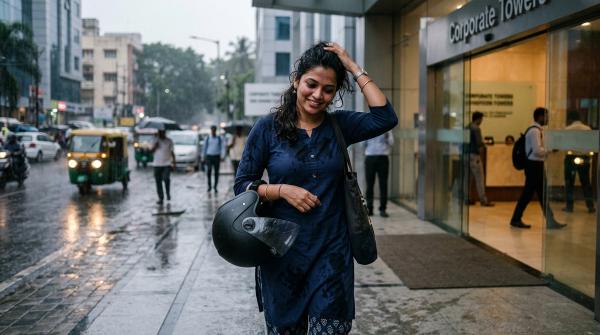
#Humidity can make frizz worse because hair reacts to moisture in the air. If your hair swells, puffs up, or loses shape during monsoon season, your drying method matters even more.
In humid weather, microfiber can be more practical because it removes extra water faster. When the air is already damp, hair that stays wet for too long can be harder to manage.
But if your hair is very curly or very frizz-prone, you may still prefer a cotton T-shirt for the first stage of drying. You can also use both, which sounds a little extra but works surprisingly well.
Try this humid-weather routine
#- Gently squeeze out extra water after washing.
- Apply your leave-in conditioner, curl cream, gel, or usual styling product on wet hair.
- Use a cotton T-shirt for 5 to 10 minutes if curl definition is your priority.
- Switch to microfiber for a short time if your hair is still dripping.
- Air dry or diffuse on low heat and low speed.
- Avoid touching your hair repeatedly while it dries.
A simple rule for monsoon hair care: reduce friction first, then reduce drying time.
What to look for when buying a hair towel
#If you want a dedicated hair towel, here are a few things worth checking.
1. A soft, smooth feel
#Run your hand over the fabric if you can. It should feel soft, not scratchy, stiff, or grabby.
2. Smooth microfiber
#For frizz-prone hair, smoother microfiber is usually better than a rough or fuzzy texture.
3. The right size
#Short or shoulder-length hair may work well with a standard hair turban. Long, thick, or curly hair may need a larger towel so your hair isn’t cramped or pulled.
4. A secure closure
#A button and elastic loop can help the towel stay in place without needing a tight twist.
5. A lightweight design
#Heavy towels can pull on wet hair and feel uncomfortable. Choose something light enough to wear for a short time without strain.
6. Easy washing and quick drying
#Hair towels should be easy to wash and dry between uses. If a towel stays damp for too long, it becomes less practical for regular wash days.
7. No rough seams near your hair
#Check the edges, stitching, and closure area. Rough seams can catch on curls, waves, or delicate strands.
Best towel for frizzy hair: final decision guide
#Still not sure? Use this quick guide:
- For maximum frizz control: use a cotton T-shirt.
- For faster drying: use a microfiber hair towel.
- For thick hair: use microfiber.
- For tight curls: use a cotton T-shirt or very smooth microfiber.
- For humid weather: use microfiber, or start with a T-shirt and finish with microfiber.
- For fine or fragile hair: use a soft cotton T-shirt and gentle pressing.
- For regular bath towels: blot only if needed, and never scrub.
The best towel for frizzy hair is not just about the fabric. It’s also about how you use it. Even the softest towel can cause frizz if you rub aggressively. And even an old cotton T-shirt can work beautifully if you press gently, wrap loosely, and leave your hair alone while it dries.
Safety note
#This article is for general education only and is not medical advice. A gentler towel routine may help reduce friction, tangles, and visible frizz, but it will not diagnose or treat scalp or hair conditions.
If you have scalp wounds, sudden or severe hair fall, burning, itching, swelling, or irritation after using a product or towel, stop using the suspected item and speak with a dermatologist.