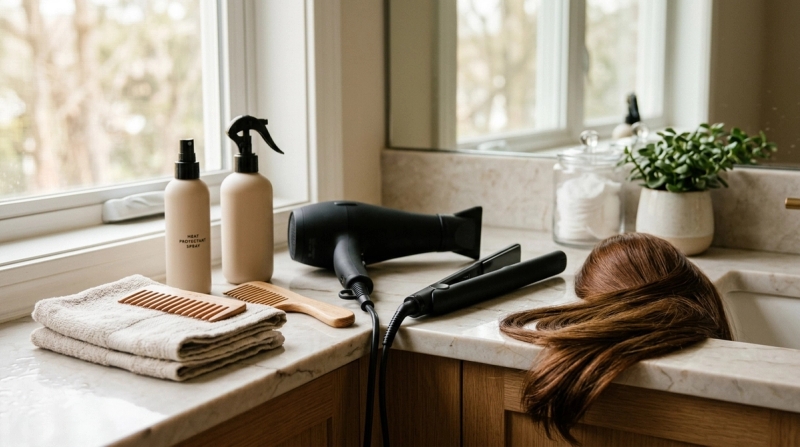
Heat Protectant Spray Buying Checklist: What to Check Before Using a Straightener, Curling Iron, or Blow Dryer
#If you use a straightener, curling iron, hot brush, or blow dryer, yes — you should be using a heat protectant spray or another heat-protective product.
Hot tools can make hair look polished in the moment, but over time they can also leave it dry, rough, weak, or more prone to breakage. A heat protectant will not make heat styling completely damage-free, but it can help reduce some of that heat stress when you use it properly.
The key is not buying every trending bottle you see. It is choosing the right type for your hair, applying it the right way, and avoiding the little mistakes that make hair feel sticky, greasy, flat, or crunchy.
Here is a simple, practical checklist to help you choose better.
Why heat protectant matters before styling
#Your hair has an outer layer called the cuticle. When you use hot tools often, especially on high heat, that cuticle can start to lift, weaken, or feel rough. That is when hair may look dull, tangle more easily, feel dry at the ends, or start splitting and breaking.
The American Academy of Dermatology recommends limiting hot tool use, choosing low or medium heat when you can, applying a protective product, and making sure hair is dry before using flat irons or curling irons.
Most heat protectants work by leaving a very thin coating on the hair shaft. This helps spread heat more evenly and gives your hair a bit of a buffer between the strand and the hot tool.
That said, heat protectant is not magic. It will not make extreme heat “safe,” and it cannot undo serious heat damage. But if heat styling is part of your routine, it is one of the easiest habits that can actually make a difference.
Safety note: heat protectant is not a hair-loss treatment
#A heat protectant for hair is a cosmetic styling product. It can help reduce heat-related dryness, roughness, and breakage when used correctly.
It is not a medical treatment.
A heat protectant spray will not cure hair loss, treat scalp conditions, or regrow hair. Be careful with products that promise miracle repair, permanent reversal of heat damage, or medical-level results from a styling product. Those claims are usually a red flag.
If your hair is already badly heat damaged, products may make it feel smoother temporarily, but they cannot truly rebuild a severely damaged cuticle.
Do you need heat protectant every time?
#Use heat protection whenever you use:
- A flat iron or straightener
- A curling iron or curling wand
- A blow dryer, especially on warm or hot settings
- A hot brush or heated styling comb
You may not need a separate product if your leave-in conditioner, styling cream, or serum clearly says it offers heat protection. But the label needs to say that.
A regular shine serum is not automatically a heat protectant.
A good rule: if the product does not mention heat protection, thermal protection, heat styling, or hot tools, do not assume it will protect your hair.
Spray vs cream vs serum: which one should you buy?
#This is where people often get stuck.
Sometimes a product is not bad — it is just wrong for your hair. A rich cream can be lovely on thick, dry hair but too heavy on fine hair. A light spray can be perfect before straightening but not enough for coarse, very dry ends.
Use this as a quick guide before buying.
Quick decision guide
#Choose a heat protectant spray if:
- Your hair gets oily or flat quickly
- You use a straightener or curling iron
- You want light coverage without heaviness
- You live in humid weather and creams make your hair limp
Choose a cream if:
- Your hair feels dry or rough after washing
- You mostly blow dry your hair
- Your hair needs slip before brushing or styling
- You want heat protection with a leave-in conditioner feel
Choose a serum if:
- Your hair is thick, coarse, or frizz-prone
- Your ends look dry after styling
- You want a smoother, shinier finish
- You need extra frizz control in monsoon weather
If you are not sure, start with a lightweight hair heat protection spray. It is usually the easiest option for beginners and is less likely to weigh hair down.
Heat protectant buying checklist
#Before you add something to your cart, check these points.
1. Does the label clearly mention heat protection?
#Look for phrases like:
- Heat protection
- Thermal protection
- Heat styling protection
- Protects before blow drying
- Safe for straighteners or curling irons
Do not rely only on words like “shine,” “smooth,” “anti-frizz,” or “repair.” Those can be nice benefits, but they do not always mean the product is designed for heat styling.
2. Is the format right for your hair type?
#This matters more than buying whatever is popular online.
- Fine hair usually does better with sprays.
- Dry, medium to thick hair may prefer creams.
- Coarse or very frizzy hair may benefit from serums.
- Humid weather usually needs lighter application, even if the product itself is rich.
A product can be good and still not be right for your hair.
3. Does it match your tool?
#For straighteners and curling irons, choose a product that can be used on dry hair or one that dries quickly before heat touches the hair.
For blow drying, a cream, spray, or leave-in with heat protection can work well because you usually apply it to damp hair before drying.
If you are shopping for a blow dryer heat protectant, look for something that spreads easily through damp hair and does not leave your roots greasy.
4. Will it stop you from overbuying?
#You do not need a full shelf of products.
For example:
- A leave-in cream with heat protection may replace a separate leave-in conditioner.
- A heat-protective serum may also help smooth frizz.
- A lightweight spray may work before straightening, curling, and blow drying.
For many routines, one good product is enough. You only need more if your hair genuinely needs it.
5. Is it suitable for humid weather?
#When choosing a heat protectant for humid weather, think about both protection and finish.
- Fine hair: choose a light spray.
- Thick hair: choose a serum or light cream.
- Dry hair: choose a cream, but apply carefully.
- Frizz-prone ends: use a tiny amount of serum only on the mid-lengths and ends.
In monsoon weather, too much product can make hair feel sticky, heavy, or coated. Start with less than you think you need. You can always add a little more later.
Step-by-step use checklist
#Even a good product will not work well if it is applied badly. Use this checklist before styling.
Before using a blow dryer
#- Gently towel dry your hairSqueeze out extra water instead of rubbing roughly. Wet hair is more fragile, so be gentle.
- Divide hair into sectionsThree or four sections is enough for most people. Sectioning helps the product spread more evenly.
- Apply your heat protectantSpray, cream, or serum should mostly go from mid-lengths to ends. Use less near the scalp unless the label says otherwise.
- Comb through gentlyUse a wide-tooth comb or your fingers to distribute the product.
- Use low or medium heat when possibleKeep the dryer moving. Do not hold hot air on one spot for too long.
- Stop when your hair is dryOverdrying can make hair feel rough, dry, and frizzy.
Before using a straightener or curling iron
#- Start with completely dry hairThis is very important. Do not use a flat iron or curling iron on wet or damp hair.
- Apply a dry-friendly protectantUse a lightweight heat protectant before straightening or curling. If the product is meant only for damp hair, use it before blow drying instead.
- Spray from a distanceIf you are using a spray, hold the bottle about 6 to 8 inches away. You want a light mist, not soaked hair.
- Comb throughThis helps prevent uneven patches of product.
- Wait before using the hot toolLet any dampness dry first. Your hair should never sizzle when the iron touches it.
- Use low or medium heat when possibleTry not to go over the same section again and again. One slow, smooth pass is better than repeated clamping.
- Work in small sectionsIf the section is too thick, you will probably need more passes. Smaller sections help you style with less repeated heat.
What to avoid before heat styling
#Try to avoid these common mistakes:
- Using a straightener or curling iron on damp hair
- Applying too much product right before ironing
- Assuming every serum is heat protective
- Using high heat every single time
- Passing the iron over the same section too many times
- Applying heavy cream to fine roots in humid weather
- Believing a product can reverse severe heat damage
- Buying multiple products before learning what your hair actually needs
A simple routine done properly is better than a crowded bathroom shelf.
Heat protectant vs hair serum: what is the difference?
#This is a common question, and the answer is pretty simple.
A heat protectant is made to be used before heat styling. It usually contains ingredients that form a protective film on the hair and help reduce heat stress.
A hair serum is usually made to add shine, smooth frizz, or make hair feel softer. Some serums also include heat protection, but not all of them do.
So the rule is: check the label.
If a serum clearly says it gives heat protection, you can use it as part of your heat styling routine. If it only says shine, smoothing, or anti-frizz, it is better used after styling rather than before hot tools.
Simple routines by hair type
#Fine hair in humid weather
#Use a lightweight heat protectant spray. Apply lightly from mid-lengths to ends. Avoid heavy creams near the scalp.
Best fit: spray.
Dry, medium-thick hair
#Use a cream before blow drying or a spray before straightening. If your ends still feel rough, use a small amount of serum after styling.
Best fit: cream or spray.
Thick, frizzy hair in monsoon weather
#Use a cream or serum depending on how dry your hair feels. Apply mostly to the lengths and ends. Do not overload the roots.
Best fit: serum or cream.
Beginner with one hot tool
#If you only use a straightener or curling iron, start with a spray that works on dry hair.
If you mostly blow dry, choose a blow-dry-friendly spray or cream.
Best fit: depends on your tool.
Final buying advice
#If you use hot tools, buy one heat protectant that matches your hair type and styling routine.
For most beginners, a lightweight heat protectant spray is the easiest place to start. If your hair is dry or thick, a cream or serum may feel better. In humid or monsoon weather, keep the application light, avoid the roots if your hair gets flat, and always let your hair dry fully before using a straightener or curling iron.
Heat protectant is not a miracle product. It is a practical safety step. Pair it with lower heat, fewer passes, and careful application, and your hair has a much better chance of staying smooth, soft, and manageable.