Trying to choose between Japanese skincare and Korean skincare? Don’t start with what’s trending. Start with what you’ll actually use every day. Japanese skincare is usually great if you want a simple, calm, low-maintenance routine. Korean skincare is usually better if you enjoy hydration, light layers, and a routine you can personalize a little more.
Skincare shopping can get out of hand fast. You open one tab for sunscreen, then suddenly you’re comparing cleansing oils, toner pads, essences, ampoules, emulsions, sleeping masks, barrier creams, and serums.
Korean skincare is famous for glow, hydration, and layering. Japanese skincare is known for being simple, elegant, and consistent. Both can be useful. So where should a beginner start?
Honestly, with less than you think.
You do not need a 10-step routine. You do not need five serums. You do not need to buy an entire product line just because the bottles look nice together.
If you’re a beginner, the best routine is usually boring in the best possible way:
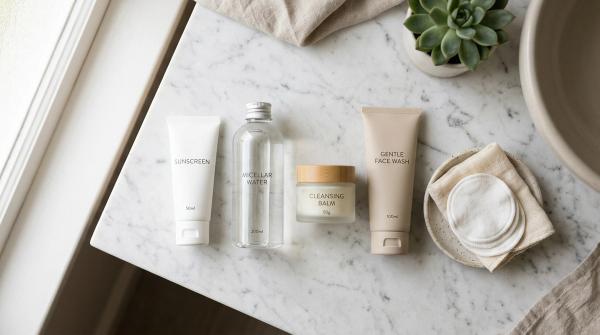
Cleanser. Hydration. Moisturizer. Sunscreen.
That’s enough to start.
Quick Summary: Japanese Skincare vs Korean Skincare
#Best beginner advice: Start with 3 to 5 products, not a whole skincare shelf.
Choose Japanese skincare if you want:
#- A simple routine
- Fewer steps
- Lightweight textures
- Gentle everyday care
- Cleansing oils, hydrating lotions, emulsions, and sunscreens
- A routine you can repeat without thinking too hard
Choose Korean skincare if you want:
#- More hydration
- A soft, dewy finish
- Toners, essences, serums, ampoules, and soothing products
- More options for dullness, dryness, texture, or barrier support
- A routine that feels more fun and customizable
Best first Japanese skincare products:
#- Cleansing oil
- Hydrating lotion
- Lightweight moisturizer or emulsion
- Sunscreen
Best first Korean skincare products:
#- Cleansing balm or gentle cleanser
- Hydrating toner
- Barrier-supporting serum or essence
- Moisturizer
- Sunscreen
If you only buy one thing first: buy sunscreen. A sunscreen you actually like wearing every day is more useful than a drawer full of fancy serums you forget to use.
Who This Guide Is For
#This guide is for you if:
- You’re new to Asian skincare and feel a bit lost.
- You’re trying to choose between Japanese skincare and Korean skincare.
- You want beginner-friendly products, not a complicated routine.
- You keep seeing viral products but don’t want to waste money.
- You want real buying advice, not vague “glass skin” promises.
- You’ve bought too much skincare before and still don’t know what your skin actually likes.
Sometimes your skin does not need more products. Sometimes it just needs fewer products, used consistently.
The Simple Buying Advice: What Should Beginners Buy First?
#If you’re starting from zero, don’t begin with strong acids, retinol, peeling pads, scrubs, or three different brightening serums.
Start with the basics.
If you choose Japanese skincare first, buy:
#1. Cleansing oil
Japanese cleansing oils are popular because they remove sunscreen, makeup, and daily grime without making you scrub your face aggressively. If you wear SPF every day, a cleansing oil is a useful first step.
2. Hydrating lotion
In Japanese skincare, “lotion” usually means a watery hydrating liquid. It is not the same as a thick body lotion. You apply it after cleansing to give your skin light hydration before moisturizer.
3. Lightweight moisturizer or emulsion
An emulsion or light cream helps seal in hydration without feeling heavy. This is especially nice if you hate greasy skincare or live somewhere humid.
4. Sunscreen
Japanese sunscreens are often loved because many feel light, smooth, and easy to wear every day. If you usually dislike thick or sticky SPF, this category is worth exploring.
A simple Japanese skincare routine for beginners looks like this:
Cleanse, hydrate, moisturize, protect.
If you choose Korean skincare first, buy:
#1. Cleansing balm or gentle cleanser
Korean cleansing balms are useful if you wear sunscreen or makeup. They melt everything down before your second cleanse. If you don’t wear makeup and your sunscreen is light, a gentle cleanser may be enough.
2. Hydrating toner
Korean toners are usually made to hydrate and soften the skin, not strip it. Toner pads are popular too, but beginners don’t really need them unless they genuinely like that format.
3. Essence or serum
This is where Korean skincare gets fun — and where it’s very easy to overdo it. Beginners should choose one gentle essence or serum, not four. Look for something hydrating, calming, or barrier-supporting.
4. Moisturizer
Even if you use toner and serum, you still need something to seal everything in. Moisturizer keeps your routine balanced.
5. Sunscreen
Korean sunscreens are often comfortable, hydrating, and easy to wear. A good SPF can make your whole morning routine feel better.
A simple Korean skincare routine for beginners looks like this:
Cleanse, tone, treat lightly, moisturize, protect.
What to Check Before Buying Anything
#Before you pick J-beauty or K-beauty, pause for a second. Your skin type, climate, habits, and current products matter more than whatever is trending this week.
1. Your skin type
#Ask yourself:
- Does your skin feel tight or flaky? It may be dry.
- Does your face get shiny quickly? It may be oily.
- Is your T-zone oily but your cheeks dry? It may be combination.
- Does your skin sting, flush, or react easily? It may be sensitive or reactive.
If your skin reacts easily, start with fewer products. A simple Japanese skincare routine may be easier to manage. If your skin handles layers well and you enjoy experimenting, Korean skincare may suit you better.
2. Your real routine habits
#If you barely have time in the morning, don’t buy seven steps. You probably won’t use them. If you enjoy taking your time at night, Korean skincare layering might feel relaxing. If you want skincare done in three minutes, Japanese skincare may be the better first choice.
3. Your climate
#Texture matters. In hot or humid weather, too many layers can feel sticky. Lightweight Japanese lotions, emulsions, and gel-style Korean products may feel better. In dry or cold weather, Korean-style hydration layers can feel nice, especially when you use a moisturizer on top.
4. Your current products
#Don’t duplicate what you already own. If you already have a cleanser you like, you don’t need another cleanser just because it went viral. Add what’s missing, not what’s popular.
Most beginners need:
- A cleanser
- A moisturizer
- A sunscreen
Then, if your skin still feels dry or dehydrated, add one hydration step like a Japanese lotion or Korean toner.
5. Ingredient sensitivity
#Both Japanese and Korean skincare can include fragrance, botanical extracts, fermented ingredients, alcohol, rich oils, or other ingredients that may not suit everyone.
That does not make them bad. It just means you should pay attention. If your skin is sensitive, patch-test new products and introduce them one at a time.
Japanese Skincare Routine: What Makes It Different?
#Japanese skincare, often called J-beauty, tends to feel calm, minimal, and consistent. It focuses more on daily care and prevention than dramatic overnight results.
A common Japanese beauty idea is mochi-hada, which means skin that looks soft, plump, and smooth, kind of like mochi.
Common Japanese skincare steps
#A beginner Japanese skincare routine usually includes:
- Cleansing oil to remove sunscreen, makeup, and daily buildup.
- Gentle cleanser, optional for some people, especially if you double cleanse at night.
- Hydrating lotion, a watery hydration step, not a thick cream.
- Emulsion or moisturizer to help lock in hydration.
- Sunscreen, often lightweight and easy to wear under makeup or on its own.
Why beginners may like Japanese skincare
#Japanese skincare is a good choice if you don’t want to make a million decisions every night. You mostly repeat the same simple steps and let consistency do the work.
That can be a relief, especially if your skin gets irritated or overwhelmed easily.
What to buy first from Japanese skincare
#If you’re curious but don’t want to go all in, start with:
- A cleansing oil if you wear sunscreen or makeup
- A hydrating lotion if your skin feels dehydrated
- A lightweight sunscreen if you hate heavy SPF
You do not need to buy a full Japanese routine right away. One or two good products are enough to see if you like the style.
Korean Skincare Routine: What Makes It Different?
#Korean skincare, or K-beauty, is known for hydration, layering, and variety.
It became famous because of multi-step routines, but that does not mean you need to do 10 steps. A beginner Korean skincare routine can still be simple. The main idea is to hydrate the skin well, support the skin barrier, and use targeted products carefully.
Common Korean skincare steps
#A beginner Korean skincare routine may include:
- Cleansing balm or oil cleanser to remove sunscreen and makeup.
- Gentle water-based cleanser, especially at night.
- Hydrating toner to add light hydration and prep the skin.
- Essence, serum, or ampoule for one clear goal like hydration, dullness, or barrier support.
- Moisturizer to seal everything in.
- Sunscreen during the day as the final step.
Why beginners may like Korean skincare
#Korean skincare is a good fit if you like the ritual of skincare. It gives you more options and more flexibility. You can keep it simple on busy days, then add a hydrating serum or essence when your skin feels dry.
It also works well if you like that fresh, dewy finish. Just be careful: Korean skincare has so many tempting products that it’s very easy to buy too much.
What to buy first from Korean skincare
#Start with:
- A hydrating toner
- One gentle serum or essence
- A comfortable sunscreen
Avoid buying five serums at once. More products does not automatically mean better skin.
Japanese Skincare vs Korean Skincare: Beginner Comparison
#Routine style
#Japanese skincare: Minimal, steady, repeatable
Korean skincare: Layered, customizable, more playful
If you want a routine you can memorize quickly, Japanese skincare may be easier. If you like choosing products based on how your skin feels that day, Korean skincare may be more enjoyable.
Product textures
#Japanese skincare: Watery lotions, light emulsions, elegant sunscreens, cleansing oils
Korean skincare: Hydrating toners, essences, ampoules, gel creams, toner pads, cleansing balms
Both can feel lightweight, but Korean skincare usually gives you more layering options.
Beginner difficulty
#Japanese skincare: Easier for minimalists
Korean skincare: Easy if you keep it to 4 or 5 steps, confusing if you overbuy
Korean skincare only gets complicated when beginners try to use too many things too soon.
Best first category
#Japanese skincare: Sunscreen or hydrating lotion
Korean skincare: Hydrating toner or serum
If sunscreen always feels heavy or greasy on you, try a Japanese or Korean sunscreen before buying anything else.
Best for hydration
#Japanese skincare: Good for light, steady hydration
Korean skincare: Better if you enjoy multiple hydration layers
Korean skincare gives you more toner and essence options, while Japanese skincare keeps the routine simpler.
Best for sensitive or reactive skin
#Japanese skincare: Often easier because there are fewer steps
Korean skincare: Can work well, but go slowly
This does not mean every Japanese product is gentle or every Korean product is irritating. It just means fewer steps make it easier to figure out what your skin likes.
Best For / Avoid If
#Choose Japanese skincare if...
#Best for:
- You want a simple routine.
- You dislike heavy layers.
- You prefer buying fewer products.
- You want skincare that feels low-maintenance.
- You’re interested in cleansing oils, hydrating lotions, emulsions, and lightweight sunscreen.
- Your skin gets overwhelmed when you introduce too much at once.
Avoid or pause if:
- You want lots of targeted serums.
- You enjoy trying new ingredients all the time.
- You prefer a very dewy, layered finish.
- You want your routine to feel like a longer self-care ritual.
Choose Korean skincare if...
#Best for:
- You enjoy skincare as a ritual.
- You like hydration layers.
- You want a dewy finish.
- You’re curious about toners, essences, serums, ampoules, and gel creams.
- You want more flexibility.
- You prefer a routine that can stay simple now and expand later.
Avoid or pause if:
- You get overwhelmed by too many choices.
- You’re likely to buy every trending product.
- Your skin reacts easily when you introduce several new products.
- You only want a two-minute routine.
Beginner Shopping Lists
#No brand names needed here. Product types are usually the safer way to shop when you’re starting out.
Minimal Japanese skincare shopping list
#Buy these first:
- Cleansing oil
- Hydrating lotion
- Lightweight moisturizer or emulsion
- Sunscreen
Use it like this:
Morning: Hydrating lotion, moisturizer if needed, sunscreen
Night: Cleansing oil, gentle cleanser if needed, hydrating lotion, moisturizer
Minimal Korean skincare shopping list
#Buy these first:
- Gentle cleanser or cleansing balm
- Hydrating toner
- One gentle serum or essence
- Moisturizer
- Sunscreen
Use it like this:
Morning: Toner, serum if needed, moisturizer, sunscreen
Night: Cleanser, toner, serum, moisturizer
The hybrid beginner routine
#You can also mix Japanese and Korean skincare. Plenty of people do.
A simple hybrid routine could look like this:
- Japanese cleansing oil
- Korean hydrating toner
- Korean serum or essence
- Japanese moisturizer or emulsion
- Japanese or Korean sunscreen
This is probably the smartest option if both styles appeal to you. Just don’t let a hybrid routine quietly turn into a crowded routine.
Mistakes to Avoid When Buying Your First Products
#1. Buying a full routine from one brand
#You don’t need the cleanser, toner, serum, cream, mask, and sunscreen from the same brand. Buy by product type and skin need, not by the prettiest set.
2. Starting with too many products
#If you start five new products in one week and your skin gets irritated, you’ll have no idea what caused it. Add one product at a time and give your skin a chance to respond.
3. Confusing hydration with moisture
#Hydrating products, like lotions, toners, and essences, add water-like hydration. Moisturizers help seal that hydration in.
4. Skipping sunscreen
#If you’re building a skincare routine and skipping sunscreen, the routine is not really complete. Pick one you like enough to wear every day.
5. Buying strong exfoliating products too early
#Beginners often jump straight into acids, peeling gels, scrubs, and resurfacing products. Start with cleansing, hydration, moisturizer, and sunscreen. Once your skin feels stable, then think about exfoliation or stronger actives.
6. Following a 10-step routine because it sounds authentic
#A Korean skincare routine does not need 10 steps to be real. A Japanese skincare routine does not need to be strict or complicated to be effective. The best routine is the one you can repeat even when you’re tired.
7. Ignoring how products feel
#Texture matters. If a product feels sticky, greasy, or uncomfortable, you probably won’t use it often. For beginners, comfort is what helps you stay consistent.
So, Which One Should You Buy First?
#Buy Japanese skincare first if you want fewer steps
#Choose Japanese skincare if your main goal is a neat, dependable routine. Start with a cleansing oil, hydrating lotion, moisturizer, and sunscreen.
Buy Korean skincare first if you want hydration and customization
#Choose Korean skincare if you like the idea of toner, serum, and light layers. Start with a hydrating toner, one serum or essence, moisturizer, and sunscreen.
Buy a hybrid routine if both sound good
#You don’t have to treat Japanese skincare vs Korean skincare like a competition. A Japanese sunscreen and a Korean toner can absolutely work together.
Just keep the number of products low at the beginning. Your skin will thank you.
Final Takeaway
#For beginners, the Japanese skincare vs Korean skincare decision is really about your lifestyle.
If you want simple, steady, and low-effort, start with Japanese skincare.
If you want hydration layers, a dewy finish, and more room to customize, start with Korean skincare.
Either way, don’t overbuy. Start with cleanser, hydration, moisturizer, and sunscreen. Use those consistently for a while. Then let your skin, not the trend cycle, tell you what to buy next.