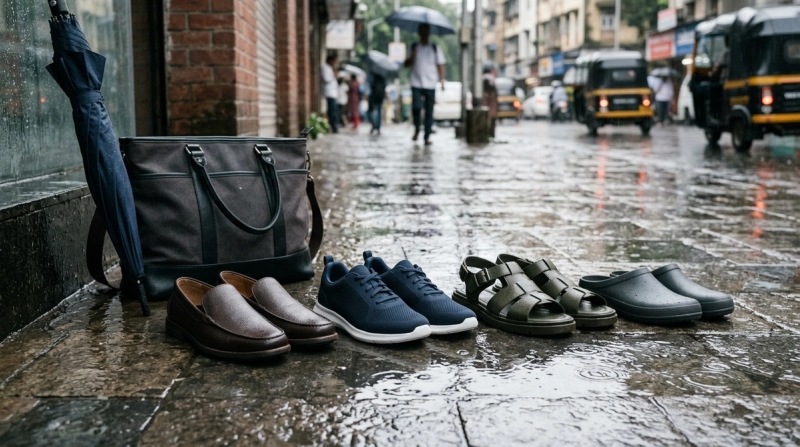
The best office shoes for monsoon depend on two very real things: how bad your commute gets, and how strict your office is about dressing.
If your office is formal, rain-friendly loafers in rubber, EVA, PVC, or washable synthetic materials are usually the safest option. They look polished enough for work and handle rain better than leather. If you travel by local train, bus, metro, or walk a lot, waterproof sneakers are often more comfortable and secure. And if your route gets properly waterlogged, strapped sandals or clogs may honestly be the most practical choice because they dry fast and are easy to clean.
Monsoon dressing in India is never just about looking good. You can leave home in light rain, step into ankle-deep water near the station, climb slippery stairs, reach office with damp feet, and then sit in AC for eight hours. That is when regular office shoes become a problem.
Leather stains. Canvas stays wet forever. Smooth soles slip on wet tiles. Flip-flops may survive puddles, but they rarely look right at work and can be risky on stairs or crowded platforms.
So the real question is not, “Which shoe is completely waterproof?” It is more like, “Which shoe can handle my commute, my office dress code, and my feet?”
This guide breaks down loafers, sneakers, sandals, and clogs as practical monsoon footwear for office wear, so you can choose one sensible pair instead of ruining shoes every rainy season.
Loafers vs Sneakers vs Sandals vs Clogs for Office Monsoon Wear
#If you are wondering what shoes to wear in rain to work, start here.
There is no single winner for everyone. The best shoes for rainy season India are the ones that match your actual day, not the ideal version of your day where the roads are dry and the cab arrives on time.
1. Monsoon Loafers: Best for Formal Offices and Light Rain
#If you work in banking, consulting, law, sales, hospitality, or a traditional corporate setup, loafers are usually the easiest choice. They look neat, do not feel too casual, and work with most office outfits.
For the monsoon, though, avoid genuine leather and suede if there is any chance your shoes will get wet. Instead, look for loafers made from rubber, EVA, PVC blends, or washable synthetic materials. Many of them are designed to look like matte leather from a distance, which is useful when you need to look formal without sacrificing practicality.
Why loafers work
#Loafers go well with trousers, chinos, formal shirts, kurtas, and some office dresses. They are easy to slip on and off, which helps if you want to air your feet a little at your desk. If they are made from rain-friendly materials, they also dry much faster than leather.
Where they fail
#Most loafers are low-cut. So if you step into a deep puddle, water can easily enter from the top. Once that happens, your socks and insoles may stay damp for hours. Sitting in cold office AC with wet socks is nobody’s idea of comfort.
Buying tips
#Choose darker colours like black, navy, brown, charcoal, or olive. They hide mud and water marks better. Look for a textured sole instead of a smooth plastic one. If possible, pick a pair with a removable or washable insole.
Small perforations on the side can help with airflow, but avoid big cut-outs if your commute includes dirty rainwater.
Loafers are best if your commute is mostly by cab, car, office bus, or metro with limited walking.
2. Waterproof Sneakers: Best for Trains, Buses, and Long Walks
#Sneakers are the practical middle ground for many Indian office commuters. They cover your feet, feel secure in crowds, and usually offer better grip than formal shoes.
But not every sneaker is monsoon-friendly.
Regular canvas, knit, and open-mesh sneakers absorb water quickly. Once soaked, they become heavy, smell bad, and take ages to dry. For rainy days, look for synthetic leather, treated nylon, or water-repellent uppers. These are much better for wet platforms, bus stops, footpaths, and slippery pavements.
Why sneakers work
#Sneakers protect your toes better than open sandals, which matters when you are travelling in crowded trains, buses, or metro stations. They stay firmly on your feet when you are walking fast, climbing wet stairs, or rushing between gates.
They also pair easily with jeans, chinos, relaxed trousers, casual kurtas, and smart-casual office outfits.
Where they fail
#Sneakers can trap water if rain enters from the ankle opening. Once the inside gets wet, they take longer to dry than sandals or clogs. Wet socks inside closed shoes can also cause odour, discomfort, and skin irritation.
Buying tips
#Check the sole before anything else. You need grooves and texture for grip. Avoid completely flat soles, no matter how stylish the shoe looks.
Pick darker shades if your commute includes mud. If your office allows sneakers, a simple black, navy, grey, or brown pair will look more polished than bright sports colours.
For many people, waterproof sneakers are the most balanced rainy season shoes for men and women, especially when the commute is crowded but the office dress code is not too strict.
3. Strapped Sandals: Best for Waterlogged Streets
#In heavy monsoon conditions, trying to keep water out of your shoes can be a losing battle. If your lane floods, your bus stop always has puddles, or your walk to office includes broken pavements, sandals may actually be the smarter choice.
Good monsoon sandals let water pass through, dry quickly, and can be rinsed clean in a washroom. They are especially useful on days when the rain is so heavy that even “waterproof” closed shoes get wet from above.
Why sandals work
#Sandals dry much faster than closed shoes. Mud is easier to wash off. Your feet also get more air, which can be a relief if you have been walking through rain for a while.
Where they fail
#Open footwear exposes your toes to dirty water, crowd pressure, and accidental bumps. Slide-on sandals without back straps can slip off in mud or while climbing stairs. Very casual rubber slippers may also look out of place in many offices.
Buying tips
#Choose sandals with a firm heel strap or ankle strap. Adjustable straps are even better because they keep your foot secure. Avoid thin flip-flops, loose slip-ons, and soles that feel smooth or slippery.
If you want something more office-friendly, choose closed-toe or structured sandals in black, tan, brown, navy, or beige.
Sandals are a good choice for creative offices, casual workplaces, college internships, and hybrid workdays when you do not have important client meetings.
4. Clogs: Best for Relaxed Offices and Easy Cleaning
#Clogs have become much more common during the monsoon, and it is easy to see why. They are comfortable, simple, and easy to clean. Many are made from waterproof or water-resistant molded materials, so mud and rain can be wiped or rinsed off quickly.
They are not the most formal option, of course. But they can work well in relaxed offices, media workplaces, campus jobs, design studios, tech teams, and work-from-office days without client-facing meetings.
Why clogs work
#Clogs offer more toe coverage than open sandals but are still easy to wash. Many styles come with heel straps, which help keep them secure while walking. They also dry much faster than fabric sneakers.
Where they fail
#The shape can look bulky. Classic clogs may not pair well with formal trousers, pencil skirts, sharp blazers, or traditional corporate wear. Some offices may simply consider them too casual.
Buying tips
#Pick simple, dark, minimal designs if you want them to look more office-appropriate. Black, navy, beige, and charcoal are easier to style than bright colours. Avoid oversized, heavily decorated, or very sporty-looking pairs if you plan to wear them to work.
Clogs are practical quick-dry office shoes, but only if your workplace culture allows them.
Office Dress Code and Commute Decision Framework
#If you are still confused, use this simple framework before buying.
Step 1: Check your commute
#Cab, car, or short walk:You have limited rain exposure. Choose appearance first, then grip. Monsoon loafers are usually enough.
Metro with clean walking routes:You need comfort and grip, but not extreme drainage. Loafers or waterproof sneakers can work well.
Local train, bus, long walk, or crowded commute:Prioritise foot security, grip, and coverage. Waterproof sneakers or tightly strapped sandals are safer choices.
Waterlogged lanes or muddy routes:Prioritise drainage and easy cleaning. Strapped sandals or clogs make more sense than closed shoes that trap water.
Step 2: Check your office culture
#Strict formal office:Choose rain-friendly loafers. If your commute is rough, use the desk shoe strategy.
Business casual office:Loafers, clean waterproof sneakers, or neat closed-toe sandals can work.
Smart casual, startup, creative, or hybrid office:Waterproof sneakers, clogs, and structured sandals are usually easier to style.
Internship or college-to-office setting:Choose one practical pair that is clean, dark, secure, and not too sporty. You do not need multiple pairs unless your dress code demands it.
The Desk Shoe Strategy
#If your commute and office dress code are completely different, stop forcing one pair to do everything.
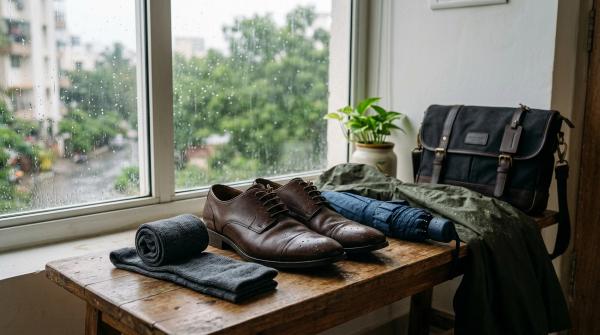
Wear practical monsoon footwear for the commute, such as strapped sandals, clogs, or waterproof sneakers. Keep a clean, dry pair of office shoes at work, like formal loafers, flats, heels, or dress shoes. Once you reach office, rinse or dry your feet if needed, change shoes, and keep the wet pair somewhere it can air out.
This is often the best solution for people who travel through flooded streets but work in formal environments.
It also protects expensive leather shoes during the monsoon. Honestly, walking through dirty rainwater in good leather shoes is rarely worth it.
Monsoon Footwear Checklist Before You Buy
#Use this checklist while shopping for office shoes for monsoon.
- Textured, anti-slip soleLook for deep grooves or patterned soles. Smooth soles can be risky on wet tiles, polished office lobbies, station floors, and mall entrances.
- Washable upper materialChoose rubber, EVA, PVC blends, synthetic leather, or water-repellent materials. Avoid suede, velvet, canvas, and genuine leather for heavy rain use.
- Secure fitPick straps, buckles, firm heel support, or snug closures. Loose slip-ons and flip-flops can be unsafe in mud or moving crowds.
- Quick-dry designIf you choose closed shoes, check whether the insole can be removed. If you choose sandals or clogs, make sure water can drain easily.
- Dark or mud-friendly coloursBlack, navy, charcoal, brown, and olive hide stains better than white, cream, or pastel shades.
- Office-appropriate shapeA plain, minimal shoe usually looks more polished than a bulky, bright, or sporty one.
- Comfort for standing and walkingTry the pair with the socks you plan to wear. Walk around before buying if possible. If your heel slips or your toes have to grip too hard, skip it.
Outfit Ideas for Monsoon Office Footwear
#You do not need to dress perfectly in the rain. You just need the outfit to look intentional.
Monsoon loafers work well with formal trousers, tapered pants, chinos, shirts, kurtas, and simple office dresses. Choose colours close to your regular work shoes.
Waterproof sneakers look best with smart-casual outfits: chinos, straight-fit jeans, relaxed trousers, polo shirts, casual shirts, short kurtas, and neat T-shirts under overshirts.
Strapped sandals pair well with cropped trousers, ankle-length pants, midi skirts, cotton kurtas, and relaxed office wear. Avoid very beachy styles if you are going to work.
Clogs look cleaner with simple silhouettes: straight pants, denims on casual Fridays, relaxed co-ords, oversized shirts, and minimal kurtas. The less busy the outfit, the easier clogs are to carry.
Safety Notes: Wet Floors, Grip, and Dry Feet
#Monsoon footwear is not only about looking presentable. Safety matters too.
Watch out for wet office floors
#Office lobbies, malls, metro stations, and building entrances often have polished tile or marble. These surfaces can get slippery when wet. Wipe your soles properly on entrance mats before walking in. Slow down on wet indoor floors, even if your shoes claim to be anti-slip.
Check the grip before style
#Good anti-slip monsoon footwear should have a textured sole that channels water away. If the sole looks flat, shiny, or plasticky, it may not grip well on wet surfaces.
Do not sit in wet socks all day
#If water enters your shoes, change socks if you can. Damp socks and closed shoes can also cause odour and discomfort. If possible, keep a spare pair of quick-dry socks in your bag or office drawer.
Dry shoes properly
#Do not push damp shoes into a closed cabinet. Leave them in a ventilated area. If sneakers get wet inside, remove the insoles and stuff the shoes with crumpled newspaper to absorb moisture overnight.