Kharbuja is one of those summer fruits that feels perfect for about five minutes.
One day it is sweet, juicy, fragrant and exactly what you wanted. The next day, it is sitting in the fridge looking a little too soft, and somehow nobody in the house wants to eat it anymore.
If that sounds familiar, good news: you can absolutely freeze kharbuja for smoothies.
Freezing is one of the easiest ways to save extra muskmelon, especially once it has already been cut. Instead of forcing everyone to finish it quickly, you can turn it into ready-to-use smoothie portions for later.
There is just one thing to keep in mind. Frozen kharbuja is wonderful for smoothies, shakes and blended drinks. It is not great if you want firm, fresh-looking pieces after thawing.
So if your plan is a cold muskmelon smoothie, freeze away. If your plan is fruit chaat or a pretty fruit plate, fresh is still best.
If you are still choosing a melon, you may also like this guide on how to pick a sweet kharbuja. This article is more about what to do after the kharbuja is already cut, or when it is getting a little too ripe to enjoy as neat slices.
Quick answer: Can you freeze kharbuja?
#Yes, you can freeze kharbuja, also called muskmelon.
For best results, wash the whole melon before cutting, remove the seeds and rind, cut the flesh into cubes or blend it into a puree, then freeze it in small portions.
The important texture warning is this:
Frozen kharbuja is best for smoothies, shakes and blended drinks, not for fresh fruit plates.
Kharbuja has a lot of water in it. When it freezes, that water turns into ice crystals. When it thaws, the fruit becomes soft, watery and a bit mushy. That is not ideal for eating with a fork, but it is perfectly fine for a blender.
The National Center for Home Food Preservation also supports freezing melons as cubes, balls or puree, as long as the fruit is handled safely first.
Why frozen kharbuja works better in smoothies
#Freezing changes melon. There is really no way around it.
When kharbuja goes into the freezer, the water inside the fruit expands and forms ice crystals. Those crystals break down the delicate texture of the fruit. While the pieces are still frozen, they may look firm and pretty normal. But once they thaw, they usually turn soft, loose and watery.
That means frozen kharbuja is not the best choice for:
- Fresh fruit plates
- Fruit salad
- Fruit chaat
- Yogurt bowls where you want firm pieces
- Lunchboxes, because the fruit will slowly thaw and get watery
But for a muskmelon smoothie, that softer texture is actually useful.
Frozen kharbuja cubes make smoothies cold, thick and naturally sweet. You do not need to add much ice, and the melon blends into a light, refreshing drink with that soft summer flavour.
So the simple rule is this:
If you want to eat kharbuja as pieces, keep it fresh and chilled.If you want to drink it, freezing is a great idea.
Before freezing: wash the kharbuja first
#This step is easy to skip, especially because we do not eat the rind. But with melons, washing before cutting really matters.
Kharbuja grows close to the ground, and the outside rind can carry dirt and germs. If you cut into an unwashed melon, the knife can drag whatever is on the outside into the fruit inside.
So even though you are going to peel it, wash it first.
How to wash kharbuja before cutting
#- Rinse the whole kharbuja under running water.
- Rub or scrub the outer surface well.
- Dry it with a clean towel if needed.
- Use a clean knife and cutting board.
- Cut the melon, remove the seeds and peel off the rind.
It only takes a minute, but it helps keep the fruit safer whether you are eating it fresh, storing it in the fridge or freezing it for later.
Refrigerate cut kharbuja quickly
#Once kharbuja is cut, treat it like a perishable food.
Do not leave cut melon sitting on the counter for hours, especially in summer. If you are not freezing it right away, put it in an airtight container and move it to the fridge soon.
For everyday kharbuja storage, remember:
- Whole, uncut kharbuja can sit out for a while depending on ripeness.
- Cut kharbuja should go into the fridge.
- Cut kharbuja should be covered or stored airtight.
- If you want to freeze it, freeze it while it is still fresh and safe.
Freezing is a good storage method, but it is not a rescue plan for fruit that has already spoiled.
How to freeze kharbuja cubes
#This is the easiest method if you make smoothies often. Cubes are simple to measure, simple to blend and easy to mix with other fruits.
Step 1: Wash the whole melon
#Wash the kharbuja under running water before cutting it. Scrub the rind, then use a clean knife and cutting board.
Step 2: Cut and clean it
#Slice the kharbuja in half. Scoop out the seeds. Remove the rind.
Step 3: Cut into small cubes
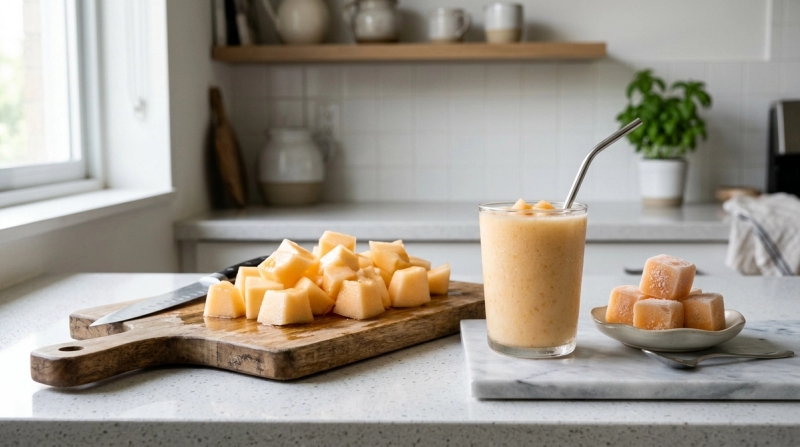
#Cut the flesh into small, even cubes.
Around 1-inch pieces work well for most blenders. Smaller pieces freeze faster and are easier to blend later.
Step 4: Freeze in a single layer
#Line a freezer-safe tray or plate with parchment paper. Spread the kharbuja cubes in one layer, leaving a little space between the pieces.
Freeze until solid. This usually takes a few hours.
This step is worth doing because it stops the cubes from freezing into one big block.
Step 5: Pack the frozen cubes
#Once the cubes are frozen, transfer them to a freezer-safe bag or airtight container.
Press out as much air as possible before sealing. If you like, label the bag with the date. This is especially helpful if your freezer tends to collect mysterious frozen packets that nobody remembers packing.
Step 6: Use straight from the freezer
#For smoothies, do not fully thaw the kharbuja cubes. Add them directly to the blender with milk, yogurt, coconut water or whichever smoothie liquid you like.
If your blender struggles with hard frozen fruit, let the cubes sit at room temperature for 3 to 5 minutes. They should soften just a little, not thaw completely.
How to freeze kharbuja puree
#Puree is a great option when your kharbuja is very soft but still fresh and safe to eat. It is also useful if you want ready-made smoothie cubes.
Step 1: Wash, cut and peel the melon
#Start the same way. Wash the outside first, then cut the kharbuja, remove the seeds and peel off the rind.
Step 2: Blend without adding water
#Add the kharbuja flesh to a blender and blend until smooth.
Try not to add water at this stage. Kharbuja already has plenty of water, and adding more can make the frozen puree extra icy.
Step 3: Pour into trays or molds
#Pour the puree into ice cube trays or freezer-safe silicone molds.
Small portions are much easier to use later. You can add a few cubes to a smoothie without thawing a whole container.
Step 4: Freeze until firm
#Place the trays in the freezer and freeze until the puree is completely solid.
Step 5: Store the puree cubes
#Pop out the frozen puree cubes and transfer them to a freezer-safe bag or airtight container.
Remove as much air as possible before sealing.
These little cubes are very handy for quick smoothies, kharbuja shakes and chilled blended drinks.
How to prevent freezer burn and extra iciness
#Kharbuja naturally has a high water content, so frozen melon will always be a little icy. But with proper packing, you can keep the flavour and texture much better.
Start with fresh fruit
#Freeze kharbuja while it still smells fresh and tastes good. Do not wait until it is questionable.
If it already smells sour, fermented or strange, freezing will not fix it.
Freeze cubes separately first
#If you are freezing cubes, spread them in a single layer first. Once they are solid, then pack them together.
This keeps them from sticking into one frozen lump and makes it easier to take out only what you need.
Remove as much air as possible
#Air is one of the main reasons freezer burn happens.
If you are using a freezer bag, press out the air before sealing. If you are using a container, choose one that fits the fruit closely instead of leaving a lot of empty space.
Freeze in small portions
#Small portions are more practical than one huge bag that you keep opening again and again.
Every time you open the pack, air and moisture can get in. Smaller packs help keep the fruit in better condition.
Do not thaw and refreeze repeatedly
#Take out only what you need.
Repeated thawing and freezing makes the texture worse, and it is not the best habit from a food safety point of view either.
Blend while frozen
#For the best smoothie texture, use kharbuja straight from the freezer.
If you thaw it first, it will become watery and soft. That is fine if you are making a puree, but not ideal if you want a thick, cold smoothie.
What to do with overripe but safe kharbuja
#A slightly overripe kharbuja can be perfect for smoothies.
If the fruit is soft, very sweet and fragrant, but still smells fresh and shows no signs of spoilage, freeze it quickly. This is often the best way to use melon that feels too soft for nice slices but is still too good to throw away.
Overripe but safe kharbuja works well as:
- Smoothie cubes
- Muskmelon shake base
- Frozen puree cubes
- A naturally sweet addition to blended drinks
You can blend frozen kharbuja with milk, yogurt, coconut water or any smoothie liquid you normally use. Keep it simple at first. Sweet muskmelon already has a gentle, fresh flavour, so it does not need much.
The important word here is safe.
Soft is okay if the fruit is still fresh. Spoiled is not okay.
When to throw kharbuja away instead of freezing it
#Freezing does not make spoiled kharbuja safe. It only freezes the problem.
Throw kharbuja away instead of freezing it if:
- It smells sour, fizzy, fermented or alcoholic.
- You see mold.
- The flesh feels slimy.
- The taste seems off.
- Cut melon has been left out too long.
- You are not sure if it was handled safely.
With cut melon, it is better to be cautious. Kharbuja is delicious, but it is not worth risking an upset stomach over fruit that seems spoiled.
How to use frozen kharbuja in smoothies
#Using frozen kharbuja is simple.
Add your liquid to the blender first if your blender works better that way. Then add the frozen kharbuja cubes or puree cubes. Blend until smooth.
If the smoothie is too thick, add a little more liquid.If it is too thin, add more frozen kharbuja.
Frozen kharbuja pairs well with mild ingredients because the fruit itself has a soft, sweet flavour. You can keep it very basic or adjust it depending on what your family likes.
Good smoothie liquids include:
- Milk
- Yogurt
- Coconut water
- Plain water
- Almond milk
- Oat milk
You can also add banana, mango or a little honey if you want it sweeter, but honestly, a good kharbuja usually does not need much help.
Best uses for frozen kharbuja
#Use frozen kharbuja for:
- Muskmelon smoothies
- Kharbuja shakes
- Blended yogurt drinks
- Chilled fruit drinks
- Smoothie bowls where a soft blended texture is expected
Avoid using frozen kharbuja for:
- Fresh fruit platters
- Fruit chaat with firm pieces
- Decorative toppings
- Lunchboxes
- Any dish where thawed melon texture really matters
Final takeaway
#Yes, you can freeze kharbuja for smoothies, and it is a very practical way to reduce waste in summer.
Just remember the texture trade-off. Frozen muskmelon will not thaw like fresh fruit. It becomes soft and watery once defrosted. But when used straight from the freezer, it blends beautifully into cold, thick smoothies and shakes.
Wash the melon before cutting, refrigerate cut fruit quickly, freeze only fruit that is still safe, and pack it well to protect it from freezer burn.
That way, the next time a kharbuja gets a little too soft for slices, you do not have to rush to finish it. You can freeze it and save it for another hot day.