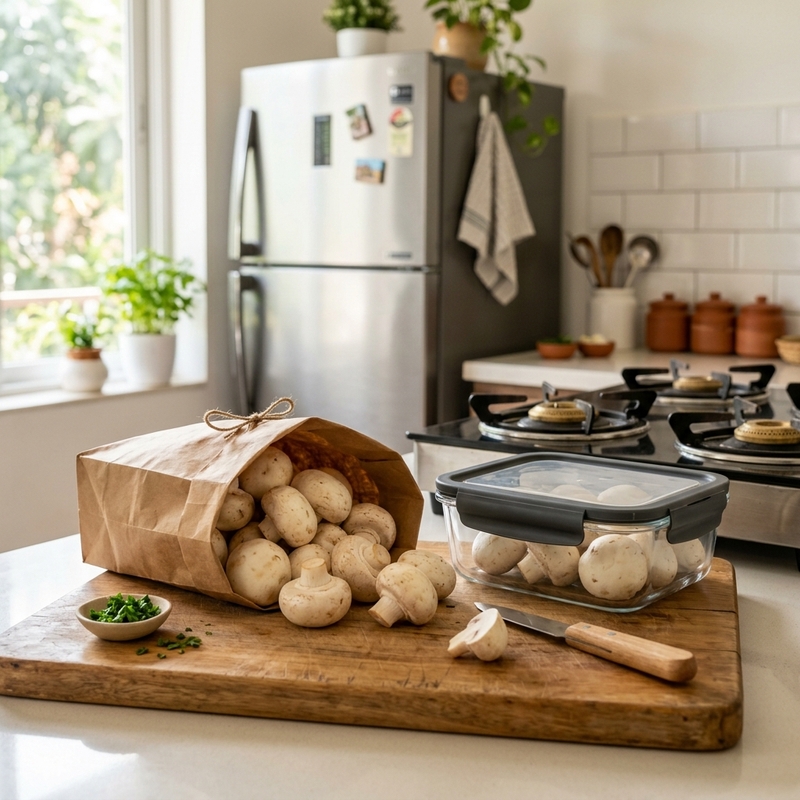
You buy a neat little box of white button mushrooms, keep it in the fridge, and open it two days later expecting to make mushroom masala.
Instead, you find dark, wet, slightly slimy mushrooms sitting in the box.
Annoying, but very common.
Mushrooms are delicate. They may look simple, but they spoil quickly, especially in Indian summer. Heat, humidity, power cuts, crowded fridges, wet vegetable drawers, and the sticky pre-monsoon weather can all make mushrooms go bad faster than expected.
That does not mean you need to avoid mushrooms in summer. You can still eat them safely. You just have to buy them carefully, store them the right way, cook them while they are fresh, and throw them out when they show clear signs of spoilage.
Here is a practical guide for handling mushrooms in Indian kitchens during hot weather.
Quick answer
#Yes, you can eat mushrooms in summer.
But no, you should not leave fresh mushrooms on the kitchen counter for hours in summer. Treat them as a highly perishable food.
Fresh mushrooms contain a lot of moisture. In hot and humid weather, they can spoil quickly. Buy them fresh, refrigerate them soon after bringing them home, store them in a breathable way, and cook them before they start turning slimy or smelly.
The simple rule is this: mushrooms are perfectly fine in summer if they are fresh and handled properly. But they are not very forgiving if you ignore them.
Why mushrooms spoil faster in summer
#Mushrooms are not like potatoes, onions, or garlic. You cannot leave them in a basket for days and expect them to behave.
They are soft, moist, and sensitive to heat. Fresh mushrooms naturally release water. When they are packed tightly in plastic, that moisture gets trapped inside the packet or box. In a warm kitchen or humid fridge drawer, the surface becomes damp. Once that happens, mushrooms can turn sticky, dark, and mushy quite fast.
Indian summer makes this worse because:
- Kitchens stay warm for a long time after cooking.
- Humidity rises before and during monsoon.
- Vegetables may sit in traffic, market stalls, or delivery bags before reaching home.
- Fridge doors are opened again and again in busy households.
- Mushrooms are often sold in plastic punnets that trap condensation.
So even if a packet looks fine in the shop, it may start spoiling by the next day if it was already sweating inside.
How to buy fresh mushrooms
#Good storage starts at the shop. If mushrooms are already old, wet, or bruised when you buy them, your fridge cannot rescue them.
When buying mushrooms in summer, take a few extra seconds to check the pack properly.
Choose firm, dry mushrooms
#Fresh mushrooms should look plump and feel firm. The caps should not look collapsed, shrivelled, soggy, or wet.
A slightly dry surface is okay. In fact, it is much better than a wet one. Damp mushrooms spoil faster.
Check for condensation inside the pack
#If you are buying packaged mushrooms, look at the inside of the plastic wrap or box.
Avoid packs with too many water droplets, heavy condensation, or a wet base. That trapped moisture is often where sliminess begins.
Avoid slimy or sticky mushrooms
#Do not buy mushrooms that feel slippery, sticky, or coated with a wet film.
Sliminess is one of the clearest signs that mushrooms are already spoiling.
Smell them if possible
#Fresh mushrooms usually smell mild and earthy.
Avoid mushrooms that smell sour, fishy, rotten, or ammonia-like. Sometimes the smell may be faint in the beginning, so do not depend only on smell. Look and touch matter too.
Watch for dark, wet spots
#A little dry browning can happen as mushrooms age. But wet dark patches, soft spots, or black mushy areas are warning signs.
If the mushrooms look bruised and damp, skip them.
Stick to cultivated mushrooms
#During summer and rainy weather, wild mushrooms may appear in gardens, fields, parks, or damp corners. Do not pick and eat them unless they have been identified by a genuine expert.
Many poisonous mushrooms look very similar to edible ones.
For regular home cooking, stick to commercially sold cultivated mushrooms such as button mushrooms, oyster mushrooms, or other common varieties from reliable sellers.
If your question is more about food classification than safety, you may also like this guide: Is mushroom veg or non-veg in India?
How to store mushrooms
#The biggest mistake is leaving mushrooms sealed in sweaty plastic.
Mushrooms need cool storage, but they also need some airflow. If too much moisture gets trapped around them, they spoil faster.
Do not wash before storing
#Do not wash mushrooms before putting them in the fridge.
Mushrooms absorb water easily, and extra moisture encourages sliminess. If there is visible dirt, gently wipe it off with a dry or slightly damp cloth.
Wash or quickly rinse mushrooms only just before cooking.
Use a brown paper bag if you have one
#A brown paper bag works well because it absorbs extra moisture while still allowing some airflow.
Here is the easiest method:
- Remove the mushrooms from the plastic packaging.
- Do not wash them.
- Put them in a clean brown paper bag.
- Fold the top loosely.
- Keep the bag in the refrigerator.
Do not pack too many mushrooms into one bag. Crowded mushrooms bruise, sweat, and spoil faster.
If you do not have a paper bag
#Use a bowl or open container lined with a clean paper towel or cotton cloth. Cover it loosely, not airtight.
The idea is simple: keep mushrooms cool, but do not trap moisture around them.
Where to keep mushrooms in the fridge
#Keep mushrooms in the fridge, not on the kitchen counter.
The main fridge compartment is often better than a very wet vegetable drawer, especially if your crisper collects condensation. If your vegetable drawer stays dry and cool, you can use it, but check the mushrooms daily.
Also avoid keeping uncovered mushrooms next to strong-smelling foods. Mushrooms can absorb smells from other items in the fridge.
How long fresh mushrooms last
#If they were fresh when bought and stored properly, whole mushrooms may last around 5 to 7 days in the fridge.
But if they are left in their original plastic pack with condensation inside, they may turn slimy much sooner.
Always check with your eyes, nose, and touch before cooking. Do not use mushrooms just because they are still within a rough time estimate. If they look or smell spoiled, throw them away.
How to cook mushrooms safely in summer
#Mushrooms cook quickly, but in summer it is worth being a little more careful.
Clean them just before cooking. Wipe off any dirt, or give them a quick rinse and dry them well. Do not soak mushrooms in water.
Cook them until they soften, release moisture, and lose their raw smell. In Indian cooking, this usually happens naturally in sabzi, masala, pulao, noodles, curries, stir-fries, and gravies.
But remember this: do not add old or doubtful mushrooms to a spicy dish just to hide the smell or texture.
Masala, garlic, onion, chilli, oil, and spices can improve flavour. They cannot make spoiled mushrooms safe.
If mushrooms are slimy or sour-smelling before cooking, discard them.
How to store cooked mushrooms
#Cooked mushrooms also need careful handling in summer.
Once mushrooms are cooked, do not leave them sitting out for a long time in a hot kitchen. Let leftovers cool slightly, then refrigerate them in a clean airtight container.
As a practical summer rule, do not leave cooked mushrooms at room temperature for more than two hours. If your kitchen is very hot, refrigerate them sooner.
Eat refrigerated cooked mushrooms within about 3 days, as long as they still look and smell normal. Reheat them properly before eating.
This is similar to how you should handle many cooked foods in summer. You may also find these useful:
- Can paneer stay outside in summer?
- How long can cooked dal stay outside in summer?
Mushroom spoilage signs to watch for
#Do not rely only on smell. Sometimes mushrooms look unsafe before they smell really bad.
Throw mushrooms away if you notice any of these signs.
Slimy surface
#This is one of the most common warning signs.
If mushrooms feel slippery, sticky, or coated with a wet film, do not cook them.
Wet, dark, mushy patches
#A little dry browning can happen with age. But wet black or dark brown soft spots are different.
They usually mean the mushroom is breaking down.
Sour or unpleasant smell
#Fresh mushrooms smell mild and earthy.
Spoiled mushrooms may smell sour, fishy, rotten, or ammonia-like. If you open the packet and immediately feel something is off, trust that instinct.
Visible mould
#If you see fuzzy mould, greenish growth, or unusual patches, discard the affected mushrooms.
If the whole pack smells bad, or several mushrooms are mouldy or slimy, it is safer to throw away the entire batch.
Collapsed texture
#If mushrooms have become limp, soggy, and shapeless, they are past their best.
In summer, it is better not to take a chance with them.
When to avoid mushrooms in summer
#Avoid eating mushrooms if:
- They were left outside for hours in a hot kitchen.
- The packet has heavy condensation and the mushrooms feel wet.
- They are slimy, sour-smelling, mouldy, or mushy.
- You are not sure whether they are wild or cultivated.
- Cooked mushroom leftovers were kept out overnight.
- You feel doubtful about how they were stored before purchase.
Food safety is not the place to adjust and hope for the best. If mushrooms look questionable, discard them.
If someone develops severe vomiting, strong stomach cramps, dizziness, breathing difficulty, swelling, or other serious symptoms after eating mushrooms, seek medical help quickly. This is especially important if wild mushrooms may have been involved, or if an allergic reaction is suspected.
Final takeaway
#You can eat mushrooms in summer. Just treat them like a delicate, perishable food, not like a hardy vegetable.
Buy firm, dry mushrooms. Avoid sweaty packs. Store them unwashed in a breathable bag or loosely covered container in the fridge. Cook them while they are fresh. Refrigerate leftovers quickly.
And if you notice slime, mould, sour smell, or mushy dark patches, do not take chances.