If you travel by train in India even semi-regularly, chances are you’ve had that awkward in-between time. Checkout from hotel at 11, train at 8:40 pm. Or you land up in a city for just a few hours and don’t want to drag one giant trolley bag through auto stands, foot overbridges, chai stalls, and half the city. That’s where the railway cloakroom can honestly save your back and your mood. I’ve used cloakrooms at New Delhi, Varanasi, Pune, Howrah side luggage rooms, and once at Chennai when my bag felt heavier than my actual body. Some experiences were smooth, some were mildly irritating, and one time I had to reopen my luggage because the lock situation wasn’t right. Very Indian travel problem, very normal.
So this post is basically the practical guide I wish somebody had given me before I started depending on station cloakrooms. Not the vague “yeah luggage rakh dete hain” type advice. I mean actual things: who can use it, what ID is needed, how much charges usually are, whether they keep bags safely, what kind of lock works, what gets rejected, and when it’s better to just book a retiring room or cheap hotel near the station instead. Trust me, knowing these tiny rules before you reach the counter matters way more than people think.
First things first: what exactly is a railway cloakroom in India?
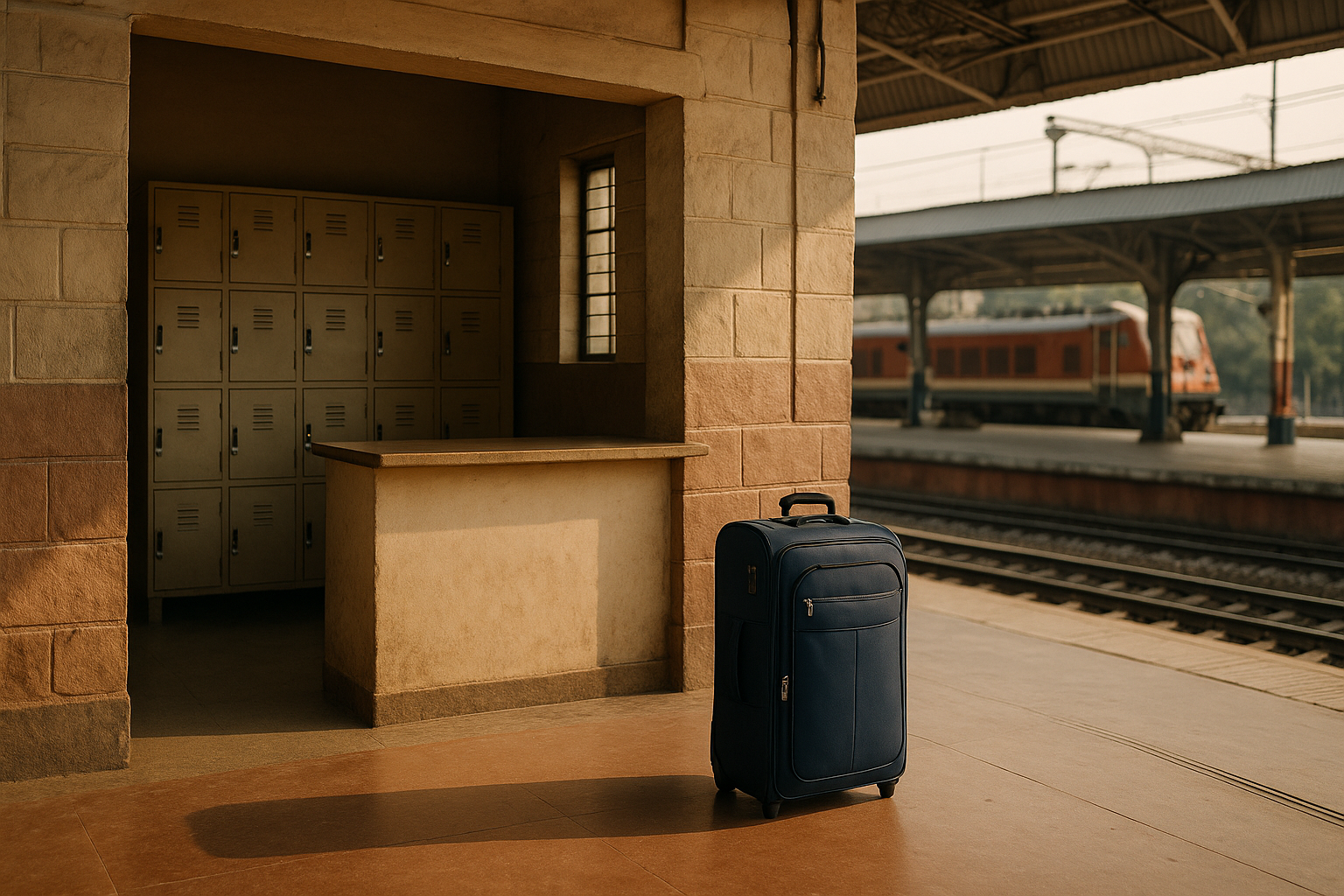
#In simple words, it’s a paid luggage storage facility inside or attached to many Indian Railway stations. You deposit your bags for a few hours or a day or two, get a receipt, and collect them later. Some stations use the term cloakroom, some people casually call it luggage room. Function is pretty much the same. Usually this is meant for bona fide rail passengers, meaning you’re expected to have a valid train ticket or proof of train journey. That part is important. It’s not always like airport baggage storage where any random person can walk in and dump bags.
And yeah, not every tiny station has a proper cloakroom. Bigger junctions and major city stations are more likely to have one, often near parcel office, retiring rooms, inquiry section, or one end of the platform complex. Sometimes signage is terrible though, so asking a porter, RPF constable, or station inquiry still works fastest. Old school but effective.
The biggest rule people mess up: you usually need a valid train ticket
#This is probably the number one thing. At most railway station cloakrooms, they ask for a confirmed, RAC, or sometimes even current journey ticket linked to that station. In many places, platform ticket alone won’t do. Some counters are strict, some are a bit flexible if you have an onward reservation from that station. But don’t assume you can just walk in as a tourist and store luggage because you’re “near the station anyway”. I’ve seen people get turned away for this.
From my own experience, carrying either a printed reservation slip used to help, but now the easiest thing is just showing your mobile e-ticket plus ID. If your journey ends at that station and you want to leave bags for a few hours before heading to hotel or sightseeing, many cloakrooms allow it. If your journey starts later the same day, even better. Still, station-specific staff may ask questions, so don’t get annoyed. Security has become tighter over the years, and honestly that’s fair.
- Keep your PNR handy on phone, with enough battery. Sounds obvious but I’ve been that person at 3% battery, sweating.
- Carry one government ID. Aadhaar is the easiest in India, but passport, voter ID, driving licence can also work depending on staff verification.
- If the ticket is on someone else’s phone and you’re carrying the bags, coordinate before reaching the counter. Avoid drama.
What ID do they ask for?
#Usually some valid photo ID. Aadhaar is the most commonly accepted and easiest for Indian travelers. Passport works, driving licence usually works, voter card also can. Some stations just note your ticket details and don’t heavily inspect ID unless needed, while others definitely ask. So my rule is simple: never approach a cloakroom without both ticket proof and at least one original or clear digital ID. You may not need both every single time, but when you do need it, there’s no workaround.
One thing I noticed, especially at busy junctions, is that staff may write down bag count, your name, train number or PNR, and issue a deposit receipt. Please don’t lose that receipt. Seriously. Losing a cloakroom receipt creates a whole mini-crisis with verification, signatures, and waiting. Once in Varanasi I almost stuffed the receipt in a tea-stained pocket and forgot it existed. Bad idea. Keep it inside wallet or phone cover.
About the lock rule... this catches a lot of people off guard
#Most Indian Railways cloakrooms want luggage to be properly locked. Not zipped shut. Locked. This is one of the oldest and most common rules. If your suitcase doesn’t have an inbuilt lock, use a small padlock. Duffel bags, backpacks, trolley bags, trunk-type luggage, all should be secured. If there are multiple chains or openings, staff may ask you to lock them properly before accepting. At a couple of stations I’ve also seen wrapping or rope-tied bedding rolls not being accepted unless secured in a way they consider safe enough.
And this makes sense, actually. If they accept unlocked bags and something goes missing, then everyone argues. Better to seal it properly from the start. So before your trip, just keep one small extra lock in your bag. It costs almost nothing and saves a lot of stupid last-minute running around station shops. I’ve bought one outside a station at double rate because I forgot mine... not my proudest budgeting moment.
Cloakroom charges in India: what you’ll usually pay
#Charges are generally quite affordable compared to hotel luggage storage or private locker services in metro areas. But exact rates can vary by station and zone, and Indian Railways can revise them, so do check the notice board at the counter. In many stations, the fee is calculated per bag for an initial slab of hours, then extra for each additional block. Older travelers will remember tiny charges from years back, but now at major stations it can be a bit higher than before. Still, for most people it remains one of the cheapest legit luggage storage options around a station.
As a rough practical expectation, think in terms of paying a modest amount per piece of luggage for the first 24 hours, and then more after that. Bigger stations may have more clearly displayed slabs. Some counters round up based on storage duration, and oversize luggage can sometimes become a discussion point. Don’t expect fancy app-style dynamic pricing or anything. It’s usually straightforward, handwritten or printed receipt, cash or sometimes digital depending on the setup. Carry some UPI-ready balance, but also a little cash, because system failures happen yaar.
My honest take? Railway cloakrooms are not luxury services, but for short city stopovers they’re one of the best value travel hacks in India. Cheap, usually secure enough, and way better than dragging 18 kilos through old city lanes.
How safe are railway station cloakrooms really?
#Short answer: generally safe for normal luggage, but use common sense. I’ve never had a bag stolen from a railway cloakroom, and plenty of regular train travelers use them without issues. The luggage is usually kept in a designated room under station control, not just abandoned in a corner. In bigger stations the area may be monitored, restricted, or supervised by staff with RPF presence nearby. Security awareness is definitely stronger now than it was many years ago.
But here’s the part people don’t like hearing. Safe does not mean careless. Don’t leave cash, jewellery, laptop if avoidable, DSLR lenses, important documents, office hard drives, or anything emotionally irreplaceable. Even if rules permit the bag, I personally never deposit valuables. I carry a smaller daypack with essentials and keep only clothes, toiletries, shoes, random chargers, maybe books, all the boring stuff, in the stored luggage. That way even in the worst-case scenario, life doesn’t collapse.
- Use a sturdy lock, not those flimsy decorative ones
- Take a quick photo of your bag before deposit, especially if it looks common
- Remove valuables and medicines you may need later
- Check collection timings, because some counters are not equally efficient late at night
- Don’t hand your receipt to random helpful strangers. Sounds dumb, but crowded stations bring out weird situations
What items may be refused or create trouble at the counter
#Hazardous stuff, inflammable items, suspicious packages, and obviously anything illegal is a straight no. Beyond that, stations may refuse bags that are poorly packed, leaking, unlocked, or wrapped in a way they consider unsafe. Food items that smell strongly can also be a headache. Once I saw a family arguing because one bag had loose steel tiffin carriers and achar jars. The staff didn’t look thrilled, let’s put it that way.
If you’re carrying electronics in a visible fragile setup, expensive instruments, or oversized cartons, the cloakroom may not be the best place anyway. Parcel office and cloakroom are different things, and confusing them leads to unnecessary fighting at the counter. Bedding bundles, pilgrim luggage, and regular suitcases are usually fine if locked. Open sacks? Hmm... depends, but I wouldn’t count on it.
When the cloakroom is full, closed, or just not worth the headache
#This also happens. During festival rush, long weekends, major melas, Kumbh-related travel pressure, Chhath movement, Durga Puja season in eastern routes, New Year crowds, exam travel season, summer vacation... stations get mad busy. Then either the cloakroom has a queue, limited acceptance, or pickup takes forever. And some stations have odd timings or understaffed counters, especially if renovation or platform redevelopment is going on. India being India, one day the board says one thing, actual practice says another.
In that case, nearby budget hotels can be a backup. Around major stations, left-luggage is sometimes allowed for guests before check-in or after checkout. Dorms and retiring rooms are another decent option if you also need a washroom, nap, and charging point. Typical budget stay near big stations can be anywhere from around ₹700 to ₹2,500 depending on city, season, and how clean you want the bathroom to be. Retiring rooms and dormitories booked through railway channels are often better value if available, especially for a few hours rest.
Best situations where a cloakroom makes total sense
#Honestly, it works best for same-day sightseeing. Like you reach Jaipur in the morning and have an evening train. Or arrive at Madurai and want to do temple darshan before hotel check-in. Or you’re in Delhi with a night departure and don’t want to haul bags into the Metro and Old Delhi market chaos. I’ve used cloakrooms for these exact reasons and felt ridiculously relieved after dropping luggage. Your whole pace changes. You walk easier, bargain better, eat calmer, and don’t keep scanning for the nearest place to dump bags.
- Long layover between two trains at the same station or city
- Hotel checkout much earlier than train departure
- Quick temple, market, or food trail visit before boarding
- When you want to use local transport without turning into a luggage porter yourself
A few practical India-specific tips nobody tells first-time users
#Label your bag clearly. Half the suitcases in India are black, navy, or maroon and look exactly like everybody else’s after a dusty platform journey. Add a ribbon, baggage tag, or tape. Reach a little early for collection if your train is important. Don’t go 12 minutes before departure expecting a swift process. If there’s one uncle ahead of you arguing over receipt timing, your whole plan can derail, literally.
Also, avoid depositing too many tiny loose bags. It gets messy. Consolidate where possible. One medium trolley plus one backpack is easier than four odd items. If you’re traveling in peak summer, keep water bottle, cap, sunscreen, and power bank outside before deposit. Once the bag is in, opening and repacking at the counter is super annoying. Been there. Not fun.
Seasonal travel and safety conditions around stations
#If you’re planning to use cloakrooms while doing city stopovers, weather matters more than people think. In peak summer, station premises can get brutally hot, so don’t leave melt-prone food or medicines in stored bags. Monsoon means dampness, slippery station entries, and occasionally delayed trains, which can increase your storage duration and charges a bit. Winter in north India is actually one of the easiest times for this kind of travel, except fog-related delays can mess with collection timing.
Safety around stations also varies by city and hour. Early morning and daytime are usually fine at major stations if you stay alert. Late-night pickups, especially if you’re solo and new to the city, need a little extra caution. Use prepaid auto where available, app cabs from proper pickup points, and don’t wander into dim side lanes hunting a cheap lodge just because one guy outside said “very good room madam/sir”. Common sense, but travel fatigue makes us all do silly things.
What to eat, where to wait, and how to make the most of the bag-free time
#This sounds unrelated, but it’s actually the whole point of using a cloakroom, no? Once your luggage is deposited, you get freedom. At bigger junction cities, that means proper station-area food exploring. In Kolkata side, grab kachori-sabzi or fish cutlet depending on time and where you are. In Delhi, chai and bread-omelette near station lanes still hit different, though pick clean places. In Pune, I’ve happily used the luggage room and gone out for misal and bun maska without hauling baggage like a fool. In Varanasi, dropping bags first made ghat walking possible. Otherwise impossible, bas.
If you’ve got 4 to 8 hours, you can usually squeeze in one solid local experience, a meal, maybe a market round, and still return comfortably. That’s why I always say the railway cloakroom is not just storage, it’s time management for Indian train travel. A weirdly underrated one.
My final take after using railway cloakrooms across different cities
#Are railway station cloakrooms perfect? Nope. Sometimes the signage is bad, the counter guy is in no mood, digital payment may or may not work, and station-specific rules can feel a bit inconsistent. But despite all that, they’re incredibly useful. For budget travelers, solo travelers, families doing short stopovers, pilgrims, students, basically anyone moving around India by train, this facility can save money and energy in a big way.
The formula is simple: carry a valid train ticket, keep one proper ID, lock your luggage well, remove valuables, preserve the receipt, and don’t leave collection for the last minute. That’s it. Do those basics and the whole thing is usually quite smooth. And if you’re planning a station-heavy India itinerary sometime in 2026 or whenever really, this is one of those boring practical things that makes the trip much easier. Not glamorous, but super useful. Anyway, hope this helped a bit more than the usual half-baked travel advice floating around. For more grounded India travel stuff, you can also browse AllBlogs.in.