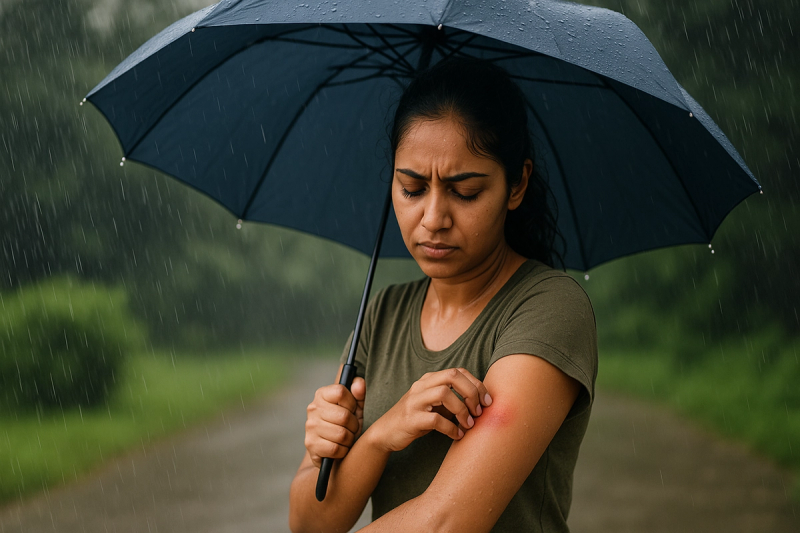
Every monsoon, I tell myself the same thing: this year I am going to be disciplined about mosquito control. And then rain starts, one bucket gets left outside, one window stays open at dusk, I get lazy with repellent, and boom... itchy bites everywhere. In India, rainy season mosquito bites are not just annoying, they're tied to a very real public health issue because dengue keeps coming back hard in many cities and towns. I’m a bit obsessive about health stuff now, mostly because a close family member had dengue a few years ago and it scared the life out of all of us. So this is the guide I’d share with a friend over chai, not to panic you, but to help you stay smart.
Quick thing before we get into it, because this matters. Dengue is a viral infection spread mainly by Aedes mosquitoes, especially Aedes aegypti. These mosquitoes tend to bite during the day, often early morning and late afternoon, which still surprises people because lots of us grow up thinking mosquito danger is mostly a nighttime thing. Not true here. Also, dengue is very common in India during and after the rains because water collects in coolers, pots, tyres, construction sites, terrace corners, like literally everywhere. The frustrating part is the mosquito that spreads dengue can breed in pretty small amounts of clean standing water too.
Why monsoon in India gets sketchy, health-wise
#I remember one July in Delhi when it rained for three days straight and then suddenly everybody in the neighborhood WhatsApp group was talking about fever. One uncle said his platelets had dropped. Somebody else's kid had a rash. One chemist near us had sold out of repellents. You could actually feel the tension. That's the thing with dengue season, it creeps into ordinary life. Offices, schools, apartment societies, hostels, villages, fancy gated communities... no one is really too posh for mosquitoes, lol.
Recent health advisories in India still keep pushing the same message because, honestly, it works when people actually do it: remove standing water weekly, prevent bites in daytime, and seek testing if symptoms fit. In 2025 and heading into 2026, there’s been even more emphasis on hyperlocal mosquito surveillance, community clean-up drives, and faster fever reporting in urban areas. Some cities have used digital dashboards, ward alerts, and drone or GIS mapping for breeding hotspots. Sounds fancy, and it is kind of cool, but none of that replaces the boring home stuff like emptying trays under plants. Which is annoying because I wish the dramatic solutions were enough.
First, what dengue usually feels like
#Dengue doesn’t always look the same in everyone, and that’s partly why people brush it off at first. The classic symptoms are sudden high fever, severe headache, pain behind the eyes, muscle and joint pain, nausea, vomiting, rash, and just that miserable wiped-out feeling. Some people call it breakbone fever for a reason. My cousin described it as being hit by a truck and then asked to smile through it. A few people also get mild bleeding signs like nosebleeds, bleeding gums, or very easy bruising.
- High fever that comes on pretty suddenly
- Bad body ache, joint pain, headache, pain behind eyes
- Nausea, low appetite, weakness, sometimes rash
- Bleeding gums, black stools, severe tummy pain, repeated vomiting = red flags, not “wait and watch” stuff
And this bit is important, maybe the most important in the whole post. Severe dengue can develop around the time fever starts settling, not only when fever is high. That catches people off guard. Families think, oh nice, fever is down, patient is improving... but then warning signs show up. Medical guidance continues to stress watching for severe abdominal pain, persistent vomiting, lethargy, restlessness, bleeding, breathing difficulty, enlarged liver, or signs of shock. If those happen, please don’t do home remedies and hope for the best.
What to do after a mosquito bite, and what not to overthink
#Most mosquito bites are just mosquito bites, obviously. Not every bite means dengue. I need to repeat that because monsoon anxiety can get a little out of hand. If you get bitten and it’s itchy, wash the area gently, avoid scratching if you can manage it, and use something soothing if needed, like calamine or a doctor-recommended anti-itch option. Cold compress helps too. Keep nails short for kids because scratching can break skin and lead to secondary infection. I learned this the hard way after scratching my ankle till it looked ridiculous.
What a bite itself can’t tell you is whether that mosquito carried dengue. You only go from 'itchy annoyance' to 'possible dengue' if symptoms begin in the following days, often around 4 to 10 days after an infective bite. So the practical approach is simple: don’t panic at the bite, but do stay alert for fever and systemic symptoms.
The mistake a lot of us make with fever meds
#This is one of those health facts that really needs to be shouted from rooftops in India every monsoon. If dengue is possible, avoid self-medicating with ibuprofen, aspirin, diclofenac and other NSAIDs unless a qualified clinician specifically tells you otherwise. These can increase bleeding risk. Paracetamol, within safe dose limits, is generally the usual first option for fever or pain in suspected dengue, but even that should be used carefully and not mindlessly every few hours because too much can hurt the liver. Read labels. Check combination cold-and-flu meds. Ask a doctor if unsure.
A fever in dengue season is not the time to be casual with painkillers just because “this tablet always works for me.” That habit can backfire, badly.
Also, antibiotics do not treat dengue because dengue is caused by a virus. People still ask for them constantly. I get why, when you feel awful you want to do something, anything. But random antibiotics are not some magic fever eraser. In fact, unnecessary antibiotic use is its own public health mess.
Hydration is not a wellness cliché here, it’s genuinely a big deal
#I know, I know, every health article says drink water and it starts sounding fake. But in dengue, hydration really matters. Good oral fluid intake can make a huge difference in mild cases and may help reduce complications from dehydration. Water is great, but also think oral rehydration solution, soups, coconut water if it suits the person, lemon water, rice kanji, whatever is easy and safe. Tiny frequent sips are often more realistic than forcing giant glasses when nausea hits. One doctor told us years ago, “pee output matters.” Kinda unglamorous, but true. If the person is hardly passing urine, that’s concerning.
Current patient-care guidance still focuses a lot on early recognition, hydration, and monitoring rather than some miracle supplement stack. Social media in 2026 is still full of ‘boost platelets fast’ claims, especially around papaya leaf extracts, goat milk, giloy, random powders, all that. Look, some traditional remedies are deeply loved and I’m not here to mock families trying to help. But the evidence is mixed or limited for many of these, product quality varies, and none of them should delay actual medical assessment. Personally I’d never rely on a viral WhatsApp cure over proper follow-up. No chance.
About platelet panic... because wow, people panic
#If I had a rupee for every time someone in dengue season says “platelets kitne hain?” I could probably buy industrial-strength mosquito screens for my whole lane. Platelets matter, yes. Doctors monitor them, along with hematocrit and the full clinical picture. But platelet count alone is not the whole story. A person can have a low count and be stable, while another can be getting much sicker because of plasma leakage or shock signs. So chasing one lab number like it's the entire plot is... not ideal.
The trend in more updated dengue care conversations, thankfully, is moving away from obsession with only platelet transfusions unless medically indicated. Many experts keep repeating that transfusions are not routinely needed just because platelets fall. Treatment decisions depend on bleeding, instability, severe disease features, and clinician judgement. Basically, don’t pressure hospitals for unnecessary platelet transfusions because a neighbor said so. Neighbors mean well, but neighbors also say weird things.
When you should get tested or seek urgent care
#If someone has fever during mosquito season in India plus body ache, headache, rash, nausea, or a known local outbreak, it’s sensible to speak with a doctor and ask whether dengue testing or monitoring is needed. The exact test depends on day of illness. Early on, NS1 antigen testing may be used. Later, IgM antibody testing may become more useful. Lab timing matters, so one negative test very early doesn’t always settle the issue. A clinician can guide that better than random internet searches at 1:30 am... yes, I have done that.
- Go urgently if there is severe stomach pain, repeated vomiting, bleeding, faintness, cold clammy skin, confusion, breathing trouble, or the person looks suddenly worse as fever drops
- Extra caution for infants, older adults, pregnant women, and people with chronic illnesses like diabetes, kidney disease, heart issues, or immune problems
- If a child is too sleepy, not drinking, peeing less, or just ‘not themselves,’ don’t sit on it
Pregnancy deserves a special mention because dengue in pregnancy can be riskier and absolutely needs doctor supervision. Same with very old grandparents who dehydrate fast and hide symptoms till they’re suddenly very unwell. Indian families often do this thing where everyone focuses on the healthy adult and the elder in the corner says ‘I’m fine beta’ while definitely not fine. Please notice them too.
How to actually prevent mosquito bites without turning your home into a chemistry lab
#The boring answer is layered protection works best. Source reduction plus bite prevention. Empty, scrub, dry, and cover water containers at least once a week. Change cooler water frequently per local guidance, or keep coolers maintained and unused ones drained. Check fridge trays, pet bowls, puja vessels, plant saucers, AC drip areas, rooftop clutter, old tyres, bottle caps, construction debris, drains. Aedes mosquitoes are such opportunists, it’s almost insulting.
- Use EPA-style tested repellents where available, or India-approved products with ingredients like DEET, picaridin/icaridin, IR3535, or oil of lemon eucalyptus where age-appropriate and label-approved
- Wear loose, long sleeves and full-length bottoms in daytime too, not just evenings
- Use window screens, door screens, mosquito nets for babies, and fans because mosquitoes struggle in strong airflow
- For kids, use repellents exactly as directed and avoid overapplying. For infants, ask a pediatrician if unsure
One thing I’ve noticed in 2026 wellness circles is people wanting “natural only” mosquito protection. I get the instinct. Strong smells, chemical anxiety, all that. But if you live in a dengue-prone area during monsoon, effectiveness matters more than aesthetic. Some botanical products may help a bit, but many don’t last long enough in humid weather. My opinion, maybe slightly cranky, is this: prevention is not the place for performative wellness. Use what actually works and use it properly.
Community action matters more than we admit
#This is the annoying social truth about dengue. You can keep your own balcony spotless and still have breeding happening three doors down, at a building site, in a vacant plot, in overhead tanks, in temple corners, in school yards. That’s why public health experts keep saying dengue control has to be community-based. Resident welfare groups, panchayats, schools, municipal teams, local clinics, everyone kind of needs to be involved. If your area has fogging, understand that fogging alone is not some magic shield. It may reduce adult mosquitoes in certain settings, but it doesn’t remove larvae breeding all over the place.
I’ve become that mildly irritating person in my building who messages the group about water collecting in the lift shaft corner and on terrace tarps. Not because I enjoy being annoying. I truly don’t. Well... maybe a little. But because prevention is easier than seeing a child admitted with dehydration and low platelets. Once you’ve watched a family go through that, your threshold for “leave it yaar” gets a lot lower.
What’s new-ish in dengue prevention and health trends right now
#A few 2026-ish trends are worth knowing, even if they don’t change the basics. One is better surveillance and reporting tech in parts of India, with some states and cities leaning more on hotspot mapping and rapid field responses. Another is stronger public conversation around climate-sensitive health, because warmer temperatures, erratic rain, urban crowding, and water storage habits can all shift mosquito patterns. So dengue is no longer treated like a random seasonal inconvenience by serious health folks. It’s part of a larger climate-and-health discussion now.
There’s also growing interest globally in vaccines and integrated mosquito control strategies, including Wolbachia-based approaches in some countries and newer vector-control research. But for most families in India right now, the practical advice on the ground is still the same old stuff, just with more urgency: prevent bites, reduce breeding, test smartly, and don’t delay care. Sometimes modern medicine is very advanced and very basic at the same time. Funny how that works.
A few myths I really wish would retire already
#Myth one: if it’s dengue, you will definitely have massive bleeding. Nope. Many cases are non-severe, though still miserable and still worth monitoring. Myth two: no fever means no danger. Also nope, severe dengue can show warning signs as fever comes down. Myth three: papaya leaf juice cures dengue. Evidence is not strong enough to treat it like a cure, full stop. Myth four: only dirty stagnant water causes dengue mosquitoes. Actually Aedes often breed in relatively clean stored water too. Myth five: if fogging happened, we’re safe now. I mean... I wish.
My practical rainy-season routine now, after getting more health-anxious than I used to be
#These days I keep repellent near the door, not buried in some drawer behind expired vitamin gummies. I do a Sunday five-minute water check on the balcony and bathroom corners. If anyone at home gets fever in monsoon, I note the time it started, keep up fluids, avoid random painkillers, and don’t wait forever to call a doctor. I also try not to doomscroll every symptom because, weirdly, that helps nobody. Me and my family have learned that being prepared feels way better than being dramatic after the fact.
And emotionally, can I just say this stuff is tiring. Health vigilance sounds nice in theory, but in real life it’s one more thing on the list. Work, family, commuting, bills, then also don't let a mosquito-borne virus take over your month. It’s a lot. So if you’re feeling a bit fed up with monsoon health warnings, same. Totally same. But small habits really do add up, and they’re easier than dealing with severe illness later.
The bottom line, from one overthinking Indian adult to another
#If you live in India during rainy season, take mosquito bites seriously but not hysterically. Prevent where you can. Watch for fever and red-flag symptoms. Hydrate. Use paracetamol carefully if advised, and avoid NSAIDs in suspected dengue unless a doctor says otherwise. Don’t worship platelet numbers without context. Don’t trust miracle cures because a cousin’s friend swore by them. And please, please get medical help fast if warning signs appear. Dengue can go from “just fever” to dangerous quicker than people expect.
That’s really the whole guide, honestly. Not glamorous, not trendy, but useful. I hope it helps you protect yourself, your kids, your parents, your annoying flatmate, whoever. Monsoon can still be beautiful, chai-and-pakora weather and all that, but you gotta respect the mosquito situation too. If you like this kind of practical health writing, there’s more wellness stuff to browse on AllBlogs.in.