The week I stopped dragging half my cupboard around
#For the longest time, I was that person at the airport who looked like she was shifting houses. One big trolley, one “small” duffel that was not small, a tote bag with snacks, charger, shawl, random medicines, and then still I’d say, “Arre I forgot my black kurti.” Classic Indian overpacker behaviour, no? But after a few messy trips across Goa, Himachal, Jaipur, Kochi, and one very sweaty budget trip to Bangkok, I finally understood the magic of a 7-day travel capsule wardrobe. Pack light, repeat smartly, wash once or twice, and stop acting like every holiday is a fashion show with 21 outfit changes.
This isn’t about looking boring in all your travel photos. That was my fear also. It’s more about carrying fewer clothes that actually work together. Like, everything matches everything. Your airport outfit can become your cafe outfit. Your cotton shirt can go over a dress, under a jacket, or become a beach cover-up if you are in Goa or Gokarna. And trust me, when you’re climbing hostel stairs in Old Manali or dragging luggage through a railway platform at 6 am, you will suddenly become very spiritual about minimalism.
What a 7-day capsule wardrobe actually means, in normal language
#Basically, a travel capsule wardrobe is a small set of clothes that mix and match nicely for a whole week. Not seven separate outfits packed like school uniforms. More like 10 to 14 pieces total, including what you wear on the travel day, that can create enough combinations for sightseeing, dinners, temples, beaches, treks, work calls, or whatever your trip throws at you.
For Indian travellers, I feel capsule packing needs slightly different thinking. We don’t just pack for weather, we pack for culture too. You may need something modest for a temple in Rishikesh, something breathable for humid Kochi, something warm for a late-night scooter ride in Goa in December, or a decent shirt because your cousin suddenly says, “Come no, we’ll go to this nice place.” Also, laundry access is not always predictable. Some hostels charge per kg, some hotels have expensive laundry, some homestays will happily dry clothes in the sun, and sometimes nothing dries because monsoon is being dramatic.
My capsule rule is simple: if one item cannot be worn at least three ways, it needs a very strong reason to come in the bag.
My 7-day packing formula that actually works
#After many mistakes, including carrying jeans to a humid coastal trip and regretting my life choices by lunch time, this is the formula I use for most 7-day trips. It fits in a carry-on backpack or a small cabin trolley, depending on shoes and winter layers. I’m not saying it’s perfect for everyone, but it’s a very good starting point, especially if you’re travelling from India and want to avoid checked baggage drama.
- 3 tops: one plain tee, one nicer top or shirt, one kurta or airy cotton shirt. Keep colours in the same family, like white, black, beige, olive, navy, rust, or denim blue.
- 2 bottoms: one comfortable trouser or jogger, one skirt/shorts/second trouser depending on destination. If you wear jeans, wear them on travel day because they’re heavy.
- 1 dress or co-ord: optional, but nice for dinners, beach evenings, photos, or days when you don’t want to think.
- 1 light layer: denim shirt, linen overshirt, thin cardigan, or windcheater. Even warm places have cold buses and airports.
- 1 sleep outfit: don’t overpack nightwear. One tee and shorts or track pants is enough, wash if needed.
- 7 underwear, 2 bras or innerwear sets, 3 to 4 socks if shoes are involved. For beach trips, add 1 swimsuit and a sarong.
- 2 footwear max: one walking shoe/sandal and one slipper or nicer flat. I know, painful, but shoes eat luggage like anything.
If the trip is colder, I don’t add many more clothes. I just change the fabric and layering. Thermal top, fleece, down jacket or padded jacket, warm socks, beanie. The number of outfits still stays small. For Ladakh, Spiti, Kashmir winter, or serious Himalayan treks, of course you need proper gear, but for normal 7-day hill station travel, layering beats stuffing five sweaters.
The colour trick nobody told me when I started travelling
#Pick one base colour. Just one. Black, navy, beige, brown, or grey. Then add two accent colours. My usual is black + white + olive, with one printed scarf or dupatta. It sounds very “Pinterest aunty” but it works. If your bottoms are neutral, all tops match. If your shoes are neutral, they don’t fight with your outfits. If your outer layer goes with everything, you don’t stand in front of your bag every morning thinking kya pehnu.
On my Kochi trip, I packed white linen shirt, black cotton pants, one rust kurta, one printed skirt, a black tee, and tan sandals. Honestly, I wore the same shirt in three completely different ways: buttoned with pants for Fort Kochi cafes, open over a tee for the ferry, and tied over the skirt for dinner. Nobody cared. Actually, people complimented the shirt. So sometimes we overthink outfits more than anyone else is noticing.
Fabric matters more than the number of clothes
#This is where I became slightly obsessed. In India, weather can be rude. Humidity in Mumbai or Chennai, dry heat in Jaipur, sudden rain in Meghalaya, cold evenings in Dharamshala. If your clothes take two days to dry, your capsule wardrobe collapses. So I prefer cotton blends, linen blends, rayon, merino for cold places if budget allows, and light synthetic activewear for treks or rainy areas. Pure thick cotton feels lovely but can dry slowly in humid weather. Denim is stylish but heavy and useless if it gets wet.
For anyone trying to understand this better, I’d genuinely suggest reading Quick-Dry Travel Clothes: Best Fabrics for Packing Light because fabric choice is the whole game. If your tee dries overnight, you can pack three tops instead of six. If your trousers don’t wrinkle badly, you can wear them to a cafe and also on a bus. Small things, big relief.
Destination-wise capsule tweaks for Indian travellers
#A 7-day capsule wardrobe is not same for Goa and Gangtok. I mean, obviously. But the base idea stays same. You just swap fabrics and layers. Here’s how I adjust it without increasing the bag size too much.
For Goa, Gokarna, Pondicherry, Andaman-type beach trips
#Beach packing is where people overpack the most. You need breathable clothes, swimwear if you swim, one light layer, and slippers that can handle sand and rain. I carry two swimsuits max, not four. A sarong or Turkish towel can work as beach mat, cover-up, scarf, even emergency blanket in an AC bus. But towels are tricky because hotel towels aren’t always for beach use and hostel towels may cost extra. If you are deciding what to carry, this comparison on Microfiber vs Turkish Towel for Travel: Which Is Better? is actually useful, especially for hostels and beach stays.
Safety wise, beach destinations in India are generally easygoing, but don’t leave your phone and wallet unattended while swimming. Late-night scooter rides are common in Goa, but wear a helmet and don’t drink and ride. Also, during monsoon, some beaches have rough water and red flags. Please don’t become that person trying to prove something to the sea.
For Jaipur, Udaipur, Kutch, Hampi and warm culture trips
#Here I pack more modest and sun-friendly clothes. Cotton kurta, linen pants, loose shirt, one dress with sleeves or a stole, sunglasses, cap. Temples and palaces involve walking, stairs, and sometimes sitting on floors. Short tight clothes may be fine in cafes but not always comfortable in local areas. Also, dust. White looks beautiful for photos but needs commitment. In Rajasthan, winter mornings and evenings can be cool, so carry one jacket or shawl. Summer can be brutal, like proper tandoor feeling, so honestly avoid peak afternoon sightseeing if you can.
For Himachal, Uttarakhand, Sikkim and hill trips
#For hill stations, I stop packing “cute” and start packing layers. One thermal or base layer, two tops, one fleece, one outer jacket, one comfortable bottom, one warm bottom, socks, beanie. Shoes should have grip, not just Instagram value. In monsoon, landslides and road blocks can happen in mountain states, so check local updates before long drives and keep one extra inner layer in your day bag. And yes, your clothes may not dry fast in cold cloudy weather, so quick-dry innerwear is a blessing.
The bag I use and how I pack it without fighting with zips
#For 7 days, I prefer a 35 to 40 litre backpack if I’m moving around by train, bus, ferry, or shared cab. If it’s one city and airport-to-hotel type trip, cabin trolley is fine. Airlines have different cabin baggage rules and they do change, so check your ticket before assuming. In India, domestic flights commonly have cabin and check-in limits, but low-cost airlines can be strict, especially if your bag looks bulky. Don’t argue at the counter, it never ends well.
Packing cubes help, but you don’t need fancy ones. I used old cloth pouches for years. One cube for clothes, one for innerwear, one for toiletries, one small pouch for chargers. Roll soft clothes. Fold structured shirts. Keep travel-day clothes on top if you have an overnight train or early check-in issue. Also, keep one plastic or waterproof pouch for wet clothes. I learnt this after a rain-soaked walk in Munnar where my damp socks made the whole bag smell like sadness.
Laundry strategy, because repeating clothes is not a crime
#A 7-day capsule wardrobe only works if you’re okay with washing small items. Not full laundry day drama. Just rinse underwear, socks, and maybe a tee in the sink. I carry a tiny detergent sheet or a little powder in a zip pouch, plus a travel clothesline or even safety pins. In India, many budget hotels and homestays offer laundry by piece or by kg. Hostels often have paid washing machines in popular places like Goa, Rishikesh, Manali, Jaipur, and Kochi, though prices vary a lot. Sometimes local laundry shops are cheaper than hotel laundry, but give them enough time.
My usual routine: wash at night, roll the item in a towel to squeeze water, hang near a fan or window, pray to weather gods. In dry places like Rajasthan, clothes can dry super fast. In coastal monsoon, forget it, things stay damp and moody. That’s why fabric matters again. Sorry I’m repeating, but it’s true.
What to wear on travel day
#Travel-day outfit should be your heaviest but still comfortable outfit. I usually wear my walking shoes, heavier bottom, tee, and layer. That way the bag stays lighter. For flights, trains, and AC buses, carry socks or a shawl because Indian AC has only two settings: off or Antarctica. For overnight trains, I avoid very light colours and complicated outfits. You want comfort, pockets, and something you can sleep in without feeling like your waistband is cutting your soul.
Also, keep one small freshening kit in your personal bag: face wipes or a small towel, toothbrush, lip balm, sanitizer, spare underwear, and basic meds. If your check-in is late or room isn’t ready, you can still survive like a functioning adult. Sort of.
Accommodation and why your wardrobe depends on it more than you think
#Where you stay changes what you need. Hostels are great for budget and laundry access sometimes, but you need sleepwear you’re comfortable wearing around others, flip-flops for shared bathrooms, and a towel if it’s not included. In many Indian tourist places, hostel dorms can range roughly from ₹500 to ₹1,500 per night depending on city, season, and location. Private hostel rooms or budget guesthouses often sit around ₹1,500 to ₹3,500. Mid-range hotels can go ₹3,000 to ₹7,000 or more, especially in peak season, long weekends, or popular areas like North Goa, Udaipur lake zones, or Mall Road side hill stations.
Homestays are my favourite when I want a slower trip. They often have space to dry clothes, local food, and someone who will tell you which road is closed or which cafe is overhyped. But don’t assume every homestay has heating, power backup, hot water all day, or laundry. Ask before booking. In mountains, this matters. In beach towns, mosquito nets and ventilation matters. In cities, location matters more than room size because transport costs and time can quietly eat your budget.
Transport realities: pack for how you will move, not just where you will go
#If you’re taking Indian Railways, metro, local buses, ferries, shared jeeps, or autos, pack smaller. Full stop. A giant suitcase is fine in a hotel lobby, but not fun on a crowded platform or while getting into a tempo traveller. In places like Himachal or Uttarakhand, shared cabs and buses may have limited luggage space. In Kerala ferries or Goa scooters, soft bags are easier. For metro cities like Delhi, Bengaluru, Mumbai, Chennai, and Kolkata, you can move with a trolley, but stairs and crowds still test your patience.
UPI works widely in India now, but keep some cash for small towns, parking, tea stalls, local buses, and emergency. Also keep digital copies of IDs, hotel bookings, and tickets. If travelling abroad from India, check visa rules, baggage rules, plug type, and weather again close to departure because these things change and WhatsApp uncle information is not always reliable.
Food, culture, and clothes that don’t make life difficult
#Indian travel is food travel. You may start the day in a temple queue, eat poha at a stall, walk through a fort, sit in a fancy cafe, then end up at a local market buying momos or jalebi. Your clothes should handle all of this. I avoid outfits that need constant adjusting. No super tight waistband if I know I’m eating thali. No delicate white thing on a street food day. No heels on cobblestone lanes. Sounds obvious, but we all make these mistakes once.
For cultural places, carry a scarf or dupatta. It helps in temples, mosques, gurudwaras, cold buses, sunny afternoons, and bad hair days. In South India temple towns, modest clothing is generally better. In hill monasteries, keep shoulders and knees covered if possible. In beach towns, beachwear is for the beach, not always for local markets. You don’t need to be paranoid, just be respectful and comfortable.
My exact sample 7-day capsule wardrobe
#If I was packing today for a mixed Indian trip, say 2 days city, 2 days beach or lakeside, 3 days slow sightseeing, this is what I’d take. Adjust for your style, but don’t add “just in case” items unless you know you’ll use them.
- Travel outfit: black jogger or straight pants, breathable tee, overshirt, walking shoes.
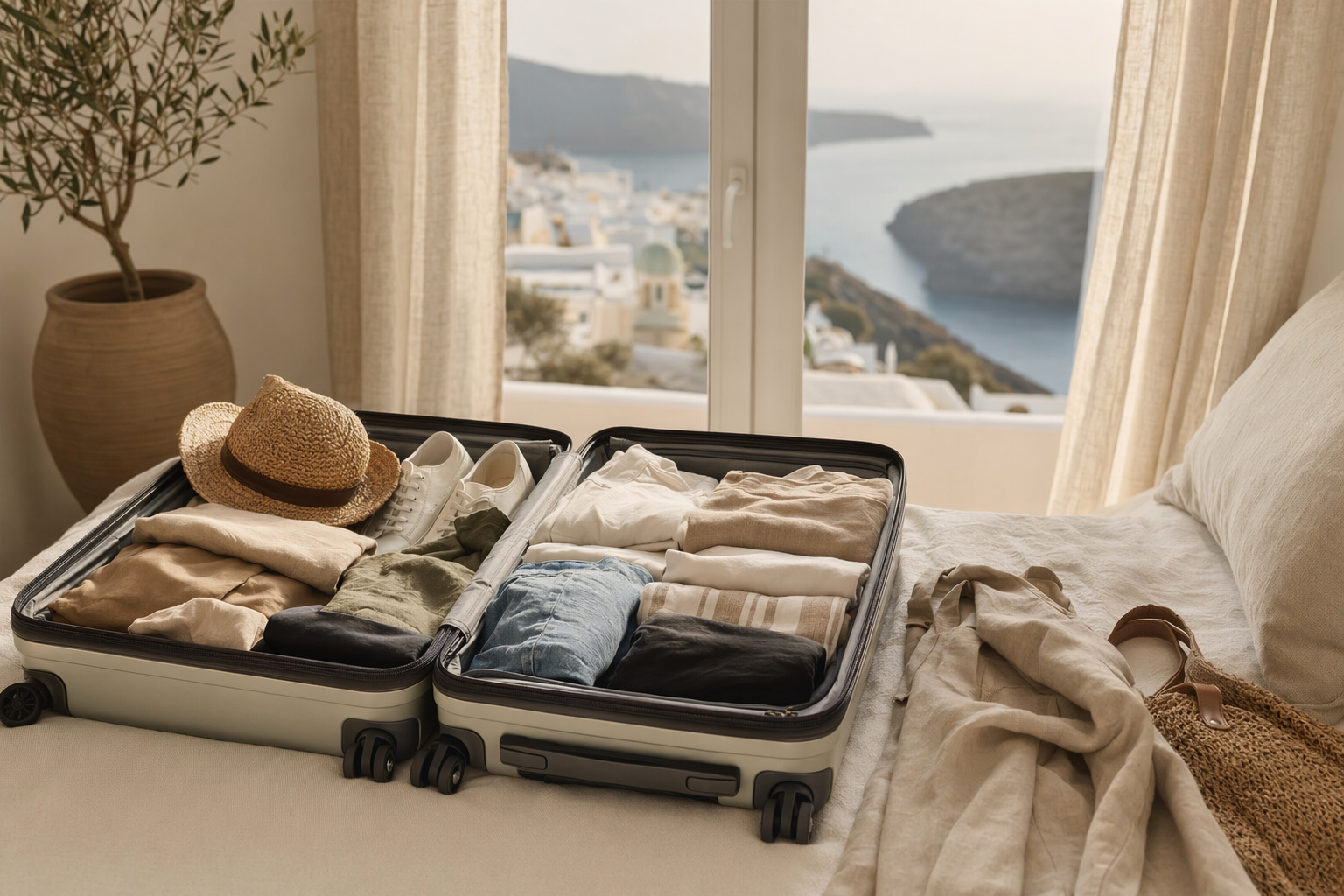
- Clothes in bag: one linen/cotton shirt, one kurta, one plain tee, one nicer top, one relaxed bottom, one skirt or shorts, one easy dress or co-ord.
- Layers: light jacket or cardigan, scarf/dupatta. For hills, replace with fleece and warmer jacket.
- Innerwear: enough for 7 days if you don’t want laundry stress, or 4 sets if you’ll wash. I usually carry 5, because life happens.
- Footwear: walking shoes plus slippers/sandals. If there’s a wedding or fancy dinner, okay, add one flat, but then remove something else.
- Extras: sunglasses, cap, compact umbrella in monsoon, minimal jewellery, laundry pouch, one small towel if needed.
This gives around 12 to 15 outfit combinations without trying too hard. Wear the shirt over the dress, tuck tee into skirt, kurta with pants, nicer top with relaxed bottom, overshirt with shorts, dress with scarf. It’s enough. More than enough, honestly.
What I stopped packing, finally
#I stopped packing multiple jeans. I stopped packing “maybe I’ll wear this” clothes. I stopped carrying big shampoo bottles because most places have shops nearby unless you’re going remote. I stopped packing three books, though this one still hurts me emotionally. I stopped packing new shoes because blisters can ruin a trip faster than bad hotel Wi-Fi.
I also stopped packing too many ethnic outfits unless the trip needs it. One kurta is useful. Five kurtas for a normal vacation? Not needed. Same with makeup. A small pouch is enough for me: sunscreen, kajal, lip balm or tint, compact, moisturiser. Sunscreen is non-negotiable, especially for beaches, deserts, and high-altitude places where sun feels soft but burns badly.
Seasonal tips that make capsule packing easier
#Best months depend on where you’re going. For Rajasthan and many North Indian culture trips, winter months are usually more comfortable than peak summer. For Goa and much of the west coast, winter is popular and prices rise, while monsoon is greener but wetter and sea conditions can be rough. For Himachal and Uttarakhand, spring and autumn are often lovely, while monsoon needs extra caution because of landslides and road delays. For Kerala, post-monsoon and winter are comfortable for many travellers, though hill stations like Munnar can get cool at night.
Peak season means accommodation prices jump and laundry may take longer because places are full. Long weekends are especially chaotic. If you’re travelling during festivals, weddings, New Year time, or school holidays, book stays early and pack one slightly nicer outfit because plans change. Off-season can be cheaper, but pack for rain, heat, closures, or transport delays.
A few safety and comfort notes, especially for solo travellers
#Pack light, but don’t pack careless. Keep one modest emergency outfit if you’re not sure about the destination. Share your stay details with someone. Use registered taxis or trusted ride apps where available. In remote places, ask locals about safe routes before wandering at night. For women travellers, I’d say choose accommodation reviews carefully, especially comments about location, lighting, staff behaviour, and transport access. A cheap room far away from the main area can become expensive and stressful after sunset.
Carry basic medicines, ORS, band-aids, period products if needed, and any prescription meds. In India, pharmacies are common in towns, but not always near beaches, treks, or small villages. Also, keep your valuables in one small crossbody or waist pouch during transit. When your luggage is smaller, you can actually keep an eye on it. Big advantage.
The emotional part nobody talks about
#Packing light feels weird at first. Like you’re underprepared. I used to stare at my half-empty bag and think, bas? That’s all? But then the trip begins and you realise freedom has weight. Literally. You walk faster. You take stairs without drama. You say yes to shared cabs. You don’t panic when check-in is late. You don’t waste morning energy choosing between seven tops that all don’t match the one trouser you packed.
And repeating outfits doesn’t make your trip less beautiful. The sunset doesn’t care. The chai stall uncle doesn’t care. Your friends may not even notice. What matters is whether you were comfortable enough to walk one more lane, sit by the river a little longer, climb that fort step, dance at the beach shack, or catch the early bus without repacking your entire life.
Final thoughts: pack light, but pack like yourself
#A 7-day travel capsule wardrobe is not about becoming some minimalist robot wearing beige forever. If you love colour, pack colour. If you love kurtas, build your capsule around kurtas. If you’re a sneaker person, wear sneakers. The only thing is, make every item earn its space. Choose clothes that match, dry fast, feel comfortable, and suit the place you’re going.
My honest advice? Try it once on a short trip. Don’t start with a remote winter trek or a wedding trip. Try it for Goa, Jaipur, Kochi, Rishikesh, Pondicherry, or even a 7-day workation. You’ll come back with notes, you’ll tweak it, and slowly you’ll find your own formula. Mine still changes. Sometimes I pack too little and buy a cheap tee. Sometimes I pack too much and curse myself. Travel is like that only.
But now, whenever I see someone struggling with two suitcases for one week, I feel that old pain in my shoulders. Pack lighter, yaar. Your back, your wallet, and your mood will thank you. And if you enjoy these practical, slightly real-life travel guides, keep browsing AllBlogs.in — I usually find some good ideas there before my own trips too.