The honest answer: the “best” sunscreen format is the one you’ll actually use enough
#Sunscreen sounds simple until you’re standing in the aisle staring at sticks, lotions, sprays, gels, milks, mineral formulas, chemical formulas, tinted ones, sport ones, baby ones, reef-conscious ones... and suddenly it feels like buying a small appliance. If you’ve ever wondered whether a sunscreen stick is better than lotion, or if spray sunscreen “counts,” you’re not being fussy. The format really can change how well sunscreen works in real life, because sunscreen protection depends heavily on applying enough, applying it evenly, and reapplying it at the right times.
Most dermatology organizations, including the American Academy of Dermatology, commonly recommend choosing a broad-spectrum sunscreen with SPF 30 or higher, plus water resistance if you’ll be sweating or swimming. Broad-spectrum matters because it means the product is designed to help protect against both UVA and UVB rays. UVB is more closely linked with sunburn, while UVA contributes to skin aging and also plays a role in skin cancer risk. No sunscreen blocks 100% of UV radiation, and sunscreen is only one part of sun protection, along with shade, hats, sunglasses, and clothing. Boring? A bit. Useful? Very.
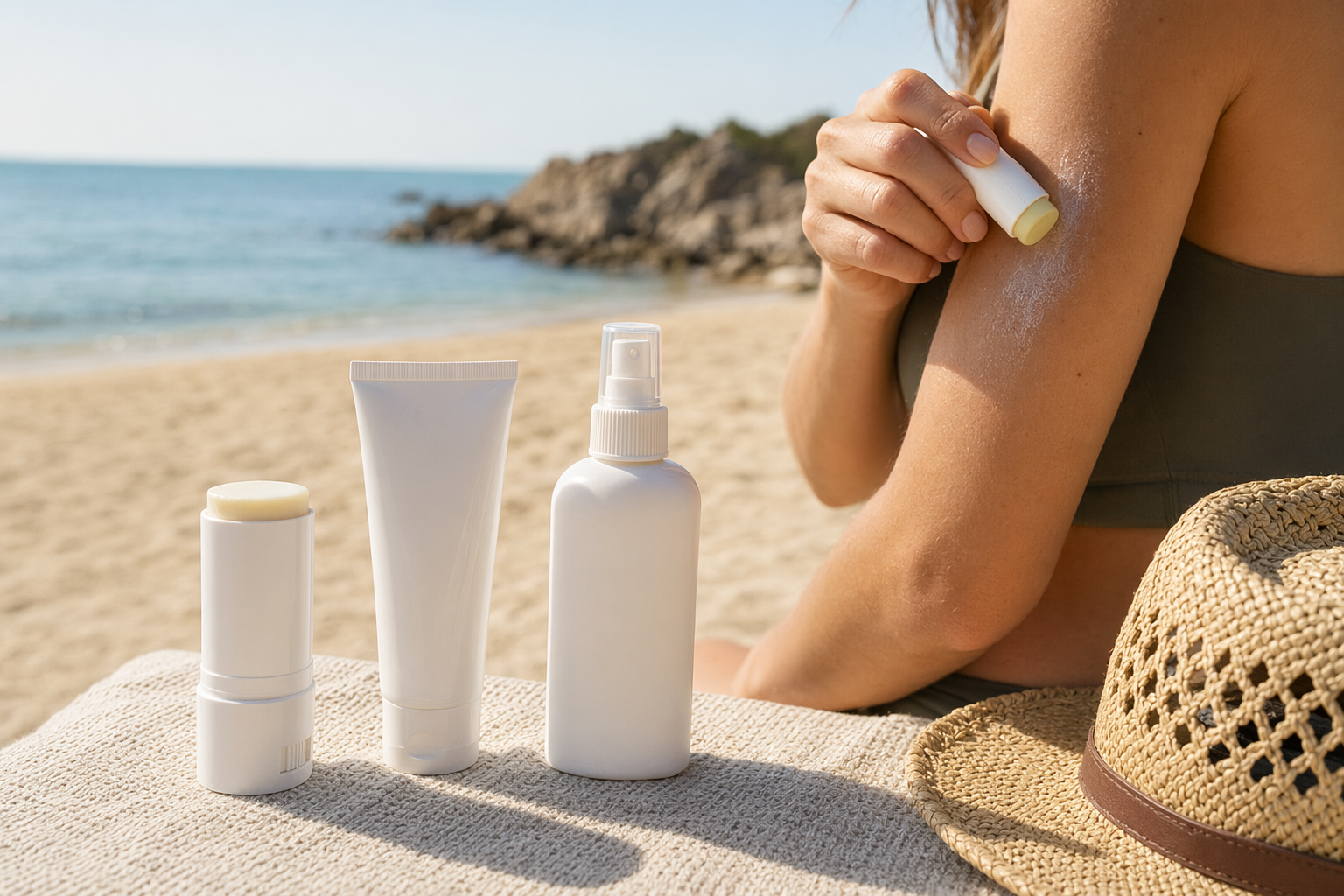
So, stick vs lotion vs spray. The short version: lotion is usually the easiest to use as a reliable full-body base, sticks are brilliant for small areas and reapplication, and sprays are convenient but easy to under-apply or inhale if used carelessly. There isn’t one perfect format for every body, every skin type, every climate, or every chaotic morning. And honestly, that’s kind of freeing. You don’t need the “best” sunscreen in theory. You need the format that fits your day without turning sun protection into a whole project.
Quick comparison: stick vs lotion vs spray sunscreen
#| Format | Best for | Main strengths | Main downsides | Good rule of thumb |
|---|---|---|---|---|
| Lotion or cream | Full face and body coverage | Easier to see where you applied, good for dry skin, often more even coverage | Can feel sticky, takes longer, may be annoying over makeup or body hair | Best default choice for the first application before going outside |
| Stick | Face, ears, lips if labeled for lips, around eyes, tattoos, kids’ noses, quick top-ups | Portable, less messy, less likely to leak, good for targeted areas | Easy to miss spots, needs multiple passes, not ideal for large body areas | Use several back-and-forth passes, then blend with fingers |
| Spray | Fast body reapplication, groups, beach bags, hard-to-reach areas with help | Convenient, lightweight feel, good for people who dislike rubbing heavy creams | Easy to underuse, can blow away in wind, inhalation risk, needs rubbing in | Spray until skin glistens, avoid breathing it in, rub in, don’t spray directly on face |
That table is the practical answer, but the details matter. A lotion that sits unused in a drawer does less for you than a spray you reapply properly. A stick that feels elegant on the face may be useless if you swipe it once like lip balm and call it done. A spray can be genuinely handy, but only if you use enough product and don’t treat it like perfume. Sunscreen is one of those wellness things where technique matters more than the pretty packaging.
Lotion sunscreen: the dependable workhorse
#Lotion, cream, milk, gel-cream, fluid, whatever the brand calls it, this format is usually the most dependable for getting even coverage. It spreads over larger areas, it’s easier to measure, and you can usually feel where it has gone. For the average adult body, dermatology guidance often uses the “one ounce” idea, roughly a shot glass full, for exposed skin. For the face and neck, many people use the two-finger method as a rough visual guide, though exact needs vary by face size, product texture, clothing coverage, and how generously you apply.
Lotions are especially useful for the first sunscreen application of the day, before a walk, commute, playground visit, beach trip, outdoor workout, gardening, or basically any time the UV index is not joking around. They’re also easier to use carefully on areas people forget: the back of the neck, tops of ears, hairline, tops of feet, backs of hands, and the edge of clothing. Those tiny missed strips can burn fast, and they are so annoying later.
The downside is comfort. Some lotions feel greasy, heavy, chalky, stingy near the eyes, or weird under makeup. People with acne-prone skin may hate richer creams. People with dry skin may love them. People with deeper skin tones may find some mineral lotions leave a white or gray cast, though tinted mineral formulas can help. If the format is right but the formula is wrong, it’s worth looking at ingredients and filter type too. A related guide, Mineral vs Chemical Sunscreen: Which One Should You Buy for Daily Use?, can help if you’re stuck between mineral and chemical formulas after choosing the format.
Who lotion is usually best for
#- Anyone who wants the most reliable full-body application, especially before extended outdoor time
- People with dry skin who may like creamier textures, though this depends on the formula
- Families applying sunscreen before leaving home, because it’s easier to cover larger areas calmly
- People who tend to miss patches with sprays or sticks
If sunscreen often feels miserable on your skin, don’t assume you’re “bad” at sun care. Texture preference is real. Fragrance, alcohol content, filters, finish, and even climate can change how a product feels. A sunscreen that feels light in an air-conditioned bathroom may feel like cling film during humid weather. Very rude, but true.
Sunscreen sticks: small, tidy, and surprisingly useful
#Sunscreen sticks are the format people often underestimate. They’re compact, don’t usually leak, are easy to keep in a bag, and can be great for reapplying on the face without getting lotion all over your hands. For kids, athletes, commuters, hikers, and anyone who hates mess, sticks can be a sanity-saver. They’re especially good for the nose, cheekbones, ears, hairline, around the eyes, and the backs of hands.
But there’s a catch. A single cute swipe is not enough. The American Academy of Dermatology commonly advises applying stick sunscreen by making several passes over the area, often described as four passes back and forth, then rubbing it in to make sure coverage is even. That rubbing-in part matters because the stick can skip over skin texture, hair, dry patches, or curved areas. Basically, if you use it like a crayon and never blend, you may get patchy coverage.
Sticks are not usually the easiest choice for full legs, arms, and torsos. You can do it, sure, in the same way you can eat soup with a fork if you are very committed. But most people won’t apply enough because it takes too long. Where sticks shine is targeted coverage and reapplication. A stick over the bridge of the nose during a long walk? Great. A stick for the whole family’s beach-day first layer? Maybe not the best use of anyone’s patience.
Who sunscreen sticks are usually best for
#- People who need quick, portable reapplication on the face, ears, neck, or hands
- Anyone who wants less mess around the eyes, though eye stinging can still happen depending on the formula
- Parents and caregivers applying sunscreen to small, squirmy areas like noses and cheeks
- People who wear makeup and want a more controlled top-up, although it may still disturb makeup a little
One careful note: if you’re using a sunscreen stick on lips, check that it’s meant for lips or use an SPF lip balm. Regular sunscreen near the mouth may taste awful and may not be formulated for that use. Also, if you have a skin condition, very reactive skin, a history of allergies, or you’re using prescription skin treatments that increase sun sensitivity, it’s sensible to ask a dermatologist or qualified healthcare professional what kind of product is appropriate.
Spray sunscreen: convenient, but only if you use it properly
#Spray sunscreen is popular for obvious reasons. It’s fast. It feels lighter. It’s easier to convince a restless kid, partner, friend, or frankly yourself to stand still for ten seconds instead of enduring a full lotion rubdown. Sprays can be especially convenient for reapplication on arms, legs, and backs, though for the back you still need help if you want even coverage.
The issue is that spray sunscreen is very easy to under-apply. People often mist it lightly, miss entire areas, let wind carry half of it away, or forget to rub it in. The FDA has considered sunscreen sprays as a format used by consumers, and dermatology groups generally say they can be effective when applied correctly, but technique is the whole game. A proper spray application usually means holding the nozzle close enough to the skin, spraying until the skin visibly glistens, and then rubbing it in. If the skin looks barely touched, it probably is barely protected.
There’s also inhalation to think about. Don’t spray sunscreen directly onto the face. Spray it into your hands first, away from wind and flames, then apply to the face while avoiding the eyes and mouth. Try not to breathe in the mist. This matters even more for children, people with asthma or breathing conditions, or anyone who is sensitive to aerosols. If someone has respiratory symptoms that are severe, persistent, worsening, or unusual, they should seek medical advice rather than assuming it’s “just sunscreen.”
Who spray sunscreen is usually best for
#- People who need fast reapplication on body areas and are willing to rub it in properly
- Outdoor activities where lotion reapplication feels too messy, like sandy beach days or sports breaks
- Adults applying sunscreen to hard-to-reach body areas with another person’s help
- People who dislike heavy lotion textures but still need broad-spectrum SPF protection
Spray sunscreen is not ideal in windy conditions, inside small enclosed spaces, or near open flames. Aerosol products can be flammable before they fully dry, so it’s smart to keep them away from grills, cigarettes, candles, and heat sources. It sounds obvious until summer chaos happens and someone applies spray sunscreen beside a barbecue. Don’t do that.
The SPF number matters, but not in the way people think
#SPF stands for sun protection factor, and it mainly refers to protection against UVB rays, the rays strongly associated with sunburn. SPF 30 filters about 97% of UVB radiation when used correctly. SPF 50 filters about 98%. That difference sounds small, but higher SPF can be useful in real life because most people apply less sunscreen than testing conditions require. Still, SPF 100 does not mean “all-day armor,” and it definitely does not mean you can skip reapplication.
For everyday use, SPF 30 or higher is commonly recommended. For long outdoor exposure, high UV index days, photosensitive conditions, certain medications, a history of skin cancer, melasma, post-inflammatory hyperpigmentation, or intense sun exposure, a healthcare professional may recommend more specific protection habits. And yes, people of all skin tones need sun protection. More melanin can reduce sunburn risk, but it does not remove the risk of UV damage, skin cancer, uneven pigmentation, or sun-related aging changes.
Water resistance is another label to notice. In many markets, sunscreens labeled water resistant specify 40 or 80 minutes. That does not mean waterproof. It means the product was tested to maintain its SPF for that amount of time in water or sweating conditions. After swimming, heavy sweating, or towel drying, reapply. Towels are sunscreen thieves. They take your SPF and leave you with false confidence.
Application is where most sunscreen routines fall apart
#The best SPF format is partly about human behavior. People don’t usually fail sunscreen because they don’t care. They fail because mornings are rushed, skin feels sticky, kids are wriggling, makeup is already on, the bottle is in another bag, or nobody wants to be the person slowing down the beach trip. That’s why format matters. It lowers or raises the friction.
- Apply before sun exposure when possible. Many sunscreens work best when applied about 15 minutes before going outside, though label directions vary.
- Use enough. Lotion should be generous, sticks need multiple passes, and sprays should make the skin glisten before you rub them in.
- Reapply at least every two hours outdoors, and sooner after swimming, sweating, or towel drying.
- Don’t forget weird little areas: ears, scalp part, hairline, lips, eyelids if appropriate, neck, chest, tops of feet, and backs of hands.
- Pair sunscreen with shade, UPF clothing, wide-brim hats, and UV-blocking sunglasses. Sunscreen is important, but it’s not a force field.
For babies under 6 months, many pediatric and dermatology sources emphasize shade, protective clothing, and hats as first-line protection, with sunscreen used only on small exposed areas when adequate clothing and shade are not available, depending on local medical guidance. For infants, children with eczema, people with allergies, and anyone with a diagnosed skin condition, checking with a pediatrician or dermatologist is a good idea.
Face, body, makeup, sweat: matching the format to your actual day
#For the face, many people prefer a lotion, gel-cream, serum-like SPF, or lightweight fluid in the morning because it spreads evenly and can sit under makeup. A stick can work well for midday top-ups on high points of the face, although it may move foundation or powder. Spray sunscreens marketed for the face exist, but spraying directly onto the face is still not a great habit. Apply into hands first, then pat or spread, and avoid inhaling it.
For the body, lotion is often best before you leave the house, especially if you’re covering a lot of skin. Spray can be useful for reapplication, but again, use enough and rub it in. Sticks are helpful for tattoos, scars, ears, noses, and small exposed areas. If you have scars, a history of skin cancer, melasma, or pigment changes that worsen with sun, ask a dermatologist for personal guidance. General sunscreen advice is helpful, but those situations may need more tailored care.
For sweaty workouts, look for broad-spectrum SPF 30 or higher with water resistance. Gel or sport lotions can feel less heavy, and sticks can be handy around the eyes because they may migrate less than runny lotion, though this depends on formula. If sunscreen repeatedly stings your eyes, switching format or filters may help, but persistent eye irritation should be discussed with a qualified professional, especially if there is redness, swelling, vision change, or pain.
For travel, sticks are wonderfully low-drama because they don’t spill and usually avoid the “liquid” headache. Lotions and sprays may be subject to airline cabin liquid or aerosol rules, which vary by country and airport. If you’re flying from or within India and packing sunscreen with makeup or skincare, Airport Beauty Liquids India: Makeup & Skincare Guide is useful for sorting out creams, aerosols, carry-on limits, and the usual last-minute toiletry panic.
Skin type and comfort: because sunscreen you hate won’t become a habit
#For oily or acne-prone skin, lightweight lotions, gels, fluids, and non-comedogenic labels may be more comfortable. “Non-comedogenic” is not a guarantee that a product will never break anyone out, but it can be a reasonable place to start. Sprays may feel light on the body, though facial sprays can still irritate or clog some people depending on ingredients. Sticks can be waxy, which some acne-prone users dislike, while others love the controlled application.
For dry or mature skin, creamier lotions may feel better and can sit nicely with moisturizers. A sunscreen stick can grab on flaky areas if skin is very dry, so moisturizing first may improve comfort. For sensitive skin, fragrance-free mineral sunscreens are often suggested as a starting point, but “mineral” does not automatically mean irritation-free. People can react to many ingredients, including botanicals and preservatives. Natural-sounding does not always mean gentler. Annoying, but true.
For deeper skin tones, the best format may also depend on finish. Some mineral lotions and sticks leave a visible cast, especially if they contain zinc oxide or titanium dioxide without tint. Chemical sunscreens and newer tinted mineral options may blend more easily. Tinted sunscreens with iron oxides may also help with visible light protection, which can matter for some pigmentation concerns, but this is an area where personal dermatology advice is useful if hyperpigmentation is persistent or distressing.
Common mistakes people make with each format
#With lotion, the biggest mistake is using too little. A pea-sized amount for the whole face and neck is usually not enough. Another mistake is applying sunscreen only when it’s hot. UV rays can still reach skin on cool days, cloudy days, and through some windows, especially UVA. Heat and UV are not the same thing.
With sticks, the biggest mistake is swiping once and assuming coverage is perfect. Sticks need repetition and blending. They’re also easy to use unevenly around textured areas like the nose, hairline, and ears. If you are using a stick on a child, it may help to make it a silly little routine, but still rub it in. Cute stripes are not the goal.
With sprays, the biggest mistakes are spraying from too far away, applying in wind, not rubbing in, and inhaling the product. Another very common one: spraying the air dramatically and walking through it like perfume. That is not sunscreen application. That is SPF theater.
The most protective sunscreen routine is not the fanciest one. It’s the one that gives you enough broad-spectrum coverage, gets repeated, and fits your life without making you dread it.
So... which format should you buy?
#If you want one simple answer, start with a lotion or cream for your main sunscreen. It’s usually the most reliable for full coverage. Then, if your budget allows, add a stick for face and small-area reapplication. If you love sprays, use them as a convenient body option, but treat them seriously: spray generously, avoid inhaling, rub in, and don’t use them as a vague mist.
A realistic routine might look like this: lotion on face, neck, arms, and legs before leaving home. Stick in the bag for nose, ears, hands, and cheekbone top-ups. Spray for body reapplication at the park or beach, used carefully and rubbed in. That combo is not mandatory, of course. It’s just practical. Some people do perfectly well with one lotion. Some people rely on sticks because they’re commuting, wearing makeup, or managing sensory preferences. The “right” answer is the one that protects your skin without becoming so annoying that you quit.
If you have a personal or family history of skin cancer, use medications that increase sun sensitivity, have a condition such as lupus, are managing melasma or severe hyperpigmentation, have frequent sunburns, or notice a new, changing, bleeding, or non-healing skin spot, please don’t rely on blog advice alone. A qualified healthcare professional or dermatologist can help you choose protection that fits your risk and can evaluate skin changes properly. Urgent or unusual symptoms deserve timely medical care.
Final take: lotion for coverage, stick for precision, spray for convenience
#Lotion is the dependable base. Stick is the tidy little helper. Spray is the convenient friend who needs supervision. All three can have a place in a smart sun-care routine, as long as the product is broad-spectrum, SPF 30 or higher, applied generously, and reapplied when needed. The best SPF format is not about winning an internet debate. It’s about making sun protection easier to do on normal, messy, busy days.
And maybe that’s the wellness lesson hiding inside the sunscreen aisle: the best habit is usually the one you can repeat without drama. Choose the texture you’ll use, apply more than you think, reapply sooner than you want to, and add hats and shade because skin deserves backup. For more practical health and beauty guides that don’t make daily routines feel like homework, you can keep browsing AllBlogs.in.