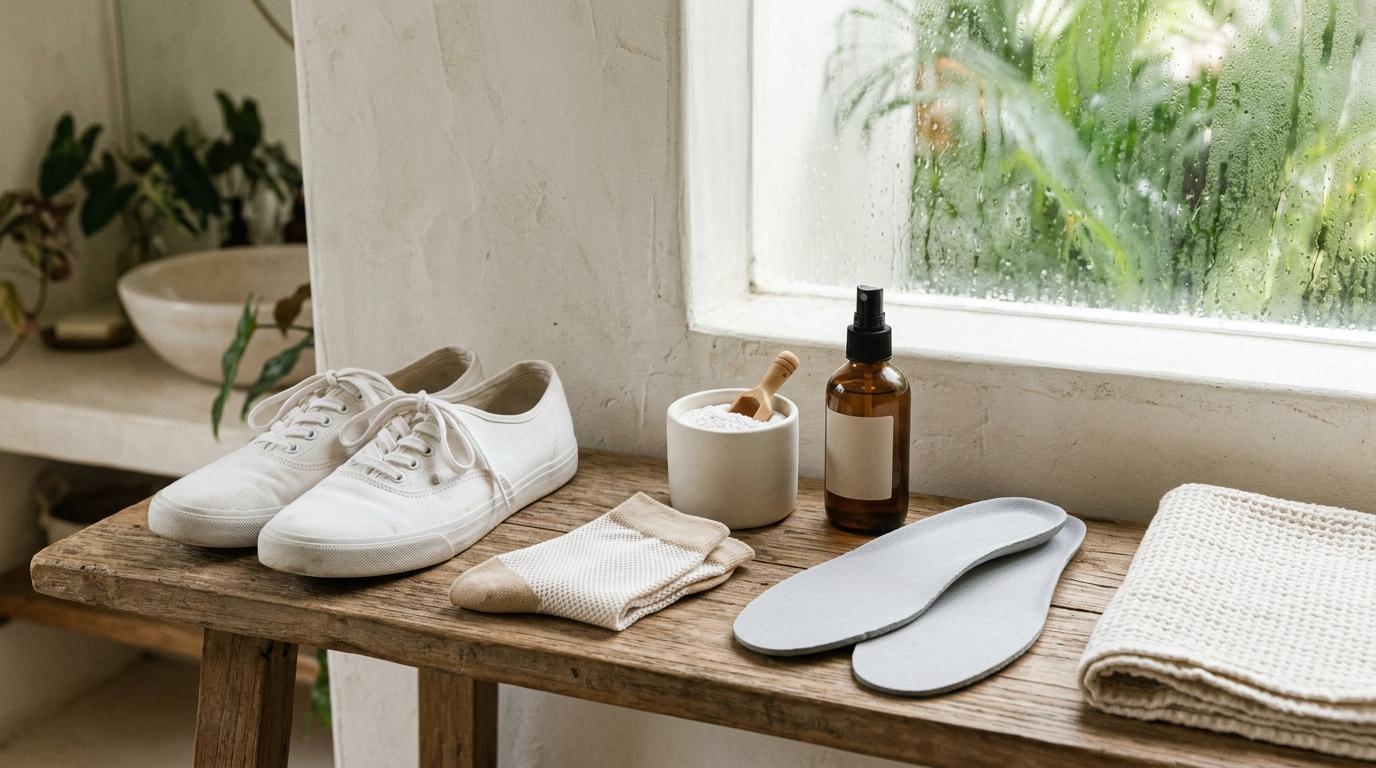
Direct answer: In humid weather, sweaty feet usually need a routine, not just one product. Foot powder helps when your feet feel lightly damp. Shoe spray helps when the shoe itself smells. Odour-control insoles help when your daily shoes stay moist inside. But clean socks, proper drying, and rotating shoes often make the biggest difference. If sweating is constant, painful, itchy, rashy, or comes with peeling, wounds, or fungal-looking signs, speak to a dermatologist or podiatrist.
Sweaty feet in humid weather are common. It does not automatically mean you are unhygienic, and it is not something to be embarrassed about. Heat, closed shoes, long commutes, office hours, college days, gym bags, socks, rain, and damp air all work together. Your feet basically spend the day inside a warm, closed box.
In India, this gets especially annoying during the monsoon. But it is not only an India problem. Anyone dealing with humid summers, crowded buses or trains, long workdays, or non-breathable shoes has probably been through it. Your feet feel wet. Your socks smell odd. Your shoes start smelling even though you bathe every day.
So what should you actually use: foot powder, shoe spray, or odour-control insoles?
The honest answer is: first figure out where the problem is coming from.
If your feet feel wet, focus on drying, clean socks, and maybe foot powder or a foot antiperspirant. If your shoes smell, treat the shoes with spray and proper drying. If your shoes stay damp inside, odour-control insoles can help. And if you wear the same pair every single day in humid weather, no product will work that well unless your shoes get enough time to dry.
Why feet and shoes smell worse in humid weather
#Sweat itself is not always the main villain. The smell usually starts when sweat sits inside socks and shoes for hours. Add warmth, moisture, skin bacteria, fabric, and a closed shoe, and the odour builds up quickly.
That is why a quick spray in the morning often does not solve the problem. Maybe you spray your feet, but your shoes are still damp and smelly. Or you spray your shoes but wear yesterday’s socks again. The real fix is not glamorous, but it works: treat the full setup — foot, sock, and shoe.
The American Academy of Dermatology notes that antiperspirants can help reduce sweating, including on the feet. The American Podiatric Medical Association also discusses excess sweating, foot odour, and how damp closed shoes can increase foot problems. That does not mean every sweaty-foot issue is medical. But if you have itching, rash, peeling, wounds, pain, or constant sweating, don’t keep hiding it with fragrance.
There is also a clear rise in demand for personal-care products that solve everyday problems. NielsenIQ’s 2026 reporting points to growing beauty and personal-care demand in India, and you can see that in stores too. People are not just buying fancy grooming products anymore. They want practical things that help with heat, sweat, travel, and daily discomfort.
The simple rule: treat the foot, the sock, and the shoe
#Before choosing a product, remember this:
- Feet create moisture
- Socks hold moisture
- Shoes trap moisture
- Humidity slows drying
So if you only fix one part, the smell often comes back.
A good routine does not mean buying every product on the shelf. For many people, it simply means:
- Dry your feet properly.
- Wear clean socks.
- Let shoes dry fully after use.
- Rotate shoes when possible.
- Use the right product for the actual problem — powder, spray, or insoles.
Now let’s compare them properly.
Comparison table: foot powder vs shoe spray vs odour-control insoles
#Foot powder: useful, but not a miracle
#Foot powder is usually the first thing people try. It is affordable, easy to find, and familiar. It can help if your feet feel slightly damp or sticky before you wear socks.
What foot powder does well
#Foot powder can:
- Absorb light surface moisture
- Make feet feel fresher at the start of the day
- Reduce some friction inside socks
- Help with mild sweating
For mild sweat, especially when your shoes are already clean and dry, powder may be enough.
Where foot powder struggles
#In very humid weather, especially during monsoon commutes or long days in closed shoes, powder can mix with sweat. Then it may become clumpy or pasty inside your socks. That is not comfortable.
Also, if your shoes already smell, foot powder alone will not fix the shoe. It may make your feet feel dry for a while, but the odour can still come back from the shoe lining or insole.
Use it lightly. More powder does not always mean more freshness. Sometimes it just means more mess.
Best use
#Use foot powder when:
- Your feet are clean and fully dry
- Sweat is mild
- Your shoes are already dry
- Your skin is not irritated, cracked, or wounded
If the main issue is shoe smell, powder is probably not your first answer.
Shoe spray: best when the shoe itself smells
#Shoe spray is meant for the shoe, not always for your feet. This is important.
A shoe spray and a foot spray are not automatically the same thing. Some sprays are made for fabric, foam, leather lining, or shoe interiors. That does not mean they are safe for skin. Always read the label, even if the bottle looks harmless.
What shoe spray does well
#Shoe spray can:
- Freshen the inside of shoes
- Reach the toe box and inner lining
- Reduce trapped odour after a long day
- Fit easily into a night routine
It is especially useful for office shoes, sneakers, loafers, school shoes, college shoes, and any closed footwear worn for long hours.
The common mistake with shoe spray
#The biggest mistake is spraying shoes in the morning and wearing them immediately.
That often leaves the inside damp, and dampness is exactly what you are trying to reduce. Shoe spray works better when the shoe has time to air out. Spray after removing your shoes, then leave them open in a ventilated area.
India Today’s July 7, 2026 monsoon shoe odour coverage also highlighted the importance of drying habits during wet weather. Products help more when shoes are actually allowed to dry.
Best use
#Use shoe spray when:
- Shoes smell even after changing socks
- You wear closed shoes for many hours
- The toe box or lining smells stale
- You can let the shoes dry overnight
- You are not spraying it directly on skin unless the label clearly says it is skin-safe
Odour-control insoles: useful for shoes that stay damp
#Odour-control insoles sit inside the shoe and create a removable layer between your sock and the shoe bed. They can help when sweat keeps getting absorbed into the original insole.
Some odour-control insoles use activated charcoal, washable fabric layers, moisture-absorbing materials, or other odour-control technology. How well they work depends on the product, your shoe type, how much you sweat, and whether you actually dry the shoes after use.
What insoles do well
#Odour-control insoles can:
- Absorb some moisture inside the shoe
- Reduce sweat build-up in the original shoe bed
- Make shoes easier to air out
- Be removed, washed, aired, or replaced depending on the type
They can be helpful for work shoes, college shoes, trainers, sneakers, and daily commute shoes.
Where insoles may not work
#They are not magic. If your socks are wet, your shoes never dry, and you wear the same pair every day, insoles will struggle.
They can also affect shoe fit. A thick insole may make formal shoes or narrow sneakers feel tight. If your toes already feel cramped, adding another layer may make things worse.
Best use
#Use odour-control insoles when:
- The shoe bed smells
- Factory insoles are removable
- The shoe has enough room
- You can air, wash, or replace the insole as directed
So, which one should you choose?
#Here is the easiest way to decide.
Choose foot powder if:
#- Your sweating is mild
- You want your feet to feel drier in socks
- Your shoes are not badly smelly
- You want something low-cost and simple
Choose shoe spray if:
#- The shoe itself smells
- You wear closed shoes for long hours
- The toe box or lining smells stale
- You can spray at night and let shoes dry
Choose odour-control insoles if:
#- Your shoe bed stays damp
- Daily shoes smell even after airing
- You want a removable layer inside the shoe
- Your shoes have enough space
Choose sock changes if:
#- Feet feel okay in the morning but wet by afternoon
- You travel in rain or humidity
- You spend long hours at college, office, or outside
- You want the cheapest practical reset
Choose shoe rotation if:
#- You wear the same shoes every day
- Shoes never dry overnight
- Smell returns quickly after cleaning
- You have at least one alternate pair
For many people, the best combination is simple: dry feet, fresh socks, shoe spray at night, and shoe rotation. Add powder or insoles only if you need them.
A practical humid-weather foot freshness routine
#This is not a perfect influencer routine. It is for real mornings, sweaty commutes, sudden rain, and tired evenings.
Night routine, after removing your shoes
#1. Open the shoes properlyDo not just kick them into a closed cupboard. Open the laces, pull the tongue forward, and let air get inside.
2. Remove insoles if possibleIf the insoles are removable, take them out and air them separately. This helps both the shoe and the insole dry faster.
3. Use shoe spray if the shoe smellsSpray according to the label. Focus on the toe area and inner lining, but don’t soak the shoe.
4. Dry in an open, ventilated placeKeep shoes under a fan, near airflow, or in a dry open corner. Avoid stuffing damp shoes into a gym bag or closed cupboard.
5. Rotate shoes if you canIf you own another pair, wear that the next day. Even one extra day of drying can help a lot in humid weather.
Morning routine, before socks and shoes
#1. Wash feet normallyClean between the toes too. Sweat and dampness often sit there.
2. Dry feet completelyThis step gets rushed a lot. Dry the soles, heels, and between the toes before putting on socks or powder.
3. Apply product only if neededUse foot powder for mild dampness. Use a skin-safe foot spray or antiperspirant only as directed. The AAD notes that antiperspirants can reduce sweating, but avoid strong products on broken or irritated skin.
4. Wear clean socksDo not reuse yesterday’s socks in humid weather, even if they seem “not that bad.” Socks hold sweat and smell.
5. Check the shoeIf the inside feels damp, wear another pair if possible.
Midday routine for office, college, or commute days
#1. Carry spare socksThis is one of the most useful habits. A fresh pair of socks can make your feet feel normal again.
2. Change after rain or heavy sweatingIf your socks are wet by lunch, change them. Don’t wait till evening.
3. Let feet breathe briefly if possibleIf your setting allows it, remove shoes for a few minutes in a private or appropriate place. Even short airing helps.
4. Don’t add powder into wet socksPowder on wet socks can clump. Change the socks first.
Buying checklist: socks, shoes, powders, sprays, and insoles
#You do not need to buy everything. Start with the basics, then add what solves your actual problem.
Socks checklist
#Look for:
- Clean socks for every wear
- Breathable cotton blends, bamboo blends, or moisture-managing fabrics
- Socks that are not too tight around the toes
- A spare pair for monsoon or long commute days
Be careful with:
- Reusing socks in humid weather
- Very thick socks in tight shoes
- Socks that stay damp for hours
- Cheap synthetic socks that trap heat and feel clammy
No sock fabric is perfect for everyone. The best one is the one that stays comfortable, dries reasonably well, and does not make your shoes tight.
Shoes checklist
#Look for:
- Breathable materials where your dress code allows
- Removable insoles
- Enough toe room
- Shoes that can dry fully between wears
- A backup pair for rainy weeks
Be careful with:
- Wearing the same closed shoes daily
- Storing damp shoes in closed cupboards
- Tight shoes that squeeze the toes together
- Non-breathable shoes during long humid commutes
For monsoon days, drying habits matter as much as the product. If a shoe stays damp inside, smell usually comes back.
Foot powder checklist
#Look for:
- Talc-free options if you prefer them
- Light texture that does not cake quickly
- Clear usage directions
- Minimal fragrance if your skin is sensitive
Be careful with:
- Applying powder on wet feet
- Using too much
- Applying on cuts, rashes, or irritated skin
- Expecting powder to fix a smelly shoe by itself
Shoe spray checklist
#Look for:
- A product clearly labelled for shoes
- Drying-time instructions
- Compatibility with your shoe material
- A scent level you can tolerate
Be careful with:
- Spraying shoes right before wearing
- Using shoe spray on feet unless the label says it is skin-safe
- Over-soaking the shoe
- Using strong fragrance to hide a dampness problem
Foot spray or antiperspirant checklist
#Look for:
- Clear skin-safe labelling
- Directions for use on feet
- Fragrance level that suits your skin
- Antiperspirant wording if sweat reduction is the goal
Be careful with:
- Applying on broken skin
- Using on active rashes
- Continuing after burning, itching, or redness
- Treating persistent sweating as only a grooming issue
If sweating is persistent or disruptive, speak to a dermatologist or podiatrist.
Odour-control insoles checklist
#Look for:
- Correct shoe size
- Trim-to-fit instructions if needed
- Washable or replaceable design
- Moisture-absorbing or odour-control materials
- Thickness that does not make shoes tight
Be careful with:
- Thick insoles in already tight shoes
- Leaving removable insoles damp inside the shoe
- Using worn-out insoles for too long
- Assuming insoles replace sock changes and shoe drying
What not to do in humid weather
#Some habits make sweaty feet worse, even if you use decent products.
- Do not wear damp shoes again the next morning if you can avoid it.
- Do not reuse sweaty socks.
- Do not spray shoes and immediately put them on.
- Do not use shoe spray on skin unless it is made for skin.
- Do not keep wet shoes in a closed bag.
- Do not cover smell only with heavy perfume.
- Do not ignore rash, peeling, pain, wounds, or persistent sweating.
Simple boring habits often beat expensive products.
Safety notes: when to pause products and get help
#Most sweaty-foot routines are grooming habits, not medical treatment. Still, skin can react, especially in humid weather.
Stop using a product and consider professional advice if you notice:
- Burning, itching, redness, or irritation
- Rash or peeling that does not settle
- Broken skin, cuts, or open wounds
- Pain, swelling, or tenderness
- Signs that look like a fungal infection
- Persistent sweating that feels hard to manage
- Allergy-like reactions to fragrance, powder, spray, or insole materials
Do not apply strong sprays, antiperspirants, or fragranced powders to broken skin. If symptoms continue, consult a dermatologist or podiatrist. Powders, sprays, deodorizers, and insoles can help with freshness, but they are not a diagnosis or cure.
Practical product combinations for common situations
#For monsoon commutes
#Use:
- Clean socks
- Spare socks in your bag
- Shoe spray at night
- Shoe rotation when possible
- Removable insoles if shoes stay damp
Skip:
- Heavy powder on already wet feet
- Wearing the same damp shoes daily
For office shoes
#Use:
- Thin breathable socks
- Shoe spray after work
- Shoe trees or open-air drying if available
- Odour-control insoles if the shoe bed smells
Skip:
- Spraying formal shoes right before leaving
- Thick insoles that make shoes tight
For college sneakers
#Use:
- Sock changes on long days
- Shoe spray after wear
- Airing under a fan
- Washable or removable insoles if suitable
Skip:
- Leaving shoes in a backpack while damp
- Reusing sports socks
For mild sweaty feet
#Use:
- Proper drying after washing
- Fresh socks
- Light foot powder if comfortable
Skip:
- Buying multiple products before fixing socks and drying habits
For strong shoe smell
#Use:
- Shoe spray at night
- Full drying time
- Removable insoles
- Shoe rotation
Skip:
- Only applying foot powder while the shoe remains smelly
Final verdict: foot powder, shoe spray, or insoles?
#If you want the easiest decision:
- Foot powder is best for light moisture on feet.
- Shoe spray is best when the shoe itself smells.
- Odour-control insoles are best when daily shoes stay damp inside.
- Sock changes are the cheapest reset during humid days.
- Shoe rotation makes every product work better.
In humid weather, the winning routine is not dramatic. Dry your feet, wear clean socks, dry your shoes, rotate pairs when possible, and choose the product that matches the real problem. Most days, that is enough for everyday freshness.