The first time I got fooled by an airport exchange counter
#My first proper lesson in “foreign currency management” happened at Bangkok airport, and it was not some grand financial gyaan. It was me, half sleepy after a red-eye from India, standing with my backpack, thinking I’m very smart because I had compared flight prices for 3 days but forgot to arrange Thai baht properly. Classic Indian traveller behavior, no? We’ll bargain ₹200 on hotel booking but lose ₹2,000 at currency exchange because we’re tired and hungry.
I exchanged cash at the airport counter because I needed money for a SIM card, snacks, and taxi. The board rate looked okay from far. Then the lady typed the amount, gave me notes, and I walked away feeling normal. Only later, at my hostel in Sukhumvit, I checked the real rate online and did the maths. Arre yaar. The difference was painful. Not robbery exactly, but that slow silent airport tax on confused travellers. Since then, I’ve tested airport currency exchange, ATMs abroad, forex cards, credit cards, and even that one friend who says “bro just use UPI everywhere now” like we’re in Koramangala.
So this post is basically the advice I wish someone had given me before my first few international trips from India. Airport currency exchange vs ATM abroad — which is better for cash? Short answer: for most Indian travellers, ATM abroad is usually better than airport exchange, but only if you use it correctly. Long answer is a little messy, because fees, bank charges, destination, safety, arrival time, and your own panic level all matter.
Airport exchange counters are convenient, but convenience has a cost
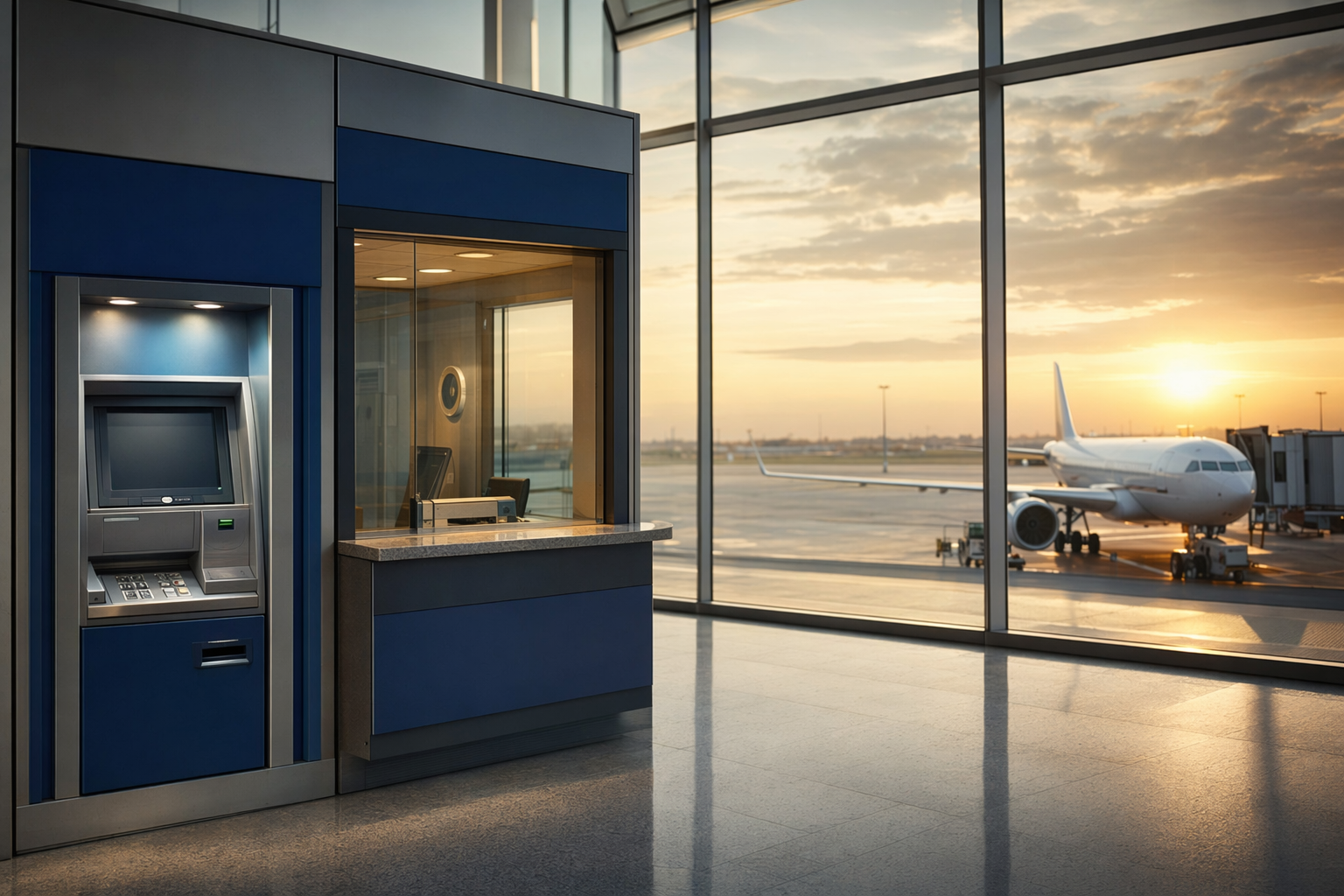
#Let’s be honest. Airport currency exchange counters are not evil. They are useful. When you land at midnight in Vietnam or early morning in Istanbul and your phone battery is at 9%, your brain doesn’t want to calculate forex spreads. You just want local cash, water, and transport to the hotel. Airport counters exist exactly for that moment.
But airport exchange desks usually have poorer exchange rates compared to city exchange shops or card network rates used by ATMs. Sometimes they say “zero commission”, which sounds nice, but the margin is hidden in the rate itself. Like if the real market rate is one thing, they’ll give you a slightly worse rate, and that difference is their earning. Fair enough for them, bad-ish for us.
In Dubai airport, I once changed a small amount of dirhams because my prepaid airport transfer guy was asking for parking cash. The counter was quick, professional, all good. But the rate was not cute. Same in Europe, especially at big airports and train stations. Those exchange kiosks with bright boards are mostly built for emergency convenience, not savings.
- Use airport exchange only for small emergency cash after landing, not your full trip budget.
- Avoid exchanging INR directly abroad if the destination doesn’t commonly handle rupees. Rates can be quite sad.
- If you must exchange at airport, compare 2-3 counters if available. Sometimes the difference is silly-big.
- Don’t get distracted by “no commission” signs. Check the final amount you recieve.
ATM abroad: usually better, but not automatically cheap
#ATMs abroad can be the best cash choice because they often use Visa/Mastercard/RuPay network conversion rates, which are generally closer to the actual exchange rate than airport cash counters. But there are layers of fees. Your Indian bank may charge an international ATM withdrawal fee. The foreign ATM operator may add its own fee. Your card may charge a forex markup, often around 2% to 3.5% depending on the card and bank. And then there is the biggest villain: dynamic currency conversion, or DCC.
DCC is when the ATM asks, “Do you want to be charged in INR?” Sounds comforting, right? Don’t fall for it. Almost always, choose to be charged in the local currency. If you accept INR conversion at the ATM or card machine, the ATM’s own conversion rate kicks in, and that can be worse. I made this mistake in Prague, because the screen was too friendly. It literally showed INR amount and I thought, wah transparency. Later I realised transparency also can slap you.
My current rule is simple: withdraw from an ATM attached to a proper bank branch, during daytime if possible, choose local currency, and take enough cash for 3-4 days so I’m not paying ATM fees again and again. Not too much cash, because carrying a fat bundle while hunting for street food is also not smart. Somewhere in the middle. Indian parent-approved but not paranoid.
The real cost comparison, without making it MBA-level boring
#| Option | Typical advantage | Typical problem | Best use |
|---|---|---|---|
| Airport currency exchange | Instant cash after landing | Poorer rate, hidden margin, long queues at times | Small emergency amount only |
| ATM abroad | Often better conversion rate | Bank fee + ATM fee + forex markup | Main cash source for most trips |
| City money changer | Can be good in some places | Need to find trusted shop, scam risk | Medium cash exchange after comparing rates |
| Forex card | Budget control, safer than cash | Reload fees, markup, ATM charges may apply | Planned spending and backup |
| Credit/debit card payment | Convenient, trackable | Markup, DCC trap, not accepted everywhere | Hotels, restaurants, shopping, transport apps |
This table is not perfect for every country, obviously. Japan still has places where cash is useful, though cards are widely accepted in cities. Thailand takes cash in markets, islands, small massage shops, local buses. Europe is very card-friendly but some toilets, lockers, bakeries, Christmas market stalls, and tiny guesthouses still prefer cash. In Bali and Vietnam, cash makes life easier for scooters, local food, tips, and small shops. So no, don’t become that person who lands with zero local currency and full confidence only in cards.
How I plan cash before leaving India now
#Before an international trip, I split money into layers. This sounds fancy but it’s basic survival. I carry a little foreign currency from India if I can get a decent rate from a trusted forex place or bank. Not huge. Just enough for first day transport, food, and emergencies. Then I use ATM abroad for more cash. Then cards for hotels and bigger payments.
For Indian residents, foreign exchange for private travel generally comes under RBI’s Liberalised Remittance Scheme, and the annual limit is quite high for normal tourist needs. But there are rules around how much foreign currency cash you can carry versus card or other instruments, so I don’t play jugaad here. I buy from proper authorised dealers, keep receipts, and avoid random WhatsApp “best rate bro” contacts. Saving ₹300 is not worth getting into trouble at the airport, boss.
I also keep card details, hotel booking screenshots, travel insurance, passport copy, forex receipts, and bank helpline numbers offline on my phone. Network can vanish exactly when you need it. If you’re also the type who keeps everything buried inside Gmail, do yourself a favour and make a proper offline folder. This Digital Travel Wallet Checklist: Save Travel Docs Offline is actually the kind of thing I wish I had followed earlier, especially after one very dramatic moment in Kuala Lumpur airport when my roaming didn’t start and I couldn’t open my booking email.
Landing cash: the one situation where airport exchange makes sense
#Here’s where I’ll contradict myself slightly. Even though airport exchange is usually not the best value, sometimes it is the best decision. If you land late night, public transport is closed, your hotel needs cash deposit, taxi apps aren’t working, or local SIM shops don’t accept card, then please don’t stand there doing currency calculations like a finance influencer. Exchange a small amount and move.
I usually calculate my “landing cash” before the trip. Taxi or metro from airport, first meal, SIM/eSIM backup, maybe hotel city tax, and a small buffer. If the airport train ticket machine accepts card, great. If buses need coins or local notes, then cash is needed. This is why I always check airport-to-city transfer options before deciding how much currency to carry. Btw, if you’re planning this part, the Airport-to-City Transfer Checklist: Train, Taxi or Bus? is a useful read because transport decides your first cash requirement more than anything else.
In Thailand, I like having baht before stepping out because taxis, small food stalls, and tips are easier. In Singapore, I’m more relaxed because card and transport cards work smoothly. In Dubai, cards work almost everywhere, but cash helps for tips, small groceries, or if you end up taking a regular taxi. In Europe, airport trains usually accept card, but small cash is still nice for lockers or toilets. Not glamorous advice, but useful.
ATM mistakes Indian travellers make abroad, including me
#The first mistake is withdrawing tiny amounts again and again. I did this in Vietnam because the ATM fee looked small each time. But after four withdrawals, I realised I had basically donated money to machines. If your bank charges a fixed fee per withdrawal, fewer larger withdrawals are better. But don’t withdraw your full trip budget either. If your wallet gets stolen, your whole holiday mood goes with it.
Second mistake: using random standalone ATMs in party areas, beach roads, or outside currency shops. Some may be fine, but I prefer bank branch ATMs or machines inside malls, airports, metro stations, or convenience stores known to be safe. Cover the keypad. Check for weird attachments. If the card slot looks loose, leave. Trust your gut. Indian gut has survived pani puri, it can detect shady machines also.
Third mistake: not informing your bank or checking international usage. Many Indian cards need international transactions enabled separately. Some banks allow you to set limits in the app. Do that before leaving. Also carry two cards from different banks if possible, because one card randomly failing abroad is not rare. My debit card once refused to work in Lisbon, while the same card worked in Madrid two days later. No explanation. Banks also have travel moods apparently.
- Enable international usage on debit and credit cards before flying.
- Set daily limits so even if something goes wrong, damage is limited.
- Choose “local currency” at ATMs and card terminals, not INR.
- Use bank ATMs during daylight when possible.
- Keep emergency cash separate from your main wallet. I use a boring hidden pouch, very uncle-type but works.
What about forex cards from India?
#Forex cards are popular with Indian travellers, especially families, students, and people who like budgeting properly. I like them as a backup and for planned spending. You load USD, EUR, GBP, AED, SGD, THB or other currencies depending on the card. The exchange rate is locked when you load, so you know your cost. If the rupee moves later, your loaded balance is already converted.
But forex cards are not magic. There may be issuance fee, reload fee, inactivity fee, cross-currency fee if you spend in a currency not loaded, ATM withdrawal fee, and sometimes refund headaches after the trip. Also, if you’re travelling across multiple countries with different currencies — say Hungary, Czech Republic, Switzerland, and Eurozone — a multi-currency forex card can help, but check the fine print. I know, fine print is boring. Still cheaper than learning by losing money.
For me, the best setup is not “ATM only” or “forex card only”. It is a mix. One forex card or low-markup credit card for card payments, one debit card for ATM withdrawals, small cash from India for landing, and a backup card kept separately. If you’re travelling with parents, give them some cash too, because they will not enjoy your “cashless travel experiment” when a restaurant says machine not working.
Destination-wise cash habits: what felt different on my trips
#Thailand is where cash still feels king in many small places. Street food, island taxis, local markets, scooter rentals, laundry shops — cash is easy. November to February is popular because weather is nicer and less sticky, but prices for stays in Phuket, Krabi, and Bangkok can jump. Budget hostels may start around ₹800-₹1,500 per night, simple hotels around ₹2,000-₹5,000, and nice beach resorts can go much higher. During Songkran in mid-April, carry waterproof protection for cash and cards because the water fights are not a joke. Fun, but your wallet will suffer if you act careless.
Dubai is super card-friendly, especially malls, metro, restaurants, and hotels. Best weather is roughly November to March, and accommodation can be costly during events and school holidays. Budget hotels or apartments may be around ₹4,000-₹8,000 a night depending on area, while Marina/Downtown can go much higher. I still keep dirhams for taxis, tips, abra rides, and small shops in older areas like Deira and Bur Dubai. Also, Indian food is everywhere, which is dangerous because you’ll say “today only shawarma” and then end up eating chole bhature near Meena Bazaar.
Europe is mixed. Big cities like Paris, Amsterdam, Barcelona, Rome, Berlin — cards work almost everywhere. But cash helps in local markets, small cafés, public toilets, luggage lockers, and some old-school guesthouses. Shoulder seasons like April-May and September-October are my favourite because weather is nicer and crowds are less mad compared to peak summer. Budget hostels can be ₹2,500-₹6,000 per bed in popular cities, basic hotels ₹7,000-₹15,000 or more, and during Christmas markets or big events, prices can become frankly rude.
Japan surprised me. Everyone says Japan is advanced, and yes it is, but cash is still very normal in smaller restaurants, temples, buses, and countryside stays. Convenience store ATMs are useful, but check fees and card acceptance. Spring cherry blossom season and autumn foliage season are beautiful but expensive. Book accommodation early, especially in Tokyo, Kyoto, Osaka. Capsule hotels and hostels can be reasonable, but ryokans and central hotels can go from “okay” to “why is my kidney tingling” very fast.
Safety updates, scams, and small things nobody tells you
#Travel safety changes by country, city, season, and sometimes even by neighbourhood. Before flying, I check official travel advisories, local news, weather alerts, and airline updates. Not obsessively, but enough. Protests, strikes, floods, wildfires, metro closures, airport delays — these things affect money too. If transport shuts down, you may need cash for taxi. If cards go down at a shop, cash saves dinner. If your phone is stolen, digital wallet alone won’t rescue you.
Pickpocketing is a real issue in crowded tourist areas, especially in parts of Europe, night markets, busy metro stations, and festival zones. India has trained us for crowds, but abroad we become relaxed because everything looks pretty. Don’t. Keep cash split. Don’t count notes openly near ATMs. Avoid helpful strangers who suddenly want to assist you with a machine. If an ATM swallows your card after banking hours, calling customer care from abroad is a headache, so I avoid deserted ATMs late at night.
Another small scam is bad exchange math at local shops. Some boards show a great rate, then add commission later. Some ask for passport and make the process weird. Some give large notes that smaller vendors don’t accept easily. Always count the cash at the counter. Don’t walk away and then check. And if the place feels too pushy, leave. There’s always another counter, but your peace of mind has limited stock.
Food, markets, and why cash still matters emotionally also
#This may sound filmy, but cash connects you to small travel moments. A card is clean and efficient. Cash is messy and local. The coin you use for a temple donation in Kyoto, the baht you hand over for mango sticky rice, the dirham for karak chai near the creek, the euro coins for a busker outside a station — it feels different.
As Indian travellers, we love local food but we also love value. Cash helps in street food lanes, old markets, flea markets, night bazaars, and smaller family-run places. In Bangkok, my best meal was not in a fancy restaurant but a plastic-stool place where the auntie didn’t care about cards. In Istanbul, cash helped for tea, tram top-up, and random snacks. In Bali, local warungs often prefer cash, especially outside tourist-heavy areas. In Europe, farmers markets and Christmas stalls sometimes accept cards now, but cash keeps things faster.
Still, don’t romanticise cash so much that you carry too much. I’ve seen one Indian uncle open a waist pouch in a hotel lobby with thick bundles of euros, like he was paying for a wedding caterer. Please don’t do that. Use hotel safes carefully, keep only day cash outside, and if travelling in groups, split funds between people.
My practical formula: how much cash to carry vs withdraw
#For a short 5-7 day trip, I carry enough local currency or major currency equivalent for the first 24 hours, then withdraw from ATM if needed. For a 10-15 day trip, I carry landing cash plus one emergency stash in USD/EUR depending on destination, and use ATMs in chunks. For family trips, I carry more cash because parents, kids, and spontaneous snacks increase spending in mysterious ways.
If I’m travelling to a very card-friendly place like Singapore or Dubai, cash is maybe 15-25% of my spending plan. If I’m going to Thailand, Vietnam, Indonesia islands, or Japan countryside, cash can be 35-50% depending on itinerary. If I’m going trekking, island hopping, or going to small towns, I increase cash because ATMs may be far or empty. Yes, empty ATMs happen. During festivals and long weekends, local machines can run out of cash, especially in tourist towns.
Accommodation also changes the money plan. Hostels and budget guesthouses sometimes take card but charge extra, or prefer cash on arrival. Mid-range hotels usually accept cards. Apartments may ask deposits. Resorts take cards, but tips and local transport need cash. Always read booking notes before arriving. If it says “cash only” and you land late, don’t assume there will be an ATM smiling at you outside.
So, airport currency exchange vs ATM abroad — my honest answer
#If you ask me directly, ATM abroad wins for most Indian travellers who want better value and flexibility. But airport exchange wins for immediate survival cash. City exchange can win in some destinations if you know trusted areas and compare rates. Forex cards are good for budgeting and backup. Cards are best for big payments, but always avoid DCC and choose local currency.
My best cash choice abroad is not one method. It’s a small mix: landing cash, ATM withdrawals from safe bank machines, cards for big payments, and one backup option hidden away. Boring? Maybe. But boring money planning makes travel more fun.
The worst choice is exchanging your entire trip budget at the arrival airport because you panicked. The second worst is landing with zero cash and assuming every country works like your favourite UPI shop in India. Somewhere between these two extremes is the sweet spot. Travel money is not about being perfect, it’s about not getting stuck.
Before your next trip, check your card fees, enable international usage, carry small emergency cash, save documents offline, and know how you’ll get from airport to hotel. Do these simple things and you’ll already be ahead of many travellers. And honestly, the money you save on bad exchange rates can go into better things — one extra food tour, a nicer hostel, museum tickets, or just more coffee while people-watching.
That’s my slightly battle-tested take after fumbling through airports, ATMs, exchange counters, and too many tiny receipts in foreign languages. If you’re planning a trip soon, don’t stress too much, just plan a little smarter than I did in the beginning. And for more practical travel stories and planning help from an Indian traveller angle, I keep finding good stuff on AllBlogs.in, so maybe wander there next.