The night I realised airport sleep is a whole seperate skill
#You know that romantic idea of travel where you land in some shiny airport, sip coffee, read a book, and look like those calm people in airline ads? Ya, forget it. My version is usually one backpack slipping off my shoulder, phone battery at 17%, one stale sandwich in hand, and me trying to decide if I should spend money on sleep or just become a statue near Gate 42. Over the years, mostly flying from India to Southeast Asia, Middle East, Europe and back, I’ve tried almost all the airport rest options: sleep pods, lounges, transit hotels, and that classic Indian jugaad called “find two empty chairs and pray no one sits next to you.”
The big question people ask is simple: airport sleep pod vs lounge vs transit hotel, what is actually worth it? Honestly, it depends on your layover length, budget, airport, visa situation, and how dead your body is. A pod can be brilliant for a quick nap. A lounge is nice if you want food, shower and Wi-Fi. A transit hotel feels like heaven when you have a long overnight stop. But each one has small catches which nobody tells you when you’re booking in excitement at 1 am.
First, understand what each option really means
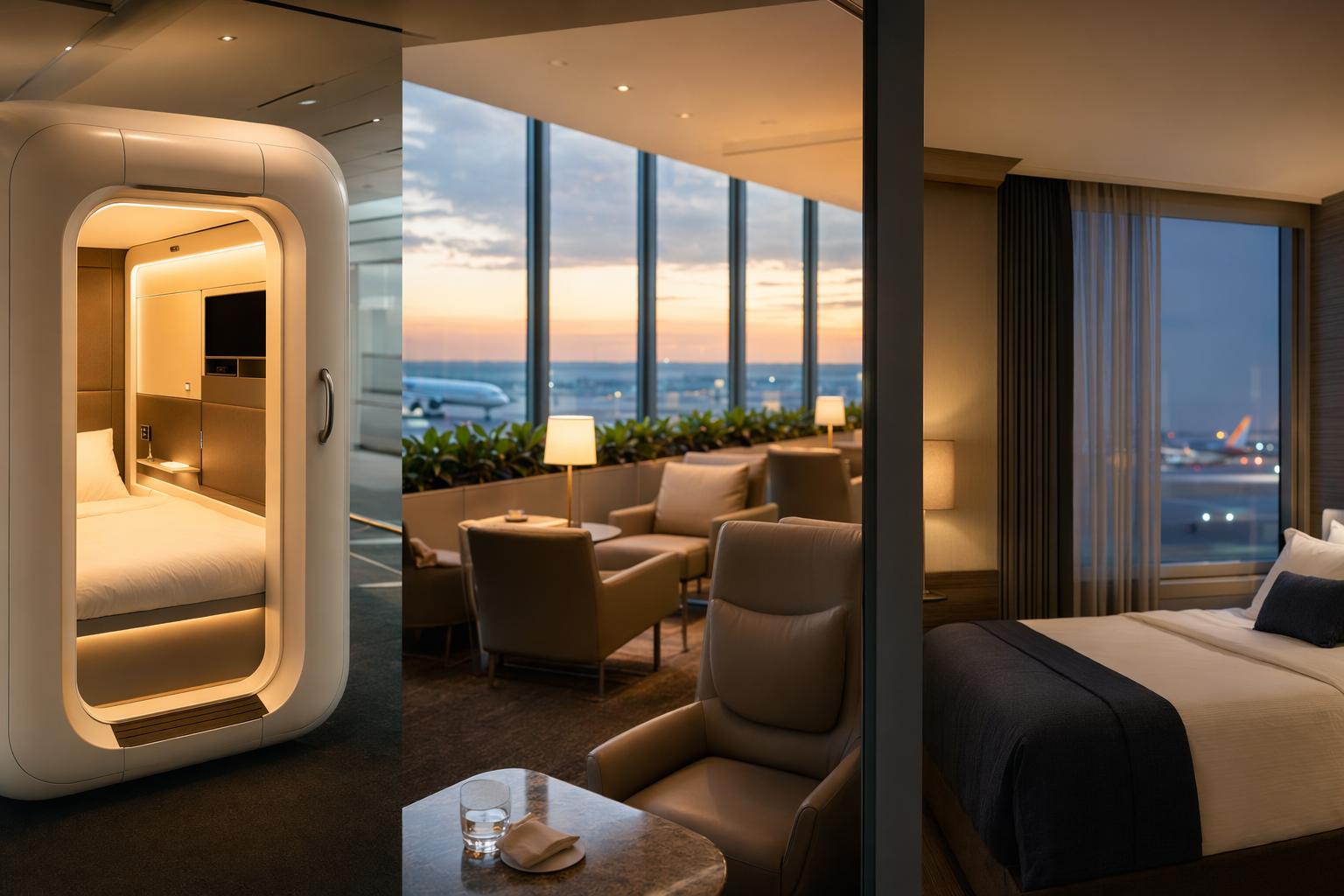
#An airport sleep pod is basically a small private sleeping unit, usually with a bed or reclined surface, charging point, sometimes a reading light, and if you are lucky, a little luggage space. Some pods are like futuristic capsules, some feel like a fancy train berth, and some are just compact cabins with a door or curtain. They are usually charged by the hour. In India and abroad, I’ve seen pod-style stays ranging roughly from ₹500 to ₹1,500 per hour depending on airport and facility, while some international hubs can go around 10 to 25 USD per hour or more. Don’t take this as fixed rate, because airport pricing changes like petrol prices, but that’s the ballpark I keep in mind.
Airport lounges are different. You don’t get a proper bed most of the time, but you get seating, snacks or buffet, tea-coffee, soft drinks, Wi-Fi, clean toilets, and sometimes showers. In India, many of us enter lounges using debit or credit cards, Priority Pass, airline status, or paid access. Paid lounge entry can be anywhere around ₹1,500 to ₹4,000 in many airports, sometimes more internationally. But please don’t assume your card will work just because it worked last year. Banks keep changing lounge rules, spend criteria, guest charges, domestic vs international access… full drama only.
A transit hotel is the proper hotel option inside or near the airport. Some are airside, meaning you don’t need immigration if you’re in international transit, and some are landside, meaning you may need to clear immigration or security depending on airport rules. Transit hotels often sell 6-hour, 8-hour or overnight packages. Rates can start around ₹4,000-ish for basic short stays in some places and go way above ₹15,000 or ₹20,000 at premium hubs. But when you get a real bed, shower, privacy, and silence, suddenly you understand why people pay.
My most Indian airport math: how many hours before I pay?
#I have a rough formula now. If the layover is under 3 hours, I don’t pay for anything unless I am already getting lounge access free with my card. Three hours sounds long on paper, but by the time you deboard, find next gate, use washroom, buy chai, complain about airport prices on WhatsApp, and walk to security, half of it is gone. For 3 to 6 hours, a lounge or pod makes sense depending on whether I need food or sleep. For 6 to 10 hours, I start thinking seriously about transit hotels, especially overnight. Above 10 hours, boss, don’t be brave unnecessarily. Your back is not a folding chair.
But this is where Indian traveller brain gets confused. We calculate everything. “If lounge is ₹2,500 and has dinner, tea, Wi-Fi, charging and sofa, then maybe ok. But pod is ₹1,000 per hour and I need 4 hours, so ₹4,000. Transit hotel is ₹7,000 for 6 hours. Should I just sit outside and save money?” I’ve done this exact mental circus standing outside a lounge in Singapore, Dubai and even Delhi T3. And every time I didn’t sleep properly, I spent the next day looking like I had been slapped by jet lag.
Sleep pods: amazing for short naps, not always for deep sleep
#My first proper pod experience was during a long international connection when my flight timing was just nonsense, that cruel 2 am to 7 am gap. I had already eaten, I didn’t want buffet, I just wanted to shut my eyes without hugging my backpack like a teddy bear. The pod was small, clean, dimly lit, and honestly I felt very cool for the first 10 minutes. Like, wow, futuristic travel life. Then the airport announcements started. One child cried nearby. Someone’s phone alarm rang for 5 full minutes. Still, compared to terminal chairs, it was luxury.
Pods work best when you need a controlled nap. Not full hotel sleep, but better than nodding off in public. I like them for 2 to 4 hour breaks, especially if I have a morning flight after an overnight arrival. You get privacy, charging, and a flat or semi-flat surface. Many pods are located inside airport terminals, near departure areas or transit zones, so you don’t waste time going outside. Some facilities allow online booking, some are walk-in, and some get full during peak travel times like Diwali, Christmas-New Year, school holidays, and summer vacation rush.
- Good for: solo travellers, quick naps, red-eye connections, people who don’t want lounge food and just need sleep.
- Not so good for: families with kids, people with big luggage, light sleepers, anyone who needs a proper bathroom and shower attached.
One thing Indians should check carefully: is the pod airside or landside? If it is airside, you may need a valid boarding pass and security access. If it is landside, it may be easier to use after arrival, but then you need to factor in check-in counters opening time for your next flight. At some airports, you can’t just enter departures 10 hours before flight because airline counters or security rules may not allow it. This small detail can ruin your entire plan, and I learnt it the annoying way.
Airport lounge: food, charging, shower… but not always peaceful
#Lounges used to feel like VIP magic to me. First time I entered one with a bank card, I was so excited I ate like it was a wedding buffet. Idli, upma, paratha, one brownie, two coffees, and then I wondered why I couldn’t sleep. Classic. Lounges are still my favourite option for medium layovers because Indian travellers usually want three things: clean washroom, decent food, and charging point. If there is a shower, even better. After a humid connection through Mumbai or a long domestic-to-international transfer in Delhi, one shower can bring your soul back.
But airport lounges have become crowded. That’s the truth. In busy Indian airports like Delhi, Mumbai, Bengaluru, Hyderabad, and Chennai, the popular card-access lounges can have queues during morning and evening peaks. Sometimes seating is limited, food is average, and people are doing video calls loudly as if whole lounge is their office. Internationally also, lounges can be hit or miss. Some are calm, some are like a railway waiting room with better lighting. So if your main goal is sleep, don’t blindly choose lounge unless it has recliners or quiet zone.
Where lounges win is the total package. Let’s say you have a 5-hour layover at Singapore Changi. You can eat properly, use Wi-Fi, maybe shower, then walk around the airport. Changi especially is one airport where you can spend hours without feeling trapped, with gardens, shops, movie screening areas in some terminals, and those budget-friendly food courts if you don’t want lounge prices. Btw, if you’re planning food during a Changi stopover, I’ve found guides like Changi Airport Food Court Guide for Budget Layovers genuinely useful because airport meals can quietly murder your budget.
Transit hotel: the expensive but most sensible choice for long layovers
#Transit hotel is the option I resisted for years because, typical me, I thought “why pay hotel money just for few hours?” Then I had one horrible overnight layover before an onward flight to India, slept badly on a metal bench, landed home with headache, acidity, and a mood so bad my mother asked if I fought with someone. After that, I changed. Sometimes spending money is saving your next day.
A good transit hotel gives you the things a pod and lounge cannot fully give: proper mattress, private bathroom, shower, silence, space to open your bag, and no fear of someone touching your stuff while you sleep. It is especially worth it when your layover is 7 hours or more, when you are travelling with parents, kids, or when you have an important meeting, wedding, visa appointment, or long drive after landing. For Indian families, I honestly think transit hotels make more sense than trying to make kids sleep across lounge chairs while everyone stares.
The catch is location and immigration. Airside transit hotels are super convenient but not available in every terminal, and they may require you to stay within international transit without clearing immigration. Landside airport hotels might need a visa, and at some countries you cannot just exit airport without meeting entry rules. Always check this before booking. Also check whether your checked baggage is through-checked to final destination or you need to collect and re-check it. If your bag is coming out at the transit point, your sleep plan becomes more complicated.
Quick comparison: pod vs lounge vs transit hotel
#| Option | Best layover length | Typical cost idea | What you get | Main problem |
|---|---|---|---|---|
| Sleep pod | 2 to 5 hours | Often hourly, roughly ₹500 to ₹1,500 per hour in many places, more at premium hubs | Private nap space, charging, basic comfort | Small space, noise can still come, limited luggage room |
| Lounge | 3 to 6 hours | Paid access often around ₹1,500 to ₹4,000 in India, card access may reduce cost | Food, drinks, Wi-Fi, seating, sometimes shower | Crowds, no proper bed, card rules keep changing |
| Transit hotel | 6 hours plus, especially overnight | Short-stay packages may start around ₹4,000 and go much higher | Real bed, private bathroom, shower, proper rest | Cost, location, visa or immigration rules |
If you want my blunt answer: pod for sleep-only short break, lounge for food-and-freshen-up layover, transit hotel for serious rest. But real life doesn’t fit neat boxes. Sometimes a lounge with empty recliners is better than an overpriced pod. Sometimes a pod inside the terminal saves you from missing a flight. Sometimes a hotel feels costly but is the only reason you survive the onward journey without turning into a zombie.
Safety: the boring topic that becomes important at 3 am
#Most major airports are generally safe, especially controlled airside areas with CCTV, security staff and passengers around. But safe doesn’t mean careless. At 3 am, when everyone is half asleep, phones and passports disappear faster than you think. I keep my passport, wallet, cards and phone either inside a small sling bag worn across my body or in a zipped inner pocket. If I’m in a pod or hotel room, I still don’t scatter things everywhere. In a lounge, I never leave my laptop on the table and go for dosa, even if the dosa is calling emotionally.
For transit hotels, use the room safe if it looks reliable, but don’t forget items inside. Sounds obvious, but travel tiredness makes us stupid. If you are confused about where to keep passport and cash during hotel stays, this piece on Hotel Safe vs Luggage Lock: Passport and Cash Safety Tips is a nice practical read. For pods and lounges, I prefer a small cable lock for my backpack if I’m sleeping, not because I’m paranoid, but because one extra layer lets me relax.
- Keep boarding pass and passport reachable, not buried under clothes in your cabin bag.
- Don’t sleep with phone charging far away, especially in public seating areas.
- Set two alarms, one on phone and one on watch if you have. Airport sleep is dangerous sleep.
- Check gate changes before sleeping. Airlines love changing gates exactly when you are finally comfortable.
Packing for layover sleep, Indian style but slightly smarter
#The best airport sleep plan fails if your essentials are in checked baggage. I keep one underseat-size backpack with toothbrush, face wash, small towel, socks, light jacket, eye mask, earplugs, power bank, meds, and one emergency snack. Indian airports can be freezing in some zones and humid in others, no logic only vibes. International airports also love AC like they’re storing vegetables. A hoodie or shawl is non-negotiable for me.
If you’re choosing between a small roller and backpack for layovers, think about movement. Pods may have limited space. Lounges can be crowded. Transit hotel rooms are fine, but getting there through escalators, security and train transfers can be irritating with too much luggage. I’ve become a fan of keeping the real essentials in a personal backpack, and this breakdown of Underseat Bag vs Personal Item Backpack: Best Pick explains that whole decision better than my messy packing lecture.
Food, chai, and the very Indian problem of over-eating before sleep
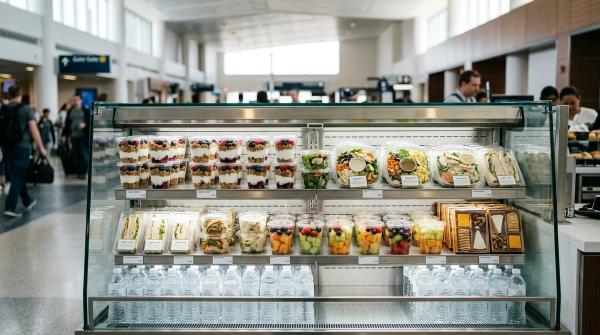
#Let’s talk food because we are Indians and obviously this matters. Before using a pod or hotel, don’t eat like you are preparing for famine. Heavy airport biryani plus 4-hour pod nap is not peaceful, trust me. I usually eat something boring but safe: curd rice if available, idli, sandwich, soup, banana, poha, or plain dal-rice in lounges. In international airports, I look for Asian food courts, bakery items, or convenience store meals instead of paying ridiculous cafe prices. Dubai, Doha, Singapore, Kuala Lumpur and Bangkok airports all have decent food options, but you need to walk a bit and not just buy the first sad croissant you see.
If I’m using a lounge, I eat first, then wash up, then sit somewhere quiet. If I’m using a pod, I eat at least 30 to 45 minutes before sleeping. If I’m using a transit hotel, I sometimes skip lounge-style buffet and just sleep first, because sleep is food also, in its own way. Morning chai after a proper airport hotel sleep hits different. Like, spiritual.
Seasonal timing and airport chaos you should plan around
#Airport rest decisions change with season. In North India, winter fog can delay flights, especially around Delhi and nearby airports. If you are transiting in December or January, keep more buffer, because a “3-hour layover” can turn into a full-day airport relationship. During monsoon, Mumbai and some coastal routes can face delays due to weather. During summer holiday season, Diwali, Eid, Christmas-New Year, and long weekends, lounges and pods get booked or crowded. Don’t assume you’ll just walk in and find a peaceful corner.
Also, late-night and early-morning flights are cheaper sometimes, which is why many of us book them and then suffer. If your flight lands at 1 am and next one is 8 am, check pod or transit hotel availability in advance. Some facilities allow hourly pre-booking, while lounges are mostly access-based and first-come-first-served. Airport apps, airline apps, and terminal maps help a lot. I know it sounds uncle-type advice, but download the airport map before landing. Roaming Wi-Fi tantrums are real.
What I choose now, after enough uncomfortable layovers
#For solo domestic layovers in India, I usually pick lounge if my card works and the stop is around 3 to 4 hours. I can eat, charge phone, and maybe close my eyes for 20 minutes. For international overnight layovers, I prefer transit hotel if the price isn’t insane and if I have 7 hours or more. If I’m alone and on a budget, sleep pod is my compromise. It gives me dignity, which airport chairs don’t.
With family, especially parents, I avoid experimenting. Older Indian parents will say “arre hum adjust kar lenge” but after 2 hours they are tired, cold, and irritated. Book the hotel if possible. With kids, same. Lounge can work for daytime, but overnight lounge with children is not fun for anyone. For couples, pod may or may not work depending on whether double pods are available. Don’t assume two people can squeeze into one pod. This is not sleeper class side lower, though even there people try.
For business travel, I’d say transit hotel or lounge with shower. Nothing is worse than reaching a meeting after sleeping at a gate with your shirt looking like you stored it in a pressure cooker. For backpacking trips, pod or lounge is enough. When I was doing budget Southeast Asia trips, I cared more about saving money for local food and experiences than airport comfort, but age catches up yaar. Now my back gives feedback immediately.
Small airport hacks that actually helped me
#- Check whether your next flight departs from same terminal. A lounge in Terminal 1 is useless if your next flight is Terminal 3 and transfer takes 45 minutes.
- Ask about shower before paying for lounge. Some lounges advertise premium comfort but shower is extra, unavailable, or only in another section.
- If booking transit hotel, check check-in duration clearly. A “6-hour stay” may start from actual check-in time, not your preferred sleep time, and extensions can be costly.
- Keep a screenshot of booking, boarding pass, and hotel location. Airport Wi-Fi login OTP sometimes doesn’t come on Indian SIM while roaming, very irritating.
- Don’t sleep too far from your gate unless you have enough time. Big airports look walkable until you are speed-walking with a backpack and regret.
One more underrated thing: airport prayer rooms, quiet zones, observation decks, and empty gates can be peaceful if you don’t want to spend. But please be respectful. Don’t occupy prayer spaces for sleeping if others need them. And don’t stretch across four seats in crowded areas like you own the airport. We all want rest, but basic manners also.
So, which one is best?
#If I have to make it super simple, I’d say this: choose airport lounge when you want food and freshening up, choose sleep pod when you want privacy for a short nap, choose transit hotel when you need real sleep. That’s the clean answer. The messy real answer is you should choose based on your body, your next day plan, your budget, and the airport layout. A ₹2,000 lounge can be a waste if it’s overcrowded. A ₹4,000 pod can feel overpriced if announcements keep waking you. A ₹9,000 transit hotel can be totally worth it if it saves your health and mood.
For Indian travellers, especially those doing long international routes like India to Europe via Middle East, India to US via Singapore or Doha, or even domestic red-eye connections, airport rest planning is not luxury anymore. It is part of the trip. We spend so much time comparing flight prices and baggage allowance, but we forget the 8-hour gap in between where we are neither here nor there, just roaming like tired ghosts under fluorescent lights.
My personal rule now: if the layover is overnight and more than 6 hours, I budget for sleep the same way I budget for flight ticket. Because reaching fresh is also part of travelling well.
Final thoughts from one tired but wiser traveller
#Airport sleep pod vs lounge vs transit hotel isn’t about which one is fancy. It’s about what kind of rest you need and how much you’re willing to pay for sanity. I still do budget hacks, I still eat lounge dessert when I shouldn’t, and yes, sometimes I still nap at the gate with my bag under my legs like every other desi traveller. But now I’m more honest with myself. If I need sleep, I pay for sleep. If I need food and shower, lounge. If I just need to survive 2 hours, chai and a quiet corner is enough.
Next time you’re booking a weird layover because the ticket is ₹3,000 cheaper, also check what that layover will cost in food, tiredness, and maybe one airport pod. Sometimes the cheaper flight is still worth it, sometimes not. Anyway, hope this helped you plan a less painful transit. I share more such practical travel notes and slightly over-honest experiences on AllBlogs.in, so do check it out when you’re planning your next trip.