The Quick Verdict: Which Italian Coast Fits Your Trip?
#If you want high-end Mediterranean glamour, luxury cliffside hotels with infinity pools, five-star fine dining, day trips by private wooden boat to Capri, and famous towns like Positano and Ravello, choose the Amalfi Coast. It is stylish, romantic, and breathtakingly dramatic, but it is expensive and requires navigating crowded ferries or narrow, winding cliffside roads.
If you want a casual, car-free coastal holiday centered on hiking between pastel fishing villages, hopping on a regional train that connects every town in five minutes, eating warm pesto focaccia on a rocky harbor pier, and traveling on a reasonable budget, choose the Cinque Terre. It is simpler, more laid-back, and much easier to explore without logistical stress.
Both coastlines feature colorful pastel villages tumbling down sheer cliffs into the Mediterranean Sea. 
Yet they sit hundreds of miles apart in different regions of Italy. 
The Cinque Terre is in Liguria on the Italian Riviera in the north, an easy train ride from Florence or Milan. The Amalfi Coast is in Campania in the south, wrapping around the Sorrentine Peninsula south of Naples.
If you only have 3 to 5 days on your Italian holiday, picking the right coast will shape your entire trip. Here is the honest breakdown of village vibes, transit friction, hiking trails, swimming spots, and daily budgets to help you choose.
The Towns and Vibe: Hollywood Glamour vs Rustic Fishing Villages
#How each coastline feels on the ground is night and day.
The Amalfi Coast has been an international playground for celebrities, writers, and luxury travelers since the 1950s. 
Its iconic towns are spread along 30 miles of towering limestone cliffs:
- Positano: The glamorous postcard star of the coast, rising in a vertical cascade of pastel pink, peach, and yellow villas above a dark pebble beach packed with striped sun loungers. High-end art galleries, linen boutiques, and Michelin-starred restaurants line its steep stone staircases.
- Amalfi: The historic heart of the coast, featuring a grand 9th-century Arab-Norman cathedral (Duomo di Sant'Andrea) dominating a lively, sun-drenched central piazza.
- Ravello: Perched high in the clouds 1,200 feet above the sea, known for its tranquil cliff-edge gardens at Villa Rufolo and Villa Cimbrone, classical music festivals, and aristocratic tranquility.
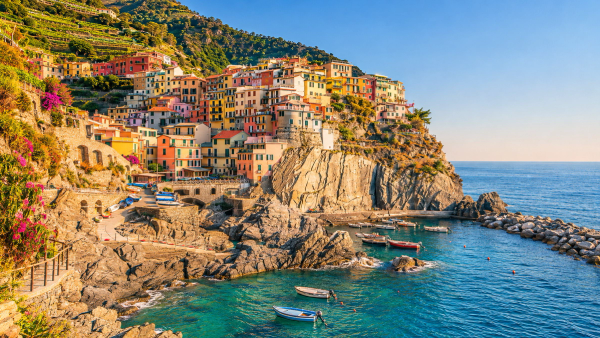
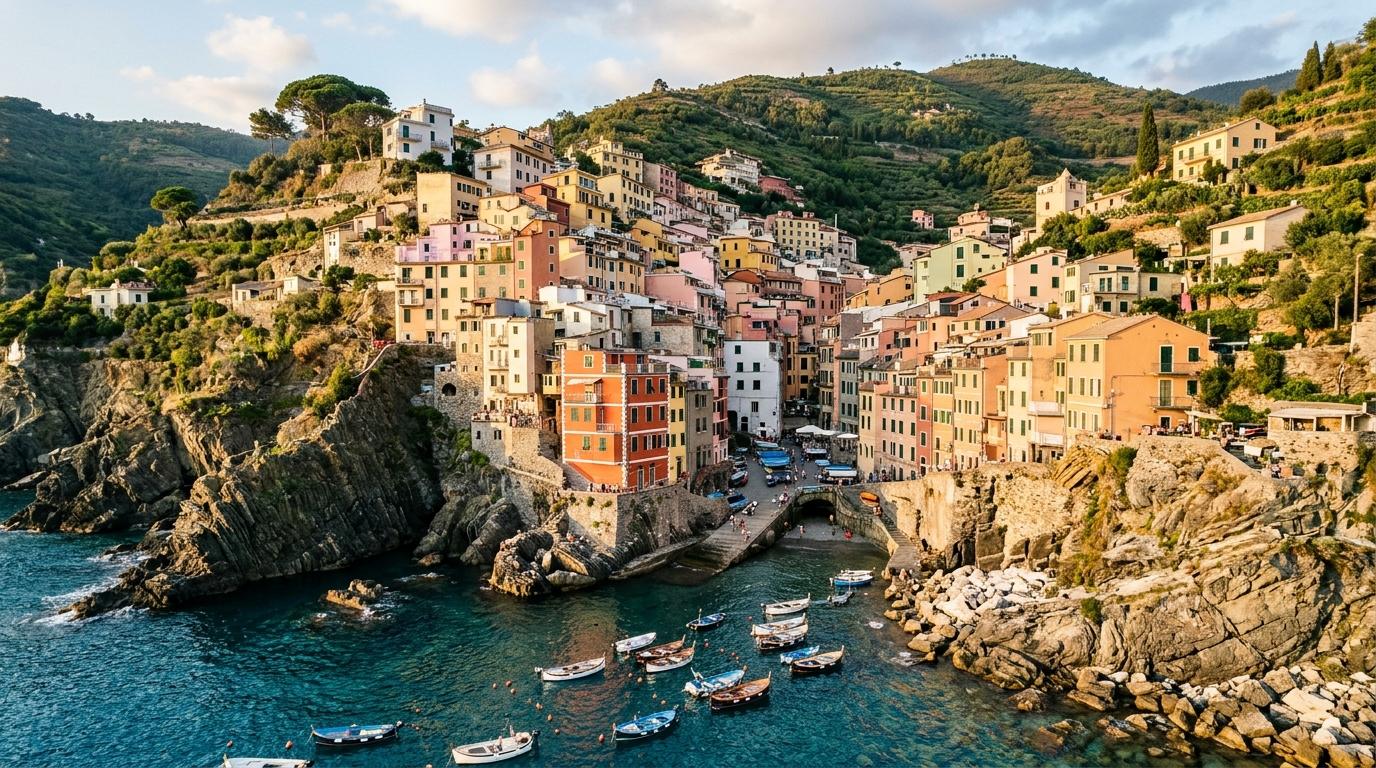
The Cinque Terre consists of five ancient fishing villages tucked into steep ravines in a protected national park:
- Riomaggiore: Famous for its steep main street leading down to a tiny, dramatic boat slip where travelers gather at sunset to sit on giant ocean boulders.
- Manarola: The quintessential photograph of Italy, with colorful tower-houses perched on a sheer black rock spur surrounded by terraced vineyards.
- Corniglia: The only village perched high on a cliff without sea access, reachable by climbing the 382-step Lardarina brick staircase, giving it a quiet, unhurried local atmosphere.
- Vernazza: Built around a natural sheltered harbor with an ancient sea-facing stone castle, lively piazza, and wooden fishing boats pulled up on the cobblestones.
- Monterosso al Mare: The largest village and the only one with a proper wide, sandy resort beach lined with colorful umbrellas and a scenic beachside promenade.
If you want chic cocktail bars, designer linen, and glamorous rooftop terraces, the Amalfi Coast delivers. If you want charming fishing village authenticity, local wine bars, and salty sea air, the Cinque Terre is magic.
Getting Around: Seamless Tunnel Trains vs White-Knuckle Cliff Roads
#Transportation is the single biggest operational difference between the two destinations.
The Cinque Terre has the easiest, most efficient public transport network in coastal Europe. 
A dedicated local commuter train—the Cinque Terre Express—runs every 15 to 20 minutes from early morning until midnight, connecting all five villages through tunnels drilled directly through the coastal rock:
- Traveling from Riomaggiore to Manarola takes just 2 minutes.
- Traveling the entire length of the park from Riomaggiore to Monterosso takes only 14 minutes.
- A flat-rate Cinque Terre Card gives you unlimited train travel and full hiking trail access for around 19 to 32 euros per day depending on the season.
You never have to worry about traffic, parking, or missed connections.
The Amalfi Coast is a logistical challenge. 
There are zero train tracks connecting the towns along the Amalfi Coast. 
Your transit choices are:
- The Amalfi Drive (SS163): A hair-raising, narrow two-lane road carved into the cliff face, featuring hundreds of blind hairpin turns, towering tour buses squeezing past each other with inches to spare, and bumper-to-bumper traffic jams in the summer.
- SITA Public Buses: Inexpensive, but buses frequently fill up at the first stop, leaving tourists waiting in the baking sun for an hour as full buses drive straight past.
- Passenger Ferries: Running between Salerno, Amalfi, Positano, and Capri. Ferries are the most scenic and relaxing way to travel, offering gorgeous views of the cliffside towns from the water, but they are vulnerable to rough sea conditions and cease operations on windy days.
For effortless, stress-free transit, the Cinque Terre wins by a landslide.
Hiking and Active Adventure: Sentiero Azzurro vs The Path of the Gods
#Both coastlines offer world-class cliffside walking trails with sweeping Mediterranean views.
The Cinque Terre is fundamentally a hiking destination. 
The entire national park is webbed with centuries-old stone pathways connecting the villages through terraced olive groves, lemon orchards, and steep hillside vineyards:
- The Sentiero Azzurro (Blue Trail): The classic coastal trail hugging the cliffs between the villages. The open sections between Monterosso, Vernazza, and Corniglia offer 2 to 3 hours of moderate climbing on stone steps with panoramic views of the turquoise sea below.
- High Trails: Quieter, rugged mountain trails leading to ancient sanctuaries and hermit chapels perched high above the coast, away from the tourist crowds.
The Amalfi Coast is home to one of the most famous single mountain hikes in Italy:
- The Path of the Gods (Sentiero degli Dei): A spectacular 5-mile (8-kilometre) high-alpine trail traversing limestone cliffs 1,800 feet above the sea between Bomerano (Agerola) and Nocelle above Positano. Walking this path feels like floating between heaven and the sparkling blue Tyrrhenian Sea, with panoramic views stretching all the way to the island of Capri.
- However, reaching the trailhead requires an early morning bus ride up into the mountains, and finishing in Nocelle leaves you with 1,700 downhill stone steps to reach the road into Positano.
If your ideal vacation involves hiking from village to village every morning, the Cinque Terre is purpose-built for you. If you want one epic, unforgettable mountain trek paired with poolside lounging, choose Amalfi.
Beaches and Swimming: Private Beach Clubs vs Rocky Coves
#If soaking up the sun and swimming in the sea is your priority, understanding the beach terrain is crucial.
Neither destination features vast stretches of powdery white sand, but how they handle swimming is quite different.
The Amalfi Coast revolves around the glamorous Italian beach club (stabilimento balneare) culture:
- At beaches like Positano’s Spiaggia Grande or Marina Grande in Amalfi, private concession operators line the dark volcanic pebbles with neat rows of colorful umbrellas and plush sun loungers.
- Renting a pair of loungers and an umbrella costs between 40 and 100+ euros per day, which includes access to changing cabins, freshwater showers, and beachside cocktail service.
- The coast also features hidden rocky swimming coves (like the Furore fjord) and sea caves accessible only by boat.
The Cinque Terre offers more casual, democratic swimming spots:
- Monterosso al Mare is the standout, featuring Fegina beach—the only true wide, sandy beach in either region, offering both private lido rentals and generous free public beach areas.
- In Riomaggiore, Manarola, and Vernazza, there are no traditional sandy beaches. Instead, swimmers sunbathe directly on the smooth black harbor rocks and dive straight into deep, crystalline harbor waters from stone piers.
If you love full-service beach clubs with chilled prosecco and towel service, Amalfi is heaven. If you prefer jumping off harbor rocks into refreshing water after a hot hike, the Cinque Terre is wonderful.
Lodging and Budgets: High Luxury Splurge vs Charming Guesthouses
#Your nightly hotel budget will be dramatically different between these two regions.
The Amalfi Coast is one of the most expensive luxury resort destinations in Europe:
- A standard double room in a 3-star hotel in Positano or Amalfi during high season (May through September) easily costs $300 to $500 USD per night.
- Legendary 5-star cliffside properties like Le Sirenuse or Hotel Santa Caterina command $1,500 to $3,000+ USD per night.
- Budget options along the coast are scarce; travelers looking to save money often have to stay in inland towns like Sorrento or Salerno and commute into the coast by ferry each day.
The Cinque Terre is dominated by casual, affordable, family-run accommodations:
- Because the five villages are protected historical national park sites, there are zero large luxury chain hotels or glitzy mega-resorts.
- Instead, you stay in converted village tower-apartments, cozy affittacamere (guesthouses), and small family-run B&Bs.
- A comfortable double room with a private sea-view balcony in Vernazza or Manarola averages $140 to $260 USD per night.
- Eating out is also significantly cheaper; you can easily grab a cone of fried calamari and anchovies or a slice of fresh focaccia for 6 to 10 euros.
For travelers watching their spending, the Cinque Terre will stretch your budget twice as far.
Food, Wine, and Regional Flavors: Ligurian Pesto vs Campanian Seafood
#Italian regional food is fiercely distinct, and both coastlines celebrate completely different local specialties.
The Cinque Terre belongs to the northern region of Liguria, the birthplace of basil pesto:
- Pesto alla Genovese: Fresh sweet Genovese basil pounded with pine nuts, garlic, Parmigiano-Reggiano, and rich Ligurian olive oil, tossed with local twisted trofie pasta.
- Focaccia Ligure: Golden, crispy on the outside, pillowy on the inside, glistening with sea salt and local olive oil, fresh out of village bakeries every morning.
- Fresh Anchovies (Acciughe di Monterosso): Served salted, fried crisp in paper cones, or marinated raw in lemon juice and olive oil.
- Cinque Terre DOC White Wine: Crisp, dry, mineral white wines made from Bosco, Albarola, and Vermentino grapes grown on steep stone-walled terraces hanging over the sea.
The Amalfi Coast belongs to Campania, the heartland of southern Italian sunshine and seafood:
- Scialatielli ai Frutti di Mare: Fresh, thick, handmade ribbon pasta tossed with clams, mussels, prawns, and sweet cherry tomatoes.
- Sfusato Amalfitano Lemons: Giant, sweet, fragrant lemons used to make authentic ice-cold Limoncello, lemon pasta, and lemon granita served inside hollowed-out frozen lemon rinds.
- Buffalo Mozzarella: Creamy, fresh Mozzarella di Bufala Campana delivered daily from nearby Caserta and Paestum.
- Neapolitan-style wood-fired pizza with charred, blistered crusts and San Marzano tomato sauce.
Both culinary traditions are extraordinary. Liguria offers fresh, herbaceous simplicity, while the Amalfi Coast delivers rich southern Italian bounty.
Summary Comparison Table: Amalfi Coast vs Cinque Terre
#| Factor | Amalfi Coast | Cinque Terre |
|---|---|---|
| Primary Vibe | Glamorous, fashionable, romantic luxury | Rustic, active, laid-back fishing villages |
| Transit Method | Ferries, SITA buses, congested cliff roads | 5-minute regional coastal train (Cinque Terre Express) |
| Hiking Focus | High mountain cliff walks (Path of the Gods) | Village-to-village coastal trails (Sentiero Azzurro) |
| Beaches | Private pebble beach clubs with sunbeds ($40–$100+) | One sandy beach (Monterosso) & rock harbor swimming |
| Daily Budget | High ($250 to $700+ USD per day) | Moderate ($120 to $300 USD per day) |
| Signature Food | Scialatielli seafood, giant lemons, Limoncello | Fresh basil pesto, crispy focaccia, fried anchovies |
| Nearest Hubs | Naples (1 hr), Rome (3.5 hrs via train/ferry) | Florence (2.5 hrs), Milan (3 hrs), Pisa (1 hr) |
| Best Suited For | Honeymooners, luxury splurges, boat lovers | Hikers, budget travelers, families, quick trips |
Final Decision: How to Choose or Pair with Rome and Florence
#Choose the Amalfi Coast if you are celebrating a special honeymoon or anniversary, have the budget to splurge on a cliffside hotel with a view, love dressing up for chic dinners, and dream of chartering a wooden gozzo boat to swim in the grottos of Capri.
Choose the Cinque Terre if you love exploring on foot, prefer hassle-free five-minute train transit between villages, enjoy eating street food and local wine on a harbor wall at sunset, and want a relaxed coastal experience without high-season luxury price tags.
How each coast fits into your broader Italian itinerary should also guide your choice:
- If your trip focuses on Northern Italy (Milan, Venice, Florence, Tuscany), adding the Cinque Terre is seamless, taking just 2.5 hours by regional train from Florence.
- If your trip focuses on Southern Italy (Rome, Naples, Pompeii), the Amalfi Coast is the natural extension, reachable in about 3 hours from Rome by high-speed train to Salerno followed by a fast passenger ferry.
Both coastlines are treasures of the Mediterranean, but knowing whether you want Riviera hiking ease or southern Italian coastal glamour will guarantee you fall in love with your Italian holiday.