If you want to experience the quiet beauty of old-world Japan, a three-day trip through the Hida mountain region in Gifu Prefecture is hard to beat. You spend your days walking through preserved Edo-period timber streets and 300-year-old sake breweries in Takayama, and take a quick 50-minute bus ride through mountain tunnels to the UNESCO thatched-roof farmhouses of Shirakawa-go.
The single most important logistics rule for this trip is booking your Nohi Bus tickets one month ahead of time. The buses between Takayama and Shirakawa-go have limited seats, and during autumn leaves or snowy winter months, reserved departures sell out weeks in advance.
Base yourself at a traditional inn or hotel in Takayama: it has far better dining, easy luggage lockers, and direct train links to Nagoya, Kyoto, and Tokyo.
3-Day Itinerary Overview
#- Day 1: Arrive in Takayama, explore Sanmachi Suji timber alleys, sample local sake, and enjoy grilled Hida beef
- Day 2: Visit Miyagawa Morning Market, take the Nohi Bus to Shirakawa-go, and hike to the village viewpoint
- Day 3: Tour Hida Folk Village open-air museum and walk the peaceful hillside temple trail
Day 1: Preserved Timber Alleys, Sake Tastings, and Hida Beef
#Morning: Arriving via the Scenic Hida Express
#Take the JR Hida Wide View Limited Express train from Nagoya Station. The train ride takes about 2 hours and 20 minutes, winding along emerald-green mountain rivers, cedar forests, and rocky river canyons. The train is fully covered by the standard Japan Rail Pass.
When you step out at Takayama Station, head straight to your hotel or drop your bags in the station coin lockers. The historic district is an easy 10-minute walk east of the station.
Afternoon: Sanmachi Suji and Sake Breweries
#Cross the red Nakabashi Bridge over the Miyagawa River and step into Sanmachi Suji. This preserved district consists of three narrow streets lined with dark, weathered wooden merchant houses dating back to the Edo period (1603–1867).
Look for large cedar balls, called sugidama, hanging under the eaves of shop doorways. These green and brown cedar spheres signal an active sake brewery.
Several historic breweries (like Funasaka and Harada) offer self-guided sake tastings. For 500 yen (about 3.50 USD), you get a small commemorative ceramic cup (ochoko) that allows you to sample several local varieties, ranging from dry, crisp junmai to rich, cloudy nigori sake made with fresh alpine spring water.
At the southern end of the street sits Takayama Jinya. This is the only surviving Edo-period government outpost in all of Japan. Take off your shoes at the entrance and walk along the tatami-matted corridors to see the magistrate's courtroom, torture interrogation room, and massive 17th-century rice granary that once held grain taxes collected from local peasants.
Evening: Authentic Hida Beef Dinner
#Takayama is famous for Hida Beef (Hida-gyu), a prized variety of Japanese black wagyu beef known for its delicate web of marbling and tender texture.
Skip the overpriced skewer stalls on the main tourist strip. Instead, walk into a local family tavern (izakaya) and order Hoba Miso beef. The chef places thin slices of raw marbled beef and wild mushrooms on top of a dried magnolia leaf (hoba), slathered with a sweet, savory fermented miso paste, and sets it over a small tabletop charcoal burner (shichirin). As the leaf heats up, the miso bubbles and caramelizes, infusing the tender beef with sweet, smoky richness.
Pair it with a bowl of hot rice and Takayama Ramen, a regional style of ramen made with thin, wavy noodles served in a clean, savory broth flavored with soy sauce, chicken bones, and bonito flakes.
Day 2: Morning Markets and the Thatched Farmhouses of Shirakawa-go
#Morning: Miyagawa Riverside Market
#Start your morning early around 7:30 AM at the Miyagawa Morning Market along the riverbank. Local farmers and grandmothers set up white tents selling crisp Hida apples, mountain pickles, dried persimmons, and hand-stitched Sarubobo dolls (traditional faceless red cloth amulets made for good luck and healthy children).
Grab a skewer of freshly charred Mitarashi Dango—soft, chewy rice dumplings glazed with savory soy sauce—for 100 yen while watching the morning mist clear over the river.
Late Morning: The Nohi Bus to Shirakawa-go
#Head back to the Takayama Bus Terminal next to the station and board your reserved Nohi Bus to Shirakawa-go. The bus leaves on the dot and takes exactly 50 minutes, traveling through high-altitude highway tunnels beneath the Hida mountain range.
Leave your heavy rolling luggage behind in Takayama. The streets in Shirakawa-go are packed dirt and gravel, which can destroy suitcase wheels and prove difficult to drag across snow or mud.
Afternoon: Exploring Ogimachi Village
#You will arrive in Ogimachi, the largest village in the Shirakawa-go UNESCO World Heritage site. Walk across the Deai suspension bridge spanning the rushing Shokawa River to enter the village.
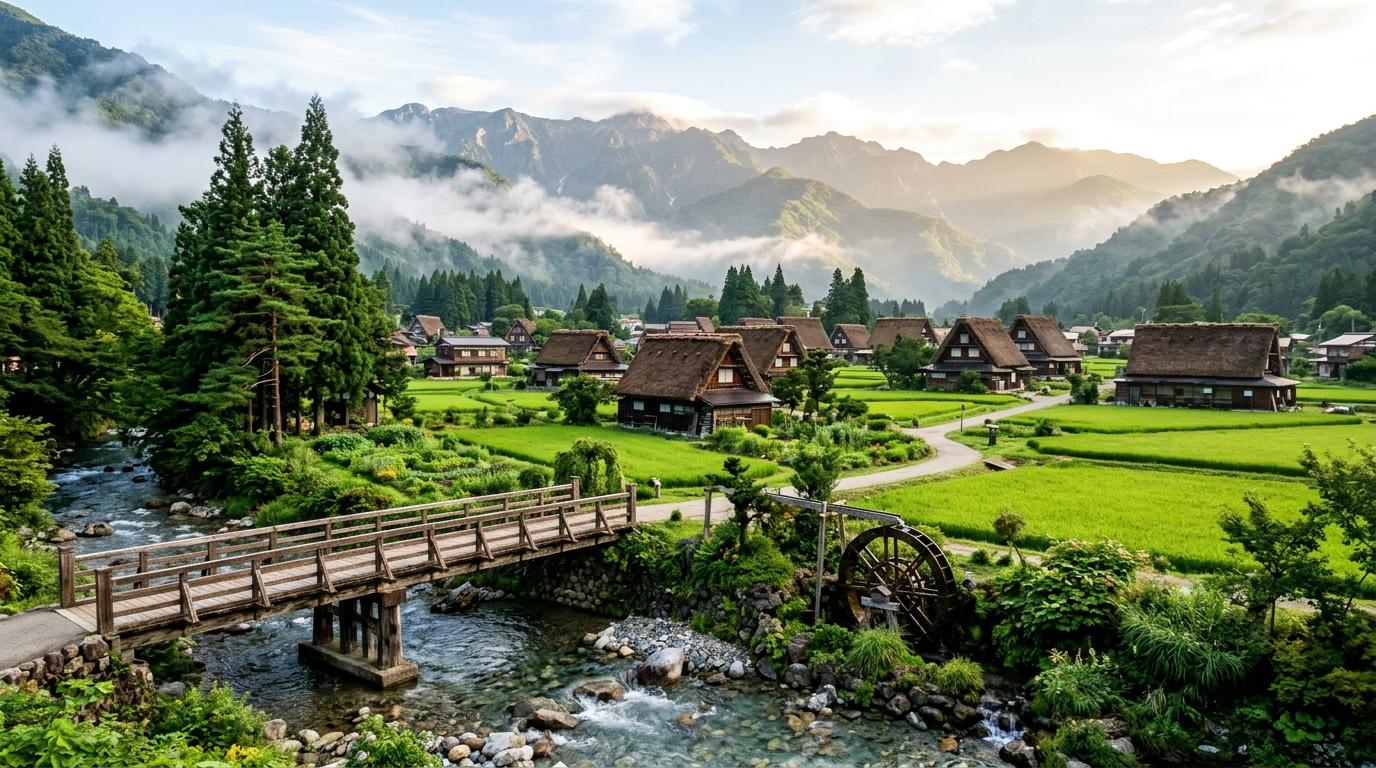
The village is famous for its gassho-zukuri farmhouses. The name translates to "constructed like hands in prayer," describing the steep, 60-degree pitched thatched roofs made of thick mountain reeds. These steep roofs were designed without a single metal nail hundreds of years ago to shed the massive winter snowfalls (often exceeding 2 to 3 meters) that cut off the mountain valley for months at a time.
Step inside Wada House (Wada-ke), the largest preserved farmhouse in the village. Climb the steep wooden ladders to the upper attic floors. In the 18th and 19th centuries, farming families lived on the lower ground floor around a sunken floor hearth (irori), while using the cavernous, multi-tiered attic space to cultivate silkworms, heated from below by the gentle smoke of the hearth.
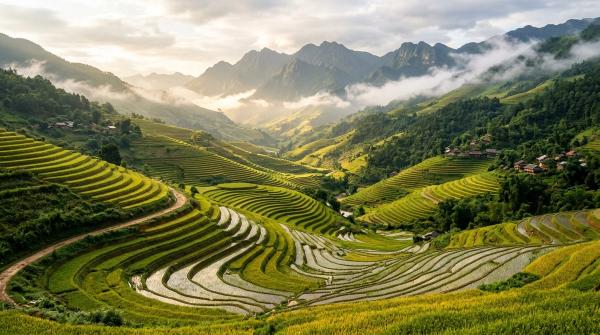
Next, walk 15 minutes uphill (or catch the 200-yen shuttle van) to the Shiroyama Viewpoint. From this high hillside clearing, you look directly down onto the entire valley: dozens of triangular thatched roofs nestled between emerald green rice paddies and towering alpine peaks.
Catch the late afternoon bus back to Takayama, soak your feet in one of the public outdoor foot baths (ashiyu), and rest up for day three.
Day 3: Hida Folk Village and Peaceful Hillside Temples
#Morning: Hida Folk Village (Hida no Sato)
#Take the 10-minute local bus from Takayama Station to Hida Folk Village.
While Shirakawa-go is a living, working village, Hida Folk Village is an open-air museum set around a calm hillside pond. More than 30 authentic traditional farmhouses and craft workshops from throughout the Hida region were relocated here to protect them from dam construction.
Because the crowds stay in Shirakawa-go, Hida Folk Village is wonderfully quiet. You can wander freely inside the old wooden homes, watch local artisans weave cedar baskets and carve wood, and see historical tools used by alpine hunters and loggers centuries ago.
Afternoon: The Higashiyama Temple Walk
#Spend your final afternoon on the eastern edge of Takayama along the Higashiyama Walking Course.
Modeled after Kyoto by the historical Kanamori samurai lords in the late 1500s, this tranquil 3.5-kilometer stone path winds through hillside forest groves, quiet Buddhist temples, and centuries-old cemetery moss. It takes about 2 hours to walk at an easy pace.
Afterward, pick up your bags from the station lockers, grab a warm Hida beef steamed bun for the train ride, and board your afternoon connection onward to Kanazawa on the Japan Sea coast or back to Tokyo.
Where to Stay: Takayama vs Shirakawa-go
#| Factor | Staying in Takayama | Staying in Shirakawa-go |
|---|---|---|
| Hotel Options | Wide range of modern hotels, traditional ryokan, and hostels | Small family-run farmhouses (minshuku) only |
| Room Availability | Plenty of rooms; easy to book 1 to 2 months ahead | Extremely limited (fewer than 20 homes); books out 4 to 6 months ahead |
| Bathroom Facilities | Private en-suite bathrooms at most hotels | Shared family-style bathrooms and traditional toilets |
| Evening Dining | Dozens of izakayas, ramen shops, and beef restaurants open late | Zero restaurants open after 5:00 PM; dinner served only at your inn |
| Transit Convenience | Direct train and bus hub to Nagoya, Tokyo, and Kanazawa | Remote; requires bus connections for all travel |
For 95% of travelers, staying in Takayama is the most practical and enjoyable choice.
Practical Logistics and Best Seasons
#- Autumn (October to November): The surrounding mountain forests turn into brilliant shades of crimson and gold. Mid-October is also home to the famous Takayama Autumn Festival, featuring ornate towering festival floats (yatai).
- Winter (January to February): Shirakawa-go transforms into a fairytale snow globe under feet of powdery white snow. If visiting for the famous winter night illumination events, you must enter a competitive lottery months in advance to secure access.
- Spring (April to May): Cherry blossoms bloom along the Miyagawa River in mid-April, several weeks later than Tokyo or Kyoto due to the high alpine elevation.