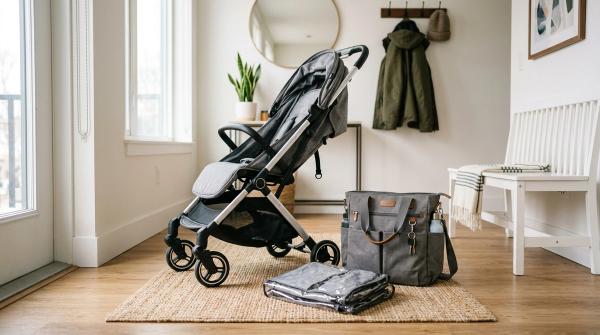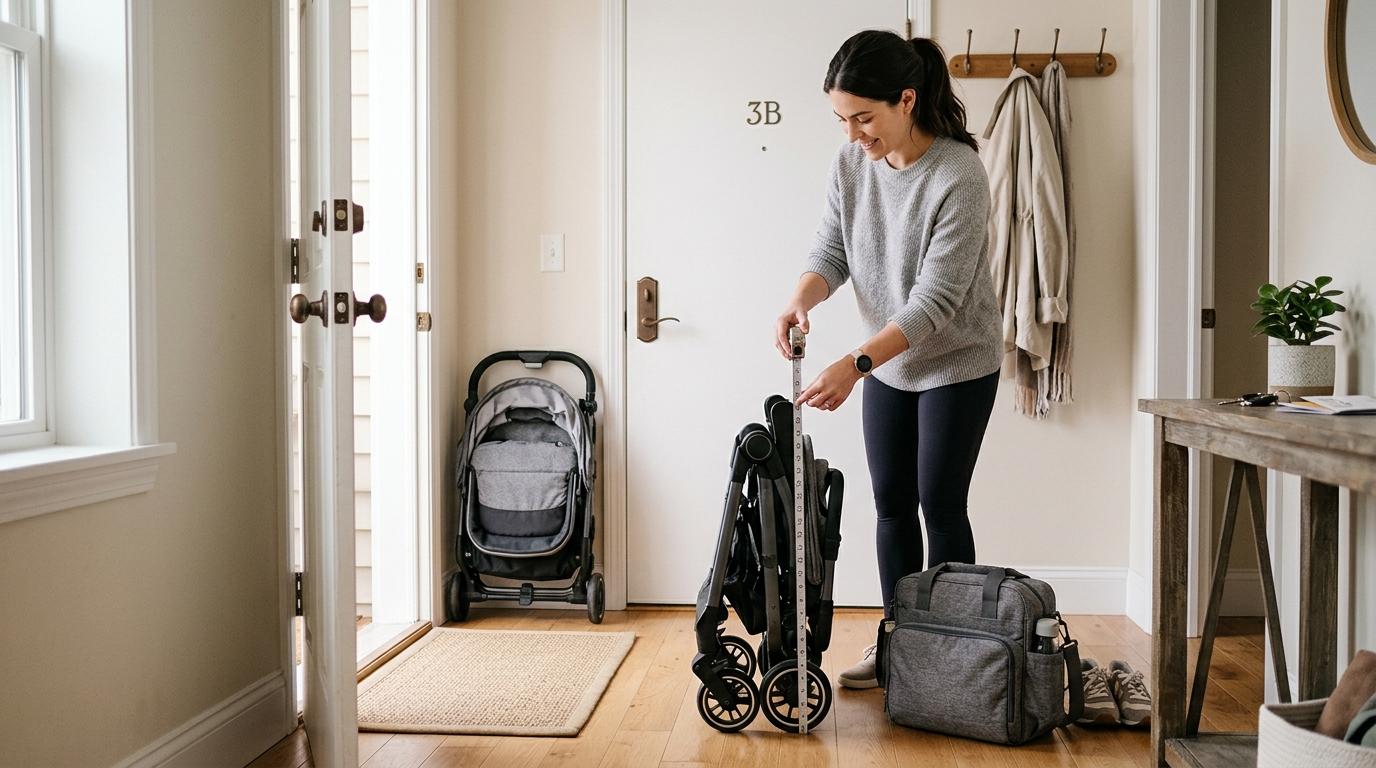
A baby stroller buying checklist should start with safety, newborn suitability, fold, weight, and whether the stroller fits everyday life. Look for a secure 5-point harness, reliable brakes, a stable frame, and a flat or newborn-safe recline if you plan to use it from birth. Then check your lift, doorway, car boot, storage space, roads, weather, and how often you will fold or carry it.
Buying a stroller looks easy until every model starts sounding “lightweight”, “premium”, and “perfect for modern parents”. The best stroller is not the one with the fanciest description. It is the one that works for your baby, your home, your roads, your car, your weather, and your hands on a tired day.
1. Start With Your Baby’s Age
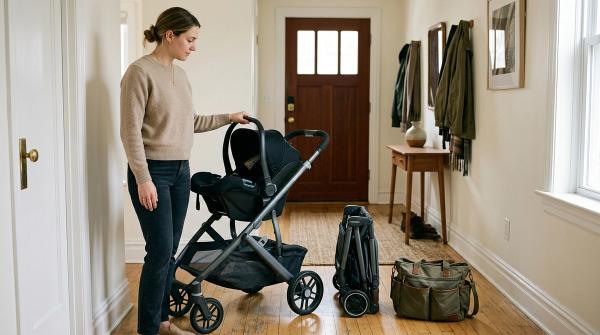
#If you are buying a stroller for a newborn, pause before looking at colour, cup holders, baskets, or handle finishes. Start with recline.
Newborns need proper head and body support, and not every stroller is suitable from birth. A seat that “leans back quite a bit” is not automatically safe for a newborn.
If you plan to use the stroller from birth, check the manufacturer’s manual carefully. Product photos can be misleading, and online listings do not always explain things clearly.
For newborn use, the stroller should usually have one of these:
- A bassinet or carrycot approved for that exact stroller model
- A fully flat or near-flat recline that the manufacturer clearly says is suitable from birth
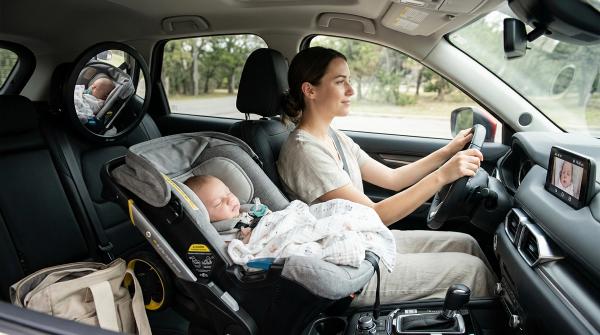
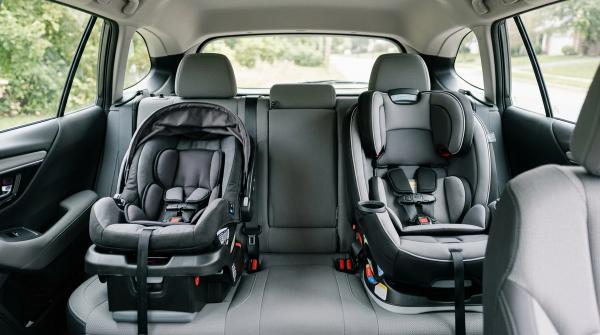
- A compatible infant car seat, used exactly as both manuals explain
Some lightweight strollers are better for older babies who can hold their head and body more steadily. They may be easy to fold and carry, but that does not mean they are right for a newborn.
For your newborn stroller checklist, ask:
- Is this stroller clearly approved from birth?
- Does it have a flat or newborn-safe recline?
- Is there enough head and body support?
- Does the harness fit a small baby securely?
- Are the age and weight limits easy to find in the manual?
If the answer is unclear, do not guess. Choose another model or ask the manufacturer, retailer, pediatrician, or a trusted child safety source.
2. Safety Comes Before Fancy Features
#A stroller does not need to be the most expensive one in the store to be safe. But it does need to be well-designed, properly assembled, and used within the manufacturer’s limits.
Harness
#Choose a stroller with a 5-point harness. It should secure your baby at the shoulders, hips, and between the legs. The buckle should be easy enough for an adult to use but not so loose or simple that a toddler can open it in seconds. Also check whether the straps can be adjusted as your baby grows.
Brakes
#Good brakes are non-negotiable. Ask yourself:
- Do the brakes lock firmly?
- Do they lock as described by the manufacturer?
- Can you use them without bending awkwardly?
- Are they easy to press with sandals or daily footwear?
- Does the stroller stay still on a slight slope when locked?
Even with good brakes, do not depend on them completely on steep slopes. Keep your hand on the stroller.
Stability
#The stroller should feel balanced when you push, turn, stop, or go over small bumps. Avoid hanging heavy bags from the handlebar because this can increase tipping risk. Use the storage basket instead, and stay within the weight limit.
Frame and Locking System
#The frame should open fully and lock securely into place. Before placing your baby in the stroller, quickly check that the frame lock is properly engaged. Make it a habit.
3. Fold Matters More Than You Think
#A stroller can have great features, but if folding it is a daily struggle, you will slowly stop using it. This matters even more if you live in an apartment, use a small car, take cabs, or often manage the baby alone.
Before buying, check:
- Folded size
- Folded shape
- Folded weight
- Whether it locks after folding
- Whether you can lift it comfortably
- Whether it stands on its own after folding, if that matters to you
One-Hand Fold
#Many strollers claim to have a one-hand fold. In real life, “one-hand fold” can mean many things. Imagine a day when your baby is fussy, your diaper bag is slipping, the cab driver is waiting, and it has started drizzling. Can you still fold the stroller without fighting with it?
Check whether it folds smoothly, auto-locks, unfolds easily, requires bending all the way to the floor, or needs too much force.
Compact Fold for Apartments
#If you need a compact stroller for apartment living, measure your actual spaces:
- Apartment lift width and depth
- Main door width
- Narrow corridor turns
- Storage space near your entrance
- Car boot size, especially for hatchbacks and compact cars
Some strollers fold long and slim. Others fold shorter and chunkier. One is not automatically better than the other. The right stroller is the one that fits your home, car, and routine.
4. Wheels and Suspension: Match Them to Your Roads
#Wheels affect how easy the stroller is to push, steer, and control.
If you mostly use the stroller in malls, airports, smooth parks, or paved society paths, smaller lightweight wheels may be enough. They usually make the stroller lighter and easier to store.
But if your usual route includes broken pavements, potholes, uneven lanes, gravel, ramps, market roads, or monsoon-damaged paths, you may need:
- Bigger wheels
- Better front-wheel control
- Suspension or shock absorption
- A sturdier frame
- Wheels that do not get stuck easily in gaps, stones, or rough edges
For Indian roads, this point matters a lot. Tiny wheels may look neat and city-friendly online, but they can become irritating on uneven footpaths and crowded lanes.
5. Heat, Humidity, and Monsoon Checks
#Weather can decide whether a stroller feels useful or annoying. In hot and humid places, thick fabric and poor airflow can make the seat uncomfortable. Look for breathable fabric, mesh windows, and a canopy that gives shade without completely blocking ventilation.
For rain or monsoon use, check whether the stroller has a compatible rain cover. Also think about cleaning and drying. Strollers collect dust, sweat, snack crumbs, milk spills, mud, and all the mysterious little messes babies create.
Check for:
- Large extendable canopy
- Ventilation panels or mesh windows
- Light, breathable seat fabric if possible
- Compatible rain cover
- Quick-drying materials
- Wheels that are easy to wipe clean
- Removable or washable seat fabric, if the manufacturer allows it
- A place at home where the stroller can dry fully after rain
Do not fold and store a wet stroller for long. Let it dry in a ventilated place first.
6. Storage Is Helpful, But Do Not Overload It
#A good storage basket can make daily outings easier. It can hold diapers, wipes, a water bottle, a baby blanket, a small toy, or a light grocery bag. But some baskets are difficult to access when the seat is fully reclined.
Ask:
- Can your diaper bag fit inside easily?
- Is the basket blocked when the seat reclines?
- What is the basket weight limit?
- Does it sag when loaded?
- Does it scrape the ground?
- Can you access it from the back or sides?
The basket is useful, but it is not meant for heavy shopping or overloaded bags.
7. Feature Comparison Table
#8. Full Baby Stroller Buying Checklist
#Safety
#- Manufacturer gives clear age and weight limits
- Suitable recline or bassinet for newborns, if buying from birth
- 5-point harness with adjustable straps
- Brakes lock firmly
- Frame opens fully and locks securely
- Stroller feels stable while turning and stopping
- No sharp edges, loose parts, or confusing lock points
- Manual is available and easy to understand
- Recall status checked where possible, such as through the CPSC recall database for relevant models
Fold and Size
#- Fold is simple enough for your daily use
- Folded stroller fits your car boot
- Folded stroller fits your apartment storage space
- Open stroller fits through your main door and lift
- Folded stroller auto-locks, if offered
- You can lift it comfortably
Wheels, Weather, and Cleaning
#- Wheels match your usual walking surface
- Front wheels steer smoothly
- Suspension is good enough for uneven roads, if needed
- Canopy gives practical shade
- Seat has some ventilation
- Rain cover is compatible or available
- Stroller can dry properly after rain
- Fabric care instructions are clear
- Wheels can be wiped clean
9. Official Safety Note Before You Buy
#Always read the manufacturer’s manual before using any stroller. That is where you will find the exact age limit, weight limit, recline instructions, compatible accessories, folding steps, cleaning rules, and safety warnings.
For official safety information, parents can check the CPSC recall database for relevant stroller models, CPSC carriage and stroller rules, HealthyChildren.org from the American Academy of Pediatrics for stroller safety guidance, and manufacturer instructions for the exact product.
If you are unsure whether a stroller is right for your baby’s age, size, development, or medical needs, ask your pediatrician or an official child safety source.