Trying to choose between an infant car seat vs convertible car seat can feel surprisingly stressful.
An infant car seat is usually the easier first choice if you want to carry your baby in and out of the car, use a stroller travel system, or avoid waking a sleeping newborn every time you stop. A convertible car seat may be the better fit if you want something that lasts longer, stays installed in the car, and helps you avoid buying another seat quite so soon.
Both can be safe. What matters most is that the seat fits your baby, fits your vehicle, is installed correctly, and is used rear-facing within the limits in the manual.
This guide is for general education only. It is not medical or legal advice. Always read your exact car seat manual, check your local rules, and if possible, have your setup checked by a certified child passenger safety technician or trained installer.
The real question is not, “Which seat do other parents say is best?”
It is this: Which seat will you use correctly when you are exhausted, late, holding a diaper bag, dealing with rain, and trying not to wake the baby?
Because the safest car seat is not just the one with the highest rating online. It is the one that works well for your child, your car, and your actual daily life.
Infant Car Seat vs Convertible Car Seat: The Simple Difference
#Infant car seat: the grab-and-go newborn seat
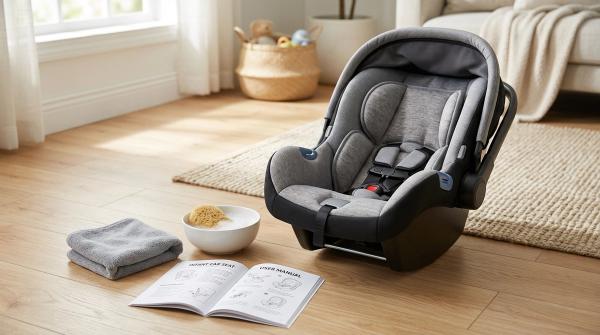
#An infant car seat is made for newborns and young babies. Most infant seats come in two main parts:
- A base that stays installed in the car
- A removable carrier seat that clicks in and out of the base
That removable carrier is the big reason many parents love infant seats.
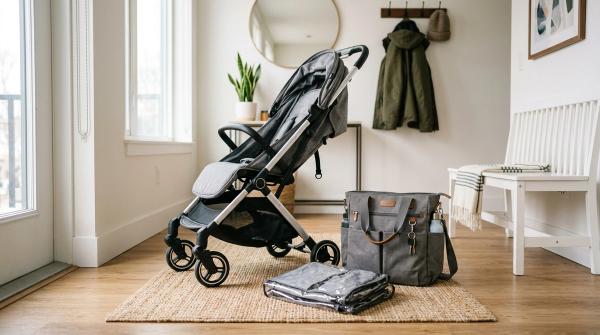
You can buckle your baby inside the house, carry the seat to the car, click it into the base, and go. When you arrive, you can often click the same seat onto a compatible stroller.
And if the baby falls asleep? You may be able to move them from car to stroller without unbuckling them right away.
That convenience is a huge deal in the newborn stage, especially if you drive often or run a lot of short errands.
Convertible car seat: the longer-use option
#A convertible car seat is designed to grow with your child.
It starts as a rear-facing car seat for babies and toddlers. Later, when your child is older and meets the seat’s requirements, it converts to forward-facing.
Unlike an infant seat, a convertible car seat does not click into a stroller. It usually stays installed in the car.
The main benefit is longer use. Instead of buying an infant seat first and then a convertible seat later, some families start with a convertible car seat from birth.
That can work well, but only if the seat is approved for your newborn’s size and gives a proper newborn fit.
And that part is really important.
Not every convertible car seat fits every newborn well, even if the box says it starts at a newborn weight.
Infant Car Seat vs Convertible Car Seat Comparison
#What Safety Guidance Actually Says
#A lot of new parents assume an infant car seat must be safer for a newborn.
That is understandable, but it is not really how most safety guidance looks at it.
Organizations such as the NHTSA, CDC, and AAP generally focus on things like:
- Using the right seat for your child’s age, height, and weight
- Following the car seat manual and vehicle manual
- Keeping children rear-facing as long as allowed by the car seat manufacturer
- Installing the seat in the back seat
- Buckling the harness correctly every ride
So instead of asking only, “Should I buy an infant car seat or convertible car seat?” ask:
Does this seat fit my baby, fit my car, install securely, recline correctly, and stay within the height and weight limits in the manual?
If the answer is yes, both an infant car seat and a convertible car seat can be safe choices.
When an Infant Car Seat Makes More Sense
#An infant car seat is often the easier first buy if convenience matters a lot in the first year.
It may be a good fit if:
- You expect to take lots of short car trips
- You want to buckle your baby indoors before leaving
- You want to move a sleeping baby from car to stroller more easily
- You plan to use a car seat stroller combo
- You have more than one car and want to use an extra base
- You live somewhere very hot, cold, rainy, or snowy
- You want fewer awkward moments buckling a newborn outdoors
For many parents, this is not about buying the fanciest gear.
It is about making everyday life less chaotic.
Newborn days can be overwhelming. If a removable carrier helps you get out the door calmly and buckle your baby correctly every time, that convenience matters.
The downside is that infant seats do not last as long.
Once your baby reaches the seat’s height limit, weight limit, head clearance rule, or any other outgrown rule in the manual, it is time to move to the next suitable car seat.
Do not stretch it just because the seat still looks okay.
When a Convertible Car Seat Makes More Sense
#A convertible car seat may be the better choice if you want to buy less baby gear and keep one seat installed for longer.
It may suit you if:
- You drive only sometimes
- You do not need to carry the car seat outside the car
- You do not care about stroller compatibility
- You prefer one longer-use purchase
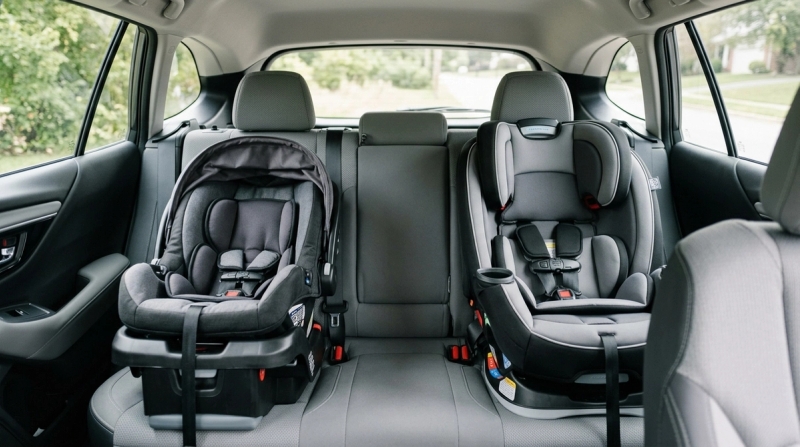
- Your back seat has enough room for a rear-facing convertible seat
- Your chosen model is approved for your newborn’s size
- The harness and recline angle fit your baby correctly from birth
The biggest thing to check is newborn fit.
Some convertible seats fit tiny babies very well. Others may technically allow newborn use but still feel awkward in a real car, especially for a small baby.
Do not guess. Check the manual before buying if possible.
Look closely at:
- Minimum weight
- Minimum height
- Newborn insert rules
- Harness position
- Recline angle
- Rear-facing limits
A convertible car seat can be a smart first purchase, but only if it truly fits your baby and your vehicle from day one.
New-Parent Car Seat Buying Checklist
#Before you decide, use this car seat buying checklist.
1. Check your baby’s expected starting size
#Look at the seat’s minimum weight and height requirements.
If you are expecting a smaller baby, or if your healthcare provider has mentioned any special concern, be extra careful here.
Some seats start lower than others. Some fit smaller newborns better than others.
Do not assume every convertible car seat fits every newborn. They do not.
2. Check the rear-facing limits
#For both infant and convertible seats, rear-facing use is very important.
Check the manual for:
- Minimum and maximum weight
- Minimum and maximum height
- Harness slot rules
- Head clearance rules
- Newborn insert rules
- Recline angle instructions
Many safety recommendations say to keep children rear-facing as long as allowed by the seat’s limits.
That means the limits in your specific manual matter.
3. Check your vehicle space
#Rear-facing car seats can take up more room than you expect.
Before buying, think about:
- Whether you drive a small hatchback, compact sedan, SUV, or larger car
- Whether the front passenger seat will still be usable
- Whether the driver can sit safely and comfortably
- Whether the car seat can recline correctly
- Whether your seat uses ISOFIX, LATCH, or seat belt installation, depending on your country and model
A convertible car seat might last longer, but if it makes the front seat unsafe or unusable, it may not be the right fit for your vehicle.
4. Check your real daily routine
#Be honest with yourself here.
If you will be driving to daycare, doctor appointments, grocery stores, grandparents’ houses, and quick errands, an infant car seat can make all those little transfers easier.
If you rarely drive and most outings are walks or short local trips, a convertible car seat may be enough.
There is no “perfect parent” answer. There is only what works for your life.
5. Check your stroller plans
#If you want a travel system, you are probably looking at an infant car seat.
Convertible car seats do not attach to strollers.
If stroller compatibility matters to you, confirm that the infant seat works with your stroller model, or that the correct adapter is available.
Do this before you buy, not after.
6. Check multiple-car use
#If your baby will regularly ride in two cars, think this through.
With an infant car seat, you may be able to install one base in each car and move the carrier between them.
With a convertible car seat, you may need:
- One seat per car, or
- A careful reinstall each time you switch vehicles
Repeated reinstalling can lead to mistakes, especially when everyone is rushed.
If two cars will be part of your routine, choose the setup that your family can use correctly every time.
7. Check your budget over time
#An infant car seat usually means two purchases:
- Infant seat first
- Convertible seat later
A convertible car seat may cost more upfront than some infant seats, but it can cover more stages.
The cheapest option is not always the best value.
The best value is the seat you can install correctly, use comfortably, and keep using within its limits.
Rear-Facing and Manual Checks You Should Not Skip
#Buying the seat is only step one.
Installation and daily buckling are where safety really happens.
Check the recline angle
#Newborns need the correct recline angle because they cannot support their heads well yet.
Most infant and convertible seats have a recline indicator, such as:
- A line
- A bubble
- A level marker
- A color zone
Use it exactly the way the manual explains.
A seat that is too upright may not be safe for a newborn. A seat that is too reclined may also be outside the allowed position.
Follow the manual, not guesswork.
Check harness height
#For a rear-facing car seat, the harness straps should generally come from at or just below the baby’s shoulders, according to the seat manual.
Check this often.
Babies grow quickly, and a harness setting that worked a few weeks ago may not be right anymore.
Check harness tightness
#The harness should be snug, with no bulky clothing between your baby and the straps.
Use the pinch test or the method described in your manual.
Also check the chest clip position if your seat uses one. In many models, it should sit at armpit level, but always follow your specific seat’s instructions.
Be careful with winter coats and thick outfits. They can make the harness look tight when it is not.
Check the back seat rule
#Safety guidance commonly says children should ride in the back seat.
The center rear seat may be preferred in some vehicles if you can get a correct installation there.
But the safest spot is the spot where the car seat installs properly according to both the car seat manual and your vehicle manual.
Sometimes that is the center. Sometimes it is not.
A correct installation matters more than forcing the seat into a position where it does not fit well.
Check when the infant seat is outgrown
#If you choose an infant car seat, do not use it past its limits.
Your baby has outgrown it when any one limit in the manual is reached. That may include:
- Maximum weight
- Maximum height
- Required hard shell space above the head, often 1 inch in many manuals
- Any other outgrown rule listed by the manufacturer
Do not wait for all limits to be reached.
One limit is enough.
India and Global Availability Context
#Car seat standards and labels vary by country, so buy for the country where you will actually use the seat.
For global buyers, look for clear approval labels such as:
- FMVSS 213 for the United States
- ECE R44 or ECE R129 for Europe and many other markets where those standards are used
For readers in India, the car seat market is growing, but availability and labeling can vary a lot between brands and retailers.
Check for relevant Indian approval information where applicable, including AIS-072 for child restraint systems. Also make sure the seat clearly lists the child size range it is designed for.
Do not rely only on the brand name, imported styling, influencer videos, or online ratings.
Look at:
- The approval label
- The manual
- The height and weight limits
- The actual fit in your car
- The fit for your child
If you travel internationally or move between countries, check whether your seat is accepted under the rules where you will drive. Local laws can differ, and enforcement can too.
Recall and Label Checks
#Before using any car seat, take a few minutes to do these checks.
They are boring, yes. But they matter.
Find the manufacturer label
#Look for:
- Brand and model name
- Model number
- Date of manufacture
- Expiration date or usable life
- Approval standard
- Height and weight limits
You will usually find this information on a label on the seat shell or base.
Register the seat
#Register your car seat with the manufacturer soon after purchase.
This helps the company contact you directly if there is a safety recall or important update.
It is one of those small tasks that can make a big difference later.
Check for recalls
#You can also check the manufacturer’s website or the official recall system in your country.
If there is a recall, follow the manufacturer’s instructions exactly.
A recall does not always mean the seat must be thrown away. Sometimes the fix is a replacement part, updated label, repair kit, or specific instruction.
The important thing is to follow the official guidance.
Quick Decision Guide
#Choose an infant car seat first if:
- You want maximum newborn convenience
- You plan to use a stroller travel system
- You drive often
- You want easier transfers with a sleeping baby
- You may use two cars with extra bases
- You want to buckle your baby indoors before heading out
Choose a convertible car seat first if:
- You want longer use from one seat
- You do not need stroller compatibility
- You drive less often
- Your car has enough room for a rear-facing convertible seat
- The seat fits your newborn properly from birth
- You prefer to keep one seat installed most of the time
There is no prize for buying the “more serious” option.
And there is no shame in choosing convenience, either.
The best first car seat is the one that fits your baby, your vehicle, your budget, and your real routine.
Not someone else’s perfect checklist.