If you’ve ever picked up a recipe, seen “baking soda” or “baking powder,” and thought, Wait… aren’t these the same thing? — you’re definitely not alone.
They all help food rise, but they don’t work the same way. And then there’s yeast, which is a completely different story.
For Indian vegetarian readers, there’s also another very fair question: are these ingredients veg? What does INS 500(ii) mean on a label? And is yeast veg or non-veg?
Let’s keep it simple. Here’s what baking soda, baking powder, and yeast actually do, when to use each one, and what to check if you’re reading labels.
Quick answer
#Here’s the easy version.
In normal kitchen language:
- Baking soda works fast, but it needs something acidic like curd, buttermilk, lemon juice, vinegar, or natural cocoa.
- Baking powder is easier to use because it already contains an acid.
- Yeast works slowly. It ferments dough and gives bread that soft, chewy texture and lovely bakery-like smell.
What these ingredients actually do
#Baking soda, baking powder, and yeast are all leavening agents. That simply means they help food rise by creating carbon dioxide gas.
Those tiny gas bubbles get trapped inside the batter or dough. That’s why cakes become soft, pancakes turn fluffy, dhokla becomes spongy, and bread gets lighter.
But the way they make those bubbles is different.
Baking soda and baking powder are chemical leaveners. They react quickly, so they’re used in recipes that don’t need long resting time, like cakes, muffins, cookies, pancakes, dhokla, and quick bhatura.
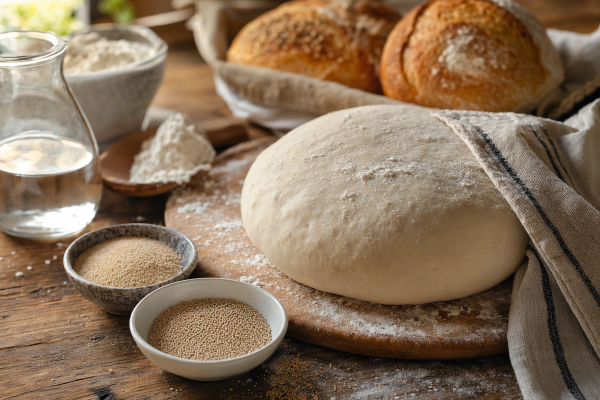
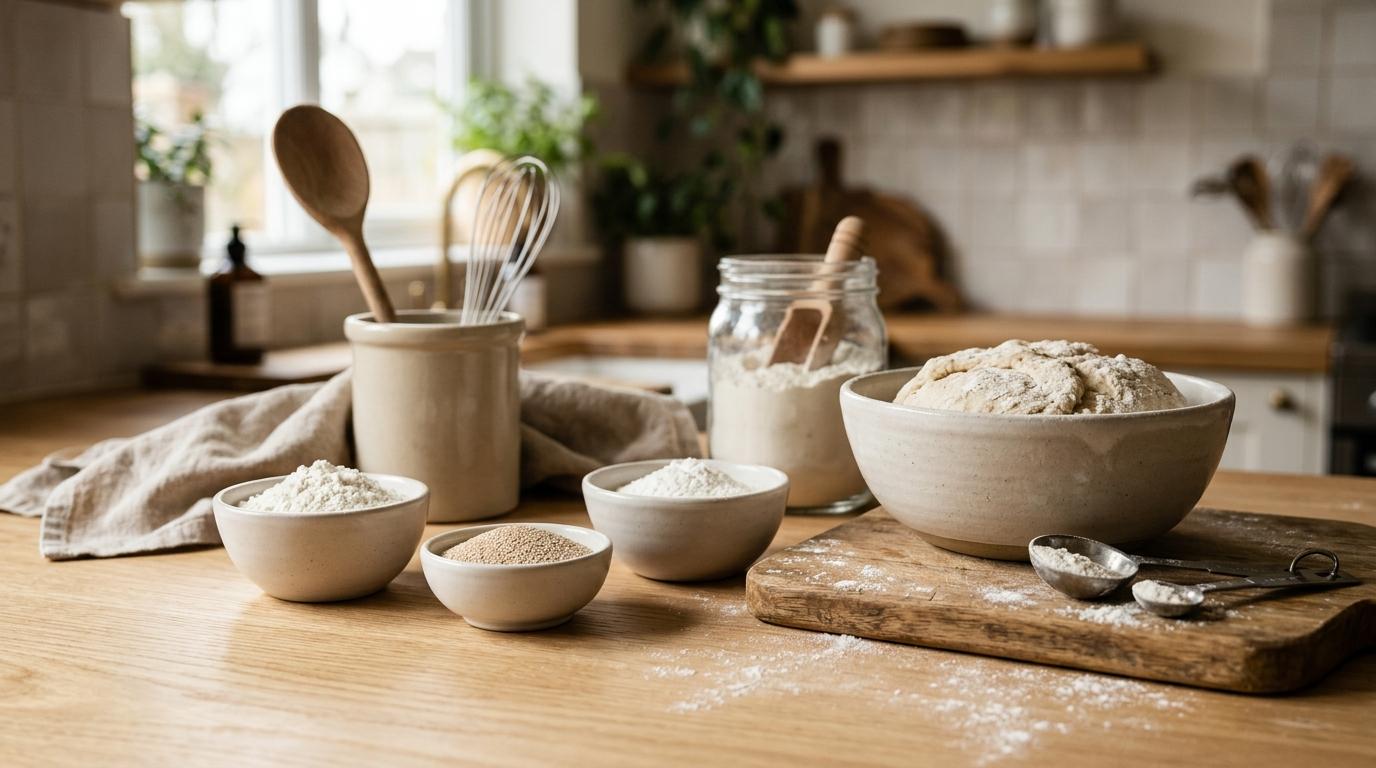
Yeast is a biological leavener. It is a living microorganism from the fungus family. It slowly feeds on the sugars and starches in dough and releases gas over time. That’s why yeasted dough needs resting or proofing.
So, if you’re comparing baking powder vs yeast, the main difference is this:
Baking powder gives a quick rise. Yeast gives a slow, fermented rise.
And that slow fermentation is what gives bread its flavour, smell, chew, and structure.
Vegetarian and label checks
#Now let’s answer the veg questions clearly.
Is baking soda vegetarian?
#Yes. Baking soda is vegetarian.
Baking soda is sodium bicarbonate, a mineral-based compound used as a raising agent.
On Indian food labels, you may see it written as:
- Baking soda
- Sodium bicarbonate
- INS 500(ii)
- E500(ii)
So if you’re wondering, is baking soda vegetarian, the answer is yes.
That said, when you’re buying packaged foods, don’t check only one ingredient. The final product may contain other ingredients too, so it’s always better to read the full ingredient list and look for the green veg symbol.
Is baking powder veg?
#Yes, standard baking powder is generally vegetarian.
If your question is, is baking powder veg, then in most regular cases, yes.
Baking powder usually contains:
- Baking soda
- A dry acid, such as cream of tartar or another approved acid salt
- A starch to keep it dry and free-flowing
Normal baking powder usually does not contain animal ingredients.
Still, if you follow very strict vegetarian or vegan rules, check the label properly. This is especially important for baking mixes, imported products, flavoured mixes, and ready-made packaged foods.
Yeast veg or non-veg?
#This one causes a lot of confusion, especially in Indian households.
Yeast is generally considered vegetarian and vegan. It belongs to the fungus kingdom, like mushrooms. It is not an animal.
So if you’re asking, yeast veg or non-veg, yeast itself is treated as veg by most vegetarian and vegan food standards.
The only time you need to be more careful is with ready-made bakery items. Bread, buns, pizza bases, and sourdough may contain other ingredients like dairy, egg, enzymes, emulsifiers, or additives. So for packaged products, always check the full label.
When to use baking soda
#Use baking soda when your recipe already has an acidic ingredient.
Baking soda is alkaline. It needs acid to react properly and make carbon dioxide. If there isn’t enough acid, it can leave a bitter or slightly soapy taste.
And honestly, once you taste too much soda in cake, dhokla, or pakoda batter, you don’t forget it.
Common acidic ingredients that work with baking soda include:
- Curd or yogurt
- Buttermilk
- Lemon juice
- Vinegar
- Brown sugar
- Natural cocoa powder
Use baking soda for:
- Dhokla
- Bhatura made with curd
- Chocolate cakes with natural cocoa or buttermilk
- Some cookies, especially where browning and spread are wanted
- Quick Indian snacks where curd or lemon juice is already part of the batter
A small amount of baking soda is enough. Don’t add extra thinking it will make the food softer or fluffier. Too much can spoil the taste very quickly.
When to use baking powder
#Use baking powder when the recipe does not have enough acid on its own, or when you want a more reliable rise.
Baking powder already contains both the alkaline part and the acidic part. It mainly needs moisture and heat to start working.
Many baking powders are double-acting. This means they release some gas when mixed with liquid and more gas when heated.
Use baking powder for:
- Vanilla sponge cake
- Pancakes
- Muffins
- Quick breads
- Some cookies
- Eggless cakes where the recipe is designed around baking powder
For beginner bakers, baking powder is usually easier than baking soda because you don’t have to worry as much about balancing acid in the batter.
One important rule: if a recipe says baking powder, don’t casually replace it with baking soda. They are not the same strength, and they don’t behave the same way.
When to use yeast
#Use yeast when you want proper bread-like dough with fermentation, chew, aroma, and structure.
Yeast needs:
- Warmth
- Moisture
- Food, usually sugars or starches from flour
- Time
That last point matters a lot. Yeast does not work instantly like baking powder. You can’t mix yeast into dough and expect it to rise immediately in the oven or on the tawa. It needs time to rest and ferment.
Use yeast for:
- Homemade bread
- Pav
- Pizza base
- Dinner rolls
- Naan-style doughs
- Some bhatura recipes that use slow fermentation
Yeast gives a very different result from baking soda or baking powder. It makes dough more elastic, airy, and bread-like.
So baking powder vs yeast is not only about rise. It is also about flavour, texture, chew, and the final feel of the food.
Can you substitute one for another?
#Sometimes, but not always. This is where many recipes go wrong.
Can you use baking powder instead of baking soda?
#Yes, in some recipes, but you’ll need more baking powder.
Baking soda is stronger than baking powder. A common rough rule is:
1 teaspoon baking soda = about 3 teaspoons baking powder
But this swap can change the taste and texture. It works better in simple quick batters than in delicate cakes or cookies.
Also, baking powder has extra ingredients, so using too much can affect the flavour. And if a recipe needs baking soda for browning or spreading, like some cookie recipes do, baking powder may not give the same result.
Can you use baking soda instead of baking powder?
#This is a little trickier.
If a recipe asks for baking powder and you only have baking soda, you need to use less baking soda and add an acidic ingredient.
A rough rule is:
1 teaspoon baking powder = about 1/4 teaspoon baking soda plus an acidic ingredient
The acid can be curd, lemon juice, vinegar, or buttermilk, depending on the recipe.
But this is not always a perfect swap because adding acid can change the flavour and liquid balance. For cakes, especially eggless cakes, it’s usually better to follow the recipe exactly unless you understand how the batter is balanced.
Can you substitute yeast with baking powder or baking soda?
#Usually, no.
Yeast is not just a raising agent. It ferments the dough and changes its structure. Baking powder or baking soda can puff something up quickly, but they won’t give the same bread-like chew or fermented flavour.
Avoid replacing yeast in:
- Bread
- Pav
- Pizza base
- Rolls
- Yeasted naan-style doughs
For bhatura, it depends on the recipe. Some bhatura recipes use yeast and need longer resting time. Quick homemade bhatura recipes often use curd with baking soda or baking powder. Follow the method written in your recipe, otherwise the texture may not come out right.
Can you use yeast instead of baking powder?
#Not in normal cake, pancake, or cookie recipes.
Yeast needs time and a dough-like structure. Cake and pancake batters are usually not meant for long fermentation. If you try it, the result may become heavy, too sour, or just odd.
Common mistakes to avoid
#1. Using baking soda without acid
#Baking soda needs acid to work properly. If there’s no curd, buttermilk, lemon juice, vinegar, or another acidic ingredient, it may not react well. The food can taste bitter or soapy.
2. Replacing baking powder with the same amount of baking soda
#Don’t do a 1:1 swap. Baking soda is much stronger than baking powder.
If you replace 1 teaspoon baking powder with 1 teaspoon baking soda, the recipe can taste harsh and may rise unevenly.
3. Expecting yeast to work instantly
#Yeast needs time. If a bread recipe says rest for one hour or until doubled, that step is not optional.
Skipping proofing can give you dense, heavy bread. And after all that effort, that’s the last thing anyone wants.
4. Killing yeast with very hot water
#Yeast likes warm water, not boiling water.
Very hot water can kill yeast, and then your dough simply won’t rise. If your recipe asks you to activate yeast in water, the water should feel warm, not hot.
5. Using old baking powder or baking soda
#Baking powder and baking soda lose strength over time, especially if moisture gets into the container.
If your cakes, pancakes, or dhokla are turning flat even though the recipe looks fine, your leavener may be old.
6. Ignoring the full label
#For vegetarian checks, don’t stop at just one ingredient like INS 500(ii).
Baking soda and standard baking powder are generally vegetarian, and yeast is generally considered vegetarian too. But packaged foods may contain other ingredients, so check the full ingredient list and the veg symbol.