Some afternoons are just not made for a full lunch.
You know the kind. The kitchen is already warm, everyone is moving a little slowly, and even the idea of making roti, sabzi, dal, rice, and salad feels tiring.
On those days, a soft bowl of barley khichdi is such a relief.
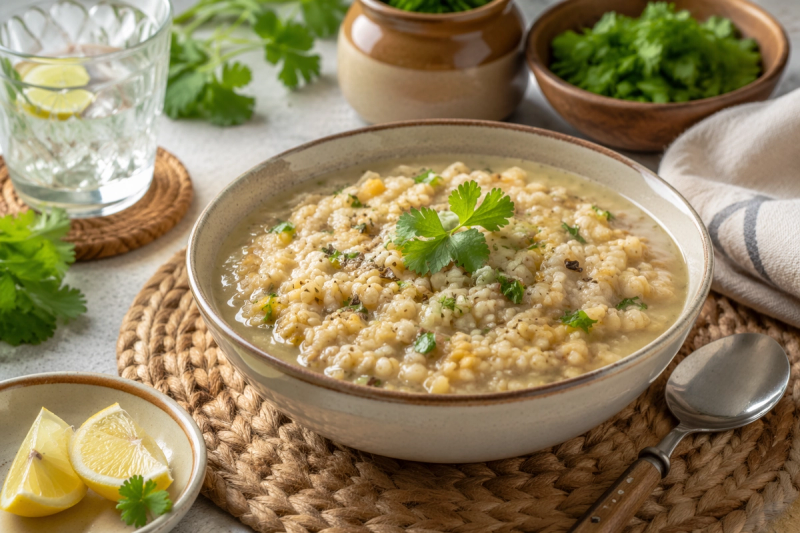
This barley khichdi recipe is made with jau, yellow moong dal, a few everyday vegetables, cumin, ginger, turmeric, and enough water to make everything soft and comforting. It is filling, but not in a heavy way. It has the same homely feeling as regular khichdi, but the barley adds a mild nutty taste and a little chew, so it does not feel boring.
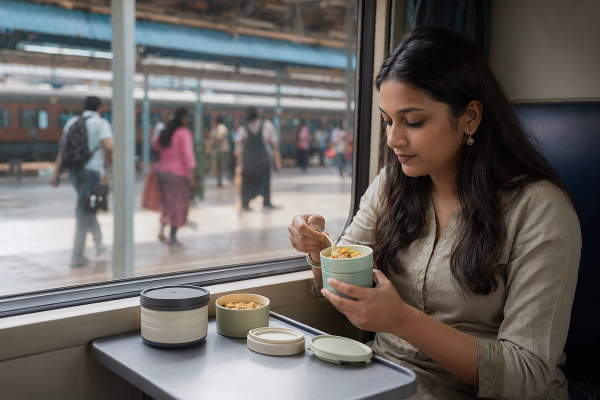
I like making this jau khichdi for a light Indian lunch, especially when I want something other than curd rice, dal chawal, poha, or the usual rice khichdi. It also works well for office tiffin. Just pack it a little loose, because barley keeps absorbing water as it sits.
One small note before we begin: this is a home-style recipe, not medical advice. If you have diabetes, kidney issues, digestive concerns, or you follow a diet plan given by a doctor or dietitian, please check whether barley, dal, salt, and the portion size are suitable for you.
Quick answer
#To make a simple barley khichdi recipe for hot weather, soak pearl barley and yellow moong dal, then pressure cook them with mild spices, vegetables, and enough water until soft.
For 4 servings, you will need:
- ½ cup pearl barley, also called jau
- ½ cup yellow moong dal
- 1 to 1½ cups chopped vegetables
- 1½ tablespoons ghee or oil
- Cumin, ginger, turmeric, black pepper, hing, and salt
- 4 to 4½ cups water
Wash and soak the barley and dal for at least 30 minutes. Make a light tadka with cumin, hing, ginger, and optional green chilli. Add the vegetables, spices, soaked barley, soaked dal, and water. Pressure cook for 5 to 6 whistles on medium heat, then let the pressure release naturally.
You will get a soft, porridge-like barley moong dal khichdi that tastes lovely with curd, cucumber raita, kachumber, roasted papad, or a small spoon of pickle.
Recipe details:Prep time: 15 minutesSoak time: 30 minutesCook time: 30 minutesYield: 4 servings 
Why barley khichdi works in hot weather
#In summer, food has to be easy in every way. Easy to cook, easy to digest, and easy to sit down and eat.
Heavy gravies, fried snacks, and very spicy food can feel like too much when the weather is already draining you. A good summer khichdi should be soft, moist, lightly spiced, and nice with something cooling on the side, like curd or cucumber.
Barley fits into that mood beautifully.
It changes regular khichdi without making things complicated
#Most Indian kitchens already understand khichdi. You do not need a special technique or any restaurant-style process. This is still khichdi, just made with jau instead of rice.
That one small change makes it feel new.
Barley has a gentle earthy taste and a little bite. Moong dal becomes soft and creamy around it. Together, they make a bowl that feels familiar, comforting, and a little more interesting than the usual version.
It does not need heavy spices
#This is not the kind of khichdi that needs a big masala base.
Barley tastes best when you keep the seasoning simple. Cumin, ginger, turmeric, black pepper, and hing are enough. You can add one slit green chilli if you like a little heat, but you do not really need red chilli powder or garam masala here.
If you are looking for cooling Indian lunch recipes for summer, this one fits right in. It is warm food, yes, but it still feels light and clean.
It works well for tiffin
#Rice khichdi can sometimes become very sticky in a lunchbox. Barley khichdi also thickens, but the grains keep some shape, which makes it good for office lunch.
The only thing to remember is that barley continues to absorb water. A khichdi that looks perfect in the morning can become quite thick by lunchtime. So if you are packing it, keep it slightly loose or stir in a little extra hot water before closing the box.
Carry curd or raita separately if possible.
It suits lunch and dinner
#For lunch, make it medium thick with vegetables and serve it with raita.
For dinner, make it looser and softer. It is one of those light Indian dinner ideas for summer nights when no one really wants a full roti-sabzi meal.
Step-by-step recipe
#This makes 4 servings of barley moong dal khichdi.
Step 1: Wash and soak the barley and dal
#Take ½ cup pearl barley and ½ cup yellow moong dal in a bowl. Rinse them well with water, rubbing gently with your fingers. Change the water 3 to 4 times, or until it looks mostly clear.
Cover with fresh water and soak for at least 30 minutes.
Soaking really helps here. Barley is firmer than rice, so it cooks more evenly when it has had some time to soften. If you have more time, you can soak it longer. But for a weekday lunch, 30 minutes is fine.
After soaking, drain the water.
Step 2: Chop the vegetables
#While the barley and dal are soaking, chop your vegetables.
Keep the pieces small so they mix well into the khichdi. Every spoonful should have a little dal, a little barley, and some vegetable.
If you are using lauki, peel it and chop it small. Carrots and beans should also be cut small so they cook properly.
Step 3: Make the tadka
#Put a pressure cooker on medium heat. Add 1½ tablespoons ghee or oil.
Once it is warm, add 1 teaspoon cumin seeds. Let them sizzle for a few seconds. They should smell fragrant, not burnt.
Add hing, ginger, and the slit green chilli if using. Stir for about 30 seconds. The ginger should smell fresh and cooked, but do not brown it too much.
This tadka is very simple, but it gives the khichdi its main flavour.
Step 4: Add vegetables and spices
#Add the chopped vegetables to the cooker. Stir well so they get coated with the ghee or oil.
Cook for about 2 minutes.
Add turmeric powder, black pepper, and salt. Stir again for a few seconds. Do not fry the turmeric for too long, because it can turn bitter if it burns.
At this point, the cooker should smell mild, warm, and earthy.
Step 5: Add the soaked barley and moong dal
#Add the drained barley and moong dal.
Stir for 1 to 2 minutes. This helps the grains pick up the flavour of the tadka. You are not trying to roast them deeply, just mixing and warming everything together.
Step 6: Add water and pressure cook
#Pour in 4 to 4½ cups water.
Use 4 cups for a thicker khichdi. Use 4½ cups if you want it softer, looser, or more tiffin-friendly.
Stir well and scrape the bottom of the cooker so nothing is stuck. Close the lid and pressure cook on medium heat for 5 to 6 whistles.
Barley takes longer to cook than rice. Do not stop at 2 or 3 whistles unless your cooker is very fast. Undercooked barley can feel hard in the middle, and that is not pleasant in khichdi.
Step 7: Let the pressure release naturally
#Turn off the heat after 5 to 6 whistles.
Let the pressure release on its own. Do not open the cooker in a hurry. This resting time helps the barley soften more and allows the dal to become creamier.
Once the pressure has fully released, open the lid carefully.
Step 8: Stir and adjust
#Stir the khichdi well with a ladle.
The moong dal should look soft and creamy. The barley grains should be tender, with a gentle chew.
If the khichdi looks too thick, add ½ cup hot water and simmer for 1 to 2 minutes. Use hot water instead of cold water so the texture stays smooth.
Taste and adjust the salt if needed.
Serve hot with curd, raita, kachumber, roasted papad, or a little pickle.
Texture tips
#Barley does not behave like rice, and that is the main thing to remember. It will not melt completely. A good jau khichdi is soft and creamy overall, but the barley still has a little bite.
Soak it, even if you are in a hurry
#If you skip soaking, the barley may cook unevenly. The outside can soften while the centre stays firm.
Even 30 minutes of soaking makes a clear difference.
If you forgot to soak it, add more water and pressure cook for longer. The texture may not be perfect, but the khichdi will still be usable.
Use enough water
#Barley absorbs a lot of water while cooking, and it keeps absorbing water even after cooking.
For 1 cup total barley and dal, these water amounts work well:
- 3½ cups water for a thicker khichdi
- 4 cups water for regular soft khichdi
- 4½ to 5 cups water for a loose, porridge-like khichdi
For summer, the softer version usually feels better. It is also easier to eat with curd or raita.
Remember that it thickens as it rests
#This is especially important for tiffin.
If you pack barley khichdi when it is already thick, it may become dense by lunchtime. Keep it slightly loose, or stir in a little hot water before packing.
For leftovers, always add water while reheating. Warm it slowly and stir often so it does not stick to the bottom.
Do not add too many vegetables
#Vegetables are good here, but too many can make the khichdi bulky.
Keep it to about 1 to 1½ cups for this recipe. For a lighter summer bowl, lauki, beans, carrots, and peas are enough.
Keep the spices mild
#This is not a masala khichdi. Heavy spice mixes can make it feel too warm and rich.
Let cumin, ginger, turmeric, and black pepper do the work. If you want more freshness, add chopped coriander at the end or squeeze a little lemon just before eating.
How to make it better for tiffin
#This barley khichdi recipe can be very good for tiffin, but summer food needs a little care.
First, cook it slightly loose. Barley thickens as it cools. Add an extra ¼ to ½ cup water if you already know it is going into a lunchbox.
Second, pack curd or raita separately. Do not mix curd into hot khichdi and close the box for later. In warm weather, it can turn sour quickly.
Third, think about time and temperature. Cooked dal and khichdi should not sit around for too long in summer heat. If your office has a fridge, use it. If you carry an insulated lunch bag, pack it properly.
If the food smells sour, looks frothy, or tastes off, do not eat it.
For regular office lunch, this khichdi works best when it is cooked fresh in the morning and eaten within a normal lunch time.
What to serve with barley khichdi
#This summer khichdi is complete enough on its own, but a good side makes it much better.
Curd
#Plain curd is the easiest side. Keep it chilled if possible and serve it separately. The slight tang goes really well with the earthy barley.
Cucumber raita
#Mix curd with grated or chopped cucumber, roasted cumin powder, salt, and chopped mint or coriander. This is one of the best pairings for a hot weather lunch.
Lauki raita
#If you have bottle gourd at home, grate and cook it, then cool it and mix with curd. It makes the meal soft, gentle, and very summer-friendly.
Kachumber
#A simple salad with cucumber, tomato, onion, coriander, lemon juice, and salt adds freshness and crunch.
If onions feel too sharp in summer, skip them.
Roasted papad
#Roasted papad gives crunch without making the meal oily. You can crush a little over the khichdi just before eating.
Pickle
#A small spoon of mango or lemon pickle is enough. Do not add too much, especially on very hot days, because the khichdi is meant to stay mild.
Variations you can try
#Once you understand the basic method, this barley moong dal khichdi is easy to adjust.
Plain barley moong dal khichdi
#Skip the vegetables and cook only barley, moong dal, and spices. This version feels closer to classic comfort food.
Lauki barley khichdi
#Use 1 to 1½ cups chopped bottle gourd as the main vegetable. It blends beautifully into the dal and keeps the khichdi light.
Pepper-cumin barley khichdi
#Skip the green chilli and use a little extra black pepper and cumin. This is nice when you want warmth without chilli heat.
Tiffin-style thicker khichdi
#Use 3½ to 4 cups water instead of 4½. Cook until soft and pack with curd, salad, or roasted papad on the side.
Dinner-style loose khichdi
#Use 4½ to 5 cups water and keep the spices very mild. This gives you a soft, soothing bowl for nights when you want something simple.
Common mistakes to avoid
#Using hulled barley without changing the cooking time
#Hulled barley takes longer than pearl barley. If you use it with the same cooking time, the khichdi may stay too chewy. Pearl barley is easier for this recipe.
Not washing properly
#Barley and dal should be rinsed well before soaking. It gives the khichdi a cleaner taste and better texture.
Adding too little water
#Dry barley khichdi can feel heavy and chewy. For summer, keep it soft and moist.
Cooking on very high heat
#Very high heat can make the bottom catch, especially once the dal starts thickening. Medium heat is safer.
Opening the cooker too soon
#Natural pressure release matters. It gives the barley more time to soften. If you open the cooker too early, the texture may feel unfinished.
Packing it steaming hot and closing it tightly
#In summer, trapped steam can make food spoil faster, especially if it sits for hours.
If you are storing it, cool and refrigerate it properly. If you are carrying it, use clean containers and eat it within a sensible time.
Final thoughts
#This barley khichdi recipe is not fancy, and it does not need to be.
It is warm, soft, practical, and easy to adjust. Exactly the kind of food that makes sense when the weather is too hot for heavy lunches.
The mix of jau, yellow moong dal, mild spices, and simple vegetables gives you a comforting light Indian lunch without using rice every time. Make it loose for home, slightly thicker for tiffin, or extra soft for dinner.
So the next time you are wondering what to cook for a hot weather lunch, soak some barley with moong dal, chop whatever gentle vegetables you have, and let the pressure cooker do most of the work.
Serve it with curd, raita, or kachumber, and you have a simple bowl of summer comfort that feels easy from the first spoonful.