Every year on Dhanteras, while long lines form outside gold and diamond jewelers, the real pulse of the festival unfolds across local utensil markets and cookware shops. From bustling neighborhood metal bazaars in Old Delhi and Rajkot to modern department stores across urban centers, hundreds of thousands of families purchase brass vessels, copper jugs, kansa dinner plates, and stainless steel pots. For many households, buying metal cookware (bartan) is not a compromise for those who cannot afford gold; it is the oldest, most foundational custom of Dhanatrayodashi.
Yet modern utensil shopping on Dhanteras is fraught with confusion. Many buyers purchase flimsy sheet-metal vessels plated with artificial lacquer that peels under heat. Others buy raw brass or unlined copper cookware without realizing that cooking acidic foods like tomato curry, curd, or tamarind in unlined copper creates toxic verdigris. Furthermore, many shoppers forget the central folk custom of Dhanteras: bringing an entirely empty utensil across your home threshold is traditionally viewed as inviting financial and material emptiness into the household.
To make an informed purchase that honors cultural tradition while ensuring food safety and genuine financial value, you need to understand the metallurgy, the ancient origins of Lord Dhanvantari, the specific metals to prioritize, what items to strictly avoid, and how to verify authenticity in crowded festival markets.
The Origin of Dhanteras: Lord Dhanvantari and the Amrit Kalash
#To understand why kitchen vessels take center stage on Dhanteras, one must look past the commercial association with gold jewelry and examine the festival's mythological and Ayurvedic roots. Dhanteras, formally known as Dhanatrayodashi, falls on the thirteenth lunar day of the dark fortnight (Krishna Paksha) in the Hindu month of Kartik. 
The day does not mark the birth of Goddess Lakshmi; rather, it commemorates the divine emergence of Lord Dhanvantari, an avatar of Lord Vishnu and the celestial physician of the gods. According to the Puranas, during the monumental cosmic event known as the Samudra Manthan (the churning of the cosmic milk ocean by the gods and demons), fourteen divine treasures surfaced from the depths. On Trayodashi, Lord Dhanvantari emerged from the churning waters holding sacred Ayurvedic texts in one hand and the Amrit Kalash—a pot brimming with the immortal nectar of life, health, and vitality—in the other.
This single iconographic detail forms the entire basis of the utensil tradition. The pot held by Lord Dhanvantari symbolizes two interconnected principles:
- Nourishment and health: A kitchen vessel is the container of food, which Ayurveda treats as Mahabhaishajya (the supreme medicine). The quality of the vessel dictates the health of the family.
- Perpetual fullness: The Amrit Kalash was never empty; it represented endless vitality and divine grace.
When families buy a utensil on Dhanteras, they are symbolically welcoming Lord Dhanvantari's healing Amrit Kalash into their kitchen. While buying silver coins for Dhanteras or investing in precious metals focuses on capital preservation, buying a kitchen vessel is an invocation for physical wellness, kitchen nourishment, and household longevity.
The Metal Hierarchy: Which Utensils to Buy on Dhanteras
#Not all metals carry equal traditional significance or practical utility. Historically, Vedic households adhered to a strict metallurgical hierarchy based on elemental conductivity, Ayurvedic health properties, and ritual purity. If you are entering the market this Dhanteras, consider how each metal performs in the kitchen and what symbolic value it brings.
1. Brass (Pital): The Prime Vessel of Dhanvantari
#Brass is the definitive metal of Dhanteras. In traditional iconography, Lord Dhanvantari is depicted holding a golden-hued vessel, which traditional scholars associate with Pital (brass). Astrologically, brass is linked to the planet Jupiter (Brihaspati), which governs wisdom, health, expansive prosperity, and auspicious domestic life.
From a metallurgical standpoint, brass is an alloy consisting of approximately 60 to 70 percent copper and 30 to 40 percent zinc. This combination yields a remarkably durable, dense metal with excellent heat retention. Unlike thin modern cookware, heavy brass heats evenly across its base, preventing localized hot spots that burn delicate spices and grains.
When buying brass on Dhanteras, shoppers typically choose:
- Brass Parat (a wide, heavy, shallow basin used for kneading dough)
- Brass Kalash or Lota (used for domestic water storage and morning puja rituals)
- Brass Kadai or Patila (deep cooking pots, provided they are properly tinned on the interior)
- Brass Diyas and lamps (which retain structural integrity under high heat)
2. Copper (Tamba): The Solar Metal of Vitality
#Copper (Tamba) holds a revered place in both Vedic rituals and preventative Ayurveda. Astrologically ruled by the Sun (Surya), copper embodies energy, willpower, purification, and physical stamina. 
In Ayurvedic texts, copper is renowned for creating Tamra Jal—water that has rested in an unlined copper vessel for six to eight hours. During this contact period, trace amounts of copper ions dissolve into the water through an oligodynamic process, imparting proven antibacterial, antifungal, and antioxidant properties. Modern microbiology confirms that copper surfaces actively neutralize harmful bacteria, including Escherichia coli and Salmonella, within hours.
Popular copper purchases for Dhanteras include:
- Seamless hammered copper water bottles and carafes
- Traditional copper water storage dispensers (Matka or jugs)
- Copper Panchpatra and spoons for sacred altar ceremonies
3. Kansa (Bronze or Bell Metal): The Royal Dining Alloy
#Often called India's premier wellness metal, Kansa is an ancient alloy composed of approximately 78 percent copper and 22 percent tin. Historically known as bell metal due to its clear, resonant, bell-like acoustic chime when struck, Kansa was the exclusive dining material of royal Indian households.
In Ayurveda, dining from pure Kansa plates and bowls is celebrated because the alloy is non-reactive to mild organic food acids, promotes digestive enzyme secretion, and helps balance the body's three doshas (Vata, Pitta, and Kapha). 
Key Dhanteras Kansa purchases:
- Complete Kansa Thali dining sets (comprising a flat plate, bowls, and a water glass)
- Kansa foot massage bowls (Kansa Vatki) used for traditional Ayurvedic wellness therapies
4. Food-Grade Stainless Steel: The Modern Practical Compromise
#Pure brass, copper, and bronze require intentional maintenance. For millions of modern working households, daily life revolves around stainless steel. Stainless steel did not exist in ancient texts, as it is an industrial alloy primarily made of iron, chromium, and nickel.
Strict traditionalists occasionally question steel because its primary constituent is iron, a metal governed by Saturn (Shani) that is conventionally avoided on Dhanteras. However, modern cultural consensus widely embraces stainless steel as a clean, hygienic, and affordable way to participate in the festival. If you choose stainless steel, ensure you buy high-grade cookware (such as 304 food-grade stainless steel with a heavy, encapsulated aluminum or copper base) rather than flimsy, low-grade utility wares. Many families purchase a practical stainless steel set and accompany it with a small brass or silver token to honor traditional metal preferences.
Dhanteras Utensil Comparison Matrix
#| Metal Type | Primary Composition | Astrological / Ritual Element | Best Kitchen and Home Use | Food Reactivity Risk |
|---|---|---|---|---|
| Brass (Pital) | 60-70% Copper, 30-40% Zinc | Jupiter (Health and Wisdom) | Rice pots, water vessels, dough basins, puja items | Highly reactive to acids; requires tin lining for cooking |
| Copper (Tamba) | 99% Pure Refined Copper | Sun (Vitality and Energy) | Overnight drinking water storage, altar utensils | Toxic with acidic foods; strictly for water and dry goods |
| Kansa (Bronze) | 78% Copper, 22% Tin | Moon and Mercury (Harmony and Digestion) | Everyday dining thalis, cups, dessert bowls | Resistant to mild acids; safe for daily dining |
| Stainless Steel 304 | Iron, 18% Chromium, 8% Nickel | Modern Neutral Alloy | General pressure cooking, boiling, everyday storage | Inert and non-reactive to all common kitchen acids |
| Pure Silver (Chandi) | 92.5% to 99.9% Silver | Moon (Calmness and Purity) | Baby feeding spoons, puja glasses, dessert bowls | Completely non-reactive; imparts antimicrobial benefits |
The Food Chemistry Reality: Why You Must Never Cook Acidic Foods in Unlined Copper or Brass
#While buying traditional metals brings historical beauty and authenticity to your home, understanding food safety is non-negotiable. Many consumers purchase decorative brass or copper cookware on Dhanteras and immediately begin cooking tomato curries, tamarind sambars, or yogurt-based gravies in them. Doing so creates a dangerous chemical hazard.
When copper or brass comes into contact with organic acids (such as citric acid in lemons, acetic acid in vinegar, lactic acid in yogurt, or tartaric acid in tamarind), a spontaneous oxidation-reduction reaction occurs. The acid dissolves trace surface copper and zinc, forming copper salts, including copper acetate and copper carbonate, colloquially known as verdigris. Verdigris is a toxic blue-green compound. 
Ingesting food contaminated with dissolved copper salts can trigger acute metal toxicity, leading to nausea, severe abdominal cramps, vomiting, diarrhea, and long-term liver or kidney strain.
The Sacred Art of Kalai: Traditional Tin Lining
#To safely cook in brass and copper, Indian culinary tradition developed the art of Kalai—coating the internal cooking surface with a thin, continuous layer of pure molten tin (Ranga). 
Tin is an inert, non-reactive metal that acts as an impermeable physical barrier between acidic ingredients and the reactive copper alloy underneath. A properly tinned brass pot delivers the magnificent, uniform heat distribution of copper without any of the toxicity risks.
When evaluating tinned brass or copper cookware on Dhanteras, keep these operational rules in mind:
- Pure tin versus lead contamination: Traditional Kalai artisans use pure food-grade tin. Disreputable vendors sometimes adulterate tin with lead to reduce melting points and cost. Always buy from reputable, certified cookware manufacturers who guarantee 100 percent lead-free tinning.
- Visual inspection: The interior of a freshly tinned pot should display a bright, silvery, semi-matte finish. It should be smooth and free of dark pinholes, black streaks, or exposed yellow brass.
- Re-tinning schedule: Tin is a relatively soft metal with a melting point of approximately 232 degrees Celsius (450 degrees Fahrenheit). Metal spoons and harsh scouring pads will gradually wear the tin away. Once the yellow brass or reddish copper base begins peeking through the silvery lining, stop cooking in the vessel until it has been professionally re-tinned.
- Never dry-heat a tinned pan: Because tin melts at 232 degrees Celsius, placing an empty tinned pan over a high flame will melt the lining within minutes. Always ensure oil, water, or cooking ingredients are in the pan before lighting the burner.
The Inauspicious List: What You Should Never Buy on Dhanteras
#Just as tradition prescribes buying wholesome, nourishing vessels on Dhanteras, ancient customs and domestic wisdom explicitly forbid purchasing certain materials and tools. Dhanteras shopping is intended to bring peace, longevity, and harmonious wealth into the home. Bringing home objects associated with destruction, conflict, or energetic decay is considered counterproductive.
Before heading into the markets, review the items you should leave off your Dhanteras shopping list:
1. Knives, Scissors, and Sharp Cutlery
#Never buy kitchen knives, scissors, cleavers, vegetable peelers, or cutlery with sharp pointed blades on Dhanteras. In cultural tradition, sharp, cutting edges symbolize the severing of family ties, disharmony, and the cutting short of prosperity. If your kitchen requires a new knife set, purchase it on any regular weekday, but keep sharp blades entirely out of your festive Dhanteras basket.
2. Raw Iron and Cast Iron
#While cast-iron skillets are outstanding tools for everyday culinary performance, raw iron (Loha) is traditionally avoided on Dhanatrayodashi. Astrologically, iron is ruled by Saturn (Shani). While Saturn is a revered planetary force representing discipline and karmic balance, ancient festive treatises advise against initiating iron purchases on days dedicated to Lord Kubera, Goddess Lakshmi, and Lord Dhanvantari.
3. Aluminium Cookware
#Aluminium pressure cookers, kadrais, and baking pans should be strictly excluded from your Dhanteras shopping. Symbolically, aluminium is regarded as an inauspicious modern metal associated with poverty and Rahu's chaotic energy. 
Scientifically, aluminium is a highly soft, reactive metal that leaches into acidic and salted foods, accumulating in bodily tissues over decades. Replacing old aluminium pots with heavy brass, kansa, or tri-ply stainless steel is one of the healthiest domestic decisions you can make on Dhanteras.
4. Glassware and Crystal
#Glass utensils, drinking glasses, and decorative crystal bowls are popular modern gift items, but they are traditionally considered inappropriate for Dhanteras buying. Glass is chemically unstable compared to metals, easily shatters into dangerous fragments, and in Vedic astrology is associated with Rahu, signifying illusion and fragility. Dhanteras purchases should emphasize durability, stability, and enduring substance.
5. Black-Colored Goods and Plastic Containers
#Avoid buying black-enameled cookware, black plastic tableware, or synthetic food storage containers. Black is the color of mourning, absorption, and darkness in festive rituals, directly contradicting the radiant illumination of the Diwali season. Plastic, being an artificial petroleum byproduct, lacks elemental vitality and breaks down under heat, releasing microplastics and endocrine-disrupting chemicals into your food.
The Golden Ritual Rule: Why You Must Never Bring an Empty Utensil Home
#Perhaps the most universally observed domestic custom surrounding Dhanteras utensils involves what happens at the doorway. Across Gujarat, Maharashtra, Rajasthan, Uttar Pradesh, and across the Indian diaspora, elders pass down an unyielding directive: Never carry a newly purchased vessel across your threshold while it is completely empty.
The Symbolic and Psychological Meaning of the Full Pot
#In traditional Indian symbolism, an empty vessel represents Khaali Haath—emptiness, barrenness, famine, and financial drought. The entire spiritual essence of Dhanteras is invoking abundance, fullness, and agricultural fruitfulness into the living space. 
Carrying a hollow, empty metal pot into the house is believed to create an energetic vacuum, symbolically welcoming emptiness into the family's food supply and bank accounts. Conversely, bringing a vessel that is already full of life-sustaining elements signals to the universe that your home is perpetually blessed with plenty.
What to Place Inside Your New Utensil Before Entering the House
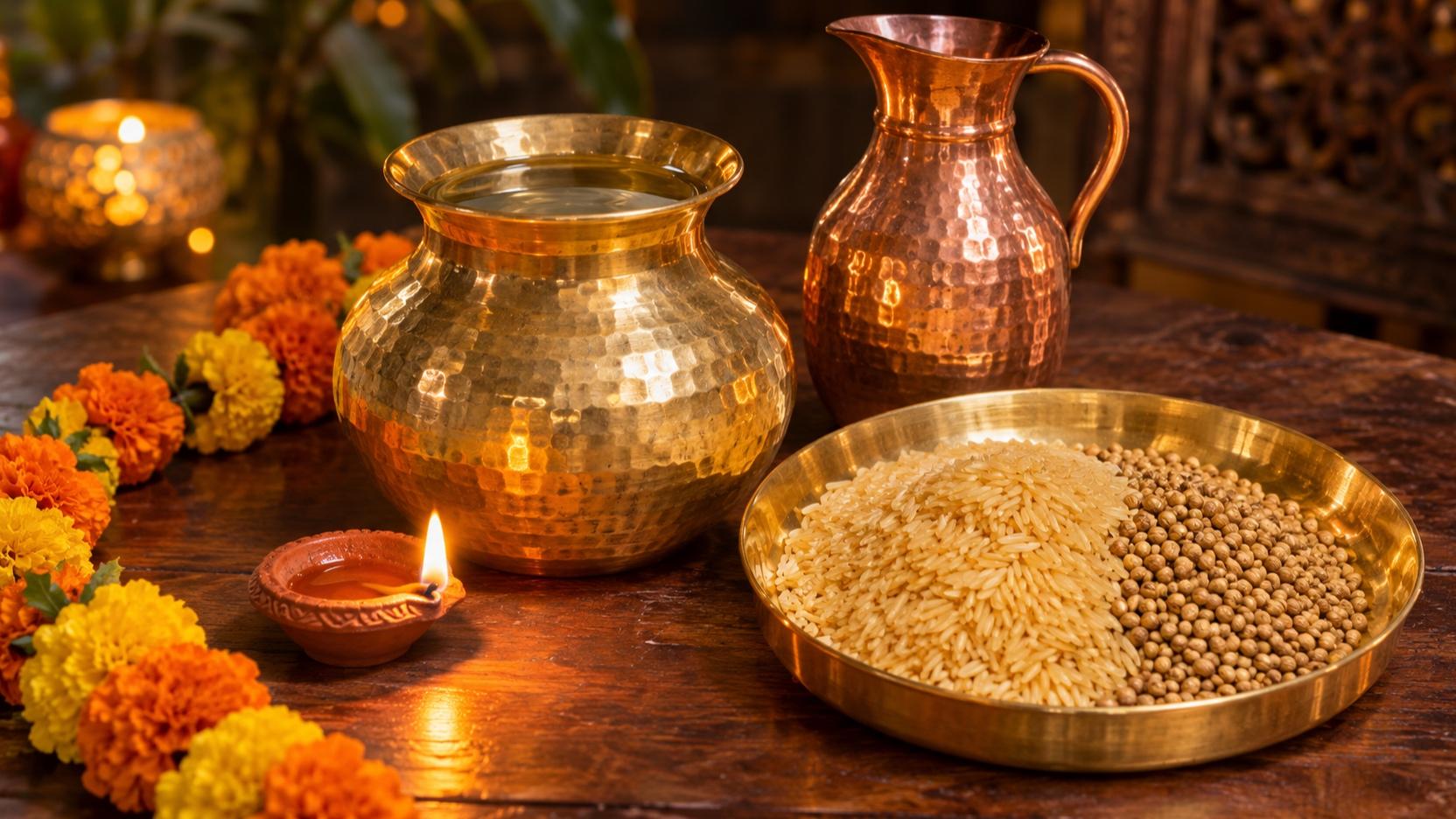
#You do not need to fill the pot inside the store. It is standard practice to bring the wrapped utensil home and pause outside your main doorway, on the veranda, or in the entryway before taking it into the kitchen. Place one of the following traditional items inside the vessel:
- Whole, unbroken raw rice (Akshat): Rice is the quintessential symbol of fertility, prosperity, and auspicious growth. A handful of clean rice grains placed in the pot ensures that the family granary remains full.
- Clean drinking water: If you purchased a jug, water bottle, or lota, filling it with clean, filtered water connects directly to the Amrit Kalash motif of Lord Dhanvantari, inviting vitality and spiritual purification.
- Whole coriander seeds (Dhaniya): Coriander seeds are traditionally purchased on Dhanteras as a symbol of domestic wealth. Placing a small pouch of coriander seeds inside a new pot combines two powerful prosperity rituals.
- Jaggery or traditional Indian sweets: Placing a small piece of raw jaggery (Gud), rock sugar (Mishri), or a box of festival sweets inside the vessel symbolizes sweetness of speech, peaceful relationships, and financial sweetness throughout the coming year.
- Silver or copper coins: If you have also purchased a commemorative coin or a simple circulating coin, dropping it to the bottom of the vessel represents rooted financial stability.
Once filled, the family carries the vessel across the threshold with gratitude, places it near the home altar or on the clean kitchen counter, and leaves it there undisturbed until the evening Lakshmi and Kubera puja.
How to Spot Counterfeit Metals and Substandard Cookware in Crowded Bazaars
#Festival demand creates a massive surge in market activity, and unscrupulous manufacturers frequently flood retail stalls with substandard, hazardous goods. When shopping under the festive lights of Dhanteras, use these practical diagnostic steps to ensure you are paying for genuine, heavy-gauge metal.
1. The Magnet Test for Brass-Plated Iron
#Pure brass, copper, and bronze are strictly non-ferrous metals; they contain zero iron and will never attract a magnet. 
Many low-cost "brass" items sold in roadside pop-up stalls are actually cheap, stamp-pressed iron or tin sheets dipped in an electroplated brass finish or sprayed with a gold-colored tinted lacquer. 
- The Test: Carry a small neodymium refrigerator magnet in your pocket. Press the magnet against the bottom, walls, and handles of the vessel.
- The Verdict: If the magnet sticks or exhibits even the slightest magnetic pull, the vessel is iron-cored. It will rust rapidly when washed and presents zero metallurgical value. Reject it immediately.
2. The Weight and Gauge Verification
#Authentic traditional cookware derives its cooking excellence from thermal mass. Cheap commercial cookware is pressed from thin, high-gauge sheet metal (22 to 24-gauge) that weighs very little and bends easily when pressed firmly with your thumb. Quality brass and copper cookware must be fashioned from thick, low-gauge metal (14 to 18-gauge, where lower numbers signify thicker walls).
- A standard 2-liter brass cooking patila should feel distinctly heavy in your hand, typically weighing between 1.2 to 2.0 kilograms.
- Inspect the rim: Many deceptive manufacturers roll the top rim over a hidden iron wire to give a flimsy pot the appearance of thickness. Check the wall thickness along the middle body, not just the folded lip.
3. The Acoustic Chime Test for Pure Kansa
#Pure Kansa (78 percent copper and 22 percent tin) possesses unique acoustic resonance. When struck gently with a wooden knuckle or a silver spoon, a genuine Kansa plate will emit a clear, penetrating, sustained bell-like ring that resonates for several seconds.
If you tap the metal and it produces a dull, flat, hollow thud, one of two things is true:
- The alloy contains high amounts of lead or aluminum filler.
- The plate is ordinary commercial brass or sheet metal disguised as bronze.
4. Detecting Toxic Lacquer Coatings
#To prevent brass and copper from naturally tarnishing while sitting on store shelves, modern commercial manufacturers spray the exterior and interior of vessels with clear synthetic acrylic lacquers. 
While a lacquer coating keeps the metal shiny in the showroom, heating a lacquered pan on a gas stove vaporizes the synthetic chemicals, filling your kitchen with toxic fumes and burning sticky chemical residues into your food.
- Look closely at the surface: A lacquered pot has an unnaturally glossy, plastic-like sheen that does not feel cold to the touch like raw metal.
- If you purchase an item that has protective lacquer, you must strip it completely using boiling water, baking soda, and a soft cloth before any food or drink touches the surface.
Caring for Traditional Metals: Cleaning Protocols Without Destroying Your Utensils
#A genuine brass, copper, or kansa utensil will outlive its owner if maintained properly. However, cleaning traditional metals requires an entirely different approach than scrubbing stainless steel. The natural oxidation that turns copper reddish-brown or brass golden-matte is not dirt; it is the metal's natural patina responding to atmospheric oxygen.
Natural Cleaning Formulations
#Avoid using commercial steel scouring pads, harsh chlorine bleaches, or abrasive synthetic powders on traditional metals, as these will scratch the surface and scour away delicate tin linings within weeks. Instead, rely on time-tested natural solutions:
- Pitambari cleaning powder: The standard Indian solution for untinned brass and copper. It contains mild organic acids and micro-fine abrasives that instantly strip away dull oxides without scoring the metal. Apply with a damp cotton cloth, rub gently in circular motions, and rinse immediately with warm water.
- Tamarind pulp and salt: The classic home remedy. Soak a walnut-sized piece of dried tamarind in warm water, mash it into a paste, mix with half a teaspoon of rock salt, and rub it across the tarnished metal. The natural tartaric acid effortlessly dissolves copper tarnish.
- Lemon juice and baking soda: Ideal for restoring the brilliant golden luster to brass diyas and puja items.
The Drying Imperative
#The most critical mistake home cooks make with brass and copper is letting them air-dry in a dish rack. Water droplets left standing on copper surfaces react with dissolved minerals and oxygen to form stubborn mineral spots and localized green rings. 
Always wipe copper, brass, and kansa dry immediately with a clean, lint-free microfiber towel the moment you finish washing them. Store them in a dry, well-ventilated cupboard away from direct kitchen steam.
Dhanteras Buying Checklist: Step-by-Step Practical Protocol
#Before stepping into the festive markets this Dhanteras, follow this concise action plan:
- Choose your metal with purpose: Prioritize heavy brass (Pital) for cooking pots and puja vessels, pure hammered copper (Tamba) for room-temperature drinking water dispensers, and certified bell metal (Kansa) for everyday dining plates and bowls.
- Verify the interior lining: If purchasing brass or copper for cooking, confirm that the interior features a certified, 100 percent lead-free tin lining (Kalai). If the pot is raw, unlined metal, allocate it strictly for dry grains, water, or religious ceremonies.
- Perform the magnet test: Touch a pocket magnet to the vessel's base and handles to confirm the metal is completely non-ferrous and not brass-plated iron.
- Check wall thickness: Avoid thin, flexible sheet metal. Choose solid, low-gauge cookware that offers substantial thermal mass and longevity.
- Exclude inauspicious goods: Leave kitchen knives, scissors, iron skillets, aluminium steamers, glassware, and black plastic tableware off your Dhanteras bill.
- Prepare the entrance ritual: Before crossing your front door with your new purchase, place a handful of raw rice, fresh drinking water, coriander seeds, or festival sweets inside the pot.
By grounding your Dhanteras shopping in genuine metallurgical knowledge and cultural awareness, your new kitchen vessels will serve not merely as festive souvenirs, but as enduring sources of health, culinary pleasure, and authentic household abundance for generations to come.