If your microwave turns reheated leftovers into a rubbery, volcanic mess with a frozen center, your appliance is not broken. It is just built on primitive, fifty-year-old technology that was never engineered to control heat.
Most conventional microwaves only have a single speed: wide open at 100% full blast. When you set a standard microwave to 50% power, it does not turn down the heat; it simply blasts your food with maximum radiation for five seconds, shuts off completely for five seconds, and repeats this crude cycle until the timer dings.
An inverter microwave fixes this fundamental culinary flaw by replacing the heavy magnetic transformer with solid-state electronics that deliver a genuine, continuous stream of low wattage. Instead of suffering through violent thermal shock, your food warms gently and evenly from edge to core.
Here is how inverter microwave technology actually works, the culinary tests where it genuinely outperforms regular models, and whether spending the extra money makes sense for your kitchen.
The Bottom Line on Inverter Microwaves
#Conventional microwaves rely on crude duty-cycle pulsing. When you select low power on a regular microwave to defrost raw chicken or soften butter, the magnetron tube alternates between full blast and zero. The outer rim of your food boils and dries out during the blast phase before heat ever has a chance to reach the center.
An inverter microwave uses a solid-state power supply to modulate continuous variable wattage. If you select 30% power on a 1000-watt inverter microwave, the unit outputs an uninterrupted, gentle 300 watts of microwave energy throughout the entire cook time.
If you only use a microwave to boil water for tea or pop bags of popcorn, a basic conventional microwave works fine. But if you defrost frozen proteins, reheat delicate dairy sauces, melt chocolate, or warm meal-prepped containers without drying out meats, an inverter microwave is worth every penny of its price premium.
How a Conventional Microwave Actually Heats: The Duty Cycle Illusion
#To understand why inverter microwaves are superior, you first have to understand the mechanical shortcut inside conventional microwaves.
Every microwave creates heat using a vacuum tube called a magnetron. The magnetron converts high-voltage electrical energy into 2.45 GHz radio waves. When these waves penetrate food, they cause polar water, fat, and sugar molecules to rotate millions of times per second. This rapid molecular friction creates thermal heat.
In a conventional microwave, the magnetron is powered by a heavy, traditional copper-wound transformer and a high-voltage capacitor. This mechanical circuit is strictly binary: it can either run at 100% maximum voltage or 0% off. It has no throttle.
When you select Power Level 5 on a conventional 1000-watt microwave, here is what actually happens:
- Seconds 1 to 5: The magnetron fires at 1000 watts of full-blast radiation. The outer edges of your food immediately heat toward the boiling point.
- Seconds 6 to 10: The magnetron clicks off completely. The turntable continues to rotate while internal conduction slowly transfers surface heat toward the frozen core.
- Seconds 11 to 15: The magnetron clicks back on at 1000 watts, blasting the already-hot outer rim again.
This start-and-stop pulsing is called a duty cycle. You can actually hear it happening: listen closely to a standard microwave on a low setting, and you will hear a deep mechanical hum click on for several seconds, followed by a lighter fan hum as the transformer shuts down.
This violent thermal cycling wrecks delicate foods:
- Proteins tighten into rubbery, chewy knots during the 100% blast phases.
- Butter separates into liquid oil and curdled milk solids instead of softening evenly.
- Soups and gravies develop boiling hot outer rings while the middle remains cold as ice.
- Surface water flashes into steam, causing soups and baked beans to explode violently across the microwave ceiling.
How Inverter Technology Solves the Problem: True Continuous Power
#In the late 1990s, appliance engineers adapted solid-state switch-mode power supplies (SMPS) for microwave ovens, introducing what is now known as inverter technology.
An inverter replaces the heavy, iron-core transformer with an electronic circuit board packed with microprocessors and high-speed switching transistors. Instead of locking the magnetron to a fixed voltage, the inverter circuit board smoothly dials electrical voltage up and down with precision.
When you select 30% power on a 1000-watt inverter microwave:
- The magnetron never clicks off.
- The power supply delivers a continuous, steady stream of 300 watts of microwave energy.
- Water molecules in the food vibrate gently and steadily without reaching aggressive boiling temperatures.
- Delicate food proteins warm gradually, allowing heat to conduct evenly inward without scorching the exterior.
The difference in cooking physics is night and day: it is the culinary equivalent of simmering a delicate sauce gently over low flame on a gas stove versus repeatedly blasting it with a blowtorch on high and turning it off every five seconds.
What Is Cyclonic Inverter Technology?
#If you shop for high-end microwaves, you will inevitably see the term Cyclonic Inverter advertised on premium models.
Standard inverter microwaves deliver linear, continuous power in a straight line from a single wave guide antenna inside the cavity wall. While the power level is continuous, microwave energy can still reflect unevenly inside the rectangular metal box, creating physical hot spots and cold spots on the rotating turntable.
Cyclonic Inverter technology incorporates a motorized rotating antenna or internal 3D wave guide that spins the continuous microwave beam in a circular, cyclonic vortex pattern. 
Instead of shooting a steady beam in one direction while your dish spins, the cyclonic wave guide distributes continuous energy in swirling circular waves across the entire depth and height of the cooking cavity. This ensures that energy reaches the center, top, bottom, and corners of your food simultaneously, reducing the need to stop and stir casseroles or soups halfway through reheating.
Inverter vs Conventional Microwave: Engineering & Performance Comparison
#Understanding the technical differences helps you compare specifications when shopping for a replacement microwave.
| Feature | Conventional Microwave | Inverter Microwave |
|---|---|---|
| Power Delivery Method | Duty-cycle pulsing (on/off cycling) | Continuous variable wattage modulation |
| Internal Power Supply | Heavy iron-core magnetic transformer | Lightweight solid-state inverter circuit board |
| Appliance Weight | Heavy (typically 35 to 45 lbs) | Noticeably lighter (typically 25 to 32 lbs) |
| Low Power Settings (30% to 50%) | 100% full-blast heat followed by zero heat | True gentle 300W to 500W steady simmer |
| Defrost Performance | Frequent edge cooking, dry gray outer rims | Even thawing without cooked edges |
| Melting Delicate Foods | High risk of scorching, separation, and splatters | Smooth, controlled melting for butter and chocolate |
| Operational Noise | Loud mechanical hum cycling on and off | Smooth, steady, consistent operating hum |
| Retail Cost | Budget-friendly | Modest price premium |
| Repair Complexity | Simple, inexpensive mechanical components | High-tech circuit board; costlier replacement |
Head-to-Head Kitchen Tests: Where Inverters Truly Win
#To see whether the engineering makes a real-world difference in daily cooking, compare how each technology handles common kitchen tasks:
Test 1: Defrosting One Pound of Frozen Ground Beef
#- Conventional Microwave: Setting the microwave to Auto Defrost runs a 30% duty cycle. The high-energy 1000W pulses quickly overwhelm the thin, thawed outer edges of the meat. By the time the icy core reaches refrigerator temperature, the outer half-inch of beef has turned gray, cooked through, and begun releasing unpleasant rendered grease.
- Inverter Microwave: The steady 300W continuous stream warms the ice crystals gradually. Heat transfers smoothly inward at the same rate that phase-change melting occurs. The ground beef emerges pliable, cold, raw, and ready for seasoning, with zero cooked gray edges.
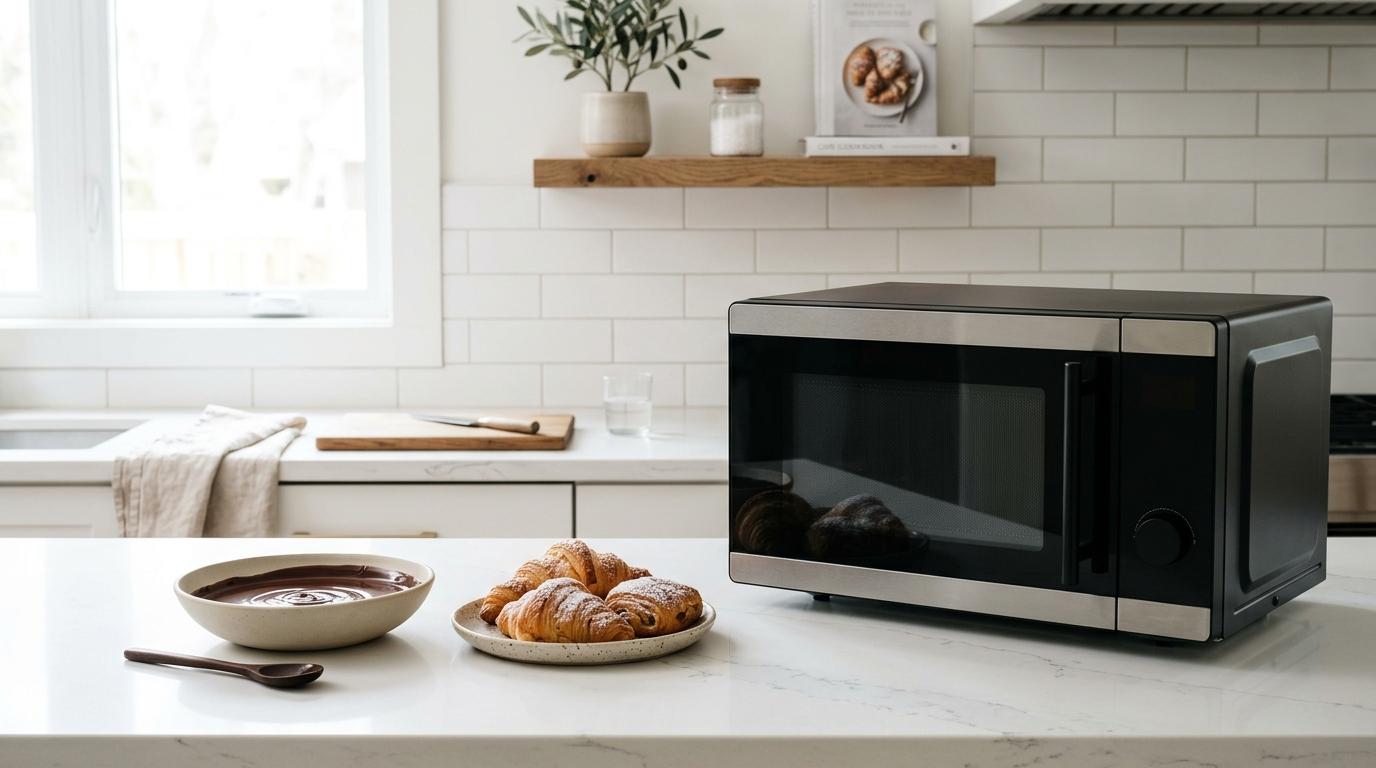
Test 2: Melting 4 Ounces of Dark Chocolate
#- Conventional Microwave: Chocolate is extremely heat-sensitive; cocoa butter scorches above 115 degrees Fahrenheit. In a conventional microwave, the 100% power bursts scorch the sugar and milk solids on the bottom of the bowl before the chips melt. The chocolate seizes into a dry, gritty paste.
- Inverter Microwave: At Power Level 3 (30% power), the continuous low wattage gently warms the cocoa butter past its melting point without scorching. The chocolate melts into a glossy, velvety liquid that coats a spoon effortlessly, eliminating the need for a stovetop double boiler.
Test 3: Reheating a Bowl of Thick Tomato Soup or Oatmeal
#- Conventional Microwave: Dense liquids do not circulate easily on their own. During the full-blast phase of the duty cycle, localized steam pockets form deep inside the bowl. Because the surface tension is thick, the steam cannot escape gently. It builds pressure and detonates, spraying hot tomato soup across the entire interior ceiling and glass door.
- Inverter Microwave: The constant, gentle heat warms the viscous soup evenly. Tiny steam bubbles rise continuously without violent pressure buildup, heating the entire bowl to a steaming, uniform temperature without a single splatter.
Test 4: Warming Poached or Scrambled Eggs
#- Conventional Microwave: Egg proteins (albumin) denature rapidly under intense heat. Full-blast pulsing turns egg whites rubbery, dry, and squeaky, and trapped water can cause egg yolks to burst with a loud bang.
- Inverter Microwave: A steady 40% power stream reheats pre-cooked breakfast scrambles and frittatas while preserving their tender, custardy texture.
Energy Efficiency, Weight, and Appliance Lifespan
#Beyond culinary performance, the shift from iron transformers to solid-state inverter electronics brings several hardware advantages:
1. Significant Weight Reduction
#A traditional microwave transformer is a massive block of laminated steel wrapped in copper wire, weighing anywhere from 12 to 18 pounds on its own. An electronic inverter power supply weighs roughly one to two pounds.
This makes inverter microwaves far easier to lift, move, and install inside over-the-range cabinetry or tight kitchen shelves.
2. Usable Interior Cavity Space
#Because the solid-state inverter power board takes up a fraction of the interior chassis volume compared to a bulky transformer and capacitor, manufacturers can build wider, deeper cooking cavities into smaller exterior cabinet footprints. You can often fit larger 12-inch dinner plates and rectangular casserole dishes into a countertop inverter microwave with a modest footprint.
3. Energy Consumption
#At maximum 100% power, both technologies draw roughly comparable wattage from your home wall outlet. However, during defrosting and lower-power cooking, inverter microwaves demonstrate higher electrical conversion efficiency. Switch-mode power supplies waste less energy as ambient chassis heat, running cooler and consuming less electricity over extended cooking sessions.
The Tradeoffs: Where Conventional Microwaves Still Make Sense
#Inverter microwaves are superior for cooking, but they are not the automatic choice for every household. Consider these drawbacks before making a purchase:
1. The Purchase Price Gap
#Conventional microwaves are mass-produced commodities. You can easily find a reliable, basic 900W conventional countertop microwave at any home improvement or big-box store for very little money. A quality inverter microwave typically costs 40% to 80% more depending on size, finish, and sensor features.
2. Repair Costs and Out-of-Warranty Failure
#When a conventional microwave stops heating after five years, the culprit is usually an inexpensive diode or door switch that costs a few dollars to replace. When an inverter microwave experiences a power failure, the entire solid-state inverter board must be replaced. The cost of a replacement board combined with professional labor often exceeds the price of buying a brand-new unit, making out-of-warranty inverter microwaves difficult to repair economically.
3. Redundancy for Basic Heating Tasks
#If your household only uses the microwave for simple, high-heat tasks:
- Heating a mug of cold coffee for 45 seconds.
- Boiling water for instant noodles.
- Popping commercial microwave popcorn on maximum heat.
- Steaming frozen vegetable bags on full power.
In all of these scenarios, the microwave runs at 100% maximum output. At 100% power, an inverter microwave behaves identically to a conventional model. You will not notice any difference in food quality if you never touch the lower power levels.
The Buying Checklist: What to Look For
#If you decide that an inverter microwave fits your cooking habits, use this checklist to select the right unit:
- Verify Genuine Inverter Technology: Look specifically for the word Inverter on the front control panel and in the technical specifications. Be cautious of marketing buzzwords like "Smart Heat," "Even Heat," or "Sensor Cook" on budget models; many brands use clever phrasing for standard duty-cycle appliances.
- Check the Turntable Diameter: If you reheat full dinner plates or 9x13 baking dishes, ensure the interior turntable is at least 12.5 to 13.5 inches in diameter.
- Prioritize Genius / Humidity Sensor Reheat: High-end inverter microwaves pair continuous power with an internal steam sensor. Instead of guessing whether a dish needs three minutes or four minutes, the sensor detects when food releases moisture and automatically adjusts the power level and countdown timer in real time.
- Stainless Steel Interior: Premium inverter models often feature stainless steel interior walls rather than white painted metal. Stainless steel reflects microwave energy more efficiently and wipes clean effortlessly without chipping or rusting over time.
The Verdict
#The conventional microwave is a blunt heating instrument that treats every dish with the subtlety of a sledgehammer. By relying on duty-cycle pulsing, it forces home cooks to accept rubbery meats, exploded sauces, and half-cooked frozen meals.
An inverter microwave is a genuine kitchen cooking tool. By delivering smooth, continuous, and finely tuned wattage, it unlocks delicate defrosting, silky chocolate melting, and restaurant-quality reheating that standard microwaves simply cannot match. If you cook from scratch, meal-prep proteins, or care about the texture of your food, upgrading to an inverter microwave is one of the smartest investments you can make for your kitchen.