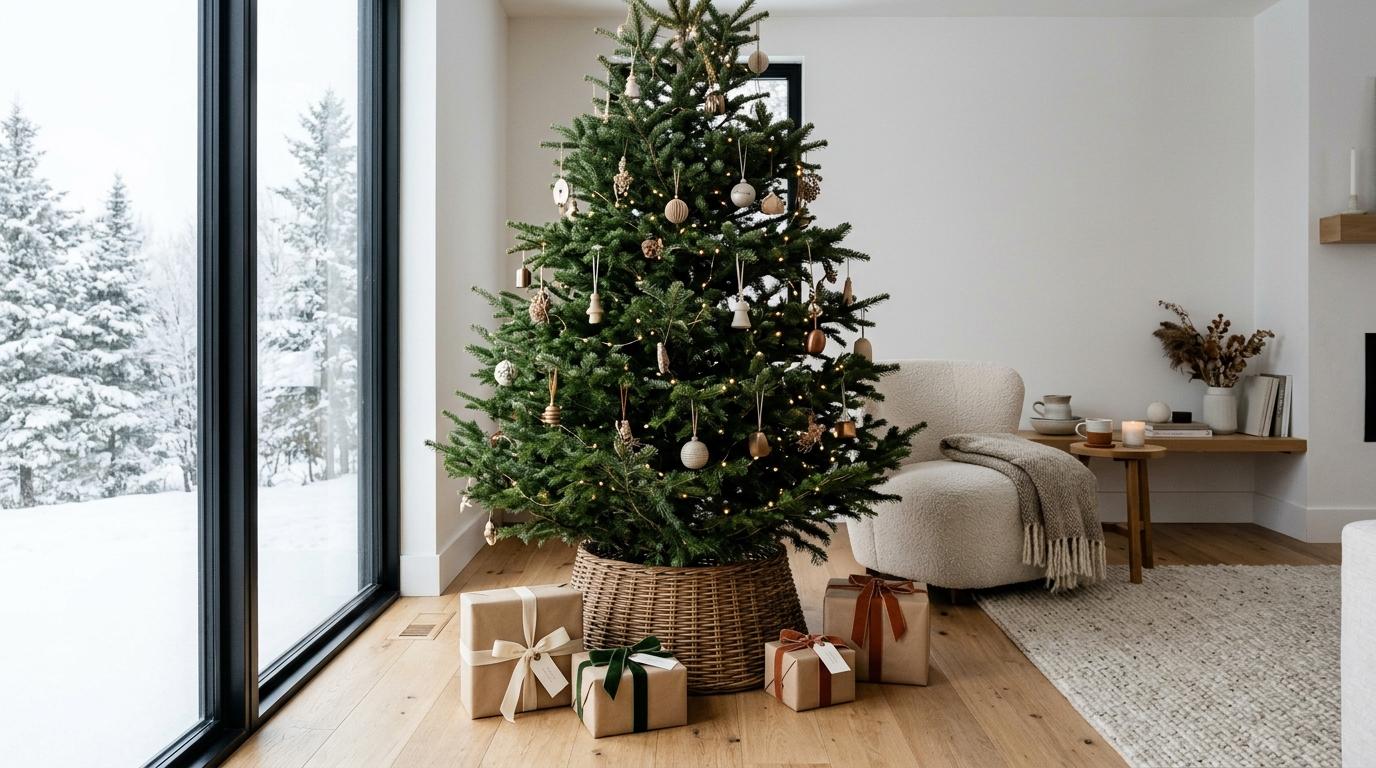
Every holiday season, households face the same recurring choice: drive to a local tree lot to pick out a fresh pine or fir, or unpack an artificial tree from a storage box in the garage.
Both options come with real tradeoffs that most product guides gloss over. Real trees bring an unmistakable forest scent and festive nostalgia, but they shed needles daily, require constant watering, and can become serious fire hazards if neglected. Modern artificial trees save money over a five-to-ten-year window and take thirty minutes to set up, but cheap models look plasticky, pre-lit lights eventually fail, and bulky boxes demand precious closet or attic space for eleven months of the year.
If you are deciding between a fresh tree and an artificial one this season, this guide breaks down the true ten-year cost of ownership, needle realism, maintenance requirements, fire safety facts, and how to choose the right tree for your floor plan.
The 10-Year Cost Comparison
#Many buyers assume artificial trees are expensive upfront, while real trees seem like a modest annual holiday expense. When you calculate the cumulative cost over a decade, the numbers tell a very different story.
Real Tree Expenses Over 10 Years
#A standard six-to-seven-foot farm-grown Christmas tree (such as a Fraser fir or Balsam fir) typically costs between $70 and $120 depending on your region, with prices rising steadily due to land, fuel, and transport costs. Over a ten-year span:
- Ten annual trees at an average of $95 each equals $950.
- A sturdy, heavy-duty tree stand with a large water reservoir costs roughly $40 to $60.
- Disposal bags, tree preservative packets, and council pickup or recycling fees add roughly $10 to $20 annually.
- Total ten-year investment: $1,100 to $1,300.
Every dollar spent on a real tree is an ongoing recurring cost that resets to zero every January.
Artificial Tree Expenses Over 10 Years
#A quality artificial tree is a single upfront capital purchase:
- A budget PVC artificial tree costs between $80 and $150. It pays for itself by year two, though branches often look flat and degrade within four to five seasons.
- A high-end realistic tree with molded polyethylene (PE) branches costs between $300 and $700. It pays for itself between year three and year six.
- A zippered rolling tree storage bag costs $40 to $70 to protect branches from dust and crushing.
- Total ten-year investment: $350 to $770.
| Comparison Factor | Fresh Live Tree (Cut) | Budget Artificial Tree (PVC) | Premium Artificial Tree (PE/PVC Blend) |
|---|---|---|---|
| Upfront Purchase Price | $70 to $120 per year | $80 to $150 once | $350 to $700 once |
| 10-Year Cumulative Cost | $1,100 to $1,300 | $120 to $220 (including storage bag) | $400 to $770 (including storage bag) |
| Break-Even Point | Never (recurring cost) | Year 2 | Year 4 to Year 6 |
| Setup Effort | Heavy (transport, trimming, securing) | Moderate (unboxing, fluffing branches) | Moderate (hinged branches, fluffing) |
| Daily Maintenance | Daily watering, sweeping dropped needles | Zero daily maintenance | Zero daily maintenance |
| Lifespan | 3 to 5 weeks before drying | 4 to 6 years before flattening | 10 to 15+ years with proper storage |
Realism Check: PE vs PVC Needles Explained
#The biggest visual difference between a cheap artificial tree and one that looks authentic comes down to manufacturing materials: Polyethylene (PE) versus Polyvinyl Chloride (PVC).
Stamped PVC Needles (The Budget Choice)
#PVC needles have been the standard since the 1980s. Manufacturers take large sheets of green plastic film, shred them into thin flat strips, and twist them between metal wires to create bottle-brush style branches.
- Up close, PVC needles look flat and papery.
- When you bend them, they tend to stay creased or shed green plastic shreds over time.
- From across the room in dim evening lighting, a dense PVC tree looks acceptable, but in natural daylight by a window, it looks unmistakably synthetic.
Injection-Molded PE Needles (The Realistic Choice)
#Modern realistic artificial trees use injection-molded Polyethylene (PE). Manufacturers take actual branches from real evergreen trees (like Douglas fir, Nordmann fir, or Blue spruce) and create three-dimensional molds.
- Molten plastic is injected into the mold, replicating the natural roundness, varying needle thickness, and subtle color variations of fresh conifer tips.
- The branch tips feel firm, spring back when touched, and support heavier glass ornaments without sagging.
The Realistic Blend Strategy
#Because full 100% PE trees are heavy and expensive, the sweet spot for smart buying is a hybrid tree:
- Look for trees advertised as having 65% to 80% PE needles.
- These trees place realistic molded PE tips on the outer outer perimeter where everyone looks and touches, while using cheaper, fluffy PVC needles near the center trunk to fill gaps and create visual depth.
Maintenance and Living with the Tree
#How much effort are you willing to invest every single morning between late November and New Year? This daily lifestyle reality often matters more than the purchase price.
Living with a Real Tree
#A fresh cut tree is a living organism that has been severed from its roots. Keeping it alive requires active care:
- The Fresh Cut: When you bring a tree home, you must cut a half-inch disc off the base of the trunk immediately before putting it in water. Dried sap seals the cut end within hours; if you do not make a fresh cut, the trunk cannot absorb water.
- Watering Routine: A cut tree drinks up to four litres (one gallon) of fresh tap water in its first twenty-four hours. After that, it needs one to two litres checked and replenished daily. If the water level drops below the base of the trunk even once, sap seals the bottom again and the tree begins drying rapidly.
- Needle Cleanup: Even well-watered trees drop needles as room heating dries branch tips. You will need to sweep or vacuum around the tree skirt every two days.
- Allergies and Scents: While most people love the fresh pine scent, real trees can carry outdoor mold spores, pollen, and natural terpenes that trigger sneezing, itchy eyes, or headaches for allergy sufferers.
Living with an Artificial Tree
#- No Watering or Mess: Zero dropped sap, zero spilled water on hardwood floors, zero vacuuming dried needles out of rugs.
- The Annual Fluffing Ritual: An artificial tree straight out of a storage box looks squished and sparse. You must spend forty-five to sixty minutes pulling apart and fanning individual wire branch tips on every tier. If you skip fluffing, the tree looks limp and hollow.
- Zero Natural Scent: Artificial trees have no scent, or a faint plastic odor during their first week out of the box. Many families bridge this gap with real pine wreaths on the front door or natural scented diffuser oils.
Pre-Lit vs Unlit Artificial Trees
#Pre-lit trees have string lights professionally wrapped around each branch tier at the factory. They save you from untangling balls of wire every December, but they introduce a common failure point.
The Case for Pre-Lit Trees
#- Setup time drops from ninety minutes to twenty minutes. You simply click the pole sections together, and built-in power connections light the tree instantly.
- Wires are neatly hidden along inner branches, creating a clean, professional aesthetic without visible drooping cables.
- Modern high-end pre-lit trees use LED micro-bulbs rated for 25,000 to 50,000 hours, often featuring dual-color options (warm white to festive multicolor) with a foot pedal switch.
The Hidden Risk: Bulb Failure
#- If an older incandescent pre-lit strand burns out, finding the single loose bulb in a dense seven-foot tree is immensely frustrating.
- Look for pre-lit models with continuous-glow technology (often marketed as Stay-Lit or Continuous-On). In these systems, if one bulb burns out or is removed, the remaining bulbs on that branch stay lit.
- Once light strands fail permanently after seven or eight years, clipping them off thousands of tightly wrapped wire branches takes hours of tedious cutting.
- If you prefer complete longevity or want to change your lighting style every few years, an unlit tree will last decades because you simply buy fresh external light strings whenever needed.
Fire Safety Facts
#Holiday fire risks are rare, but when tree fires happen, they are fast and devastating.
Real Tree Combustion Risks
#According to fire safety data from the National Fire Protection Association (NFPA), Christmas tree fires cause disproportionate property damage compared to other residential fires.
- The primary cause is not the tree itself, but a dried-out tree placed near heat sources: radiators, fireplaces, space heaters, or hot incandescent light bulbs.
- A fresh, well-watered tree is difficult to ignite with a match because its needles are full of moisture.
- A dry, neglected tree acts like fuel-soaked kindling. If an electrical spark touches a dry tree, the entire tree can become fully engulfed in flames within thirty seconds, generating lethal heat and toxic smoke before smoke detectors even wake a household.
Artificial Tree Fire Resistance
#- Legitimate artificial trees are manufactured from flame-retardant materials.
- While they can still melt or smolder if exposed to direct open flame, they do not catch fire easily or burst into explosive flames.
- Look for verified safety certifications on the packaging (such as UL listing or CE compliance) to ensure the materials meet modern flame-retardant standards.
Storage and Apartment Realities
#Before buying an artificial tree, answer one honest question: where will you keep it from January to November?
A disassembled seven-foot artificial tree fits into a box measuring roughly 48 inches long, 16 inches wide, and 16 inches deep. In a compact apartment with limited closet space, storing a bulky, twenty-kilogram box is a major inconvenience.
- If you live in an apartment without a dedicated storage locker, basement, or garage, an annual real tree that gets collected and composted in January may actually be more convenient than sacrificing half a bedroom closet.
- For houses with basements, garages, or walk-in closets, an artificial tree packed in a rolling canvas bag is simple to tuck away.
Environmental Footprint
#The debate over which tree is greener is nuanced.
- Real trees are grown as an agricultural crop on dedicated tree farms, absorbing carbon dioxide and providing wildlife habitats during their seven-to-ten-year growth cycle. For every tree harvested, farmers typically plant one to two new seedlings. When the holidays end, most cities chip real trees into garden mulch or compost, keeping them out of landfills.
- Artificial trees are petroleum-based products manufactured primarily in industrial factories and shipped across global freight networks. They cannot be recycled through municipal systems; when discarded, they sit in landfills for centuries.
- Research from environmental organizations indicates that you must reuse an artificial tree for at least seven to ten years to equal the life-cycle carbon footprint of buying a fresh farm-grown real tree annually. If you replace your artificial tree every three years because you want a taller model or a different look, real trees are considerably more eco-friendly.
The Decision Matrix
#Use this quick checklist to decide what fits your household best:
Buy a Real Tree If:
#- You prioritize authentic pine scent, needle texture, and the family tradition of visiting a tree farm.
- You have no closet, garage, or basement storage space for a heavy off-season storage carton.
- You are committed to checking water levels daily and vacuuming fallen needles.
- You want an organic, locally compostable holiday centerpiece.
Buy an Artificial Tree If:
#- You want to set up your decorations early (in November) and keep them up past New Year without branches dying.
- You want zero daily maintenance, zero needle mess, and no messy water spills on floors.
- You want to save hundreds of dollars over the next five to ten years.
- Family members suffer from seasonal pine allergies or sensitivities to outdoor mold spores.
- You want a flame-retardant option in a home with curious pets or small children.
Both options create a wonderful festive atmosphere. The right choice is the one that fits your budget, daily habits, and home space.