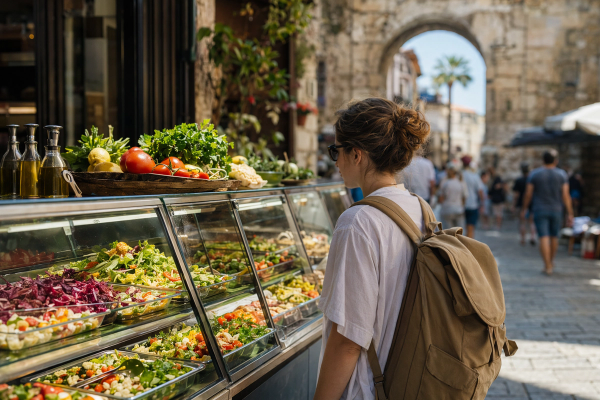
A good café lunch can save a travel day.
Not in a dramatic way. More in the “everyone needs to sit down, someone is getting cranky, the phone is at 12%, and we still have three things on the list” kind of way.
A coffee shop gives you a pause. You can look at the map again, answer one message, let a tired kid decompress, charge your phone if you’re lucky, and stop walking for twenty minutes. Sometimes that is exactly what the day needs.
But café lunches can also go wrong pretty easily. Order only a coffee and a pastry, and you may be hungry again before you reach the next museum. Add a giant sweet drink, a second cake, and a side you didn’t really need, and suddenly your “quick cheap lunch” feels expensive, heavy, and not very satisfying.
The goal of a coffee shop lunch while traveling is simple: eat something filling enough to carry you through the afternoon, light enough that you still want to walk around, and sensible enough that you are not gambling with your stomach in the middle of a trip.
This guide is for city breaks, family trips, remote work days, museum-heavy afternoons, train station lunches, and those slightly chaotic sightseeing days when nobody is quite sure when dinner will happen.
Here’s what to order, what to split, and what to skip.
Quick Answer: What to Eat at a Coffee Shop for Lunch
#If you are already standing in line and need the short version, here it is.
For the best café lunch while traveling, look for:
- A protein-based main, such as an egg sandwich, chicken wrap, tuna sandwich, deli-style sandwich, or salad with eggs, beans, cheese, or grilled chicken.
- Simple bread-based foods, like toasties, paninis, baguette sandwiches, and wraps.
- A plain drink, such as drip coffee, batch brew, an Americano, tea, water, or sparkling water.
- One shared treat, if you want the local pastry but do not want sugar to become the whole meal.
- Food that is stored properly, meaning cold food is actually cold and hot food is served hot.
Skip the pastry-as-lunch move if you have a long afternoon ahead. Be careful with room-temperature sandwiches that contain meat, dairy, eggs, tuna, or mayonnaise. And think twice before ordering a sweet coffee drink that is basically dessert in a cup.
That’s the quick answer. Now let’s make it useful.
When a Café Lunch Makes Sense
#A coffee shop lunch is not always the meal you will remember years later. But often, it is the smartest meal of the day.
It makes sense when you need food quickly but do not want fast food. It works when you are between museums, shops, train stations, walking tours, parks, meetings, or family activities. It is also helpful when a full restaurant lunch would take too long or cost more than you want to spend.
A café lunch can also be a nice reset. Travel eating can pile up quickly: big breakfasts, random snacks, restaurant dinners, desserts, convenience store food, and whatever you bought because you were too hungry to make a good decision. By midday, a sandwich, salad, toastie, wrap, or soup can feel pretty perfect.
A coffee shop lunch makes sense when:
- You want to sit down without committing to a long meal.
- You need Wi-Fi, a bathroom, or a place to plan the next stop.
- You are traveling with people who all want different things.
- You need a predictable menu in a city you do not know well.
- You want coffee, but you also need real food.
- You are working remotely and do not want a lunch that makes you sleepy.
- You are trying to keep costs under control without skipping meals.
The trick is remembering that not every coffee shop is really built for lunch. Some cafés are great at bread, pastries, eggs, spreads, sandwiches, salads, and coffee. Others are mostly a pastry counter with a few tired prepared items in the case.
The best order is usually the one that matches what the café seems to do well.
Best Orders for a Coffee Shop Lunch While Traveling
#The best coffee shop lunch ideas are usually not the fanciest things on the menu. In many cafés, the safest and most satisfying choice is something simple, fresh, and hard to mess up.
Here’s what to look for.
1. Pressed Sandwiches, Paninis, and Toasties
#Pressed sandwiches are one of the most reliable coffee shop lunch orders.
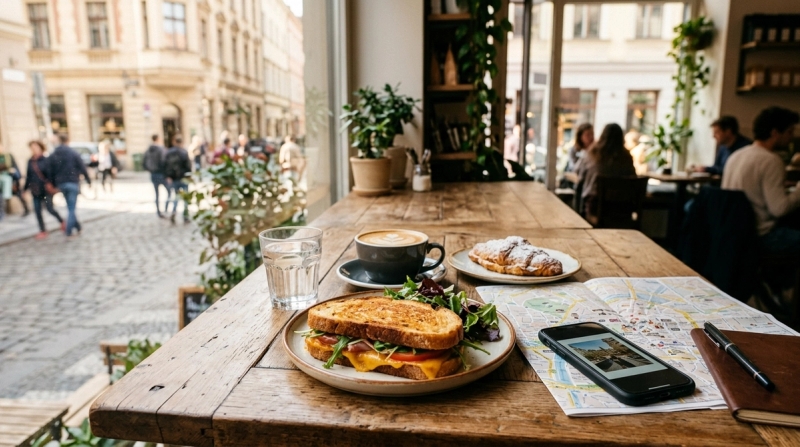
They are usually built around bread, cheese, vegetables, spreads, and maybe a simple protein. Since they are grilled or pressed before serving, they often arrive warm, crisp, and easy to eat. That matters more than you think when you are juggling a bag, a camera, a child’s jacket, and a half-formed plan for the afternoon.
Good choices include:
- Tomato and mozzarella toastie
- Chicken panini
- Ham and cheese toastie
- Grilled vegetable sandwich
- Egg and cheese sandwich
- Tuna melt, if it looks fresh and is served hot
The nice thing about a pressed sandwich is that it feels like lunch. It holds together better than a messy salad or pastry, it can usually be taken to go, and it has enough substance to keep you full for a while.
One small warning: pressed does not automatically mean fresh or safe. If a sandwich has meat, eggs, dairy, tuna, or mayonnaise, it still needs to be stored properly before it gets heated. If it looks dried out, tired, or like it has been sitting there all morning, choose something else.
2. Cold Sandwiches and Wraps
#Cold sandwiches and wraps can be great value when they are fresh and properly chilled.
Look for something with protein and a bit of texture, not just bread and dressing. A good café sandwich should feel like a meal, not a snack pretending to be lunch.
Good options include:
- Chicken and salad sandwich
- Turkey or ham sandwich
- Egg salad sandwich, if it is refrigerated
- Tuna sandwich, if it looks fresh and cold
- Hummus and vegetable wrap
- Cheese and tomato sandwich on good bread
- Roast vegetable and cheese wrap
Whole-grain or seeded bread can make a sandwich more filling, but do not worry too much about it. In some places, the normal local sandwich bread might be a baguette, white bread, or a roll. That is fine. The bigger question is whether there is enough inside the sandwich to get you through the afternoon.
If you are wondering what to eat at a coffee shop for lunch, a simple sandwich with protein is often the easiest answer.
3. Salads With Protein
#A salad can be a smart travel lunch. But only if it is more than leaves.
A bowl of greens with a few cucumber slices might feel virtuous for ten minutes. Then, suddenly, you are buying a cookie, crisps, or another coffee because you are still hungry. A better café salad has something in it that actually makes it filling.
Look for salads with:
- Grilled chicken
- Boiled eggs
- Beans or lentils
- Cheese
- Tuna
- Roasted vegetables
- Nuts or seeds, if they are safe for you
- Rice, couscous, quinoa, or another grain base
If it is normal at that café, ask for dressing on the side. This is especially useful if you are taking the salad to go, because nobody wants a soggy lunch leaking into a bag.
For food safety, be more cautious with salads that contain mayonnaise, seafood, eggs, or dairy if they are not clearly chilled. Trust your eyes a little too. If the salad looks wilted, watery, or like it has been sitting there too long, get the hot sandwich instead.
4. Egg-Based Lunches
#All-day breakfast can be your friend at lunchtime.
Egg sandwiches, egg toast, omelet-style wraps, or avocado toast with egg can make a very solid café lunch. Eggs add protein and staying power, and many coffee shops are used to making them quickly.
Good egg-based lunch choices include:
- Egg and cheese sandwich
- Scrambled egg toast
- Egg wrap
- Avocado toast with egg
- Boiled egg salad
- Breakfast sandwich with a simple filling
This is especially useful if you missed breakfast, or if breakfast was just coffee and something sweet. An egg-based lunch can steady the day without feeling like a big restaurant meal.
If you have dietary restrictions, ask about what else is cooked on the same surface. Small cafés may not be able to avoid cross-contact, especially when they are busy.
5. Simple Toasts With Add-Ons
#Toast can be lunch, but it needs help.
Plain buttered toast is probably not enough for a travel day. But toast with egg, cheese, hummus, avocado, vegetables, mushrooms, or another substantial topping can work well. A lot of cafés now serve open-faced toasts that sit somewhere between breakfast and lunch.
Better choices include:
- Avocado toast with egg
- Cheese and tomato toast
- Hummus toast with vegetables
- Mushroom toast with egg or cheese
- Smoked or grilled protein on toast, if it is handled properly
Be careful with beautiful but tiny toasts. You know the kind: one thin slice of bread, a little smear of something, and three herbs on top. It might be lovely, but it may not keep you full.
If the portion looks small, pair it with yogurt, soup, fruit, or a simple side.
6. Soup and Bread
#Some cafés offer soup of the day with bread. When it is done well, this can be a lovely lunch, especially in cooler weather or after a long morning outside.
Soup works best when it is simple and served hot. Good options include:
- Lentil soup
- Tomato soup
- Vegetable soup
- Chicken soup
- Bean soup
- Minestrone-style soup
Skip soup if it looks lukewarm, has been sitting around without clear temperature control, or seems like an afterthought. A café that mostly sells cakes may not be the best place to order soup, unless you can see that it is fresh and popular.
The basic rule is simple: order what the café seems set up to do well.
7. Yogurt Bowls and Fruit
#A yogurt bowl can work as a light lunch, especially on a hot day or between larger meals. It is usually better as a smaller lunch or an add-on than as the only thing you eat before a big afternoon of walking.
Look for yogurt bowls with:
- Fruit
- Granola
- Nuts or seeds, if safe for you
- A moderate amount of honey or jam
If you are sensitive to dairy or need to avoid nuts, ask before ordering. And if the yogurt bowls are sitting in a display case, they should be properly chilled. Not sort of cool. Actually cold.
8. Better Drink Choices
#Your drink can support your lunch, or it can turn the whole thing into dessert.
For steadier energy and better value, simple drinks usually work best:
- Drip coffee
- Batch brew
- Americano
- Espresso
- Tea
- Iced tea without loads of sugar
- Water
- Sparkling water
- Decaf coffee
Big flavored coffee drinks can be fun, and there is nothing wrong with ordering one if you really want it. Just treat it like part of the meal. If your drink has syrup, whipped cream, sweet sauces, and milk, you might not need a pastry too.
This matters even more if you are working remotely. A heavy sweet drink plus a carb-heavy lunch can make the next work session feel strangely difficult.
What to Split
#Sharing is one of the easiest ways to make a café lunch work better.
It helps with budget, portion size, and curiosity. You can try the local pastry, get the bigger sandwich, or add a side without over-ordering.
Large Sandwiches and Toasties
#Some sandwiches are big enough to split, especially if you are not starving or you plan to eat again soon.
Good items to split include:
- Large deli sandwiches
- Thick toasties
- Paninis
- Baguette sandwiches
- Loaded wraps
If two people have different hunger levels, split one larger item and add a small side, soup, fruit, or yogurt for the hungrier person. This is often better than ordering two full meals and leaving half behind.
Pastries and Local Sweets
#Pastries are one of the joys of travel. They are just not always a great lunch by themselves.
If something in the pastry case looks special, split it after eating something more balanced. That way you get the fun of trying it without building the entire meal around sugar and butter.
Good things to split include:
- Croissants
- Muffins
- Scones
- Sweet buns
- Local pastries
- Cake slices
- Cookies or biscuits
Think of the pastry as a taste of the place, not the foundation of lunch.
Side Salads, Fruit, or Yogurt
#If a café has simple sides, they can be useful.
A side salad can freshen up a cheese toastie. Fruit can balance a sandwich. Yogurt can make a light order more filling. But do not add sides just because they are there. Add them if they solve an actual problem, like not enough freshness, not enough protein, or not enough food.
Specialty Drinks
#If you want the seasonal drink, the whipped-cream drink, or the colorful iced thing everyone seems to be ordering, consider splitting it.
This works especially well for families. One or two sweet drinks to share may satisfy everyone’s curiosity without giving each person a sugar-heavy lunch.
What to Skip
#A good coffee shop lunch is partly about restraint. You do not need to avoid every treat. That would be boring. But some choices are more likely to leave you tired, hungry, or spending more than you planned.
Pastries as the Whole Meal
#A pastry and coffee can feel like lunch when you are busy. But it usually does not act like lunch.
Most pastries are low in protein and do not keep you full for very long. A muffin, croissant, sweet bun, or slice of cake can be delicious, but it is usually better next to something more substantial, like eggs, a sandwich, yogurt, or soup.
If you want a pastry, order one. Just do not pretend it is the same as a balanced lunch on a long sightseeing day.
Overly Complicated Hot Meals
#Many coffee shops do not have full restaurant kitchens. Some are excellent at simple hot food, while others are mostly set up for coffee, pastries, and reheating.
Be cautious with complicated hot meals that seem out of place. If a tiny café suddenly has a long menu of pasta, heavy meat dishes, cooked breakfasts, burgers, and elaborate plates, it is worth asking whether the kitchen looks ready for all that.
This does not mean every café hot meal is bad. It just means the safest bet is usually something that fits the place. A toastie in a busy café may be better than an ambitious entrée from a counter that mostly sells cake.
Lukewarm or Poorly Stored Food
#This is the boring part, but it matters.
If something looks wrong, skip it.
Be careful with:
- Cold sandwiches with meat, fish, eggs, dairy, or mayonnaise that are not clearly refrigerated
- Salads that look wilted or watery
- Yogurt bowls sitting out too long
- Hot food that is only slightly warm
- Display items that look dried out
- Food cases that look dirty or disorganized
You do not need to inspect every café like a health inspector. Just pay attention. When you are traveling, a cautious food choice is usually the better choice.
Drinks That Quietly Become Dessert
#A sweet coffee drink can be a nice treat. It can also turn a simple lunch into a heavy one.
Watch out for drinks with:
- Multiple syrups
- Whipped cream
- Sweet sauces
- Huge sizes
- Extra toppings
- Lots of milk or cream
They can cost more than expected, and they may not pair well with a sweet pastry or a carb-heavy meal.
If you want one, enjoy it. But maybe keep the food simple or skip the pastry.
“Cheap” Items That Need Too Many Add-Ons
#Some menu items look cheap at first, but stop being cheap once you add everything they need.
Plain toast might need egg, cheese, avocado, or a side to become lunch. A small salad might need protein. A basic coffee can get expensive with multiple customizations.
Before ordering, ask yourself: “Will this actually be enough?”
If the answer is no, compare the full meal price, not just the starting price.
Budget Tips for Travelers
#A budget-friendly café lunch is not always the cheapest item on the board. It is the meal that keeps you from buying another snack twenty minutes later.
Here are a few practical ways to get better value.
Choose Filling Before Fancy
#Spend your money on the part of the meal that matters most: the actual food.
A simple coffee plus a solid sandwich is usually a better travel lunch than an elaborate drink plus a small pastry. The sandwich may not feel as exciting in the moment, but it will probably keep you going longer.
Look for the Café’s Strength
#Order what the café appears to do well.
If you see fresh bread, busy sandwich prep, and a steady lunch crowd, sandwiches are probably a good choice. If the café is mostly a pastry case, use it as a snack stop or choose the simplest fresh item.
Busy does not always mean amazing, of course. But steady turnover can be a good sign, especially for prepared food.
Split Strategically
#Two travelers do not always need two full sandwiches, two pastries, and two large drinks.
Try combinations like:
- One large sandwich, one soup, and two waters
- Two simple coffees, one shared pastry, and one protein-based main each
- One toastie split between children, with fruit or yogurt if needed
- One salad and one sandwich shared between two light eaters
This keeps lunch flexible and helps avoid waste.
Avoid Ordering From Panic
#Travel hunger makes every menu feel urgent.
If you are tired, hot, jet lagged, or stuck in a crowded tourist area, pause for a minute before ordering. It sounds silly, but it helps.
Ask yourself:
- Do I need a full meal or just a snack?
- Do I need caffeine, water, or both?
- Will this keep me full?
- Is this food stored properly?
- Am I ordering the pastry because I want it, or because I forgot to eat lunch?
A short pause can save money and stomach regret.
Bring Small Travel Snacks
#Travel snacks make café lunches easier.
If you have nuts, crackers, fruit, a protein bar, or something simple in your bag, the café does not have to solve everything. You can stop for a lighter meal, a drink, or a sit-down break without feeling desperate.
This is especially helpful with kids, dietary needs, long lines, or late lunches.
Food Safety and Caffeine
#Food safety and caffeine are not the glamorous parts of travel eating. But they matter. A bad lunch can ruin the rest of the day, and too much caffeine too late can ruin your sleep.
Basic Food Safety at Café Lunches
#Use common sense, especially with prepared food.
Look for:
- Cold foods kept cold
- Hot foods served hot
- Clean display cases
- Food that seems to move quickly
- Staff handling food with reasonable care
- Wrapped or packaged items when you need more certainty
Be more cautious with:
- Mayonnaise-based fillings
- Egg salad
- Tuna or seafood
- Deli meats
- Dairy-heavy foods
- Cut fruit or yogurt that is not chilled
- Anything left uncovered at room temperature
If you are unsure, choose something heated, freshly assembled, packaged, or less perishable. No café lunch is worth losing a travel day over.
Dietary Needs and Allergies
#Cafés can be tricky if you have strict dietary needs.
Many have small kitchens, shared prep areas, and fast service. Even helpful staff may not be able to guarantee no cross-contact. This matters for allergies, gluten restrictions, nut allergies, dairy allergies, and other medical needs.
A cautious approach:
- Ask clear, simple questions.
- Choose packaged items when ingredients matter.
- Avoid display foods if cross-contact is a concern.
- Do not assume “vegan,” “gluten-free,” or “dairy-free” means safe for severe allergies.
- If staff seem unsure, choose the safer option.
For preferences, cafés are usually pretty flexible. For medical needs, be more careful.
Managing Caffeine While Traveling
#Coffee is useful. Too much coffee, at the wrong time, is not.
A midday café stop can tempt you into ordering extra caffeine because you are tired from walking, jet lag, heat, or an early start. But caffeine late in the day can make it harder to sleep, especially when your schedule is already off.
A few simple habits help:
- Pair coffee with food, not just sugar.
- Drink water alongside coffee.
- Choose a smaller coffee if you already feel shaky.
- Switch to decaf, tea, sparkling water, or water later in the afternoon.
- Be careful with large sweet coffee drinks, which can feel energizing at first and heavy later.
If you are working remotely, think about the next hour too. A simple coffee and protein-based lunch is usually much more work-friendly than a huge sweet drink and a pastry.
Related Travel Meal Ideas
#A café lunch is only one way to handle food while traveling. It works best when it is part of a flexible plan.
Other useful ideas include:
- Museum cafés, helpful when you do not want to leave the museum or lose time searching for food.
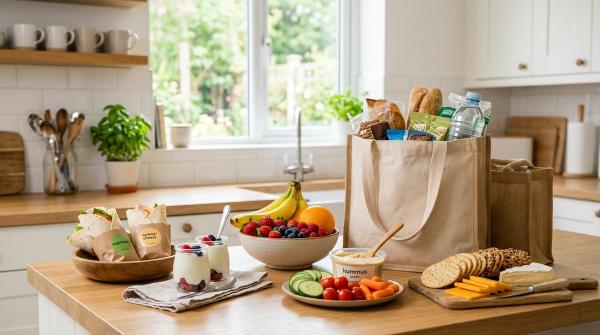
- Grocery lunches, often a budget-friendly way to build a meal from bread, cheese, fruit, yogurt, salads, or ready-made items.
- Walking-tour breakfasts, useful when a stronger morning meal lets you delay lunch until after the tour.
- Travel snacks, helpful for avoiding panic orders when lines are long or options are limited.
You do not need to plan every bite. Just having a few backup ideas makes lunch feel much less stressful.
A Simple Ordering Formula
#When in doubt, build your café lunch like this:
- Choose one main with protein, such as eggs, chicken, tuna, cheese, beans, lentils, or yogurt.
- Add a steady carbohydrate, like bread, a wrap, grains, or potatoes if offered.
- Include something fresh, such as salad, vegetables, fruit, or a simple side.
- Pick a drink that helps, not one that overwhelms the meal.
- Share the sweet thing, if you want it.
That simple formula works in a lot of cities and café styles, even when you do not fully understand the menu.