Your credit card total limit is the maximum limit approved by the bank. Your credit card available limit is what you can actually use right now. Your credit card cash limit is the ATM withdrawal portion within the same card limit, not extra money. Before any big payment, check available limit, transaction controls, EMI blocks, pending holds and overlimit settings.
A credit card can look simple until you open the bank app and see three different numbers: total limit, available limit, and cash limit.
Then the doubt starts:
- Can I spend this much?
- Why is my available limit lower?
- Is cash limit extra money?
- Will my payment fail if I try a bigger transaction?
If you use a credit card in India, these are normal questions. Before any important payment — a flight booking, hotel stay, hospital bill, phone purchase, EMI transaction or large online order — the number you should check first is your available credit limit.
Quick Answer
#Your credit card total limit is the full spending limit given by your bank.
Your credit card available limit is the amount left for you to use after purchases, EMIs, charges, unpaid dues and pending holds are deducted.
Your credit card cash limit is the amount you can withdraw from an ATM using your credit card. It is usually lower than your total limit, and it is not extra money.
Your credit card overlimit facility may allow some transactions to go through even if they cross your approved limit. In India, RBI credit-card guidance says overlimit use requires prior explicit consent from the cardholder.
For day-to-day use, the most important figure is the available credit limit, not the total limit.
Simple Definitions Table
#An easy way to remember this:
- Total limit is your full ceiling.
- Available limit is what you can use today.
- Cash limit is the ATM withdrawal portion inside that ceiling.
Example With a ₹1,00,000 Credit Card Limit
#Suppose your bank issues you a new credit card.
- Credit card total limit: ₹1,00,000
- Credit card cash limit: ₹20,000
- Credit card available limit: ₹1,00,000
Since you have not used the card yet, the full ₹1,00,000 is available for purchases.
Scenario 1: You spend ₹5,000 on groceries
#After this transaction:
- Total limit remains: ₹1,00,000
- Available limit becomes: ₹95,000
- Cash limit remains capped at: ₹20,000
Your total limit has not changed. Only your available limit has reduced because you used part of the card limit.
Scenario 2: You buy a laptop for ₹85,000
#You had already spent ₹5,000 earlier, so before buying the laptop, your available limit was ₹95,000.
After buying the laptop:
- Total limit remains: ₹1,00,000
- Available limit becomes: ₹10,000
- Cash limit effectively becomes: ₹10,000
This is where many card users get confused.
Your cash limit may show as ₹20,000, but if your overall available limit is only ₹10,000, you cannot withdraw ₹20,000 from an ATM. Your usable limit at that moment is only ₹10,000.
So the available credit limit is the real number to watch.
Scenario 3: You convert the laptop purchase into EMI
#If you convert the ₹85,000 laptop purchase into a 6-month EMI, the full purchase amount may still remain blocked against your credit card limit. Your available limit may not immediately go back up just because the transaction has become an EMI.
As you pay each monthly EMI, your available limit slowly gets restored.
So before taking a big EMI, always check how much limit will remain for regular expenses like groceries, fuel, bills, travel and online payments.
Why Your Credit Card Available Limit Keeps Changing
#Your credit card available limit is not fixed. It can change several times in a billing cycle.
Sometimes it may even feel like your limit has gone down although you have not made any major purchase. Usually, there is a reason.
Purchases and online payments
#Every swipe, tap, online payment, or in-app transaction reduces your available limit.
Even small spends add up. Food delivery, fuel, OTT subscriptions, cab rides, grocery orders and app renewals can quietly use more limit than you realise.
EMI purchases
#When you convert a purchase into EMI, the bank may still block the full principal amount from your card limit.
For example, if you buy an item worth ₹60,000 on EMI, your available limit may reduce by the full ₹60,000, not just by the first EMI amount.
This matters if you use the same card for monthly expenses.
Fees and charges
#Your available limit can also reduce because of bank charges.
These may include:
- Joining fee
- Annual fee
- Late payment fee
- Interest
- Cash advance fee
- Foreign currency markup
- GST on applicable charges
If your limit has dropped and you do not remember spending much, open the unbilled transactions section in your card app. In most cases, the reason will be visible there.
International transactions and forex markup
#If you spend abroad or shop on an international website, the bank may add a foreign currency markup. GST may also apply on certain charges.
So the final amount charged to your card can be slightly higher than the price you first saw. That extra amount also uses your credit limit.
Payment processing time
#Paying your credit card bill does not always restore your available limit instantly.
Sometimes payments made through third-party apps take time to reflect. Your available limit usually increases only after the bank receives and processes the payment.
If you need the limit urgently, use a payment method that your bank updates quickly. This differs from bank to bank.
Credit Card Cash Limit and Why Cash Withdrawals Are Expensive
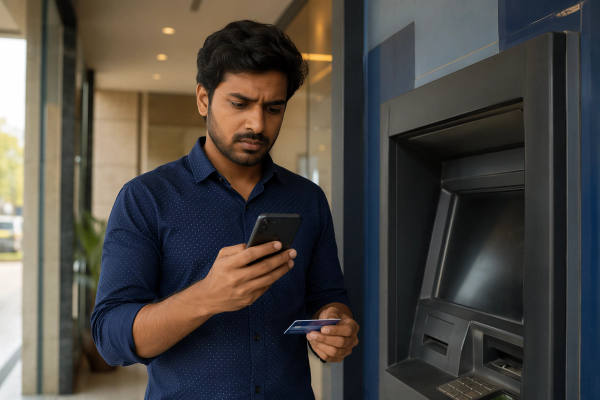
#Your credit card cash limit is the amount you can withdraw from an ATM using your credit card.
But it is important to understand one thing clearly:
The cash limit is not an additional limit.
If your total credit card limit is ₹1,00,000 and your cash limit is ₹20,000, your total card limit is still ₹1,00,000. You do not get ₹1,20,000.
The cash limit only tells you how much of your existing card limit can be used for ATM withdrawals.
Why you should avoid credit card cash withdrawals
#Cash withdrawals from credit cards are usually costly.
With normal credit card purchases, you may get an interest-free period if you pay the full bill by the due date. But with cash withdrawals, there is usually no interest-free period. Interest generally starts from the date of withdrawal.
Banks may also charge a cash advance fee. This is usually a percentage of the amount withdrawn, subject to a minimum charge. The exact amount depends on your bank and card type.
So when you withdraw cash from a credit card, you may have to pay:
- Cash advance fee
- Interest from the withdrawal date
- GST and other applicable charges
That is why the credit card cash limit should be used only in a genuine emergency.
If you need cash often, a credit card ATM withdrawal is usually not the right solution. It may be better to review your budget, build an emergency fund, or look for a cheaper borrowing option.
Credit Card Overlimit and Explicit Consent
#A credit card overlimit facility may allow a transaction even if it crosses your approved card limit.
For example, suppose your available credit limit is ₹45,000 and you try to make a payment of ₹50,000.
What happens then?
If overlimit is disabled
#The transaction will most likely be declined.
This may feel inconvenient at a shop, hotel or hospital counter. But it also protects you from overlimit fees.
If overlimit is enabled
#The bank may approve the transaction, depending on its internal rules. You may then be charged an overlimit fee.
RBI’s public credit card FAQ says usage beyond the sanctioned credit limit requires prior explicit consent from the cardholder, and cardholders should be given a way to enable or disable overlimit through transaction controls.
For most users, keeping overlimit disabled is safer. It helps you stay within your approved limit and avoids surprise charges.
Before enabling overlimit, check:
- What the overlimit fee is
- Whether the fee is charged once per billing cycle or per transaction
- Whether the bank can still decline some overlimit transactions
- Whether you actually need this facility
- How to disable it later
If you enable it only for one large purchase, remember to review the setting afterwards.
What to Check Before a Large Purchase or Travel Booking
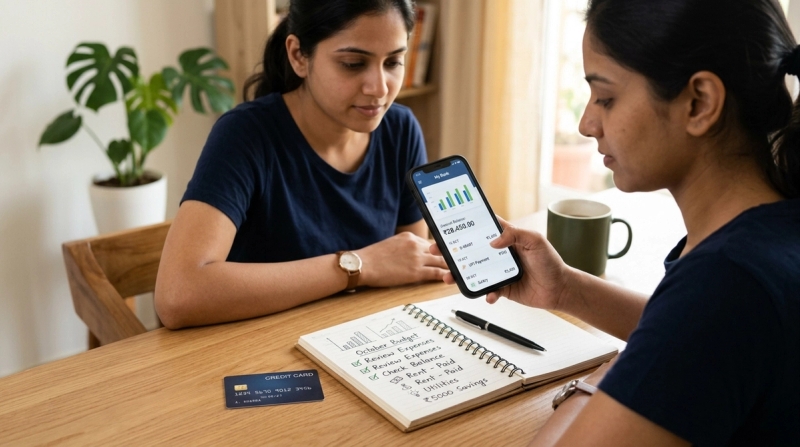
#Before booking flights, paying hospital bills, buying a phone, reserving a hotel, or making any large card payment, spend two minutes checking your credit card app.
1. Check your available credit limit
#Do not look only at the total limit.
If your total limit is ₹2,00,000 but your available limit is ₹38,000, a ₹50,000 payment may fail.
At payment time, the available credit limit is the number that matters.
2. Add taxes, convenience fees and platform charges
#The first price shown on a website may not be the final amount charged.
Travel bookings, hotel reservations and online purchases may include:
- Convenience fees
- GST
- Insurance add-ons
- Platform charges
- Currency conversion charges
- Other small extras
Keep some buffer. Do not run the card right up to the edge.
3. Check per-transaction limits
#Many bank apps allow you to set separate limits for different types of transactions.
These may include:
- Online transactions
- Contactless payments
- International usage
- ATM withdrawals
- Daily spending limit
- Per-transaction limit
Even if your available credit limit is high, a transaction can fail if that particular channel is disabled or capped too low.
4. Check international usage settings
#If you are travelling abroad or paying on an international website, check whether international transactions are enabled.
Also remember that currency conversion and forex markup can make the final amount higher than expected.
5. Keep room for hotel and travel holds
#Hotels, car rentals and some travel merchants may block temporary security amounts on your card.
These holds may be reversed later, but until then, they can reduce your available limit.
When travelling, it is better to keep extra space on your card. Otherwise, one hotel deposit can affect your next payment.
6. Think before converting to EMI
#EMI can make a large purchase feel lighter month by month, but it can still block a large part of your card limit.
Before converting anything to EMI, check how much available limit will remain afterwards. This is especially important if salary day is still far away and regular expenses are pending.
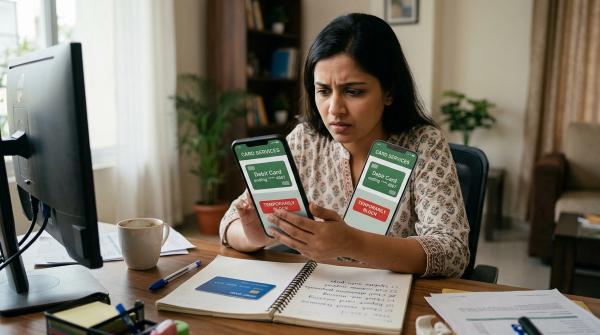
What to Do If Your Transaction Is Declined
#A declined credit card transaction does not automatically mean your credit score is bad or your card is blocked.
Many times, it is simply a limit or settings issue.
Step 1: Open your banking app
#First, check your available credit limit.
If your available limit is lower than the transaction amount, that is probably the reason the payment failed.
Step 2: Check transaction controls
#See whether the required transaction type is enabled.
For example:
- Online transactions
- Domestic transactions
- International transactions
- Contactless payments
- ATM withdrawals
If the required option is switched off, turn it on only if you need it.
Step 3: Check daily and per-transaction caps
#Your app may have a separate transaction limit that is lower than your actual card limit.
For example, your available limit may be ₹80,000, but your online transaction cap may be set at ₹30,000. In that case, a ₹50,000 online payment can fail.
Increase the cap only to the amount you need.
Step 4: Look for pending holds or unbilled transactions
#A hotel hold, annual fee, EMI block, auto-debit or recent purchase may have reduced your available limit.
Check the unbilled transactions section. It is often the fastest way to understand what happened.
Step 5: Make a part payment if needed
#If you are close to your limit, paying part of your outstanding amount can free up limit after the bank processes the payment.
If the purchase is urgent, use the fastest payment method supported by your bank. Then wait for the available limit to update before trying again.
Step 6: Call the bank if the problem continues
#If your limit and settings look fine but the transaction still fails, contact your bank through official channels.
There could be a fraud-risk block, merchant issue, network problem, card restriction, or another bank-side reason.
Mistakes to Avoid
#A credit card is useful when you manage it carefully. Problems start when people treat the card limit like money already sitting in their savings account.
Mistake 1: Looking only at the total limit
#Your credit card total limit may be ₹1,00,000, but that does not mean the full ₹1,00,000 is available today.
Always check your credit card available limit before important payments.
Mistake 2: Thinking cash limit is extra money
#Your credit card cash limit is part of your total card limit. It is not an add-on.
If you withdraw cash, your overall available credit limit also reduces. Plus, the charges can be heavy.
Mistake 3: Maxing out the card again and again
#Using most of your credit limit regularly can increase your credit utilisation ratio.
High utilisation may make you look credit-hungry or financially stretched to lenders and credit bureaus.
A commonly suggested practice is to keep usage below 30% of the total limit, where possible. It may not always be practical, but it is a good habit.
Mistake 4: Forgetting auto-debits
#OTT subscriptions, insurance premiums, app renewals, cloud storage, gym memberships and other auto-debits can quietly reduce your limit.
Keep some buffer so these payments do not fail.
Mistake 5: Ignoring EMI blocks
#A no-cost EMI can still block your credit card limit.
Before taking any EMI, check how much available limit will remain after the conversion.
Mistake 6: Keeping overlimit on without a reason
#The credit card overlimit option may help in rare cases, but it can also lead to fees.
If you do not need it, keeping it disabled is usually better.
Mistake 7: Treating the card limit as free money
#A credit card limit is not your bank balance. It is borrowed money.
If you do not pay the full statement amount by the due date, interest and charges can grow quickly. Credit card interest is usually expensive, so carrying a balance can become costly.
Final Takeaway
#Before using your credit card, do not rely only on the total limit. Open your card app and check your credit card available limit. Also make sure the right transaction settings are enabled and leave some buffer for fees, holds, forex markup and EMI blocks.
Use the credit card cash limit only in emergencies because cash withdrawals are usually expensive.
Keep the credit card overlimit setting off unless you clearly need it and understand the charges.
A credit card is convenient, but it is still borrowed money. The safest habit is simple: check the usable limit first, spend only what you can repay, and pay the full bill on time.