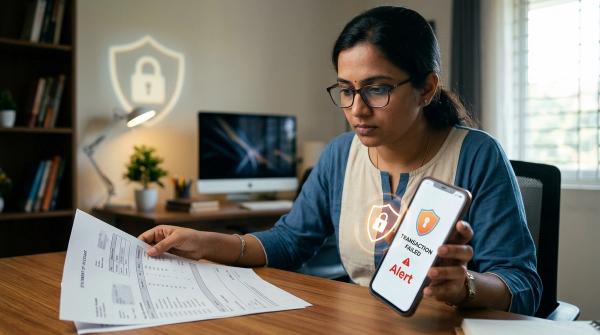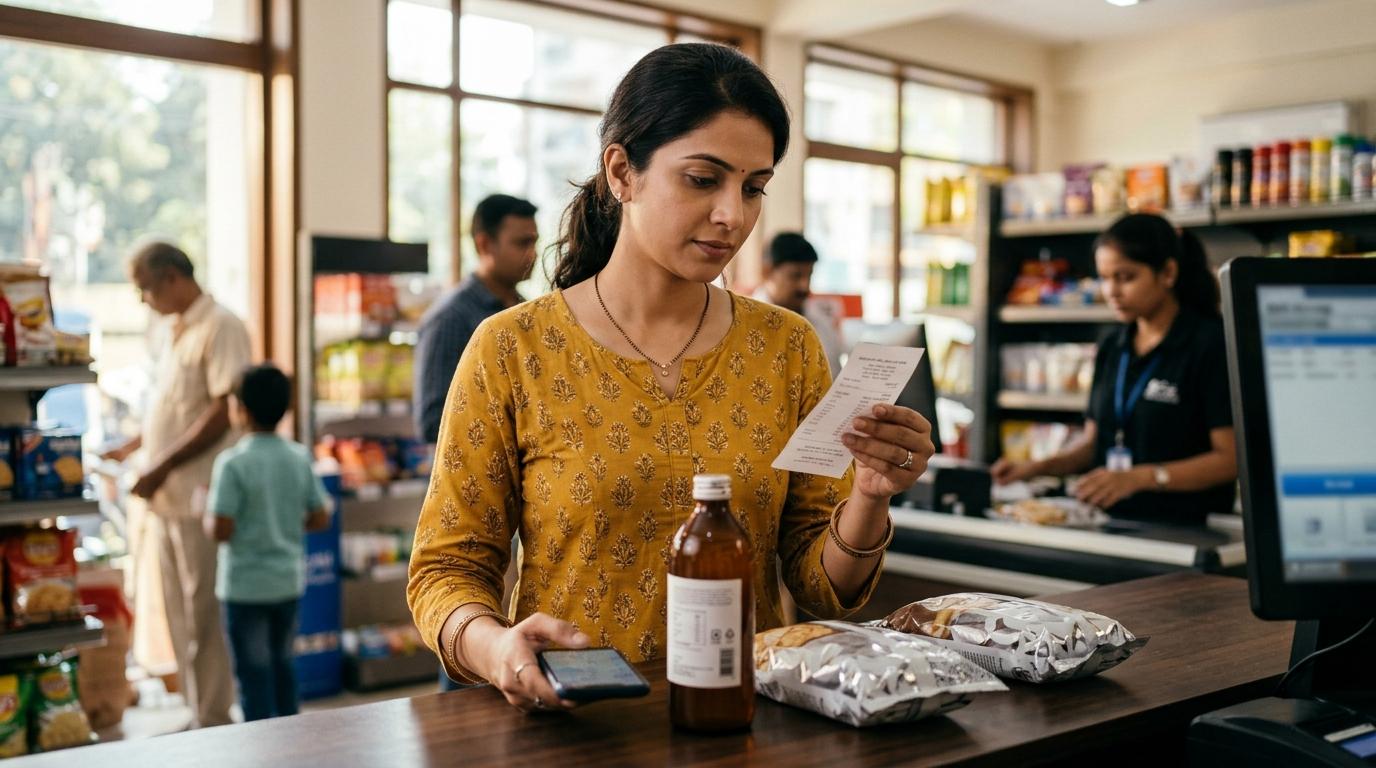
For most packaged products in India, the printed MRP is the maximum price a normal retailer can charge. If someone asks for more, first ask them to correct it. If they refuse, save proof: product photo, MRP photo, bill or UPI screenshot, seller details, date and location. Then complain through the National Consumer Helpline, your state Legal Metrology Department, or RailMadad for railway-station cases.
Quick Summary
#- Shop charges more than printed MRP: ask them to charge the printed MRP.
- Seller refuses: pay only if necessary and collect proof.
- No bill is given: save UPI proof, shop details, and product photos.
- Railway station vendor overcharges: use RailMadad or call 139.
- Online order price is higher than product MRP: save invoice, app screenshots, and MRP photo.
- You want official action: file a complaint with NCH or Legal Metrology.
Who This Guide Is For
#This checklist is for anyone in India who has been charged more than the printed MRP for a packaged item bought from kirana stores, supermarkets, railway stations, bus stands, college canteens, office shops, tourist spots, local stalls, grocery apps, e-commerce platforms, cinemas, food courts, or takeaway counters.
If you were charged extra for a packaged water bottle, cold drink, chips packet, biscuit packet, snack, or grocery item, this guide will help you handle a charged more than MRP complaint in India without getting lost in the process.
First, What Does MRP Actually Mean?
#MRP means Maximum Retail Price.
For packaged products sold in India, the printed MRP is the highest price a seller is supposed to charge you for that product. It is printed by the manufacturer, packer, or importer, and it usually says something like “inclusive of all taxes.”
That means a normal retailer cannot simply add extra charges such as cooling charge, handling charge, transport charge, festival charge, station charge, tourist area charge, or convenience charge for handing over the same sealed product.
If a sealed water bottle has an MRP of ₹20, a shop or stall should not charge ₹25 for that same bottle.
The legal area involved is mainly Legal Metrology, especially the rules for packaged commodities. But as a consumer, you don’t need to know every section of the law. The simple rule is this: if it is a packaged product with a printed MRP, a normal retailer should not charge above that MRP.
There are some exceptions in hotel, restaurant, and service settings, which are explained later in this article.
What to Check Before You Pay
#Before paying, take a few seconds to look at the pack. It may feel like a small thing, but it can save money and make your complaint much stronger if the seller refuses to cooperate.
1. Check the Printed MRP
#Look for words like “MRP”, “Maximum Retail Price”, or “Inclusive of all taxes”.
On bottles, the MRP may be printed on the label, neck, or cap area. On food packets, it is usually near the batch number, manufacturing date, expiry date, or barcode.
2. Check Whether the MRP Has Been Covered or Changed
#Be careful if you notice a sticker pasted over the original MRP, scratched price printing, two different prices on the same pack, a handwritten price over the printed MRP, or a suspicious new sticker.
If the seller is asking for more than the visible printed MRP, ask them to explain before you pay.
3. Check That It Is Actually a Packaged Product
#MRP rules mainly apply to packaged commodities.
For example, a packaged water bottle, sealed cold drink bottle, chips packet, or branded biscuit packet fits this issue. Loose samosa from a stall or tea served in a cup is not the same MRP issue.
So don’t confuse packaged product overcharging with normal menu pricing or loose food pricing.
4. Check the Expiry Date and Batch Details Too
#While checking the MRP, also look at manufacturing date, packing date, expiry date or best-before date, batch number, and FSSAI details if it is a packaged food item.
Sometimes the problem is not just overcharging. The product may also be expired, relabelled, or tampered with.
5. Ask One Calm Question
#If the seller asks for more than the printed MRP, say: “The printed MRP is ₹20. Why are you charging ₹25?”
Many sellers correct the price immediately when they realise you have checked the pack.
Consumer Complaint Proof Checklist
#If the seller still charges extra, proof is very important. A complaint without proof can become difficult, especially if the seller denies it later.
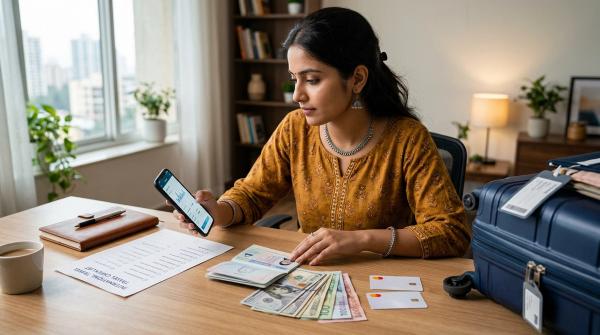
Save a clear photo of the printed MRP, a photo of the full product pack or bottle, the bill or receipt showing the amount charged, the date and time of purchase, shop name or stall number, and location details such as station, mall, market, street, or shop address.
If the Seller Does Not Give a Bill
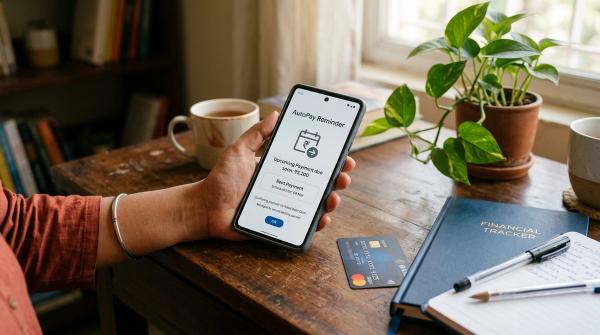
#Many small sellers either don’t give bills or say “bill nahi milega”. If that happens, collect other proof: UPI payment screenshot, merchant name shown in the transaction, amount paid, date and time, shop or counter photo if safe, and a short note of what happened.
If possible, add a UPI payment note like “water bottle” or “MRP overcharge”. It may help later.
Don’t rely only on memory. After a few days, details like exact time, stall number, or product price can get mixed up.
For Online Orders
#For online or app-based purchases, save the app order screenshot, digital invoice, product page screenshot showing price or MRP, photo of the delivered product’s printed MRP, order ID, and chat or support ticket screenshot.
This is especially useful when an app charges more than the MRP printed on the product actually delivered to you.
What to Do If You Are Charged More Than MRP
#Follow these steps in order.
Step 1: Ask the Seller to Correct the Price
#Start with the simplest option.
Say: “This is above MRP. Please charge the printed price or give me a proper bill showing the amount.”
If the seller corrects it, the issue may end there. But if they refuse, don’t get into a long argument. Collect proof.
Step 2: File a Complaint with the National Consumer Helpline
#For most everyday cases, the National Consumer Helpline is the easiest place to start.
You can complain by phone at 1915, through WhatsApp on 8800001915, the NCH app, UMANG app, or the National Consumer Helpline website.
Use simple words: “I was charged above the printed MRP for a packaged product. I have the bill, product photo, and payment proof.”
Mention the product name, printed MRP, amount charged, seller name, location, date and time, and proof available.
This is usually enough for a basic MRP overcharging complaint.
Step 3: Complain to the State Legal Metrology Department
#If the overcharging is serious, repeated, or clearly deliberate, you can complain to your state Legal Metrology Department.
Legal Metrology authorities handle packaged commodity rules, including MRP-related violations.
You can usually submit product photo, MRP photo, bill or payment proof, seller details, location, and a short complaint note.
Search online for your state’s Legal Metrology Department complaint page or contact details. Many states provide phone numbers, email IDs, or online complaint forms.
Use a clear subject line: “Complaint for charging above MRP on packaged product”. Keep your complaint factual. Don’t exaggerate. Attach whatever proof you have.
Step 4: Use RailMadad for Railway Station Overcharging
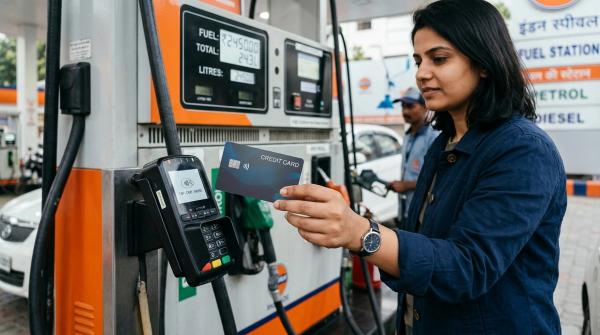
#Overcharging for water bottles and packaged snacks at railway stations is common. If your complaint is about a railway station vendor, use railway complaint channels quickly.
Use the RailMadad app or website, or call 139. Share station name, platform number, stall number, product details, MRP photo, and payment proof.
For railway complaints, exact location matters a lot. “Platform 4, near coach indicator, Stall No. 6” is much more useful than “one shop at the station”.
If the vendor refused to give a bill, mention that too.
Step 5: Use e-Daakhil for Consumer Commission Cases
#If the issue is not resolved, or if you faced a bigger loss, harassment, or repeated unfair treatment, you can consider filing a formal consumer complaint through e-Daakhil.
This is more formal than an NCH complaint.
It may be useful when the seller refuses to refund the excess amount, the platform ignores your complaint, there is repeated overcharging, you want compensation or formal relief, or you have strong proof and want the matter taken further.
For small amounts, many consumers first try NCH, app support, RailMadad, or Legal Metrology before going to a consumer commission.
Offline vs Online MRP Overcharging
#MRP overcharging can happen both offline and online. The main difference is the kind of proof you need.
Offline Overcharging
#Common excuses include “cold water is ₹5 extra”, “this is station price”, “tourist area rate is different”, “pay extra if you want chilled bottle”, “no bill available”, or “everyone charges this much here”.
For a normal packaged product, these excuses usually do not justify charging above printed MRP.
What you should do: check the printed MRP, ask for the correct price, ask for a bill, pay digitally if possible, save product and shop proof, and file a complaint through NCH, Legal Metrology, or RailMadad if it happened at a railway location.
Online Overcharging
#Online overcharging usually looks like this: the app invoice charges more than the printed MRP on the delivered product, the product page shows one price but the delivered item has a lower MRP, combo or pack pricing is unclear, support offers wallet credit without explaining the price difference, or the product price and platform charges are mixed together in a confusing way.
Take a screenshot of the app invoice, take a photo of the printed MRP on the delivered pack, raise a complaint inside the app, ask for a refund of the excess amount, and if unresolved, complain through NCH with the order ID and screenshots.
One important point: delivery fee, platform fee, handling fee, or small cart fee may be separate from product MRP if clearly shown. Your complaint is strongest when the product price itself is higher than the printed MRP.
Special Note on Restaurants, Hotels, and Service Settings
#This is where many people get confused.
Buying a sealed water bottle from a retail shop is different from being served bottled water in a hotel or sit-down restaurant. Courts have treated hotels and restaurants differently from ordinary retail shops in some situations because service is involved.
Before complaining, ask yourself: did I buy the sealed packaged product as a retail item, or was it served as part of restaurant or hotel service? Was there a menu price? Was it a takeaway counter, kiosk, or retail stall? Was I paying only for the product, or also for service?
For a normal shop, railway stall, supermarket, kiosk, or packaged product counter, charging above MRP is much easier to challenge.
Mistakes to Avoid When Making an MRP Complaint
#Mistake 1: Leaving Without Proof
#If you don’t save the product photo, bill, or payment proof, your complaint becomes weak.
Even if you are in a hurry, try to take one clear photo of the MRP, one photo of the product, and one screenshot of payment.
Mistake 2: Getting Into a Loud Argument
#You don’t need to fight at the counter.
Stay calm and say: “Please give me a bill for the amount charged.” If they refuse, mention that in your complaint.
A calm complaint with proof is usually more useful than a heated argument without proof.
Mistake 3: Confusing MRP With Discounts
#A seller can sell below MRP. That is allowed. The problem is selling above MRP.
MRP ₹100 sold for ₹90 is allowed. MRP ₹100 sold for ₹100 is allowed. MRP ₹100 sold for ₹110 is the problem.
Mistake 4: Ignoring Product Differences
#Two similar-looking products may have different MRPs.
Before complaining, compare net quantity, pack size, variant, batch, packaging, combo details, and free item or offer details.
Mistake 5: Mixing Product Price With Delivery Fee
#For online orders, check whether the extra amount is product price above MRP or a separate delivery, handling, platform, or small cart fee.
A separate fee may be shown by the platform. Your packaged product MRP complaint is strongest when the product price itself is higher than the printed MRP.
Simple Complaint Format You Can Copy
#Subject: Complaint for charging above MRP on packaged product
I purchased [product name] from [shop/platform name] on [date] at [time].
The printed MRP on the product is ₹[MRP], but I was charged ₹[amount charged].
Seller/location details:
[shop name, stall number, address, platform number, or order ID]
Proof attached:
1. Photo of printed MRP
2. Bill/payment screenshot
3. Product photo
4. Shop/order details
Please help with refund of the excess amount and take necessary action for MRP overcharging.
Keep it short and clear. Attach proof. Don’t add unrelated issues unless they are directly connected.
Final Takeaway
#If you are charged above MRP, don’t ignore it just because the extra amount is small.
Check the printed price. Ask the seller to correct it. If they refuse, save proof and complain through the right channel.
For most packaged products, start with the National Consumer Helpline. For railway station overcharging, use RailMadad or call 139. For repeated or serious cases, complain to your state Legal Metrology Department.
A clear photo, a payment record, and a calm complaint can do more than a long argument at the counter.