
A credit card balance transfer in India lets you move unpaid dues from one credit card to another, usually to get a lower interest rate, fixed EMI plan or short promotional repayment window. It can help only if the total cost is lower and you stop adding fresh card spending.
Done well, it can reduce the interest burden on existing credit card dues. Done casually, it can simply move the same problem from one card to another.
Despite how some offers are marketed, a balance transfer is usually not “free”. You still need to check the processing fee, GST on fees, promotional interest rate, late payment rules, EMI terms and what happens after the offer period ends.
If you are currently paying only the minimum due every month, a balance transfer may feel like breathing room. Sometimes it is. But it only really helps if you use that breathing room to repay the debt faster.
The important question is not just, “Can I transfer my dues?” It is: “Can I repay them after the transfer without creating fresh card debt?”
How a Credit Card Balance Transfer Works in India
#When you do not pay your full credit card bill, the unpaid amount can start attracting revolving credit interest according to your card’s Most Important Terms and Conditions, or MITC. That can become expensive if the balance stays unpaid for several billing cycles.
A balance transfer credit card offer usually works like this:
- You have unpaid dues on Card A.
- You apply to move those dues to Card B or to another bank’s card facility.
- If approved, the new bank pays the old card balance, up to the approved limit.
- You now repay Card B as per the new balance transfer terms.
The purpose is to reduce interest cost or make repayment more structured. But the benefit depends completely on the written terms of the offer.
In India, balance transfer offers usually come in a few forms:
- Balance transfer with EMI repayment: the transferred amount is converted into fixed monthly EMIs.
- Low-interest or promotional offer: the bank gives a lower rate for a limited period.
- Loan-on-card or credit card loan: the bank offers a structured loan against your card limit, which you may use to clear dues on another card.
Different banks may use different names for these products. Do not judge the offer only by its label. Look at the actual cost, repayment period and penalties.
The Real Cost of a Credit Card Balance Transfer
#A credit card balance transfer is useful only if the total cost is lower than what you would pay by keeping the dues on your current card.
1. Processing fee
#Most balance transfer offers come with a processing fee. This may be charged as a percentage of the amount transferred or as a bank-defined fee.
For example, if you transfer ₹1,00,000 and the processing fee is 2%, the fee is ₹2,000 before GST.
That may not sound huge, but context matters. A 2% fee for a 12-month repayment plan may be very different from a 2% fee for a three-month promotional window.
Always compare the fee with the time you actually get to repay.
2. GST on fees
#GST generally applies to financial service charges such as processing fees. GST is not charged on the principal amount transferred.
If your processing fee is ₹2,000, GST at 18% would add ₹360, making the upfront fee ₹2,360.
This is why a “low-interest” or “0% interest” transfer can still have a cost.
Depending on the bank’s billing method, GST may also apply on other charges. Check your bank’s latest terms before accepting the offer.
3. Promotional interest rate
#Some banks offer a low or 0% promotional rate for a fixed period. These offers can be useful, but only if you understand the timeline.
Before accepting, check:
- What is the processing fee?
- How much GST will apply?
- What is the promotional interest rate?
- How long does the promotional period last?
- What happens after the period ends?
- Is repayment through EMI or regular card billing?
- Will one missed payment cancel the promotional rate?
A low-interest offer is valuable only if you can repay a meaningful portion of the balance before the offer period ends.
4. Revert rate after the offer period
#The revert rate is the interest rate that applies once the promotional period is over. In many cases, this may be the bank’s normal credit card interest rate.
For example, suppose you transfer ₹80,000 under a six-month offer. During those six months, you repay only ₹20,000. The remaining ₹60,000 may start attracting regular card interest after the offer ends.
That can quickly reduce, or erase, the benefit of the transfer.
5. Late payment fees and penalty interest
#A balance transfer can become expensive if you miss a payment.
Depending on the bank’s terms, a missed payment may lead to:
- Late payment fee
- Interest on the unpaid amount
- Loss of promotional rate
- Regular credit card interest charges
- Negative impact on your repayment history
This is why a balance transfer should not be taken just because it is available. It works best when the monthly repayment amount is realistic.
Be Careful With New Spending on the Balance Transfer Card
#This is one of the most common mistakes.
After transferring dues to a new card, many people start using the same card for groceries, online shopping, fuel, subscriptions, travel bookings or UPI-linked payments.
It feels normal because it is still a credit card. But it can create a messy situation.
When you are already carrying a balance, new purchases may not get the usual interest-free period. Banks may also follow payment allocation rules where your payments are adjusted against one type of balance first, while another balance continues to attract interest.
A safer rule is simple: do not use the receiving card for fresh spending until the transferred dues are fully repaid.
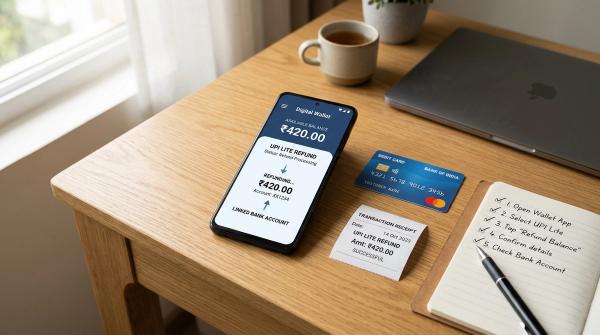
Also check for old subscriptions, app renewals, OTT payments, UPI AutoPay mandates and recurring bills linked to both cards.
If a card is being used to repay debt, it should not quietly collect new bills in the background.
Balance Transfer vs EMI Conversion vs Personal Loan
#A balance transfer is not the only way to manage card dues. You may also compare EMI conversion on the same card or a personal loan. This is a comparison framework, not a recommendation.
There is no single best option for everyone. The right choice depends on the actual numbers: interest rate, processing fee, GST, tenure, EMI amount and your ability to repay on time.
When a Balance Transfer May Help
#A credit card outstanding transfer may be useful if:
- Your current card is charging high revolving interest.
- You have a clear repayment plan.
- The total cost, including fee and GST, is lower than staying with the current card.
- You can repay within the promotional or EMI period.
- You will stop fresh spending on both the old and new cards.
- You can pay more than the minimum due every month.
Think of a balance transfer as breathing room, not free money and not extra spending capacity.
Its main job is to help you reduce expensive credit card debt faster.
Warning Signs to Avoid Balance Transfer Offers
#Not every balance transfer offer is worth taking. Be careful if you notice any of these signs.
The fee cancels out the savings
#If the processing fee and GST are almost equal to the interest you would have paid anyway, the transfer may not help much.
This is especially true for short promotional offers with high upfront fees.
You cannot repay enough during the offer period
#A low-interest or 0% offer works best when you can make meaningful repayments before the offer ends.
If you already know you cannot pay much during the promotional period, the remaining balance may later attract regular credit card interest.
The new card limit will be almost fully used
#If the transferred amount uses most of the new card’s limit, your credit utilisation may go up. High utilisation can affect your credit profile.
This does not mean you should never transfer dues, but you should know how much of the new limit will be blocked.
The offer wording is unclear
#Avoid offers where you cannot clearly understand:
- Processing fee
- GST
- Interest rate
- Tenure
- EMI amount
- Due date
- Late payment rules
- Revert rate
- Foreclosure or prepayment charges, if any
If a bank representative says one thing and the written terms say something else, rely on the written terms.
You are using the transfer to create more spending room
#This is risky.
If Card A becomes free after the transfer and you start using it again, you may soon have dues on both cards. That is exactly the situation you were trying to avoid.
Step-by-Step Checklist Before You Transfer Credit Card Dues
#Use this checklist before accepting any balance transfer offer.
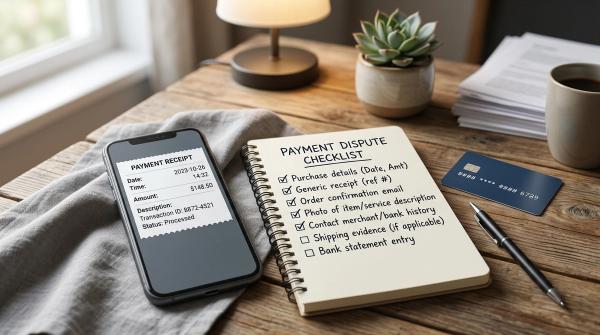
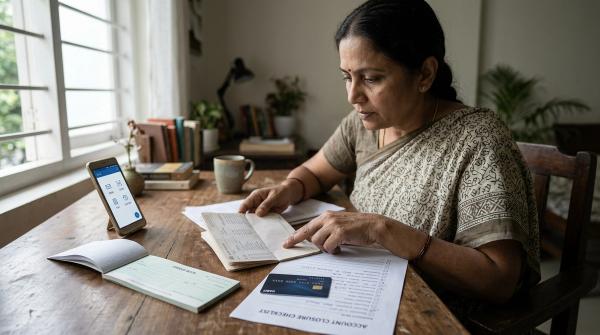
- Check your exact outstanding amount. Open your latest statement and banking app. Check total outstanding, minimum due, interest charges, late fee, overlimit fee, cash withdrawal charges and recent unbilled transactions.
- Ask for the full cost in writing. Confirm the transfer amount, processing fee, GST, interest rate, promotional period, EMI amount, total payable, due date and rate after the offer period.
- Compare it with your current card cost. Compare what you will pay if you stay with your current card versus what you will pay after the transfer.
- Check whether the monthly payment is realistic. If you transfer ₹60,000 and want to clear it in six months, you need to budget roughly ₹10,000 per month plus charges.
- Stop new spending on the old card. Once the old card is paid off through the transfer, avoid using it again. Lock it temporarily if needed.
- Stop new spending on the new card too. Avoid mixing transferred dues, new purchases, UPI spends, subscriptions and cash withdrawals.
- Set reminders or auto-debit. Missing one payment can reduce or remove the benefit of the transfer.
- Track the promotional end date. Note the start date, end date, due dates and remaining balance after each payment.
A Simple Example of Balance Transfer Cost
#Suppose you have ₹1,00,000 outstanding on a credit card.
Another bank offers a balance transfer with:
- 2% processing fee
- 18% GST on the fee
- Low promotional interest for a limited period
The processing fee is:
2% of ₹1,00,000 = ₹2,000
GST on the fee is:
18% of ₹2,000 = ₹360
So your upfront cost is:
₹2,000 + ₹360 = ₹2,360
This is before considering any interest during or after the offer period.
Now compare this with the interest you would pay on your old card during the same period. If the balance transfer saves you more than the total cost and you can repay on time, it may help. If not, it may just add another layer of charges.
Common Mistakes to Avoid
#Avoid these mistakes when moving card dues:
- Paying only the minimum due after transferring.
- Ignoring the processing fee and GST.
- Forgetting the promotional end date.
- Using the new card for fresh purchases.
- Keeping AutoPay or subscriptions active on a card you are trying to clear.
- Assuming 0% interest means zero cost.
- Missing one EMI or due date.
- Not comparing EMI conversion on the same card.
- Using the old card again after its balance becomes zero.
The product itself is not the problem. The problem is using it without a repayment plan.
Related AllBlogs Guides to Read Next
#- Credit Card Minimum Due in India: Meaning, Cost, and Why Paying More Helps — useful if you are paying only the minimum due.
- Credit Card Autopay vs Manual Payment in India — useful before setting repayment reminders.
- Credit Card EMI Conversion Charges in India — useful when comparing EMI conversion with a balance transfer.
- Credit Card Billing Cycle in India — useful for understanding statement dates, due dates and interest-free periods.
General Education Disclaimer
#This article is for general financial education and informational purposes only. It is not personalised financial advice, debt advice, legal advice, tax advice or a recommendation to apply for any card, loan or balance transfer facility. Credit card terms, interest rates, fees, GST treatment and bank rules can change. Always read your bank’s latest MITC and terms before making a decision.